
Patent CN105459163B
Updated November 5, 2026Dual-Head Trimmer with Motor Switching Mechanism
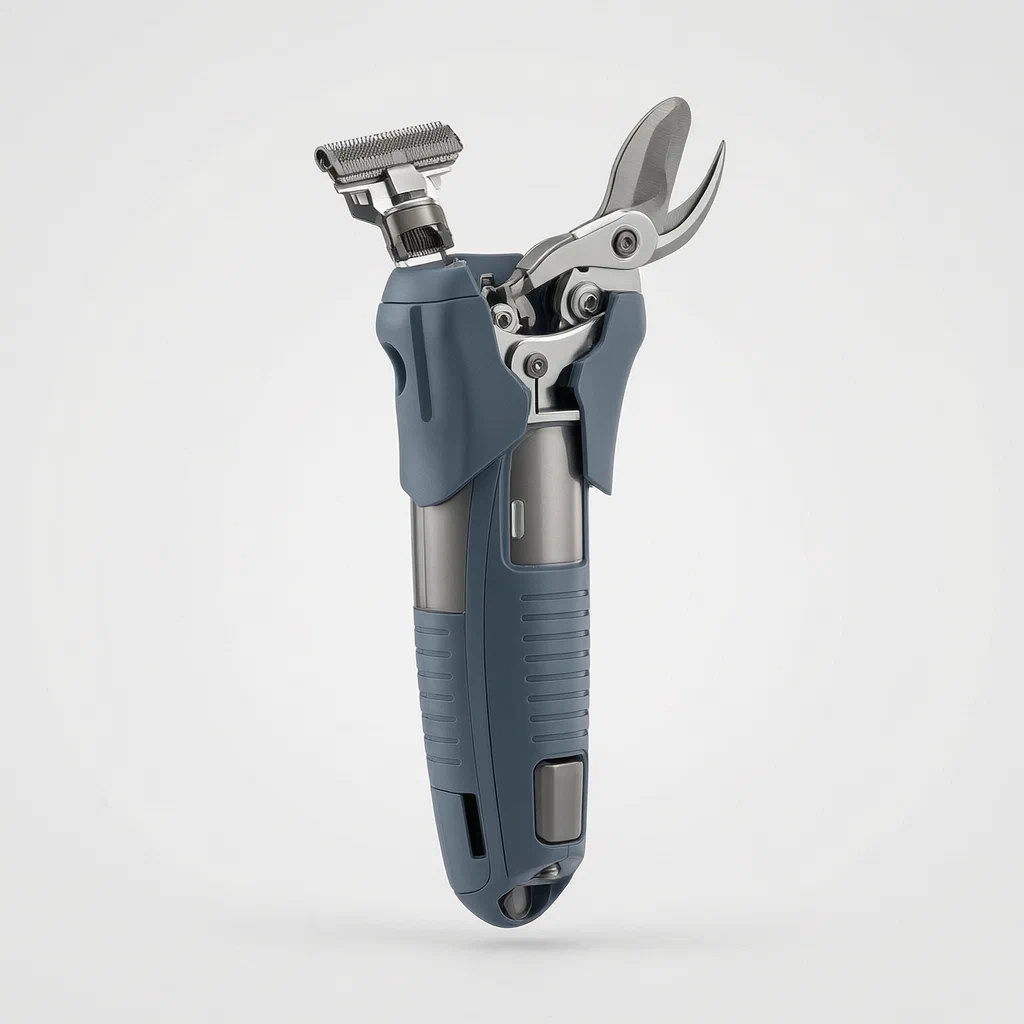
Standard barber kits often require carrying multiple tools, leading to lost parts and bulk. This patent describes a compact unit where a single motor drives both a foil shaver and a hair shear. A swinging arm with switching posts moves into specific Y-shaped grooves to engage either the shaver carriage or the shear carriage. This mechanical linkage allows quick function switching without extra motors, reducing weight and complexity while keeping both cutter heads attached to the body to prevent loss.
- China invention patent - active
- No filings outside China
- Grooming appliances
- Single motor, dual head switching
Splat! What let you down?
🔄
Single Motor Drive
One motor powers both the shaver and the shears via a mechanical switch.
⚙️
Swinging Switch
A swinging mounting with posts engages Y-shaped grooves to select the active head.
📏
Compact Design
Adjacent head placement reduces overall size compared to multi-tool kits.
🔒
Attached Heads
Cutter heads remain fixed to the body, preventing loss during travel.
Bring this product to market
- ✓ Patent review Patent family and legal status reviewed in the relevant jurisdictions.
- 2 Product brief · now How it works, uses and options written up
- 3 Prototype First samples for buyers to review
- 4 Pilot run Small first batch for launch customers
- 5 Volume production Repeat orders at scale
Buyer interest
– of 100 buyers needed to start prototyping
One click, no sign-up. Each vote is one real visitor, and products with the most interest go to prototyping first.
Build team: no members yet. Need a partner, co-funding or skills to build this? Join and we introduce the team once it forms.
Patent Rights & Team Participation
Before joining a development team, participants should ensure they have the necessary rights or authorization to participate in the project.
Participation is generally appropriate where:
- You own the relevant patent rights or have obtained permission or a license from the rights holder.
- The relevant patent rights have expired or have been legally invalidated in the jurisdictions where the planned activities will take place.
- The planned development, manufacturing, and commercialization activities have been independently assessed and do not infringe applicable patent rights in the relevant jurisdictions.
Important: Being located outside a country where a patent is protected does not automatically exempt you from patent infringement risks. Patent rights may apply based on where development, manufacturing, use, sale, or import activities take place.
IP2M does not grant any patent license or authorization through team participation. Joining a project does not provide permission to use, manufacture, or commercialize patented technology.
The problem
Professional groomers and home users typically need two distinct tools: a foil shaver for close cuts and a scissor-style shear for trimming longer hair. Carrying both separately adds bulk to tool bags and increases the risk of losing individual components if they are detachable. Previous attempts to combine these functions in one device often resulted in complex internal structures with multiple motors or loose, easily damaged parts. These designs were heavy, expensive to manufacture, and prone to failure due to the high number of connection points. There is a need for a simpler, more robust device that integrates both cutting modes without sacrificing portability or reliability.
The solution
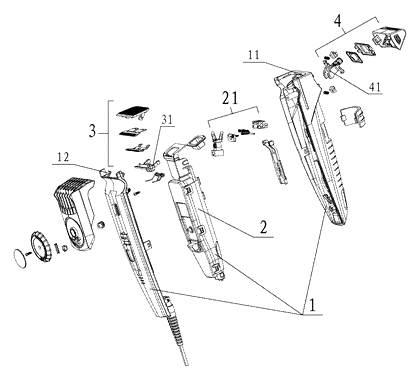
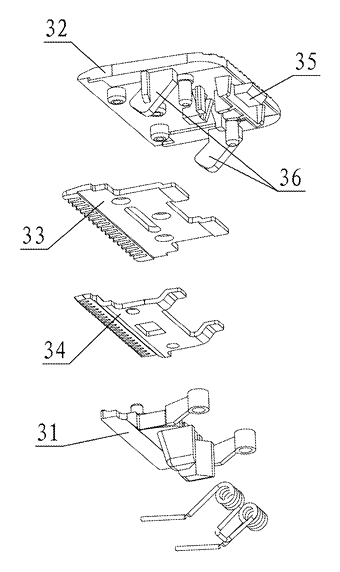
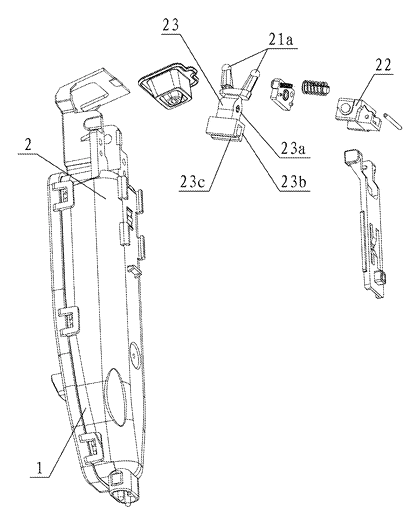
The patent describes a trimmer with a fuselage (1) containing a single motor (2). Two cutting groups are arranged adjacently on the front of the fuselage: a shaver group (4) and a pruning shear group (3). Each group has its own driven carriage—the first driven carriage (41) for the shaver and the second driven carriage (31) for the shears.
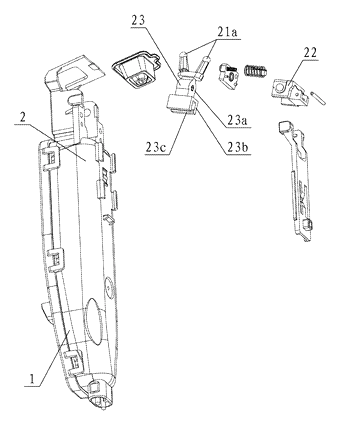
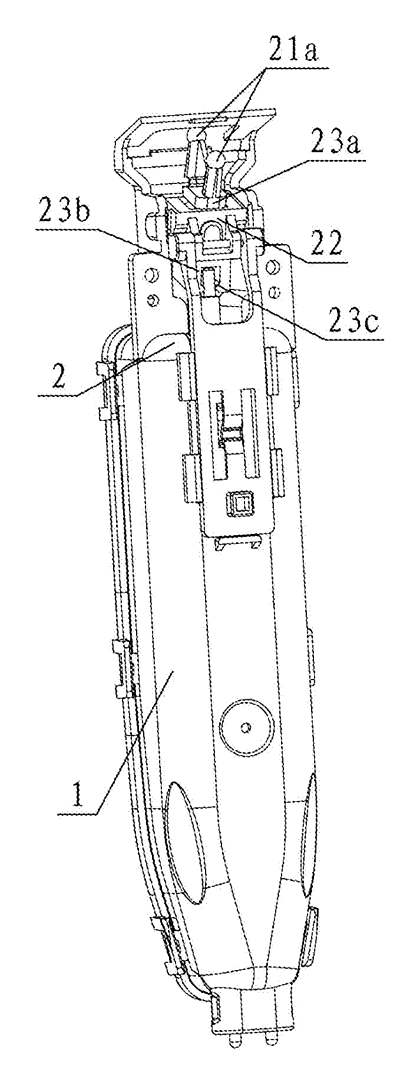
The core innovation is a swinging mounting (21) connected to the motor’s axle. This mounting features switching posts (21a). When the user activates the switch, the swinging mounting rotates. The posts move into Y-shaped grooves located on the carriages.
- If the post enters the small end of the shaver carriage’s groove, the motor drives the shaver group.
- If the post enters the small end of the shear carriage’s groove, the motor drives the shear group.
This mechanical linkage allows one motor to serve two functions. The Y-shaped groove design ensures that small movements of the switch result in positive engagement, while larger movements disengage the drive, preventing cross-talk between the two heads.
Who it is for
- Barber Supply Brands: Companies looking to offer compact, all-in-one grooming kits for professional stylists who value space-saving tools.
- Amazon Sellers: Private label brands targeting the home grooming market, where consumers prefer fewer devices per kit.
- Travel Accessory Manufacturers: Brands focusing on portable electronics and toiletries that need durable, low-part-count solutions for frequent travelers.
- OEM/ODM Manufacturers: Factories specializing in small electrical appliances that want to differentiate their product line with a mechanically simple dual-function design.
How it works
The main parts
| No. | Part | What it does |
|---|---|---|
| 1 | Fuselage | Houses the motor and supports the cutting heads. Includes locking slots. |
| 2 | Motor | Single power source driving both heads via the swinging mount. |
| 3 | Pruning Shear Group | Contains the stationary and dynamic knife heads for trimming. |
| 31 | Second Driven Carriage | Moves the dynamic shear blade; has a Y-groove for switching. |
| 32 | Fixed Rack | Holds the stationary shear blade; includes side and bottom fixture blocks. |
| 4 | Shaver Group | Contains the foil shaver head. |
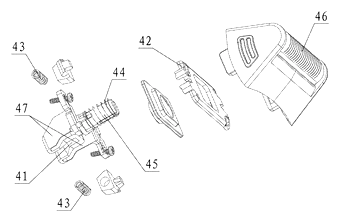
| 41 | First Driven Carriage | Moves the shaver head; has a Y-groove for switching. |
| 21 | Swinging Mounting | Connects to motor axle; carries switching posts. |
| 21a | Switching Posts | Engage with Y-grooves to activate the selected head. |
| 43 | Reset Spring | Returns the shaver carriage to its neutral position. |
Operating Steps
- Select Mode: The user manipulates the external control to swing the mounting (21).
- Engage Shaver: The switching post (21a) enters the small end of the Y-groove on the first driven carriage (41). The motor rotation is transferred to the shaver head.
- Engage Shears: Alternatively, the post enters the small end of the Y-groove on the second driven carriage (31). The motor drives the dynamic shear blade against the stationary blade.
- Disengage: Moving the post to the large end of the Y-groove disconnects the drive, stopping the corresponding head.
- Lock Heads: Side and bottom fixture blocks on the shear rack snap into the fuselage slots to secure the assembly.
Applications
Professional Barber Kits
Barbers can carry one device instead of two, saving counter space during busy shifts. The switchable heads allow quick transitions from trimming beard lines to shaving neck areas without changing tools.
Home Grooming Sets
Home users benefit from a simplified routine. Instead of buying separate clippers and razors, this unit handles basic maintenance tasks like edge-up and detail work with a single charging base.
Travel Toiletries
For travelers, the integrated design means fewer items to pack. Since the heads are fixed to the body rather than removable, there is no risk of leaving a blade cap behind in a hotel room.
Beard and Neckline Detailing
Users who shape beards and necklines can switch from the wider trimmer head for bulk work to the shaver head for clean edges. The mechanical selection avoids swapping separate tools mid-routine.
Where it is less suitable
- Heavy-Duty Hair Cutting: Long-duration professional cutting may overheat a single motor designed for mixed use.
- Sensitive Skin Areas: The mechanical switching might not be as smooth as dedicated electric toothbrushes or facial massagers.
- Waterproof Use: The patent does not specify sealing levels, so submersion cleaning is likely not supported.
Patent & Production
At a glance
| Patent number | CN105459163B (application CN201610019283) |
| Type | China invention patent (发明专利) - protects technical solution |
| Original title | Trimmer with Cutter Head Structure (一种具有刀头结构的修剪器) |
| Patent owner | Zhejiang Richuang Liangpin Electrical Appliances Co.,Ltd. |
| Inventors | Zhang Chi |
| Filing date | 2016-01-13 |
| Grant date | 2017-04-19 |
| Status (China) | In force - valid until at most 2036-01-13, subject to annual fee payments |
| Patent family | Public record shows Chinese filings only - no US, European, Japanese, PCT or other filings listed |
| Cited by | 0 later documents |
| Source | Google Patents (search for CN105459163B) |
What the claims cover, in plain language
Claim 1 - A trimmer comprising a fuselage (1), a motor (2) inside, a shaver group (4), and a pruning shear group (3). The groups are adjacent. The shaver has a first driven carriage (41) and the shear has a second driven carriage (31). The motor axle connects to a swinging mounting (21). When the mounting swings to coordinate with the first carriage, the motor drives the shaver. When it swings to coordinate with the second carriage, the motor drives the shear.
Claim 2 - The carriages have Y-shaped grooves. The swinging mounting has switching posts (21a) that enter the small ends of these grooves to link the motor to the respective carriage.
Claim 3 - Two sets of switching posts are used. One set engages one carriage while the other set is idle, allowing closer spacing of the heads.
Claim 4 - The shear group includes a fixed rack (32) with elastic components. It has a stationary knife head (33) and a dynamic cutter head (34) with zigzag engagement.
Claim 5 - The fixed rack has side and lower fixture blocks that snap into draw-in grooves and jump rings on the fuselage to lock the assembly.
Claim 6 - The shaver group includes an installing rack (42) with reset springs (43). The first driven carriage extends forward with a mounting post (44) holding the shaver (46).
This is a simplified reading for orientation only. The legal scope is defined by the exact claim wording in the official Chinese document.
What this means for US production
This patent was filed in China and is currently in force. Making or selling this specific structure in China requires the owner’s permission. However, the public record shows no US counterpart. Therefore, manufacturing or selling this design in the United States is not restricted by this specific Chinese patent.
Before tooling, review these two issues:
- Other patents may exist. Electric trimmers and grooming devices are a crowded field with many existing US patents covering motor drives, blade shapes, and housing designs. A freedom-to-operate (FTO) review is recommended to ensure no other active US patents cover similar dual-head switching mechanisms or specific blade geometries.
- Design specifics. The Y-groove switching mechanism is unique to this patent. Alternative switching methods (e.g., electronic selection or different mechanical cams) would avoid this patent but may introduce other IP risks.
Customization and manufacturing
What can be customized
| Area | Options |
|---|---|
| Blade Material | Stainless steel forming, ceramic coatings |
| Housing Color | Injection molded ABS/PC, electroplated accents |
| Motor Type | Brushed DC or brushless DC (BLDC) depending on noise/power needs |
| Switch Mechanism | Slider, button, or dial interface linked to the swinging mount |
| Battery | NiMH or Li-ion cell capacity based on runtime targets |
| Packaging | Blister packs, retail boxes, or travel pouches |
Things to plan for (US market)
- FCC Part 15: If the device includes wireless charging or Bluetooth connectivity, FCC certification is required. Standard wired chargers generally do not need FCC ID but must comply with EMC rules.
- UL 60335: Safety standard for household electrical appliances. Batteries must comply with UN 38.3 for transport.
- FDA Registration: While not a medical device, grooming tools are consumer products. Ensure materials are safe for skin contact.
- California Prop 65: Warning labels may be needed for certain plastics or battery components sold in California.
How a project runs
- Inquiry - Define target price, quantity, and feature set (battery vs corded).
- Design - CAD modeling of the fuselage, swinging mount, and carriage interfaces.
- Prototype - 3D-printed housings and off-the-shelf motors to test switching mechanics.
- Pilot Run - Injection molding trials, motor assembly, and durability testing.
- Production - Mass injection molding, stainless steel blade stamping, assembly, and packaging.
Quantities & timeline
Tooling for the plastic housing and metal blades takes several weeks. Injection molds for the complex internal carriers require precision engineering to ensure the Y-groove switches operate smoothly without binding. Certification tests for safety and EMC add time before shipment. Send us your target quantity, battery preference, and color scheme and we will reply with options.
Production notes
Tooling and process
Injection molding is likely the primary process for the fuselage and internal carriers, given the complex geometry of the Y-grooves. Stainless steel forming would be used for the shear blades and fixed racks. Motor assembly involves press-fitting or screwing the rotor/stator into the housing. Electroplating may be applied to exterior accents for aesthetic appeal.
Cost drivers
Material grade of the plastic typically affects durability and feel. Plating thickness on metal parts influences corrosion resistance and cost. Seal and gasket quality is critical if any water resistance is desired. Packaging complexity also typically impacts final landed cost.
Prototyping path
Start with 3D-printed housings to verify the swinging mount fit. Off-the-shelf seals are typically used for initial water spray tests. Conduct plating trials on coupons to check adhesion. Finally, move to tooling for pilot batches once the mechanical switch action is confirmed.
What we would change before tooling
We would likely adjust the wall thickness of the carrier arms to prevent flexing during operation. Joint design between the fixed rack and fuselage should be reinforced to handle snap-fit stresses. Shaft alignment tolerances for the motor and swinging mount need tightening to reduce noise.
Common failure points
Spring fatigue is a risk for the reset mechanisms in the shaver group. Hinge fatigue could occur in the swinging mounting if the material is too brittle. Water ingress at seams might damage the motor if not properly sealed. Edge hardness and wear on the shear blades determine longevity.
Patent drawings
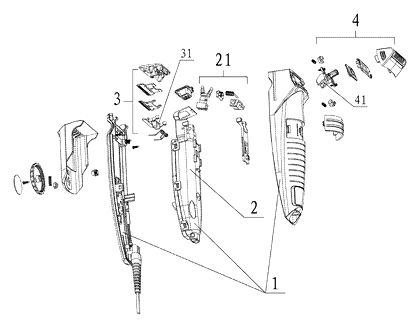
Drawings reproduced from the public patent document for reference.
Frequently asked questions
How does the switch between shaver and shear work?
The device uses a single motor connected to a swinging arm. This arm has posts that slide into Y-shaped grooves on the internal carriages. By moving the external switch, you direct the arm to engage either the shaver carriage or the shear carriage, activating only the selected head.
Is the motor powerful enough for both functions?
The patent specifies a single motor drives both heads. Performance depends on the motor rating chosen during design. Typically, manufacturers select a motor torque sufficient for the heaviest load (usually the shears) to ensure both functions operate effectively.
Can I remove the heads for cleaning?
According to the patent description, the heads are fixed to the fuselage using snap-fit fixture blocks and draw-in groves. They are designed to stay attached to prevent loss, which differs from traditional removable blade systems. Cleaning methods would depend on the final waterproofing level.
What materials are used for the blades?
The patent mentions a stationary knife head and a dynamic cutter head with zigzag engagement. In production, these are typically made from stainless steel. Ceramic coatings or alternative alloys can be specified to enhance sharpness retention.
Does this design support rechargeable batteries?
Yes, the fuselage houses the motor and can accommodate a battery pack. The patent focuses on the mechanical switching, so battery chemistry (NiMH or Li-ion) and capacity are determined during the industrial design phase based on runtime goals.
Why use Y-shaped grooves for the switch?
The Y-groove design allows for precise engagement with minimal movement. The small end locks the drive, while the large end disengages it. This reduces wear on the switching posts and provides a tactile, reliable click when changing modes.
Can this design be made and sold in the US?
The patent was filed in China and is in force there. The public record shows no US counterpart, so this specific Chinese patent does not restrict manufacturing or sales in the United States. However, other US patents may cover similar technologies, so a freedom-to-operate check is advised.
Are you affiliated with the patent owner?
No. IP2M is an independent design and manufacturing service working from the public patent document.
Request a quote
Click Request a Quote below to see our email address - copy it, or open your email app with a ready-made message. Please mention patent CN105459163B in the subject.
Helpful details to include:
- Your company and channel (barber supply brand, Amazon seller, OEM factory)
- Power source preference (corded, rechargeable battery type)
- Target retail price and estimated volume
- Desired features (waterproofing, LED indicators, specific colors)
- Timeline - when you would like samples and the first shipment
You can also reach us at (332) 203-9997.
Page editor: Daniel Chen, Product Research Editor · IP2M
Last updated November 5, 2026. If something on this page looks wrong, email [email protected] and we will check it against the patent.
Interested in building this?
Tell us your target market, quantity and timeline. We reply with options for prototyping, small-batch runs or volume production.
Send your inquiry to
Please put CN105459163B in the subject line and tell us your company, country, estimated quantity and timeline.
Prefer to talk? Call (332) 203-9997.
More product-ready patents
All Bath & Personal Care patents →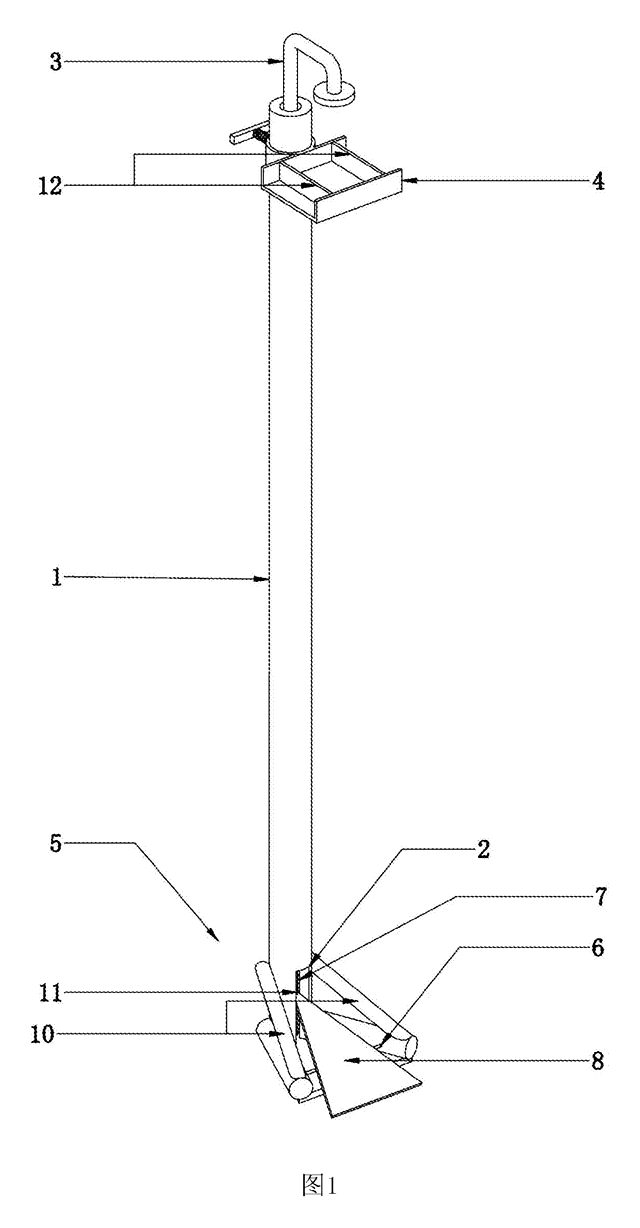
Bath & Personal Care
Foot-Pedal Soap & Sanitizer Dispenser Stand
Hands-free, battery-free dispenser stand - step on a pedal to press the pump of any soap or sanitizer bottle.
Patent CN207461995U
Bath & Personal Care
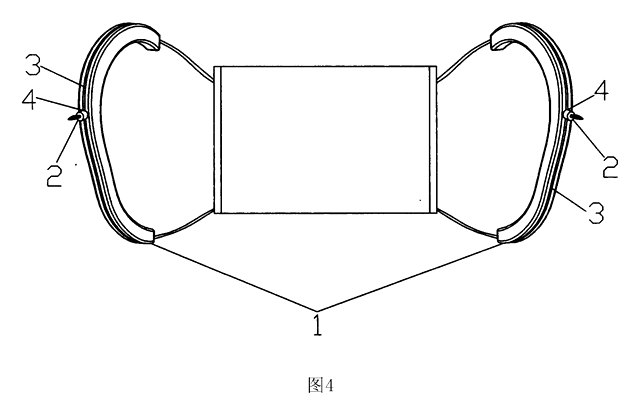
Ear-Shaped Mask Strap Guard with Tension Adjuster
Ear-shaped silicone guard and strap-length adjuster that make ear-loop masks comfortable to wear for long hours.
Patent CN205456233U
Bath & Personal Care
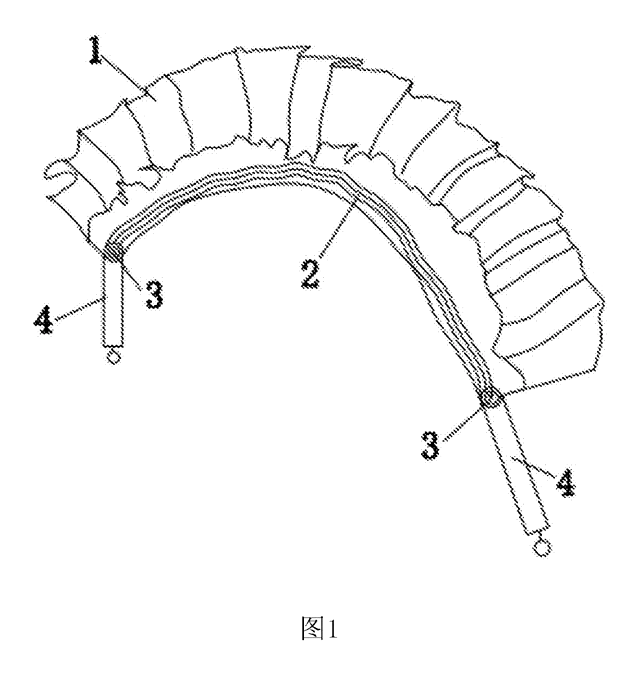
Adjustable-Length Back Scrubber Strap with Push-Button Handles
Back-scrubber strap with push-button handles that set its length and a spring that keeps it taut.
Patent CN207041452U
Bath & Personal Care
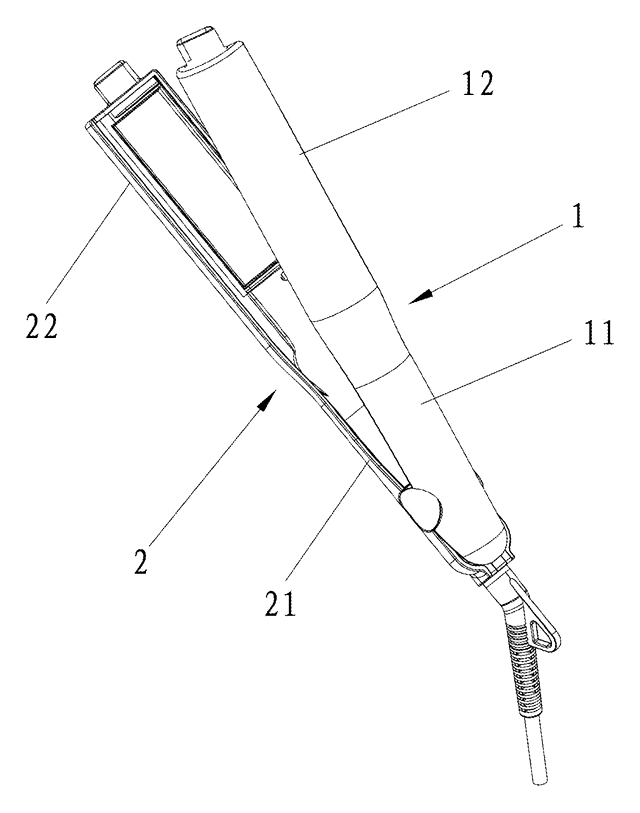
Angled-Plate Hair Straightener
Flat iron with plates twisted 45-75° to the handle, a curling groove and rubber-capped tips.
Patent CN206137462U
Bath & Personal Care
Refillable Lipstick Case with Sealed Snap-In Refill Pods
Reusable twist-up lipstick case; sealed refill pods unlock at the top of the stroke for shade swaps.
Patent CN206909979U
Bath & Personal Care
Quick-Release Toilet Seat Hinge with a Push-Button Two-Strip Latch
Toilet seat hinge: drop the shaft onto a grooved post to lock; one push parks the latch open to lift it off.
Patent CN210370292U
Browse by category
- Apparel & Accessories (41)
- Baby & Kids (27)
- Bags & Luggage (15)
- Bath & Personal Care (28)
- Car Accessories (23)
- Furniture, Bedding & Storage (21)
- Garden & Outdoor (29)
- Health & Wellness (13)
- Home, Kitchen & Cleaning (44)
- Lighting (22)
- Packaging & Containers (11)
- Pet Products (10)
- Phone & Camera Accessories (8)
- Retail Display (23)
- School, Office & Art (32)
- Sports & Recreation (41)
- Tools & Workshop (50)
- Toys & Games (21)
This page is based on the public patent document CN105459163B, assigned to Zhejiang Richuang Liangpin Electrical Appliances Co.,Ltd.. IP2M is an independent manufacturing service and is not affiliated with, endorsed by or licensed by the patent owner. Images marked as concept renderings are illustrations, not photos of an existing product. Patent status information is provided for reference only and is not legal advice; confirm freedom to operate for your market before production. Full disclaimer.