At a glance
| Patent number | CN105459665B (application CN201610079391) |
| Type | China invention patent (发明专利) - protects product shape, structure and method |
| Original title | A kind of name card stand (一种名片台) |
| Patent owner | Guangxi Dazhou International Logistics Co ltd |
| Inventors | Wang Siji |
| Filing date | 2016-02-04 |
| Grant date | 2017-06-06 |
| Status (China) | Lapsed - terminated for non-payment of annual fees (recorded 2024-02-09) |
| Patent family | Chinese filings only - no US, European, Japanese, PCT or other filings listed |
| Cited by | 0 later documents |
| Source | Google Patents (search for CN105459665B) |
What the claims cover, in plain language
Claim 1 - a business card stand comprising a base (1), a retaining ring (2) and rotation seats (3). The retaining ring is fixed in the center of the base and has an outward-opening sliding groove (22). Each rotation seat has a sliding ball (31) at its end, and its bottom rests against the base. The sliding ball passes through an entrance (21) on the retaining ring and engages the sliding groove, connecting the seat to the ring so it can rotate around the ring on the base. The entrance size and shape match the sliding ball. Each rotation seat also features a name card slot (32) with a diagonal opening whose width matches the thickness of a business card (4). There are multiple rotation seats.
This is a simplified reading for orientation only. The legal scope is defined by the exact claim wording in the official Chinese document.
What this means for US production
This patent was filed only in China and has lapsed due to non-payment of annual fees, so it no longer restricts anyone in China either. It has no US or other foreign counterpart.
Two points to settle early:
- Other patents may exist. Desk organizers with rotating or spinning mechanisms are a common category in office supplies, and various US design and utility patents cover spinning card files, rotary displays and modular holders. A freedom-to-operate (FTO) review focusing on the ball-and-groove attachment and the modular entrance feature is recommended before tooling.
- Stability requirements. Because the seats rotate on a central ring while holding cards, the base weight and footprint must be engineered to prevent tipping during rotation.
Customization and manufacturing
What can be customized
| Area | Options |
|---|---|
| Materials | Injection-molded ABS or polystyrene for plastic versions; zinc alloy or aluminum for premium metal versions |
| Base shape and size | Round, square or custom footprint; diameter and weight adjusted for stability |
| Number of seats | Sold in sets (e.g., 10, 20, 30 seats); entrance allows users to buy refills |
| Card slot angle | Diagonal angle adjusted for optimal viewing based on typical desk height |
| Colors and finish | Solid colors, two-tone bases, matte or glossy textures, metallic plating |
| Branding | Pad-printed logo on the base top, laser engraving on metal rings, or debossed marks on seats |
| Packaging | Retail blister pack, gift box with foam insert, or bulk tray for promotional distribution |
Things to plan for (US market)
- California Proposition 65 - if using certain plastics, paints or metal alloys, screening for listed chemicals (like lead in brass or specific phthalates in PVC) is required, with warnings applied if thresholds are exceeded.
- Consumer Product Safety Improvement Act (CPSIA) - if the stand is marketed or packaged in a way that targets children under 12 (e.g., sold as a toy desk accessory), it must meet lead and phthalate limits and third-party testing requirements. Standard adult office supplies generally fall outside CPSIA but remain subject to general CPSC safety rules against sharp edges or choking hazards.
- ASTM D4236 - if the product is categorized alongside art or craft supplies, labeling for chronic health hazards may apply, though standard business card holders typically do not trigger this.
How a project runs
- Inquiry - target material, base dimensions, seat count per unit, branding needs and quantity.
- Design - CAD modeling of the base, retaining ring profile, groove geometry, entrance shape and sliding ball tolerances to ensure rotation without wobble.
- Prototype - 3D printing or CNC machining of sample parts to test the fit at the entrance and verify the card slot width suits the intended cardstock.
- Pilot run - small injection molding or die-casting batch to check shrinkage, surface finish, and assembly consistency. Drop and tip-over tests performed here.
- Production - full-scale molding or casting, finishing, pad printing or engraving, counting and bagging seats, final packing.
Quantities & timeline
Plastic versions require injection molds for the base, the retaining ring (if molded separately) and the rotation seats. Metal versions need die-casting or stamping dies plus polishing and plating fixtures. The sliding ball and groove interface demands tight mold tolerances to ensure rotation without excessive play. Tooling complexity scales with the chosen material. Send us your material preference, base dimensions, seat count, branding artwork, estimated quantity and target price and we will reply with options.
Patent drawings
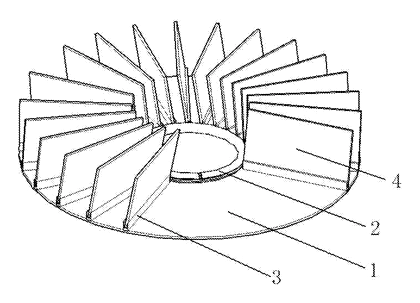
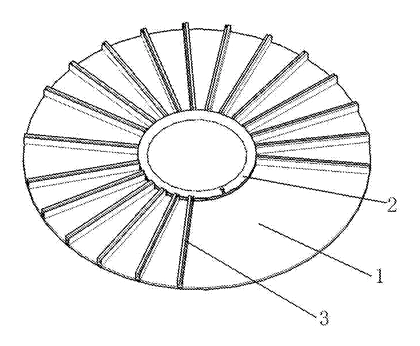
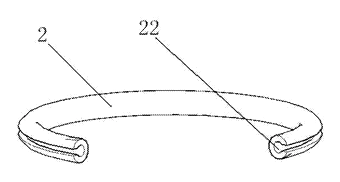
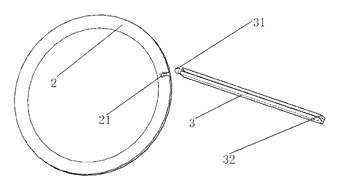
Drawings reproduced from the public patent document for reference.