
Patent CN105619323B
Updated November 6, 2026Motorized Differential Dismantling Tool with Adjustable Handle Grip
Standard extraction tools often lack precise torque control or fail under sustained load. This design integrates a motorized drive with a mechanical clutch for manual fallback, while its unique handle adjusts grip elasticity dynamically. Thermal safety is built into the electrical connection, cutting power before damage occurs.
- China invention patent - active
- No filings outside China
- Automotive service equipment
- Motorized puller, adjustable grip, thermal cutoff
Splat! What let you down?
🔧
Dual Drive Mode
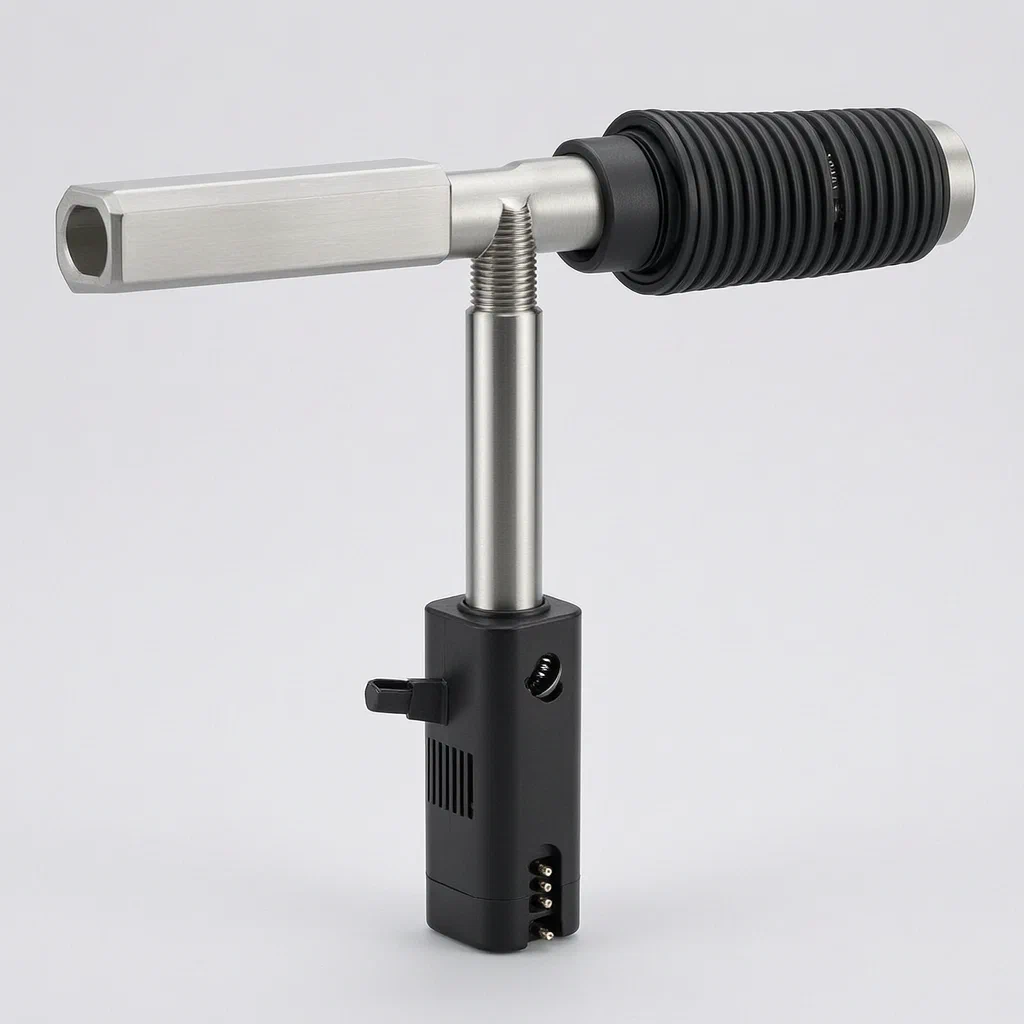
Switch between motorized rotation and manual turning using a mechanical latch and spring system.
✋
Adjustable Grip
Internal springs push friction strips against the rubber sleeve to customize holding tension.
🌡️
Thermal Safety
Overload cylinder expands gas from heat to mechanically disconnect power if the motor overheats.
⚙️
Threaded Engagement
Pull rod threads directly into the differential shaft end for secure extraction leverage.
Bring this product to market
- ✓ Patent review Patent family and legal status reviewed in the relevant jurisdictions.
- 2 Product brief · now How it works, uses and options written up
- 3 Prototype First samples for buyers to review
- 4 Pilot run Small first batch for launch customers
- 5 Volume production Repeat orders at scale
Buyer interest
– of 100 buyers needed to start prototyping
One click, no sign-up. Each vote is one real visitor, and products with the most interest go to prototyping first.
Build team: no members yet. Need a partner, co-funding or skills to build this? Join and we introduce the team once it forms.
Patent Rights & Team Participation
Before joining a development team, participants should ensure they have the necessary rights or authorization to participate in the project.
Participation is generally appropriate where:
- You own the relevant patent rights or have obtained permission or a license from the rights holder.
- The relevant patent rights have expired or have been legally invalidated in the jurisdictions where the planned activities will take place.
- The planned development, manufacturing, and commercialization activities have been independently assessed and do not infringe applicable patent rights in the relevant jurisdictions.
Important: Being located outside a country where a patent is protected does not automatically exempt you from patent infringement risks. Patent rights may apply based on where development, manufacturing, use, sale, or import activities take place.
IP2M does not grant any patent license or authorization through team participation. Joining a project does not provide permission to use, manufacture, or commercialize patented technology.
The problem
Disassembling differentials from automatic transmissions requires significant force and precision. Standard manual pullers rely entirely on user strength, leading to fatigue and inconsistent torque application. Motorized alternatives often lack a safe way to switch back to manual mode if the power fails or if fine-tuning is needed. Furthermore, fixed handles do not accommodate different grip strengths or conditions, and unprotected motors can burn out if jammed, creating a safety hazard in workshop environments.
The solution
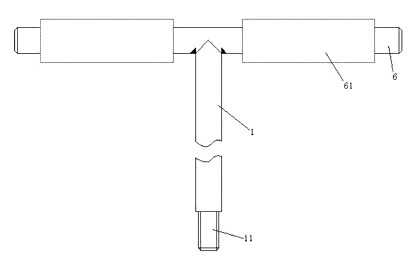
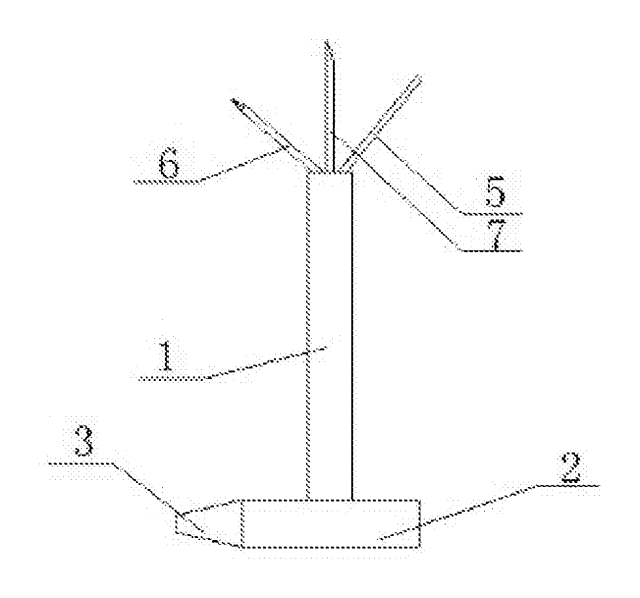
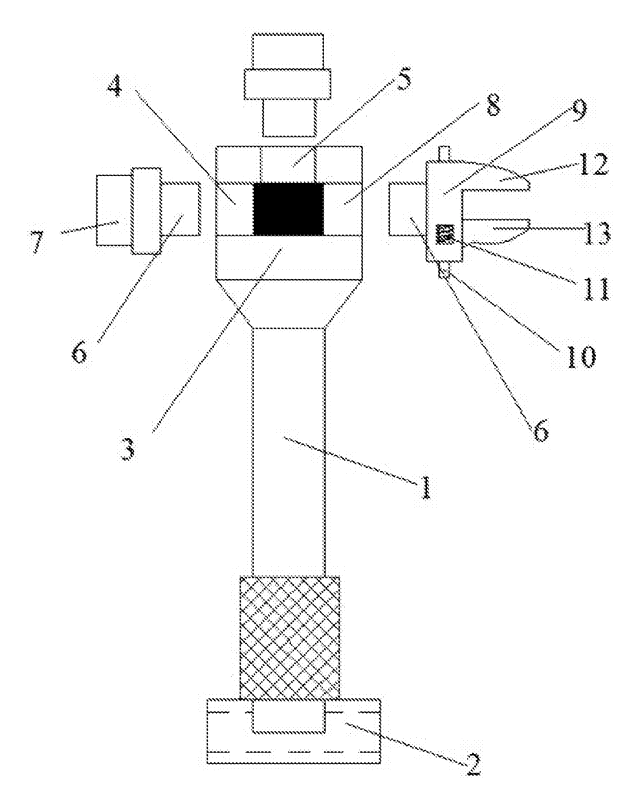
The tool adopts a T-shaped structure consisting of a horizontal handle bar and a vertical pull rod. The bottom of the pull rod has a threaded section that screws into the existing hole on the differential shaft. A motor is mounted on the handle bar. Its shaft connects to the pull rod via a sliding latch mechanism. When the latch is engaged, the motor drives the rod. When a press rod pushes the latch out, the motor disconnects, allowing the user to turn the handle manually. The handle ends are covered with elastic rubber sleeves. Inside, a base tube holds friction strips pushed outward by springs, adjusting the grip’s resistance. The electrical terminal includes a thermal sensor; if the copper foil heats up, gas expansion in a sealed cavity pushes a piston to break the electrical contact, stopping the motor.
Who it is for
- Transmission Remanufacturing Shops: Technicians who perform high-volume differential extractions need a tool that reduces physical strain and prevents motor burnout.
- Automotive Service Equipment Brands: Companies looking to add specialized, safety-focused tools to their professional catalog.
- Heavy Duty Repair Centers: Workshops handling large commercial vehicles where manual extraction is impractical due to weight and rusted components.
- Industrial Hand Tool Manufacturers: Firms seeking to differentiate products with integrated ergonomic adjustments and passive safety mechanisms.
How it works
The main parts
| No. | Part | What it does |
|---|---|---|
| 1 | Pull Rod | Central shaft with a threaded end for engaging the differential. |
| 5, 52 | Motor and Shaft | Provides rotational force; mounted to the handle bar. |
| 6 | Handle Bar | Horizontal crossbar held by the operator; houses controls. |
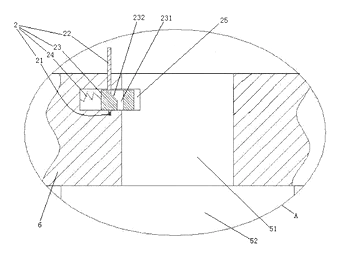
| 21, 22, 23, 24 | Power Switch Mechanism | Press rod (22), Latch (23), and Spring (24) engage/disengage motor. |
| 31, 34 | Electrical Terminal | Copper foil and wiring sleeve; includes thermal disconnect. |
| 35, 36 | Overload Response Cylinder | Gas-filled chamber that moves piston to cut power when hot. |
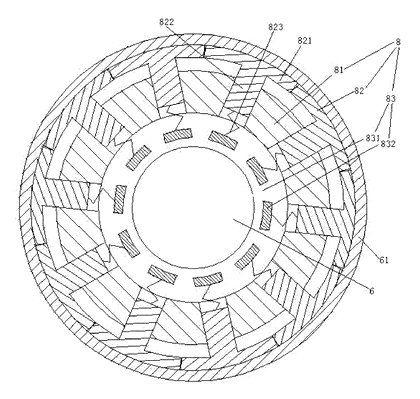
| 7, 8 | Grip Adjustment System | Base tube, friction strips, and internal springs tighten the rubber sleeve. |
Operating steps
- Engage Thread: Screw the threaded tip of the pull rod into the differential shaft hole.
- Select Mode: To use power, press the press rod down. This slides the latch away from the motor shaft, allowing the motor to rotate the pull rod. To use manual mode, release the press rod; the spring forces the latch into the locking hole, connecting the handle directly to the shaft.
- Apply Torque: Rotate the handle. In motor mode, the electric motor turns the shaft. In manual mode, the user turns the entire assembly.
- Safety Check: If the tool jams and the motor draws excess current, the copper foil in the terminal heats up. This heat expands the gas in the adjacent chamber, pushing the piston to separate the conductive segments, cutting power automatically.
Applications
Automatic Transmission Rebuilds
Primary use case for extracting differentials from various automatic transmission models during rebuild processes.
Commercial Vehicle Maintenance
Suitable for larger trucks where standard gear pullers may struggle with torque requirements without assistance.
Fleet Service Operations
Ideal for shops processing multiple units daily, as the adjustable grip reduces hand fatigue over long shifts.
Educational Automotive Programs
Demonstrates mechanical clutches and thermal safety systems in a practical automotive context for students.
Where it is less suitable
- Light Duty Passenger Cars: For small engines, a simple manual gear puller is often faster and cheaper than this complex motorized unit.
- Wet Environments: The exposed mechanical switches and thermal chambers may require additional sealing not described in the patent for heavy water exposure.
- Non-Threaded Shafts: Only works if the differential shaft has a compatible threaded hole for engagement.
Patent & Production
At a glance
| Patent number | CN105619323B (application CN201610091079) |
| Type | China invention patent (发明专利) - protects product structure and method |
| Original title | Differential dismantling tool with handle glove for automatic transmission remanufacturing (自动变速器再制造用设有把手套的差速器拆解工具) |
| Patent owner | Anhui Hangjia Auto Parts Manufacturing Co ltd |
| Inventors | Yu Songlan |
| Filing date | 2016-02-19 |
| Grant date | 2017-12-26 |
| Status (China) | Active - In force in China until at most 2036-02-19 (if annual fees are paid) |
| Patent family | Public record shows Chinese filings only - no US, European, Japanese, PCT or other filings listed |
| Cited by | 1 later document |
| Source | Google Patents (search for CN105619323B) |
What the claims cover, in plain language
Claim 1 defines the core apparatus: a T-shaped tool with a motor, a pull rod with a threaded end, and a handle bar. The motor casing is fixed to the handle. The pull rod connects to the motor shaft. A power switching mechanism allows the user to disconnect the motor from the rod via a press rod, latch, and spring, enabling manual operation. The handle ends have rubber sleeves. An elastic force adjustment mechanism inside uses springs and friction strips to change the grip’s tightness. The electrical terminal includes a thermal overload protection system: a copper foil generates heat which expands gas in a chamber, driving a piston to mechanically break the electrical connection.
Claims 2-4 detail the grip adjustment: a base tube with radial slide bars and friction strips pushed by springs. A conical head and threaded top blocks allow the user to adjust the preload of these springs, tightening or loosening the rubber sleeve’s grip on the hand.
Claims 5-7 specify the thermal disconnect: the overload response cylinder divides into closed and open cavities. The wiring sleeve contains insulating and conductive sections. Sealing rings ensure the integrity of the conductive liquid filling the hole. When heated, the piston moves the sleeve to align the insulating section with the contact point, cutting power.
This is a simplified reading for orientation only. The legal scope is defined by the exact claim wording in the official Chinese document.
What this means for US production
This patent was filed in China and is currently active. Making or selling this specific design in China would require the owner’s permission. However, the public record shows no US counterpart. Therefore, the Chinese patent alone does not restrict manufacturing or selling in the United States.
Two points to settle early:
- Other patents may exist. Automotive service tools are a competitive field. While no foreign patents citing this one were found in the provided data, general search for similar motorized pullers with thermal cutoffs is recommended. A freedom-to-operate (FTO) review should verify that the combination of the mechanical clutch and the gas-expansion thermal breaker does not infringe on existing US utility patents.
- Complexity of Integration. The thermal disconnect mechanism involves precise machining of gas chambers and electrical contacts. Ensuring consistent performance across batches will require strict quality control protocols during production.
Customization and manufacturing
What can be customized
| Area | Options |
|---|---|
| Pull Rod Thread | M10, M12, M14, or custom sizes to match different differential shafts. |
| Motor Power | Voltage (12V/24V/AC) and torque ratings based on target vehicle classes. |
| Grip Material | Rubber hardness (Shore A scale) and texture patterns for the outer sleeve. |
| Latch Design | Adjusting the spring rate of the power switch for different tactile feedback. |
| Housing Finish | Powder coating colors or industrial-grade protective coatings. |
Things to plan for (US market)
- UL 62841 / IEC 62841: Standards for motor-operated hand-held tools. Electrical safety, insulation, and grounding must comply.
- OSHA Guidelines: General workplace safety for hand tools; ergonomic considerations for the adjustable grip.
- RoHS Compliance: Restriction of hazardous substances in electronics (motor windings, copper foils).
- EPA Regulations: Proper disposal guidelines for batteries or electronic components if applicable.
How a project runs
- Inquiry - Define thread specs, motor voltage, and target torque.
- Design - Finalize the thermal chamber geometry and latch tolerances.
- Prototype - Machined samples for functional testing of the clutch and heat cutoff.
- Pilot Run - Validate assembly consistency and electrical safety certification.
- Production - Injection molding for housings, stamping/machining for rods, motor sub-assembly.
Quantities & timeline
Tooling costs are driven by the multi-part mold for the handle and the precision dies for the latch mechanism. Lead times depend on sourcing the specific electric motor and certifying the thermal safety feature. Send us your thread specifications, motor voltage, quantity, and target price and we will reply with options.
Production notes
Tooling and process
Die-cast aluminum is likely used for the motor housing to manage heat dissipation effectively. Stamped steel forms the pull rod and handle bar, requiring heat treatment for durability. Glass-filled nylon injection molding creates the internal latch components to reduce friction and wear. Machining is critical for the threaded tip and the precise bore of the thermal cylinder.
Cost drivers
Material and heat treatment costs typically dominate the metal components. Cutting edge machining for the gas chamber seals adds complexity. Assembly steps are numerous due to the integration of the electrical, mechanical, and pneumatic subsystems. Surface finish requirements for the rubber grip also impact cost.
Prototyping path
We would typically start with a 3D-printed handle to test ergonomics and grip adjustment mechanics. Use machined or off-the-shelf blades for initial torque tests. Heat-treatment trial coupons validate rod strength. Build a functional sample focusing on the thermal disconnect response time. Finally, create tooling for mass production.
What we would change before tooling
We would simplify the thermal chamber assembly if possible, as it involves multiple sealing surfaces. We might increase the wall thickness of the handle bar to prevent creep under high torque. We would also review the spring rate of the latch to ensure it doesn’t fatigue prematurely.
Common failure points
Edge hardness below spec on the pull rod threads could cause stripping. Pivot pin wear in the latch mechanism may lead to accidental disengagement. Seal surface leakage in the thermal chamber could prevent proper gas expansion. Motor mount cracking under vibration is a risk if the housing material is too brittle.
Patent drawings
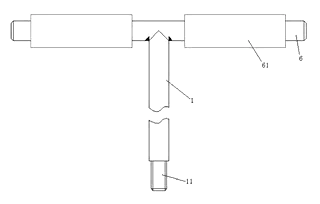
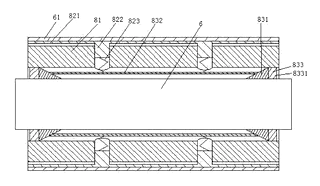
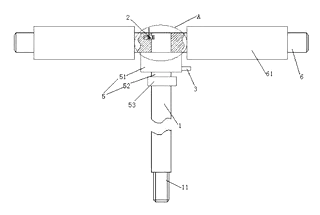
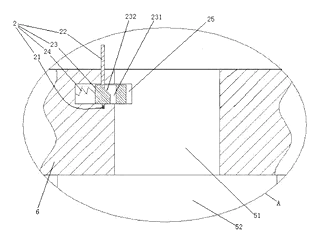
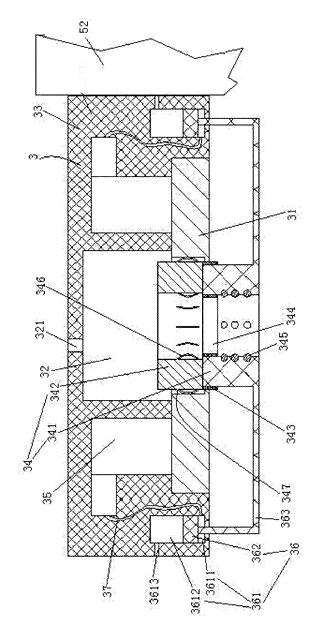
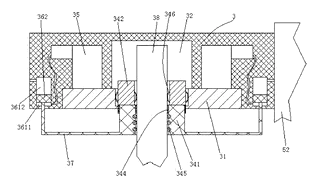
Drawings reproduced from the public patent document for reference.
Frequently asked questions
How does the dual drive mode work?
The tool has a mechanical latch that connects the motor shaft to the pull rod. By pressing a button on the handle, you retract the latch, disconnecting the motor so you can turn the tool by hand. Releasing the button lets a spring push the latch back in, re-engaging the motor for powered rotation.
Why is the handle grip adjustable?
Inside the rubber sleeve, there are friction strips pushed outward by springs. You can adjust the tension of these springs using a threaded mechanism. This allows you to tighten or loosen the grip, accommodating different hand sizes or ensuring the tool stays secure even with oily hands.
What happens if the motor overheats?
The electrical terminal has a passive safety feature. If the current causes the copper contact to heat up beyond a set limit, gas in a nearby sealed chamber expands. This pressure pushes a piston that physically separates the electrical contacts, cutting power to the motor to prevent burning out. It resets automatically once cooled.
Can I use this for all transmission types?
It is specifically designed for automatic transmissions where the differential shaft has a threaded hole for engagement. You must verify that your target transmission model has a compatible thread size and location.
Is the tool difficult to maintain?
The mechanical parts are enclosed within the handle and motor housing. Regular cleaning of the external surfaces and checking the latch movement for smoothness are the primary maintenance tasks. The thermal safety unit is sealed and generally requires no service unless damaged.
Does the motor require a battery?
The patent describes a motor with electrical terminals for connecting to a power source. Depending on the final design, this could be wired for AC mains power or connected to a DC battery pack. The power supply method is determined during the customization phase.
Can this design be made and sold in the US?
The patent is active in China, but the public record shows no US counterpart. Therefore, this specific Chinese patent does not restrict making or selling the tool in the United States. However, automotive tools are a heavily patented field, so we recommend a freedom-to-operate check to ensure no other US patents cover similar thermal cutoff mechanisms or adjustable grips.
Are you affiliated with the patent owner?
No. IP2M is an independent design and manufacturing service working from the public patent document.
Request a quote
Click Request a Quote below to see our email address - copy it, or open your email app with a ready-made message. Please mention patent CN105619323B in the subject.
Helpful details to include:
- Your company and channel (transmission shop, tool brand, distributor)
- Thread specifications for the pull rod
- Motor preferences (voltage, power source)
- Quantity and target price
- Timeline - when you would like samples
You can also reach us at (332) 203-9997.
Page editor: Daniel Chen, Product Research Editor · IP2M
Last updated November 6, 2026. If something on this page looks wrong, email [email protected] and we will check it against the patent.
Interested in building this?
Tell us your target market, quantity and timeline. We reply with options for prototyping, small-batch runs or volume production.
Send your inquiry to
Please put CN105619323B in the subject line and tell us your company, country, estimated quantity and timeline.
Prefer to talk? Call (332) 203-9997.
More product-ready patents
All Tools & Workshop patents →
Tools & Workshop
Rolling Tool Box with Telescoping Step Ladder
Telescoping A-frame ladder with an attached rolling tool box that slides to your working height.
Patent CN206290197U
Tools & Workshop
Folding 3-Handle Wrench Multi-Tool
Folding three-handle wrench multi-tool with magnetic screwdriver bits, saw, file and bottle opener.
Patent CN205290875U
Tools & Workshop
Rolling Auto-Repair Tool Cabinet with Built-In Lights
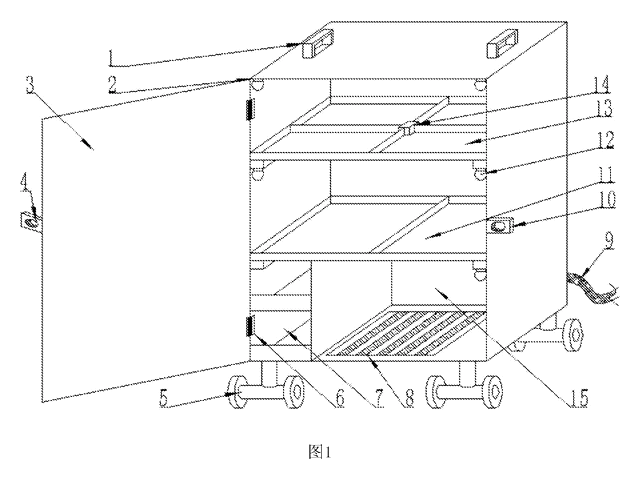
Lockable rolling tool cabinet for car repair with interior lights, a lubricant tray, parts drawers and a tool bay.
Patent CN205989314U
Tools & Workshop
Wide-Opening Folding Bolt Cutter
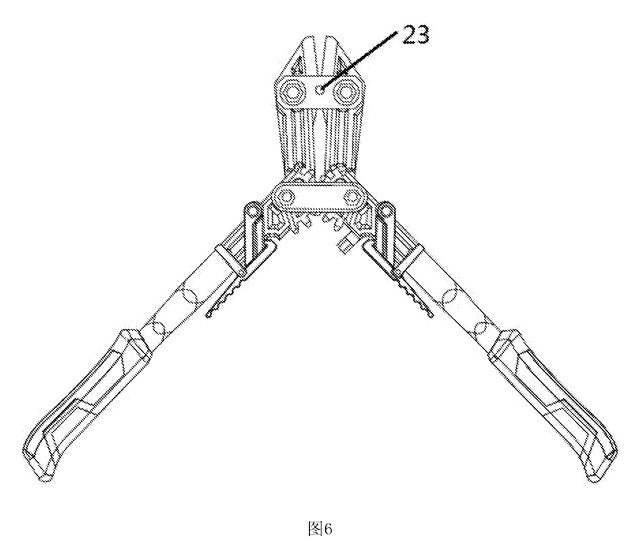
Bolt cutter with linked, gear-meshing handles that open up to 190° and fold in half for storage.
Patent CN207206226U
Tools & Workshop
Nail-Holding Hammer with Fold-Out Drivers
Hammer with a nail-holding T-slot in the head and fold-out drivers stored in the handle.
Patent CN205254927U
Tools & Workshop
Modular Wrench with Screw-On Heads
Wrench handle with a three-way threaded hub for screw-on adjustable and hex heads, plus a pipe sleeve.
Patent CN206216564U
Browse by category
- Apparel & Accessories (45)
- Baby & Kids (28)
- Bags & Luggage (16)
- Bath & Personal Care (30)
- Car Accessories (24)
- Furniture, Bedding & Storage (23)
- Garden & Outdoor (31)
- Health & Wellness (13)
- Home, Kitchen & Cleaning (48)
- Lighting (22)
- Packaging & Containers (12)
- Pet Products (11)
- Phone & Camera Accessories (9)
- Retail Display (24)
- School, Office & Art (34)
- Sports & Recreation (44)
- Tools & Workshop (53)
- Toys & Games (22)
This page is based on the public patent document CN105619323B, assigned to Anhui Hangjia Auto Parts Manufacturing Co ltd. IP2M is an independent manufacturing service and is not affiliated with, endorsed by or licensed by the patent owner. Images marked as concept renderings are illustrations, not photos of an existing product. Patent status information is provided for reference only and is not legal advice; confirm freedom to operate for your market before production. Full disclaimer.