
Patent CN105686206B
Updated October 27, 2026Resilient Support Sole with L-Shaped TPU Supporters and Ribbed Outsole
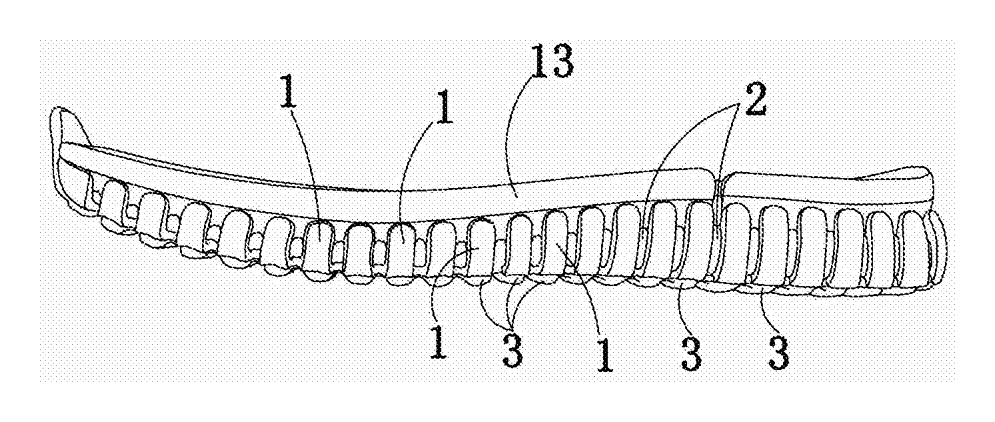
Athletic footwear often faces a trade-off between soft cushioning and firm lateral support. This sole design resolves it by embedding a series of L-shaped flexible supporters along the side wall of the midsole. Made from TPU, each supporter has a vertical part and a transverse part. The vertical parts connect via a top strap fixed to the midsole wall, while the transverse parts sit between the midsole and the outsole. This arrangement allows the midsole to use softer materials while the supporters provide structural resistance against rolling over during movement. A cavity forms between the supporter, the midsole wall, and the ground, allowing the material to deform under impact and spring back to assist forward motion. The outsole is built from two rows of width-direction ribs linked by connection sheets. The gaps between the ribs create drainage channels that widen from front to back, directing water outward. The rib bottoms are arc-shaped with anti-skidding salient points, and the heel features three V-shaped rib groups angled at 60 degrees for multidirectional grip.
- China invention patent - lapsed
- No filings outside China
- Athletic footwear soles
- TPU supporters, RB outsole
Splat! What let you down?
🛡️
Lateral stability
L-shaped TPU supporters along the midsole wall resist rolling over during athletic movements.
💥
Shock absorption
A cavity behind each supporter allows controlled deformation to absorb impact forces.
💧
Water drainage
Outsole ribs form channels that widen toward the heel, directing water away quickly.
🏃
Forward assist
Deformation recovery of the supporters and unified rib pulling force help propel the foot forward.
Bring this product to market
- ✓ Patent vetted China-only family and legal status checked
- 2 Product brief · now How it works, uses and options written up
- 3 Prototype First samples for buyers to review
- 4 Pilot run Small first batch for launch customers
- 5 Volume production Repeat orders at scale
Buyer interest
– of 100 buyers needed to start prototyping
One click, no sign-up. Each vote is one real visitor, and products with the most interest go to prototyping first.
Build team: no members yet. Need a partner, co-funding or skills to build this? Join and we introduce the team once it forms.
The problem
Athletic footwear requires a balance between cushioning impact and maintaining stability. Softer midsole materials absorb shock well but often lack the rigidity needed to prevent the foot from rolling sideways during rapid directional changes. Conversely, stiffening the entire midsole reduces comfort and increases fatigue. Additionally, flat outsoles can trap water underneath, reducing traction on wet surfaces and adding unnecessary weight.
The solution
This sole addresses these issues through a combination of embedded flexible supporters and a structured outsole.
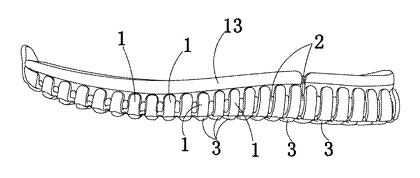
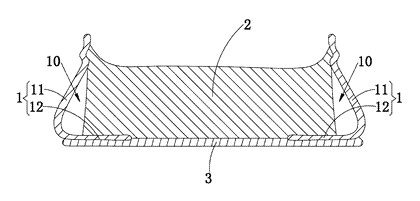
- Flexible supporters are placed along the lower side wall of the midsole. Each supporter is L-shaped, formed by a vertical part extending upward and a transverse part extending inward.
- The vertical parts connect at their upper ends via a connection strap fixed directly to the midsole wall.
- The transverse parts join at their inner ends and are sandwiched securely between the midsole and the outsole.
- A cavity forms between the lower end of the vertical part, the outer end of the transverse part, and the midsole wall. This space allows the supporter to deform fully under stress, absorbing impact, and then recover its shape to return energy.
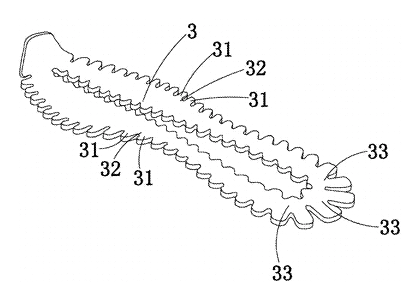
- The outsole consists of two rows of ribs running along the width direction. Gaps between the two rows form a drainage channel that widens from the toe to the heel, pushing water out to the sides.
- Connection sheets link adjacent ribs. Their bottom surfaces form grooves with the ribs, giving the outsole pliable folding endurance. When the sole bends and recovers, the pulling force from each connection sheet aligns in the front-to-back direction, assisting forward propulsion.
Who it is for
- Athletic shoe brands seeking a sole architecture that combines soft cushioning with built-in lateral support without adding heavy external cages.
- Private-label footwear manufacturers producing running or training shoes for retail chains and looking for functional outsole designs.
- Orthopedic and therapeutic shoe makers needing stable platforms that resist ankle inversion while maintaining shock absorption for active users.
- Work boot producers requiring slip-resistant, water-shedding outsoles with durable side-wall reinforcement for uneven terrain.
How it works
The main parts
| No. | Part | What it does |
|---|---|---|
| 1 | Supporter | Flexible TPU element providing lateral support and shock absorption. |
| 10 | Cavity | Space behind the supporter allowing deformation and energy return. |
| 11 | Vertical part | Extends along the sole height; lower end may tilt outward to form a convex portion or curve into an arc shape. |
| 12 | Transverse part | Extends along the sole width; joins the vertical part at an L-shape with a rounded or chamfered corner. |
| 13 | Connection strap | Links the upper ends of all vertical parts and fixes them to the midsole wall. |
| 2 | Midsole | Main cushioning body of the sole. |
| 3 | Negative film (outsole) main body | Flexible RB material base carrying the ribs. |
| 30 | Groove | Formed between the connection sheet bottom and adjacent ribs; depth about 1.5 to 3.5 mm, width about 2.5 to 5 mm. |
| 31 | Rib | Width-direction tread element; width about 4 to 8 mm, arc-shaped bottom with anti-skidding salient points. |
| 32 | Connection sheet | Integrates adjacent ribs; top surface flush with ribs, bottom forms grooves. |
| 33 | V-shaped rib group | Three groups at the heel tail end set at 60-degree angles, openings facing outward. |
| 34 | Drainage channel | Gap between the two rib rows, widening from front to back. |
Operating steps
- Impact phase: As the foot strikes the ground, force compresses the midsole. The cavity behind the L-shaped supporter allows the TPU material to deform, absorbing the shock.
- Stabilization phase: The vertical part resists lateral displacement, preventing the foot from turning on its side. The transverse part anchors the structure between the midsole and outsole.
- Recovery phase: The supporter springs back to its original shape. Simultaneously, the outsole ribs bend at the grooves. Because the connection sheets pull uniformly in the front-to-back direction upon recovery, they generate a forward thrust.
- Traction and drainage: On wet surfaces, water enters the drainage channel between the two rib rows. Because the channel widens toward the heel, water flows quickly backward and exits through the side grooves. The arc-shaped rib bottoms reduce contact area on hard ground while increasing grip on softer surfaces via the anti-skidding salient points.
Applications
Running and jogging shoes
Runners need consistent shock absorption over long distances. The L-shaped supporters allow the midsole to remain soft while the cavities manage repetitive impact forces. The forward-assist recovery of the outsole ribs helps maintain stride efficiency.
Court sports and cross-training
Activities involving rapid lateral cuts require strong edge support to prevent ankle rolls. The vertical parts of the supporters act as a built-in barrier against excessive side-to-side movement. The V-shaped rib groups at the heel provide multidirectional grip during pivots.
Trail and outdoor footwear
Uneven, wet terrain demands reliable water shedding and traction. The widening drainage channel directs mud and water away from the center of the sole. The arc-shaped ribs with salient points adapt to both hard rocks and soft soil.
Occupational and safety footwear
Workers standing or walking on wet industrial floors need slip resistance and fatigue reduction. The structured outsole grooves provide flexibility for all-day wear, while the drainage channels prevent hydroplaning. The lateral supporters add stability when carrying loads.
Where it is less suitable
- Minimalist or barefoot-style shoes - the added thickness of the supporters, cavities, and ribbed outsole conflicts with ultra-thin, ground-feel designs.
- Formal dress shoes - the visible side-wall supporters and aggressive ribbed tread pattern do not match formal aesthetics.
- Winter ice boots - while the ribs offer general slip resistance, dedicated metal studs or specialized ice compounds are required for sheer ice.
Frequently asked questions
How do the L-shaped supporters work?
Each supporter has a vertical part attached to the midsole wall and a transverse part sitting between the midsole and the outsole. They form an L-shape. When the foot lands, a cavity behind the supporter allows it to flex and absorb shock. The vertical part also acts as a barrier to stop the foot from rolling sideways.
What materials are used?
The patent specifies TPU (thermoplastic polyurethane) for the flexible supporters, with a thickness of 0.3 to 1.8 millimeters. The outsole main body is made of RB (rubber) material. The midsole material is not strictly limited in the claims, allowing softer foams to be used since the supporters handle the lateral stability.
Does the outsole drain water?
Yes. The outsole features two rows of ribs running across the width of the shoe. The gap between these two rows forms a drainage channel that gets wider from the toe to the heel. Water flows backward through this channel and exits via grooves between the ribs.
What is the purpose of the grooves on the outsole bottom?
The grooves are formed between the bottom of the connection sheets and the adjacent ribs. They give the outsole pliable folding endurance. When the sole bends during a step and then recovers, the connection sheets pull uniformly in the front-to-back direction, which helps propel the foot forward.
Are there different supporter shapes?
The patent describes two preferred frames for the vertical part: one where the lower end tilts outward to form a convex portion, and another where the vertical part curves laterally into an arc shape. The joint between the vertical and transverse parts can be rounded or chamfered.
How is traction handled at the heel?
The heel tail end of the outsole includes three V-shaped rib groups set at 60-degree angles, with their openings facing outward. These are connected integrally to the rest of the outsole ribs to improve grip in multiple directions and stabilize movement.
How is sizing handled in production?
The patent describes the structure generically. In production, the entire assembly—midsole, supporters, and outsole—must be scaled for each shoe size. Exact dimensions for the cavity, rib widths, and supporter lengths for specific sizes are set in design and confirmed on prototypes.
Can this design be made and sold in the US?
The patent was filed only in China and is lapsed due to non-payment of annual fees, so it does not restrict the design in the US or in China. However, athletic footwear soles are covered by numerous other active US patents held by major sportswear brands, so we recommend a freedom-to-operate check before volume production.
Are you affiliated with the patent owner?
No. IP2M is an independent design and manufacturing service working from the public patent document.
Request a quote
Click Request a Quote below to see our email address - copy it, or open your email app with a ready-made message. Please mention patent CN105686206B in the subject.
Helpful details to include:
- Your company and channel (athletic shoe brand, private-label manufacturer, work boot producer)
- Target shoe type (running, court, trail, occupational)
- Size range and gender/age category
- Material preferences (TPU hardness, RB compound, midsole foam)
- Estimated quantity per size and total
- Timeline - when you would like prototypes and the first shipment
You can also reach us at (332) 203-9997.
Explore this product
Interested in building this?
Tell us your target market, quantity and timeline. We reply with options for prototyping, small-batch runs or volume production.
Send your inquiry to
Please put CN105686206B in the subject line and tell us your company, country, estimated quantity and timeline.
Prefer to talk? Call (332) 203-9997.
More product-ready patents
All Apparel & Accessories patents →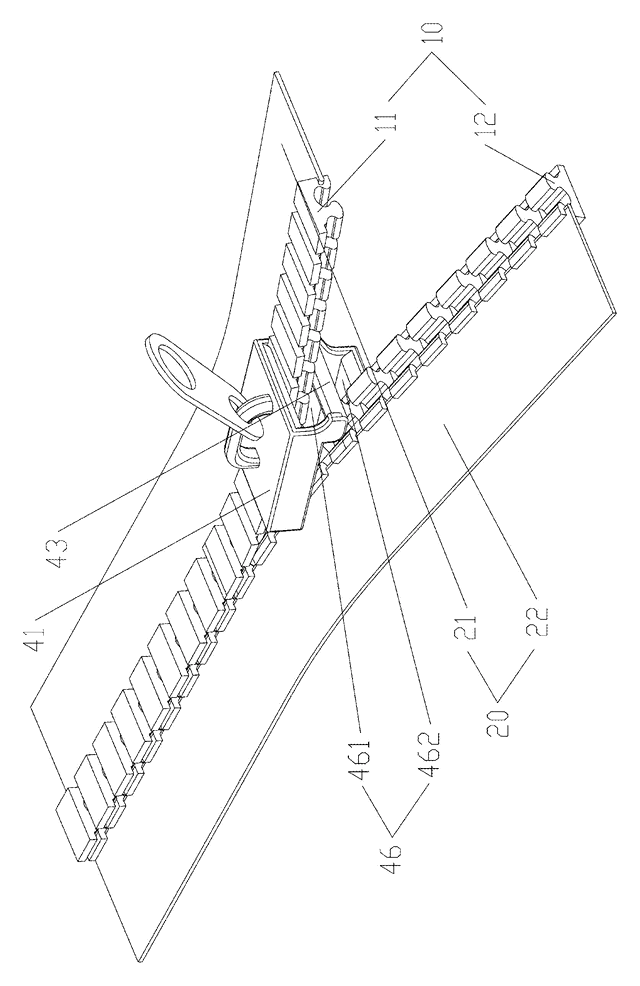
Apparel & Accessories
Stacked Zipper with Teeth That Mesh Top-to-Bottom
Zipper whose two identical tooth rows mesh on top of each other, closed by a simplified slider.
Patent CN205795062U
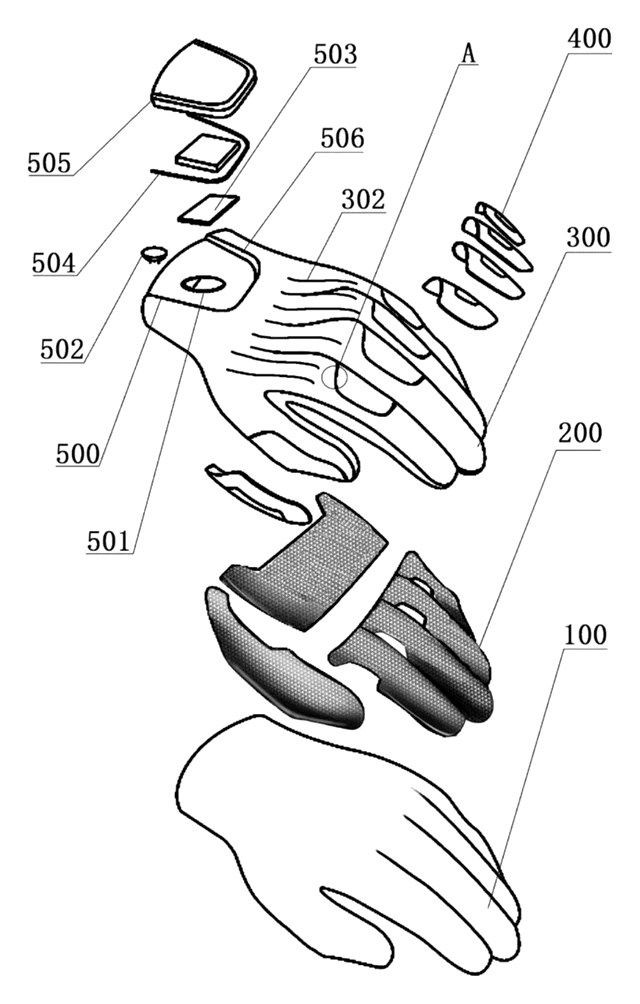
Apparel & Accessories
Impact-Resistant Glove with a 3D-Printed Lattice Layer
Work glove with a 3D-printed lattice impact layer, TPU knuckle guards and a light mounting area.
Patent CN213785583U
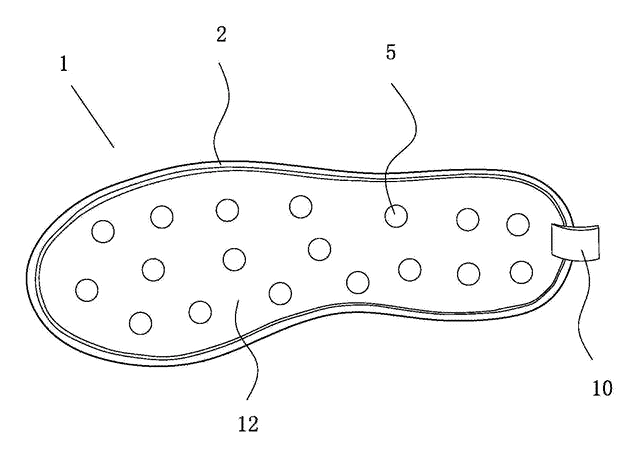
Apparel & Accessories
Massage Insole with Spring-Back Silicone Nubs and a Removable Top Layer
Layered insole: silicone nubs rise through a removable perforated top sheet and sink under each step.
Patent CN208286505U
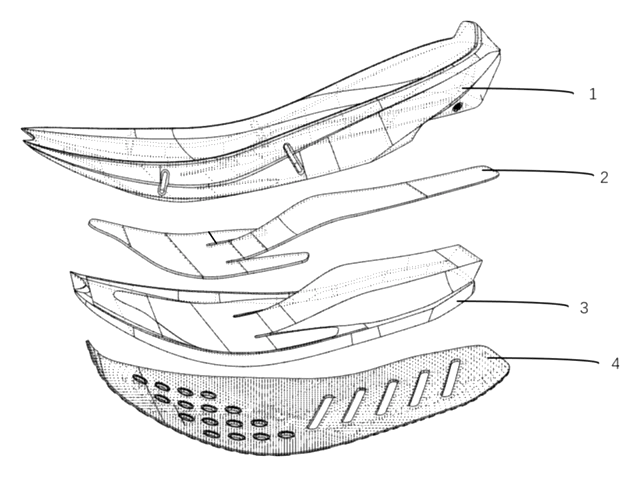
Apparel & Accessories
Heel-Less Carbon Plate Running Shoe Sole for Forefoot Strikers
Running sole for forefoot strikers: no ground-touching heel, winged carbon plate between two midsoles.
Patent CN216723354U
Apparel & Accessories
Waterproof Magnetic Zipper Stop That Snaps the Two Halves Together
Separating-zipper stop with sealed magnets: pin and box snap together one-handed, safe in rain and wash.
Patent CN215075936U
Apparel & Accessories
Left-Right Specific Soccer Socks: Grip for the Plant Foot, Touch Pads for the Kicking Foot
Soccer socks knitted as a left-right pair: grip zones for the plant foot, pads for the kicking foot.
Patent CN212728807U
Browse by category
- Apparel & Accessories (22)
- Baby & Kids (16)
- Bags & Luggage (9)
- Bath & Personal Care (16)
- Car Accessories (10)
- Furniture, Bedding & Storage (12)
- Garden & Outdoor (18)
- Health & Wellness (8)
- Home, Kitchen & Cleaning (24)
- Lighting (12)
- Packaging & Containers (6)
- Pet Products (6)
- Phone & Camera Accessories (4)
- Retail Display (13)
- School, Office & Art (19)
- Sports & Recreation (25)
- Tools & Workshop (27)
- Toys & Games (12)
This page is based on the public patent document CN105686206B, assigned to GRN Group Co Ltd. IP2M is an independent manufacturing service and is not affiliated with, endorsed by or licensed by the patent owner. Images marked as concept renderings are illustrations, not photos of an existing product. Patent status information is provided for reference only and is not legal advice; confirm freedom to operate for your market before production. Full disclaimer.