At a glance
| Patent number | CN105686206B (application CN201610145665) |
| Type | China invention patent (发明专利) - protects product shape, structure and method |
| Original title | Resilient support sole (弹力支撑鞋底) |
| Patent owner | GRN Group Co Ltd |
| Inventors | Lin Tianfu, Chen Zongrong |
| Filing date | 2016-03-15 |
| Grant date | 2018-04-24 |
| Status (China) | Lapsed - terminated for non-payment of annual fees (recorded 2023-03-03) |
| Patent family | Chinese filings only - no US, European, Japanese, PCT or other filings listed |
| Cited by | 0 later documents |
| Source | Google Patents (search for CN105686206B) |
What the claims cover, in plain language
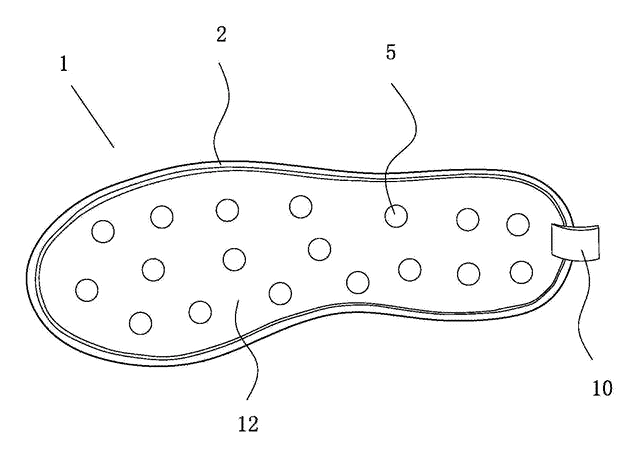
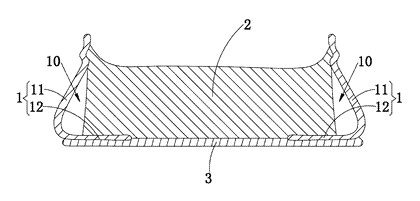
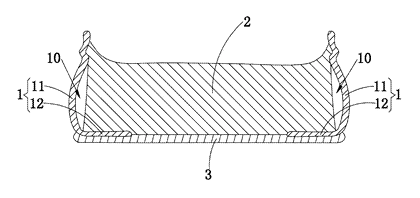
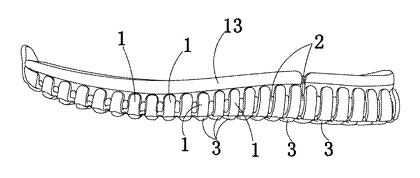
Claim 1 - a resilient support sole including a midsole, an outsole (referred to as a negative film), and a supporting item assembled on the lower side wall of the midsole. The supporting item consists of multiple integrally connected flexible supporters. Each supporter has a vertical part extending along the sole’s height direction and a transverse part extending along the width direction, joined at an L-shape. The upper ends of all vertical parts are connected by a connection strap fixed to the midsole wall. The inner ends of all transverse parts are connected and sandwiched between the midsole and the outsole.
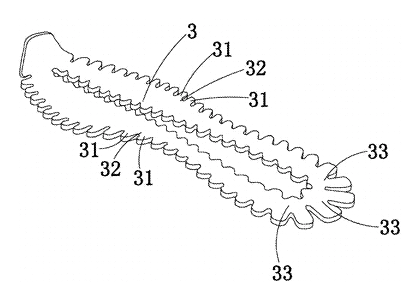
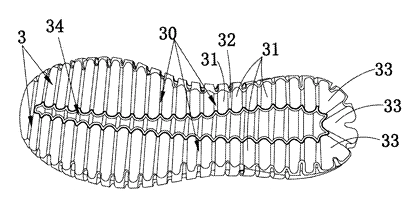
Claim 2 - the lower end of the vertical part tilts outward to form a convex portion. Claim 3 - the joint between the lower end of the vertical part and the transverse part is rounded or chamfered. Claim 4 - the supporters are made of TPU with a thickness of 0.3 to 1.8 millimeters. Claim 5 - the outsole includes a flexible main body made of two rows of ribs extending along the sole length direction. Each row consists of multiple ribs arranged side by side along the width direction, connected by connection sheets. Claim 6 - each rib overlaps and connects with one transverse part of a supporter; the ribs of the two rows correspond left and right. Claim 7 - the top surface of the connection sheet is flush with the ribs, forming a smooth joint face, while the bottom surface forms a groove with adjacent ribs. Claim 8 - the groove depth is 1.5 to 3.5 millimeters, groove width is 2.5 to 5 millimeters, and rib width is 4 to 8 millimeters. Claim 9 - the rib bottom surface is arc-shaped and equipped with anti-skidding salient points. Claim 10 - the heel tail end of the outsole main body features three V-shaped rib groups set at 60-degree angles, opening outwardly, connected integrally via connection sheets to each other and to the main ribs.
This is a simplified reading for orientation only. The legal scope is defined by the exact claim wording in the official Chinese document.
What this means for US production
This patent was filed only in China and is lapsed, so it no longer restricts anyone in China either. It has no US or other foreign counterpart.
Two points to settle early:
- Other patents may exist. Athletic footwear soles incorporating embedded support structures, specific TPU geometries, and articulated outsole ribs are heavily patented by major global sportswear companies. A freedom-to-operate (FTO) review of the L-shaped supporter geometry, the cavity arrangement, and the specific rib-and-groove outsole pattern is needed before tooling.
- Material selection and bonding. The patent specifies TPU for the supporters and RB (rubber) for the outsole. The method of integrating the transverse parts between the midsole and outsole—whether by adhesive, molding over, or mechanical interlocking—must be defined in engineering to ensure durability under repeated flexing.
Customization and manufacturing
What can be customized
| Area | Options |
|---|---|
| Supporter thickness | Within the 0.3 to 1.8 mm range, adjusted for target stiffness |
| Supporter profile | Convex lower end or curved arc-line shape |
| Outsole rib dimensions | Width (about 4-8 mm), groove depth (about 1.5-3.5 mm) and width (about 2.5-5 mm) to be confirmed in design |
| Materials | TPU grade for supporters; RB compound hardness for outsole; midsole foam density |
| Heel traction | Angle and spacing of the V-shaped rib groups |
| Sizing | Full size runs for men, women or youth, requiring graded molds |
Things to plan for (US market)
- CPSC regulations - if the soles are used in children’s footwear, compliance with applicable lead and phthalate limits under CPSIA is required.
- California Proposition 65 - rubber compounds, TPU, adhesives, and dyes must be screened for listed chemicals.
- ASTM F2413 - if the sole is adapted for occupational safety footwear, it must meet relevant impact, compression, or slip-resistance standards.
How a project runs
- Inquiry - target market, shoe type, sizing, material preferences and quantity.
- Design - CAD modeling of the midsole wall, supporter geometry, cavity volume, and outsole rib layout.
- Prototype - 3D printing or soft tooling of the supporters and outsole to test flex, drainage, and lateral stability.
- Pilot run - mold fabrication for a sample size range; physical testing for abrasion, slip resistance, and bond strength.
- Production - injection molding for TPU supporters, compression or injection molding for the RB outsole, and assembly with the midsole.
Quantities & timeline
Each shoe size requires its own set of molds for the midsole, the TPU supporting item, and the outsole. Grading a full size run involves significant tooling investment. Material curing times for RB rubber and cooling cycles for TPU dictate daily output rates. Certification tests for slip resistance and chemical compliance add to the pre-production schedule. Send us your target shoe type, size range, material preferences, estimated quantity and performance requirements and we will reply with options.
Patent drawings
Drawings reproduced from the public patent document for reference.