At a glance
| Patent number | CN105751782B (application CN201610230017) |
| Type | China invention patent (发明专利) - protects product shape, structure and method |
| Original title | All-in-one plotter (一体化绘图仪) |
| Patent owner | Yantai Nanshan University |
| Inventors | Jin Hongyan, Ju Xiaojun, Wang Meichun, Ren Qingping, Wang Jiaming |
| Filing date | 2016-04-14 |
| Grant date | 2017-03-01 |
| Status (China) | Lapsed - terminated for non-payment of annual fees (recorded 2019-04-05) |
| Patent family | Chinese filings only - no US, European, Japanese, PCT or other filings listed |
| Cited by | 0 later documents |
| Source | Google Patents (search for CN105751782B) |
What the claims cover, in plain language
Claim 1 describes the core assembly: two bases connected by a first polished rod shaft with a slider. A second polished rod shaft hinges to the first through that slider and features a sliding groove. An M rod sits below the sliding groove, hinged to it via a sliding block. An N rod runs parallel beneath the M rod, hinged to it through a shaft sleeve. One end of the N rod carries a chalk support frame. Two connecting rods are movably joined together, with one end mating with the sliding groove and the other end mating with a horizontal protruding end of the shaft sleeve.
Claims 2 through 10 add specific details: suction cups on the base bottoms; hollow metal rods of about 8 mm diameter forming the shafts; free stretching and rotation of the sliding grooves in their horizontal planes; a rolling steel ball under the N rod at the sleeve hinge; equal vertical distances from the base bottom and the N rod bottom to the second shaft; scales marked on the shafts and chutes; a chalk support frame containing a sleeve, a spring and a chalk cover; angle plates with scales above the slider and sliding block; and six adjustment knobs located at the various hinge and sliding joints.
This is a simplified reading for orientation only. The legal scope is defined by the exact claim wording in the official Chinese document.
What this means for US production
This patent was filed only in China and is lapsed due to non-payment of annual fees, so it no longer restricts anyone in China either. It has no US or other foreign counterpart.
Two points to settle early:
- Other patents may exist. While no foreign patents cite this document, mechanical drawing aids and linkage-based plotters have a long history of patent filings worldwide. A freedom-to-operate (FTO) review covering the specific connecting-rod ellipse mechanism and the suction-cup base arrangement is recommended before investing in tooling.
- Chalk dust management. The design relies on dry chalk. If adapting the chalk support frame for modern dry-erase markers or low-dust alternatives, the sleeve and spring dimensions will need re-engineering, and marker compatibility should be tested early.
Customization and manufacturing
What can be customized
| Area | Options |
|---|---|
| Rod length | Sized for different board widths; to be confirmed in design |
| Material | Hollow metal rods as described, or alternative alloys and plastics for weight reduction |
| Base mounting | Suction cups for smooth boards, or magnetic bases for steel whiteboards |
| Drawing holder | Spring-loaded chalk sleeve, or adapted clamp for dry-erase markers |
| Scales | Metric, imperial, or custom markings on the shafts and angle plates |
| Color and finish | Powder coating or anodizing for classroom visibility and wear resistance |
Things to plan for (US market)
- ASTM F963 - if marketed as a toy or educational kit for children under 14, the product must meet the US toy safety standard, including mechanical and physical tests for sharp edges and small parts.
- CPSC 16 CFR 1501 - small parts regulation applies if any detachable component, such as the adjustment knobs or chalk cover, fits entirely within the test cylinder and is intended for young children.
- California Prop 65 - metal finishes, plastic knobs and chalk materials must be screened for listed substances.
- Labeling requirements - educational products sold to schools often require age grading and choking hazard warnings on the packaging.
How a project runs
- Inquiry - target user, board size, drawing medium and quantity.
- Design - rod lengths, hinge tolerances, spring force for the chalk frame, and knob placement.
- Prototype - machined or 3D-printed samples to verify the ellipse linkage and suction cup hold.
- Pilot run - small batch for classroom testing, checking scale readability and joint stiffness.
- Production - metal cutting, bending, machining of hinges, injection molding for knobs and sleeves, assembly and packaging.
Quantities & timeline
The metal rods require cutting and drilling dies, the suction cups and plastic components need injection molds, and the springs for the chalk frame are sourced or wound to specification. Scale printing or engraving on the rods adds a processing step. Certification tests for school supplies take additional weeks depending on the lab schedule. Send us your target board size, preferred drawing medium, estimated quantity and timeline and we will reply with options.
Patent drawings
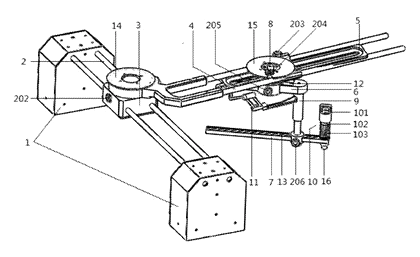
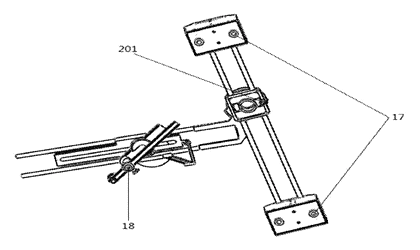
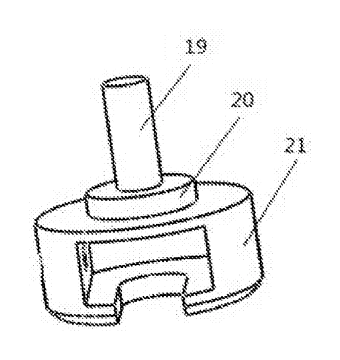
Drawings reproduced from the public patent document for reference.