
Patent CN105815903B
Updated October 29, 2026Windproof Sunshade Umbrella with Rotating Overlapping Blades
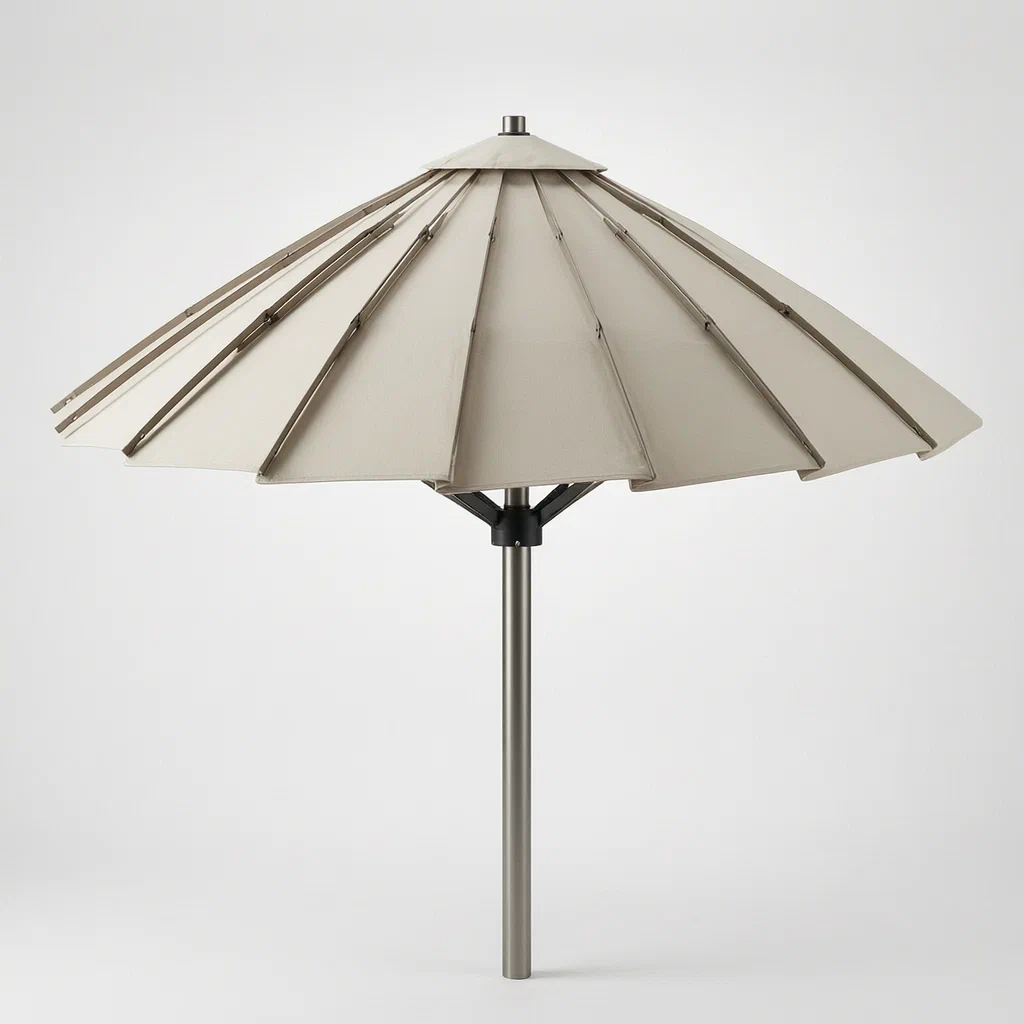
Large sunshade umbrellas catch wind like sails, pushing the canopy upward and threatening to tip the base or tear the fabric. This design replaces the single-piece canopy with multiple independent blades arranged at an angle, much like fan blades. Two sets of auxiliary support rods hold each blade so that its tail sits slightly above or below the head of the next blade, leaving a narrow longitudinal gap between them. When wind enters the underside of the canopy, it flows through these gaps and pushes the angled blades sideways rather than straight up, causing the whole canopy to spin smoothly around the main rod on a bearing. A telescopic locking mechanism on the second group of support rods lets the operator control how wide the gaps open. Connecting belts between the blades and an optional skirt joining their front ends keep the assembly together while still allowing rotation.
- China invention patent - lapsed
- No filings outside China
- Patio & outdoor shade
- Rotating canopy, bearing-mounted pole, independent blades
Splat! What let you down?
🌀
Rotating canopy
A bearing between the fixed rod and rotating rod lets the entire umbrella surface turn when wind hits the underside.
🍃
Independent blades
Multiple separate blade surfaces are arranged obliquely, overlapping longitudinally outward from the center.
↕️
Staggered gaps
The tail of one blade and the head of the next are offset vertically, forming a longitudinal gap for wind to pass through.
🔒
Telescopic lock
A locking mechanism on the second set of support rods controls the opening or closing of the gaps between blades.
Bring this product to market
- ✓ Patent vetted China-only family and legal status checked
- 2 Product brief · now How it works, uses and options written up
- 3 Prototype First samples for buyers to review
- 4 Pilot run Small first batch for launch customers
- 5 Volume production Repeat orders at scale
Buyer interest
– of 100 buyers needed to start prototyping
One click, no sign-up. Each vote is one real visitor, and products with the most interest go to prototyping first.
Build team: no members yet. Need a partner, co-funding or skills to build this? Join and we introduce the team once it forms.
The problem
Standard sunshade umbrellas use a continuous piece of fabric stretched over ribs. When wind catches the underside of this large surface, it generates a strong upward lifting force. That force transfers directly to the pole and base, which can cause the umbrella to tilt, slide across a deck, or tip over entirely. Vent holes cut into a regular canopy relieve some pressure, but they reduce the shaded area and do not change the fundamental aerodynamics of a flat sail. In commercial settings such as restaurant patios or pool decks, staff must repeatedly close umbrellas whenever wind picks up, interrupting service and requiring constant attention.
The solution
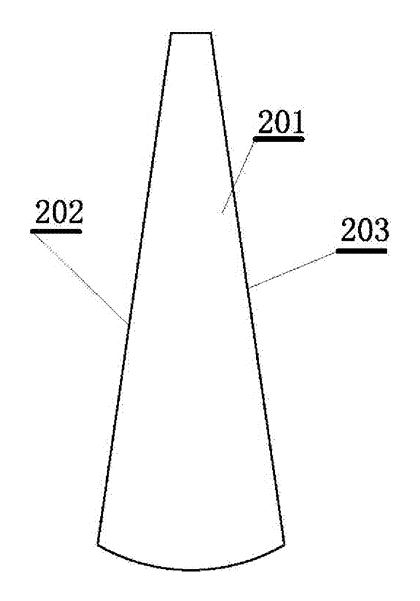
This design addresses the lifting problem by reshaping the canopy itself. Instead of one continuous sheet, the umbrella surface is made of several independent blade surfaces. Each blade is held at an oblique angle along the circumference, similar to the blades of a fan. The blades are stretched outward from the center by two groups of auxiliary support rods. As they extend, each blade overlaps the next one longitudinally. Crucially, the tail edge of one blade and the head edge of the adjacent blade are staggered vertically—one sits slightly higher than the other—so that a longitudinal gap remains between them.
When wind blows into the inner side of the umbrella surface, it passes through these gaps. Because the blades are angled, the wind exerts a rotational push rather than a vertical lift. The main support rod is split into a fixed lower rod and a rotating upper rod connected by a bearing. The canopy, together with the auxiliary support rods and the sliding sleeve, is free to rotate around the central axis. This rotation dissipates the wind energy continuously, keeping the umbrella stable without needing to be closed. A telescopic locking mechanism on the second group of support rods allows the user to adjust or close the gaps depending on conditions. Optional connecting belts between the blades and a skirt linking their front ends hold the assembly together while preserving the ability to spin.
Who it is for
- Patio furniture brands looking to add a wind-resistant umbrella to their outdoor collections without relying solely on heavy bases.
- Hospitality wholesalers supplying hotels, resorts, and restaurants where sudden gusts force staff to close umbrellas frequently.
- Amazon sellers in the garden category seeking a differentiated shade product with a clear mechanical advantage over standard vented canopies.
- Commercial shade distributors providing equipment for public pools, parks, and outdoor event spaces where stability matters daily.
How it works
The main parts
| No. | Part | What it does |
|---|---|---|
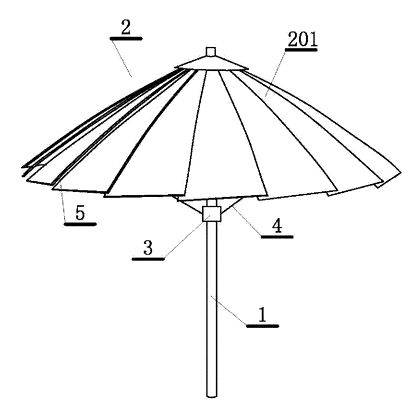
| 1 | Main support rod | Divided into a fixed rod and a rotating rod joined by a bearing. |
| 2 | Sliding sleeve | Slides up and down along the main support rod to stretch or fold the canopy. |
| 3 | First group of auxiliary support rods | Upper support ends connect to the blade head of each leaf surface; lower ends connect to the sliding sleeve. |
| 4 | Second group of auxiliary support rods | Support ends connect to the blade tail of the adjacent leaf surface; lower ends connect to the first group of rods. Includes a telescopic locking mechanism. |
| 5 | Blade surfaces | Independent leaves arranged obliquely, overlapping longitudinally outward from the center. |
| 6 | Disc | Fixed at the top of the main support bar by a bearing; rotates around the rod and connects to the blades via ribs. |
| 7 | Connecting belt | Arranged between two blade surfaces to link them. |
| 11 | Skirt | Connects the front ends of the multiple independent blade surfaces as a whole. |
Operating steps
- Open the umbrella - push the sliding sleeve upward along the main support rod. The first and second groups of auxiliary support rods extend outward, stretching the independent blade surfaces.
- Lock the gaps - engage the telescopic locking mechanism on the second group of support rods to set the desired gap width between the staggered blade tails and heads.
- Wind response - if wind enters the inner side of the canopy, it pushes against the oblique blades. The disc at the top and the sliding sleeve allow the entire umbrella surface and support rods to rotate smoothly around the main support rod on the bearing.
- Close the umbrella - release the locking mechanism, pull the sliding sleeve down, and the blades fold back together.
Applications
Restaurant and cafe patios
Outdoor dining areas experience shifting breezes throughout the day. Staff often waste time running to close umbrellas when gusts arrive. This design allows the canopy to spin harmlessly, keeping tables shaded and service uninterrupted.
Pool decks and beach clubs
Guests relax under umbrellas near water where wind channels are common. A rotating canopy prevents the sudden upward jerking that can knock over lounge chairs or drop shade onto swimmers.
Residential gardens and decks
Homeowners who leave patio umbrellas open during mild weather benefit from a self-adjusting canopy. The staggered blades let air pass through, reducing the chance of the umbrella tipping and damaging nearby planters or furniture.
Outdoor events and markets
Vendors setting up temporary stalls need shade that handles changing wind directions. The bearing-mounted rotation means the umbrella adjusts automatically without manual repositioning of the entire stand.
Public parks and recreation areas
Municipalities installing permanent shade structures require durable solutions. The independent blade design distributes wind loads across the rotating mechanism rather than concentrating stress on a single fabric panel.
Where it is less suitable
- Heavy rain protection - the longitudinal gaps between blades are designed for airflow, meaning rain will pass through unless the gaps are fully closed by the locking mechanism, making it primarily a sunshade.
- Compact portable beach umbrellas - the bearing, two sets of support rods, and individual blades add mechanical complexity compared to simple folding stick umbrellas.
- Enclosed winter use - this is an open-air sunshade design; it does not include sidewalls or heating elements for cold-weather enclosures.
Frequently asked questions
How does this umbrella handle wind differently from a vented canopy?
Instead of a single piece of fabric with a hole cut in the top, this design uses multiple independent blades arranged at an angle. The blades overlap with staggered gaps. When wind hits the underside, it pushes the angled blades sideways, causing the entire canopy to rotate around the central pole on a bearing rather than lifting straight up.
Do the blades provide full shade if there are gaps between them?
The blades overlap longitudinally outward from the center. The gaps are formed by staggering the tail of one blade vertically against the head of the next. The telescopic locking mechanism on the support rods allows the user to adjust or close these gaps depending on the sun angle and wind conditions.
What keeps the canopy from spinning constantly in light breezes?
The rotation relies on wind entering the inner side of the canopy and catching the oblique blades. In very light air, the friction of the bearing and the weight of the blades keep the canopy relatively still. The locking mechanism also helps stabilize the structure when full rotation is not needed.
What materials are used for the blades and frame?
The patent describes the mechanical structure—independent blades, support rods, bearing, and sliding sleeve—but does not specify exact materials. Fabrics, metals, and plastics are set in design and confirmed on prototypes based on the intended market and load requirements.
How is the umbrella opened and closed?
A sliding sleeve moves up and down along the main support rod. Pushing it up extends the two groups of auxiliary support rods, which stretch the blades outward. Pulling it down folds the blades back together.
Can the height be adjusted?
The patent describes the sliding sleeve moving along the main support rod to open and close the canopy. Additional height adjustment mechanisms for the fixed rod section are set in design based on buyer requirements.
Is it difficult to assemble?
The core mechanism involves inserting the rotating rod into the fixed rod with the bearing, attaching the sliding sleeve, and connecting the two groups of support rods to the blades. Assembly steps and hardware are confirmed during the prototyping phase.
Can this design be made and sold in the US?
The patent was filed only in China and is lapsed due to non-payment of annual fees, so it does not restrict the design in the US or in China. Wind-resistant umbrellas may be covered by other US patents - see Patent & Production - so we recommend a freedom-to-operate check before volume production.
Are you affiliated with the patent owner?
No. IP2M is an independent design and manufacturing service working from the public patent document.
Request a quote
Click Request a Quote below to see our email address - copy it, or open your email app with a ready-made message. Please mention patent CN105815903B in the subject.
Helpful details to include:
- Your company and channel (patio furniture brand, hospitality wholesaler, Amazon seller, commercial distributor)
- Canopy diameter and preferred blade count
- Material preferences for blades and frame
- Base type required for your market
- Estimated quantity and target price
- Timeline - when you would like samples and the first shipment
You can also reach us at (332) 203-9997.
Explore this product
Interested in building this?
Tell us your target market, quantity and timeline. We reply with options for prototyping, small-batch runs or volume production.
Send your inquiry to
Please put CN105815903B in the subject line and tell us your company, country, estimated quantity and timeline.
Prefer to talk? Call (332) 203-9997.
More product-ready patents
All Garden & Outdoor patents →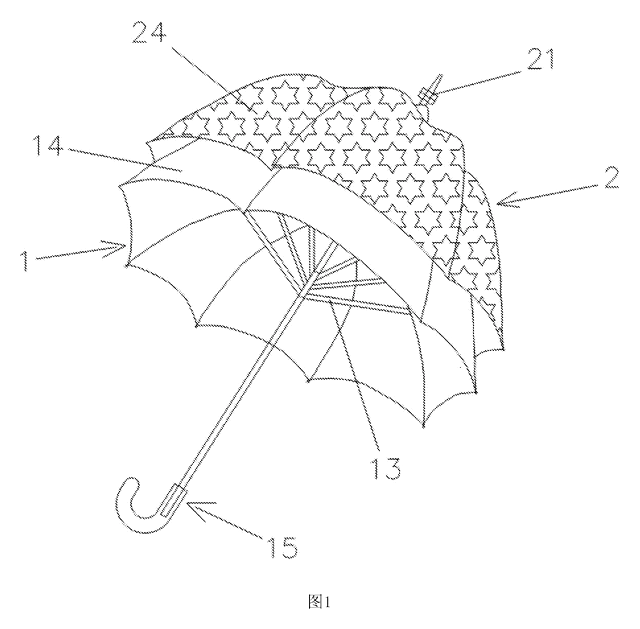
Garden & Outdoor
2-in-1 Parent & Child Umbrella
Full-size umbrella with a nested smaller umbrella on top - a rotating decorative layer that detaches into a kid-size umbrella.
Patent CN205611962U
Garden & Outdoor
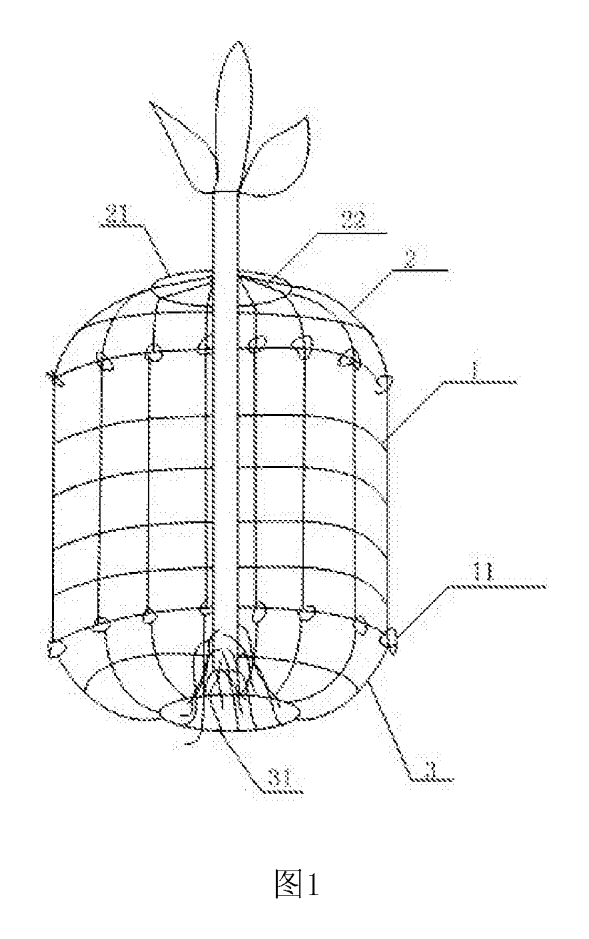
Wire-Mesh Tree Root & Trunk Guard Against Rodents
Three-part wire-mesh guard that protects the roots and lower trunk of young trees from burrowing and gnawing animals.
Patent CN206808261U
Garden & Outdoor
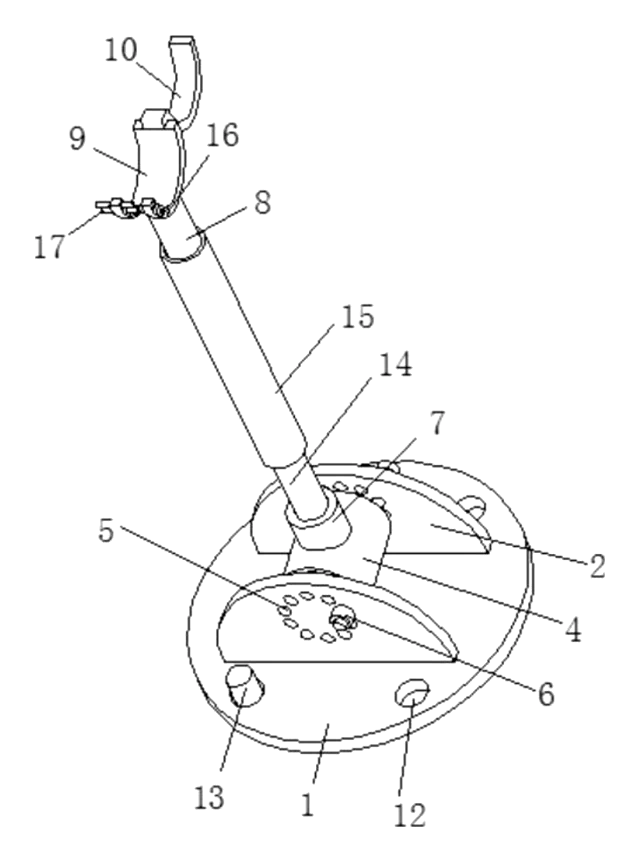
Adjustable-Angle Tree Support Prop
Tree prop with a pinned base, angle-locking hinge, twist-adjust tube and a locking trunk ring.
Patent CN208370491U
Garden & Outdoor
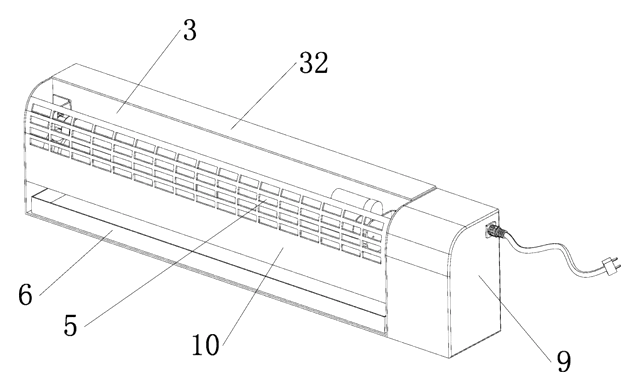
Self-Renewing Glue-Roller Mosquito Trap
UV insect trap with a glue roller that re-coats itself and scrapes the catch into a tray - no glue boards.
Patent CN217038569U
Garden & Outdoor
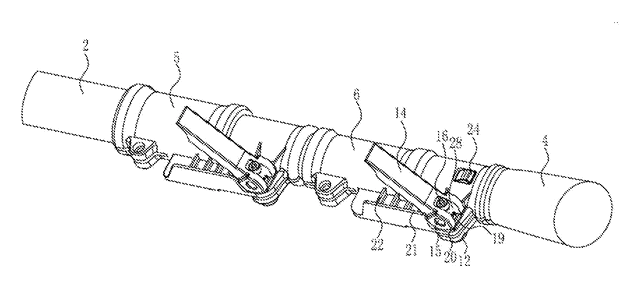
Cam-Lock Telescopic Pole for Garden Power Tools
Telescopic pole for garden power tools with cam-lever locks and a spring-button, tear-drop head socket.
Patent CN205812889U
Garden & Outdoor
Mosquito Fan That Listens for Mosquitoes Before It Sprays
Fan with a scanning microphone dish that mists repellent only when it hears mosquitoes.
Patent CN208708542U
Browse by category
- Apparel & Accessories (22)
- Baby & Kids (16)
- Bags & Luggage (9)
- Bath & Personal Care (16)
- Car Accessories (10)
- Furniture, Bedding & Storage (12)
- Garden & Outdoor (18)
- Health & Wellness (8)
- Home, Kitchen & Cleaning (24)
- Lighting (12)
- Packaging & Containers (6)
- Pet Products (6)
- Phone & Camera Accessories (4)
- Retail Display (13)
- School, Office & Art (19)
- Sports & Recreation (25)
- Tools & Workshop (27)
- Toys & Games (12)
This page is based on the public patent document CN105815903B, assigned to Individual. IP2M is an independent manufacturing service and is not affiliated with, endorsed by or licensed by the patent owner. Images marked as concept renderings are illustrations, not photos of an existing product. Patent status information is provided for reference only and is not legal advice; confirm freedom to operate for your market before production. Full disclaimer.