
Patent CN105962616B
Updated October 27, 2026Adaptive Cup Brush with Expandable Bristle and Sponge Frame
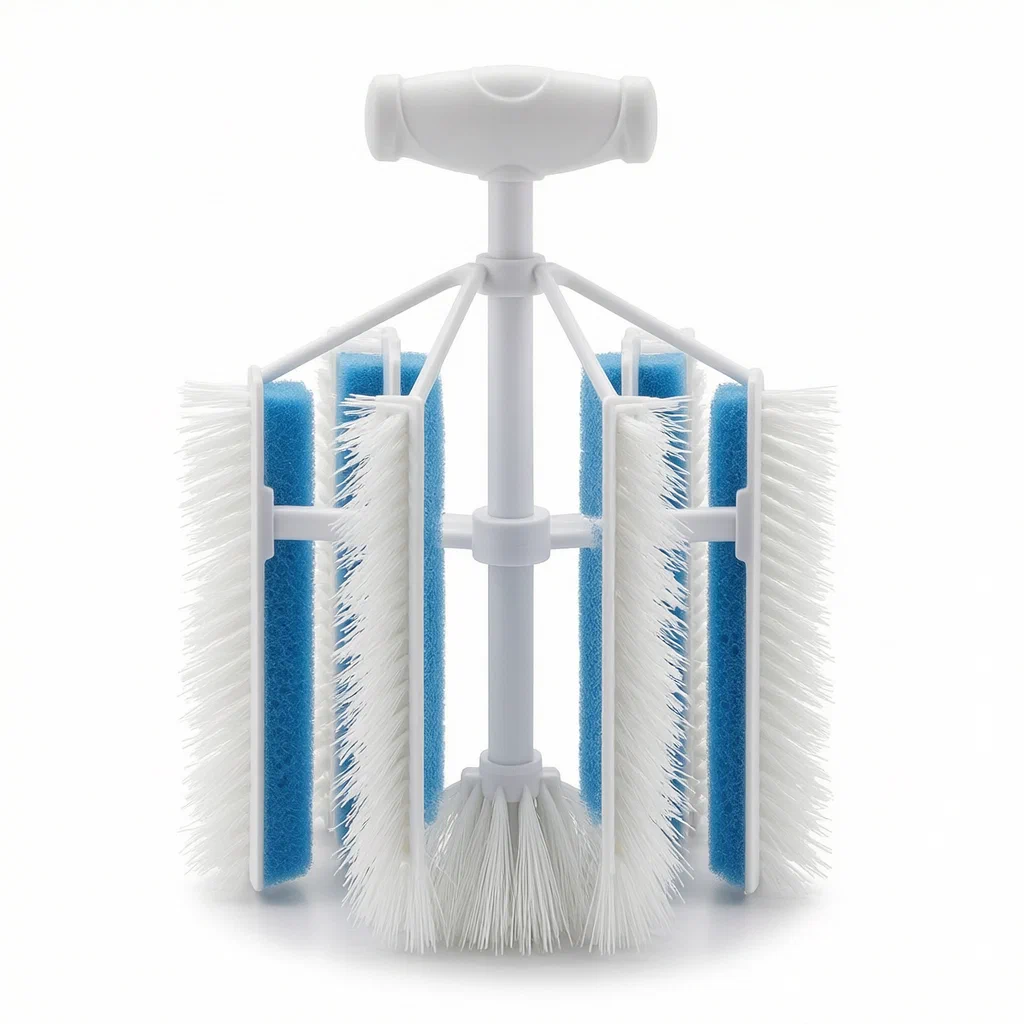
Standard cup brushes come in fixed diameters, so buyers need multiple sizes to cover narrow tumblers and wide mugs. This adaptive design uses a central shaft with an upper buckle and a lower buckle that hold several support rods and horizontal brush bars. Vertical brush strips connect these rods and bars, and each strip carries bristles and a sponge brush on its front side. A fixing ring sits on the shaft between the two buckles. Pressing buckles on this ring engage magnetic circular catching grooves on the rear side of the vertical strips. By operating the pressing buckles, the user changes how far the vertical strips sit from the shaft, expanding or contracting the whole frame to match the inside diameter of the cup. The patent describes that this arrangement allows the brush to adapt to cups of different bores while cleaning the cup wall and bottom.
- China invention patent - in force
- No filings outside China
- Kitchen cleaning tools
- Bristles, sponge, magnetic catching grooves
Splat! What let you down?
🔄
Adjustable diameter
Pressing buckles on a fixing ring engage magnetic grooves to move the vertical brush strips inward or outward.
🧽
Dual scrubbing surfaces
Each vertical brush strip carries both bristles and a sponge brush on its front side.
📐
Defined dimensions
The patent specifies lengths for the support rods, brush bars, vertical strips, bristles and sponge.
🔩
Pin-shaft assembly
Sub-buckles on the rods and bars lock into the card slots using pin shafts secured by nuts.
Bring this product to market
- ✓ Patent vetted China-only family and legal status checked
- 2 Product brief · now How it works, uses and options written up
- 3 Prototype First samples for buyers to review
- 4 Pilot run Small first batch for launch customers
- 5 Volume production Repeat orders at scale
Buyer interest
– of 100 buyers needed to start prototyping
One click, no sign-up. Each vote is one real visitor, and products with the most interest go to prototyping first.
Build team: no members yet. Need a partner, co-funding or skills to build this? Join and we introduce the team once it forms.
The problem
Households, cafes and offices use cups and tumblers in many different diameters. A standard cup brush has a fixed frame, so a brush sized for a wide mug leaves gaps when used in a narrow glass, while a small brush cannot reach the walls of a large tumbler. Buyers who want thorough cleaning end up stocking several brush sizes. The patent describes that a single tool capable of adapting to different cup bores and cleaning the bottom and wall without leaving unwashed areas saves time and effort compared with using multiple fixed-size brushes.
The solution
This adaptive cup brush solves the sizing issue with a mechanical frame that expands and contracts around a central shaft.
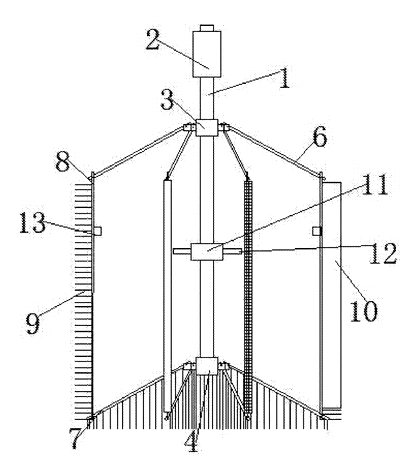
- An intermediate shaft (1) serves as the spine of the brush, with a brush handle (2) at its upper end for gripping.
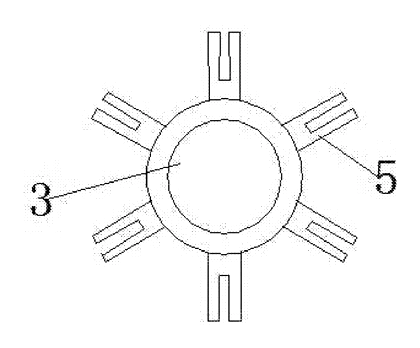
- An upper buckle (3) and a lower buckle (4) are mounted on the shaft. Both buckles have several protruding card slots (5) on their outside.
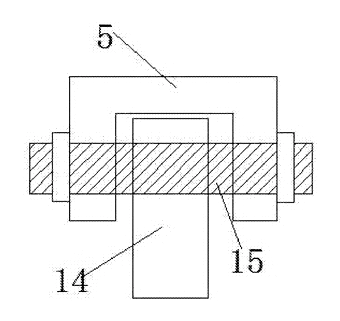
- Several upper support rods (6) and lower horizontal brush bars (7) attach to the upper and lower buckles through these card slots. Each rod and bar ends with a sub-buckle (14) that locks into a card slot, held in place by a pin shaft (15) passing through holes in both parts and secured with nuts.
- Vertical brush strips (8) run between the upper support rods and the lower horizontal brush bars, forming the sides of the cleaning cage.
- On the front side of each vertical strip, bristles (9) and sponge brushes (10) are arranged at intervals to scrub the cup interior. Bristles are also placed on the sub-buckles and the lower end of the card slots.
- A fixing ring (11) sits on the intermediate shaft between the upper and lower buckles. It carries several pressing buckles (12).
- On the rear side of each vertical brush strip is a magnetic circular catching groove (13). The pressing buckles cooperate with these magnetic grooves. When the pressing buckles are operated, they adjust the position of the vertical strips relative to the shaft, changing the overall diameter of the brush frame to match the cup being cleaned.
Who it is for
- Kitchenware brands looking to add a single adjustable brush to their cleaning-tool lineup instead of offering multiple fixed sizes.
- Coffee shops and tea houses where staff wash tumblers, mugs and pitchers of varying diameters throughout the day and need one tool that fits them all.
- Wholesalers supplying hospitality distributors who want to reduce SKU counts for hotel and restaurant housekeeping departments.
- E-commerce sellers of home goods targeting consumers who prefer compact, multi-function kitchen accessories over bulky brush sets.
How it works
The main parts
| No. | Part | What it does |
|---|---|---|
| 1 | Intermediate shaft | Central spine that holds all components. |
| 2 | Brush handle | Grip at the upper end of the shaft. |
| 3 | Upper buckle | Holds the top ends of the support rods; has protruding card slots. |
| 4 | Lower buckle | Holds the bottom ends of the brush bars; has protruding card slots. |
| 5 | Card slots | Protrusions on the buckles that receive the sub-buckles. |
| 6 | Upper support rods | Connect the upper buckle to the vertical brush strips. |
| 7 | Lower horizontal brush bars | Connect the lower buckle to the vertical brush strips. |
| 8 | Vertical brush strips | Form the side walls of the brush; carry bristles and sponge. |
| 9 | Bristles | Scrubbing elements arranged on the strips, sub-buckles and card slots. |
| 10 | Sponge brushes | Soft scrubbing pads arranged at intervals with the bristles. |
| 11 | Fixing ring | Mounted on the shaft between the buckles; holds the pressing buckles. |
| 12 | Pressing buckles | Engage the magnetic grooves to adjust the frame diameter. |
| 13 | Magnetic circular catching grooves | Located on the rear side of the vertical strips; cooperate with the pressing buckles. |
| 14 | Sub-buckles | Lock the rods and bars into the card slots. |
| 15 | Pin shafts | Pass through holes in the sub-buckles and card slots, secured by nuts. |
Adjusting and cleaning
- Hold the brush handle (2) and locate the pressing buckles (12) on the fixing ring (11).
- Operate the pressing buckles so they engage or release the magnetic circular catching grooves (13) on the rear of the vertical brush strips (8).
- Expand or contract the frame: moving the pressing buckles shifts the vertical strips closer to or further from the intermediate shaft (1), matching the inside diameter of the target cup.
- Insert the brush into the cup. The bristles (9) and sponge brushes (10) on the front side of the vertical strips contact the cup wall, while the bristles on the lower horizontal brush bars (7) and lower buckle (4) reach the bottom.
- Scrub and remove, then rinse the brush.
Applications
Home kitchens with mixed drinkware
Families often own narrow water glasses alongside wide soup mugs. Instead of keeping separate brushes, a homeowner adjusts the pressing buckles to fit whichever vessel needs washing, saving drawer space.
Coffee shops and juice bars
Baristas cycle through different-sized shakers, pitchers and customer cups rapidly. The adaptive frame lets them switch from a narrow tumbler to a wide mixing cup without reaching for another tool.
Office break rooms
Shared office kitchens accumulate varied mugs brought in by employees. A single adjustable brush in the sink area covers all sizes, reducing replacement costs for facility managers.
Hotel housekeeping carts
Room attendants clean guest coffee cups, water glasses and bathroom tumblers. Carrying one adaptive brush instead of a set lightens the cart and speeds up the washing routine.
Where it is less suitable
- Dishwasher-only operations - commercial kitchens that rely entirely on automated dishwashers do not need manual cup brushes.
- Extremely deep, narrow bottles - the patent specifies vertical brush strip lengths of about 10 to 16 cm, which may not reach the bottom of tall, narrow-neck bottles designed for specialized bottle brushes.
Frequently asked questions
How does the brush change size?
A fixing ring on the central shaft holds pressing buckles. These buckles engage magnetic circular catching grooves on the back of the vertical brush strips. Operating the pressing buckles moves the strips closer to or further from the shaft, expanding or contracting the frame to match the cup’s inside diameter.
What scrubbing materials are on the brush?
The patent describes bristles and sponge brushes arranged at intervals on the front side of the vertical brush strips. Bristles are also placed on the sub-buckles and the lower end of the card slots to help reach corners.
What are the dimensions specified in the patent?
The patent states that the upper support rods and lower horizontal brush bars have a length of 1.5 to 4 cm, the vertical brush strips are 10 to 16 cm long, and the bristles and sponge thickness are 0.8 to 1.2 cm. For a custom production run, final sizes would be set in design and confirmed on prototypes.
How many vertical strips does the brush have?
Claim 6 specifies that the number of upper support rods, lower horizontal brush bars and vertical brush strips is 6. This number can be adjusted during product development if a different configuration is needed for specific cup shapes.
Can the materials be changed for food safety?
Yes. The patent describes the mechanical structure but does not limit the materials. For US sales, the shaft, buckles, bristles, sponge and magnets must be selected to meet applicable food-contact and chemical safety standards.
Does it clean the bottom of the cup?
The patent describes that the design adapts to various spots in the cup, including the bottom and wall. Bristles on the lower horizontal brush bars, the sub-buckles and the lower buckle are positioned to reach the cup bottom when the brush is inserted.
Can this design be made and sold in the US?
This patent was filed only in China and is currently in force there (until at most 2036-07-13, if annual fees are paid). There is no US counterpart, so this specific patent does not restrict manufacturing or selling the design in the United States. However, other US patents covering adjustable brushes may exist, so a freedom-to-operate review is recommended before volume production.
Are you affiliated with the patent owner?
No. IP2M is an independent design and manufacturing service working from the public patent document.
Request a quote
Click Request a Quote below to see our email address - copy it, or open your email app with a ready-made message. Please mention patent CN105962616B in the subject.
Helpful details to include:
- Your company and channel (kitchenware brand, hospitality supplier, e-commerce seller, wholesaler)
- Target cup sizes or desired expanded/contracted diameters
- Material preferences for the frame, bristles, sponge and magnets
- Color and handle style requirements
- Estimated quantity and packaging format
- Timeline - when you would like samples and the first shipment
You can also reach us at (332) 203-9997.
Explore this product
Interested in building this?
Tell us your target market, quantity and timeline. We reply with options for prototyping, small-batch runs or volume production.
Send your inquiry to
Please put CN105962616B in the subject line and tell us your company, country, estimated quantity and timeline.
Prefer to talk? Call (332) 203-9997.
More product-ready patents
All Home, Kitchen & Cleaning patents →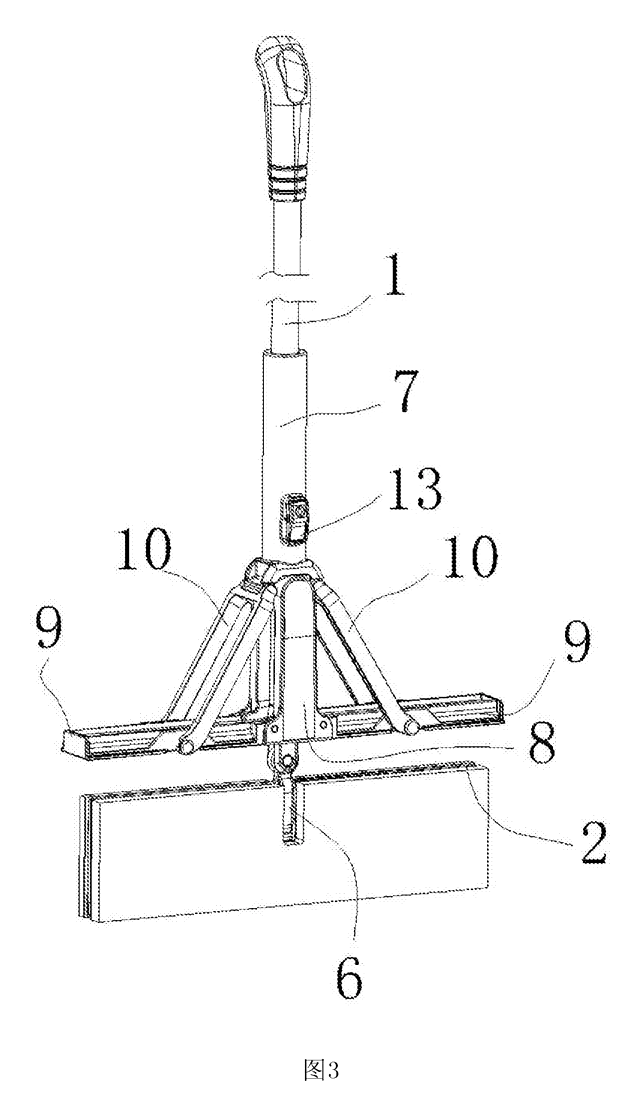
Home, Kitchen & Cleaning
Self-Wringing Flat Mop with Fold-Away Wringer
Flat mop with a built-in wringer that opens only when you wring and folds flat against the pole when you mop.
Patent CN207734114U
Home, Kitchen & Cleaning
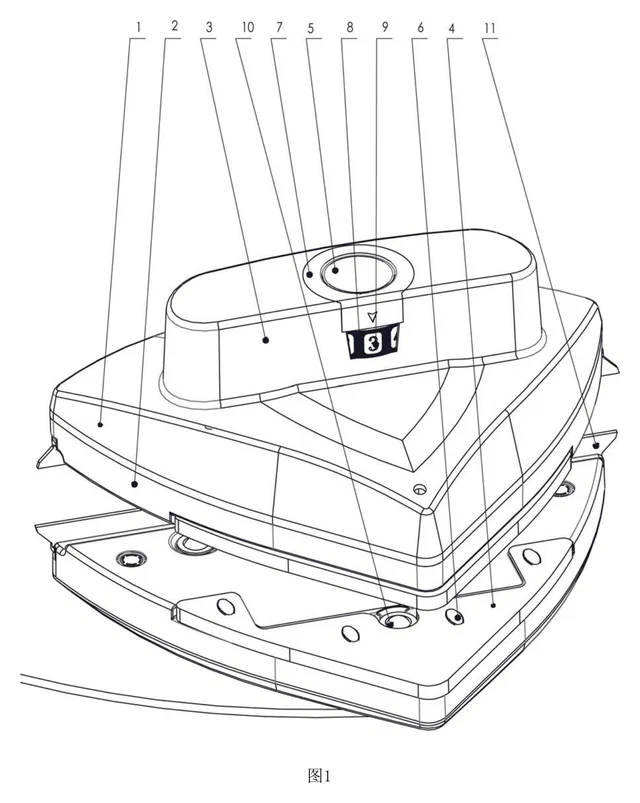
Magnetic Double-Sided Window Cleaner with Dial-Set Magnet Strength
Magnetic window cleaner with a sealed, sliding magnet, dial-set strength for different glass thicknesses and a spring-held idle position.
Patent CN209360543U
Home, Kitchen & Cleaning
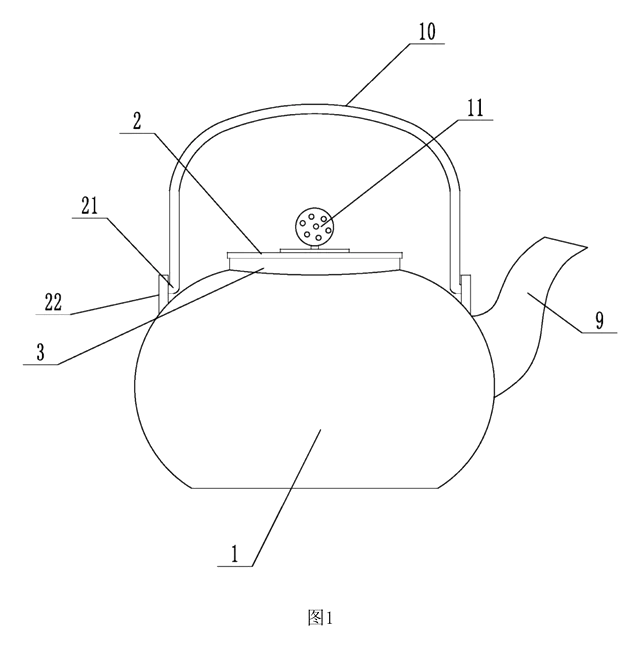
Metal Kettle with Magnetic Lid That Stays On When Pouring
Metal teapot/kettle with a magnet-held lid that does not fall off when pouring, and an insulated, vented lid knob.
Patent CN210540477U
Home, Kitchen & Cleaning
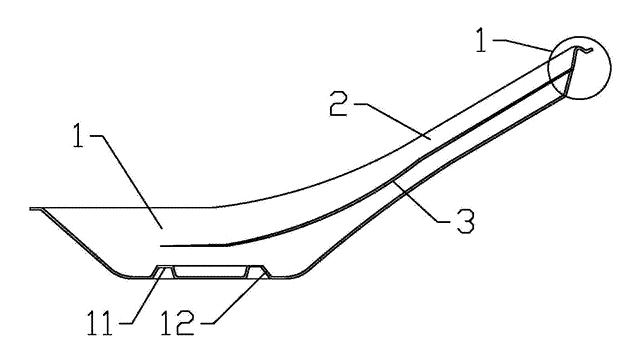
Reinforced Disposable Soup Spoon
Disposable soup spoon with a handle-to-bowl rib, stiffened edges and a ring foot to resist breaking.
Patent CN206964482U
Home, Kitchen & Cleaning
Self-Switching Double-Squeegee Window Cleaner
Cleaning head with two squeegee blades that switch automatically with the direction of movement.
Patent CN212630655U
Home, Kitchen & Cleaning
Self-Rinsing Roller Scrub Brush with Dirty-Water Tank
Powered roller brush that rinses and spins its bristles clean inside the body and stores the dirty water.
Patent CN210076909U
Browse by category
- Apparel & Accessories (22)
- Baby & Kids (16)
- Bags & Luggage (9)
- Bath & Personal Care (16)
- Car Accessories (10)
- Furniture, Bedding & Storage (12)
- Garden & Outdoor (18)
- Health & Wellness (8)
- Home, Kitchen & Cleaning (24)
- Lighting (12)
- Packaging & Containers (6)
- Pet Products (6)
- Phone & Camera Accessories (4)
- Retail Display (13)
- School, Office & Art (19)
- Sports & Recreation (25)
- Tools & Workshop (27)
- Toys & Games (12)
This page is based on the public patent document CN105962616B, assigned to Dongtai Zhichuang Precision Manufacturing Industrial Park Investment Co ltd, Jiangsu Huizhi Intellectual Property Services Co ltd. IP2M is an independent manufacturing service and is not affiliated with, endorsed by or licensed by the patent owner. Images marked as concept renderings are illustrations, not photos of an existing product. Patent status information is provided for reference only and is not legal advice; confirm freedom to operate for your market before production. Full disclaimer.