
Patent CN105996204B
Updated October 27, 2026Wide-Field Raincoat with Sliding Transparent Visor
Standard rain hoods block side vision because the opaque brim or fabric sits close to the face. Turning your head to check traffic or look sideways means moving your whole body. This design adds a transparent sheet that wraps around the head between the top of the cap and the neck. Both edges of the sheet ride in flexible slide rails: one sewn or joined to the cap, the other to the neck. Each rail has a chute holding a matching flexible slider fastened to the sheet. You pull the sheet forward or back along the rails to change how much of your face is covered, opening up your side view without letting rain in. A pull handle on each side lets you move the sheet smoothly. The ends of the neck rail detach so the hood can be opened fully when not raining.
- China invention patent - in force
- No filings outside China
- Rainwear & outdoor apparel
- Flexible slide rails, transparent sheet
Splat! What let you down?
👁️
Wider field of view
A transparent sheet replaces part of the opaque hood fabric, opening up side vision.
↔️
Sliding adjustment
The sheet moves along flexible rails at the cap and neck to change coverage.
🧩
Simple structure
Two flexible slide rails with chutes and matching sliders hold the sheet in place.
🤏
Pull handles
Handles on both sides let the user slide the sheet smoothly while wearing gloves.
Bring this product to market
- ✓ Patent vetted China-only family and legal status checked
- 2 Product brief · now How it works, uses and options written up
- 3 Prototype First samples for buyers to review
- 4 Pilot run Small first batch for launch customers
- 5 Volume production Repeat orders at scale
Buyer interest
– of 100 buyers needed to start prototyping
One click, no sign-up. Each vote is one real visitor, and products with the most interest go to prototyping first.
Build team: no members yet. Need a partner, co-funding or skills to build this? Join and we introduce the team once it forms.
The problem
When wearing a standard raincoat, the hood sits close to the face. The opaque fabric blocks the wearer’s peripheral vision, forcing them to turn their entire body to see traffic, obstacles, or people beside them. Fixed clear peaks sewn into some hoods offer limited improvement because they cannot be moved once stitched; if the rain angle changes or the user wants more airflow, the peak stays in one position. Bulky rigid visors add weight and make the hood hard to fold or store.
The solution
This raincoat solves the visibility problem by replacing a section of the hood with a movable transparent sheet.
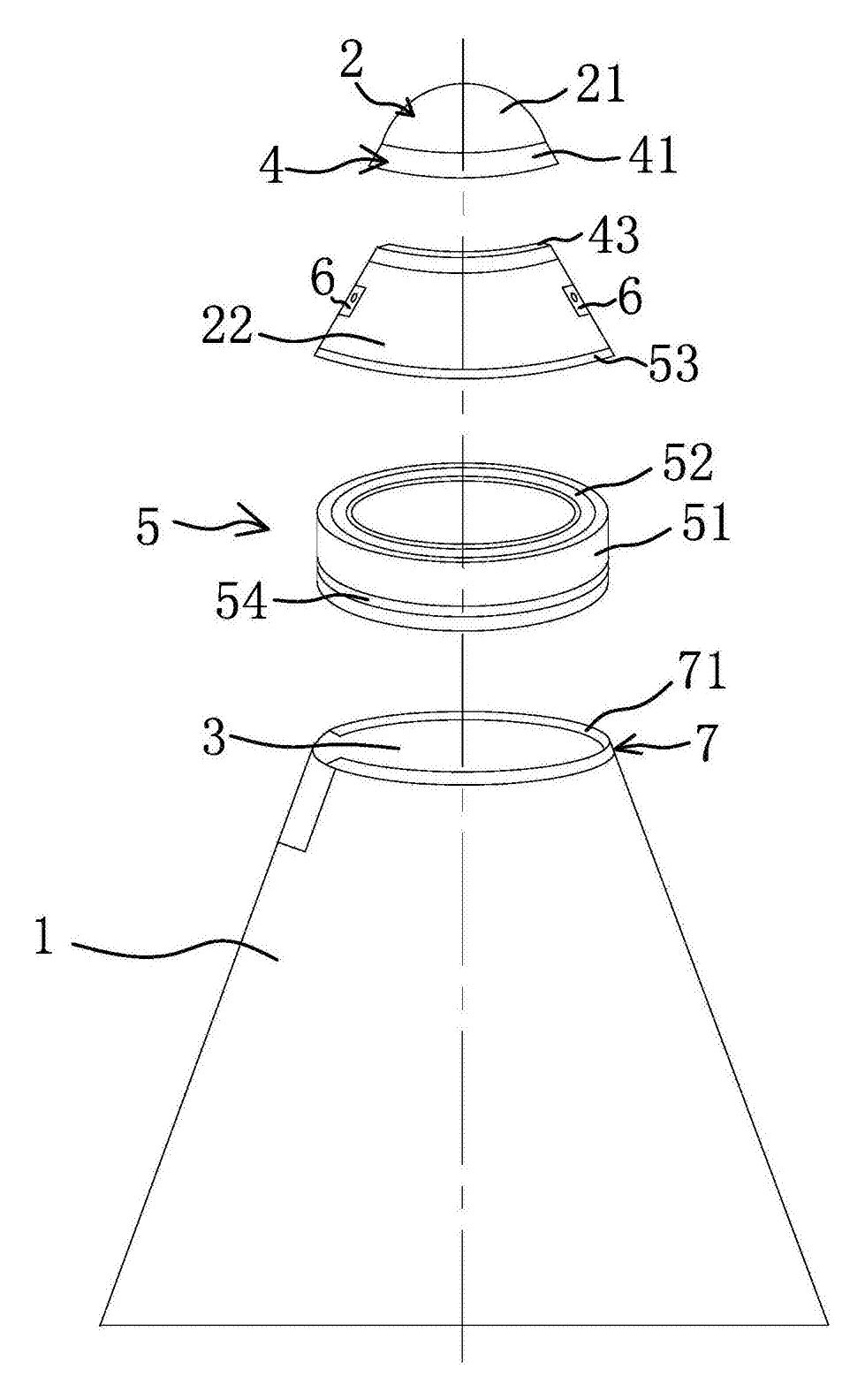
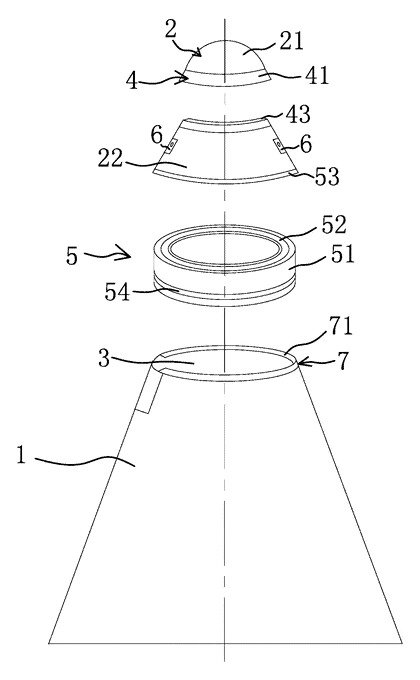
- A raincoat body (1) supports a rain cap (2) that communicates with a neck (3).
- The cap includes a cap top (21) covering the head and at least one transparent sheet-like body (22) blocking the sides.
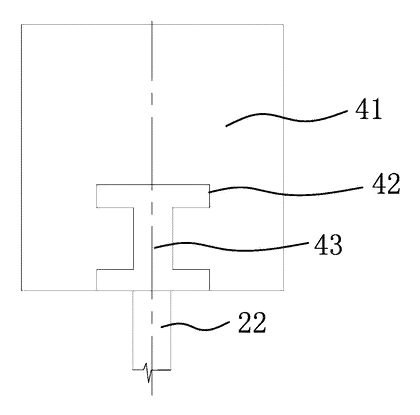
- A first sliding structure (4) connects the upper edge of the transparent sheet to the cap top. It consists of a first flexible slide rail (41) running around the cap top, with a downward-opening first chute (42). A first flexible slider (43), identical in side length to the sheet’s connecting edge and tightly joined to it, rides inside this chute.
- A second sliding structure (5) connects the lower edge of the sheet to the neck. It uses a second flexible slide rail (51) around the neck with an upward-opening second chute (52) and a second flexible slider (53) attached to the sheet. The ends of this second rail are detachably connected.
- Pull handles (6) hang vertically on both sides of the transparent sheet, positioned alongside the flexible slide rails, allowing the user to pull the sheet axially along the rails.
Who it is for
- Outdoor workwear brands supplying crews who need full weather protection while maintaining awareness of vehicles and machinery around them.
- Cycling and e-bike accessory companies looking for rain gear that lets riders check blind spots without removing the hood.
- Promotional product wholesalers sourcing functional rainwear for corporate events where safety and visibility matter.
- School uniform suppliers needing raincoats that help children see clearly when walking near roads in wet weather.
How it works
The main parts
| No. | Part | What it does |
|---|---|---|
| 1 | Raincoat body | The main garment shell. |
| 2 | Rain cap | Hood assembly communicating with the neck. |
| 21 | Cap top | Covers the top of the head. |
| 22 | Transparent sheet-like body | Flexible clear panel wrapping the sides of the head. |
| 3 | Neck | Lower collar section of the hood. |
| 4 | First sliding structure | Connects the upper edge of the sheet to the cap top. |
| 41 | First flexible slide rail | Rail fixed around the cap top. |
| 42 | First chute | Downward-opening groove in the first rail. |
| 43 | First flexible slider | Slider joined to the sheet, riding in the first chute. |
| 5 | Second sliding structure | Connects the lower edge of the sheet to the neck. |
| 51 | Second flexible slide rail | Rail fixed around the neck, with detachable ends. |
| 52 | Second chute | Upward-opening groove in the second rail. |
| 53 | Second flexible slider | Slider joined to the sheet, riding in the second chute. |
| 6 | Pull handle | Handle on the sheet for manual sliding. |
| 7 | Elastic brace structure | Support ring to maintain shape. |
Operating steps
- Put on the raincoat. The transparent sheet rests in its default position around the head.
- Adjust the view. Grasp the pull handles (6) on either side of the transparent sheet (22).
- Slide the sheet. Pull the handles to move the sheet axially. The first flexible slider (43) glides inside the downward-opening first chute (42) of the cap rail, while the second flexible slider (53) glides inside the upward-opening second chute (52) of the neck rail.
- Lock the position. Release the handles; the tight fit between the sliders and the chutes holds the sheet in the chosen spot, altering the size of the shaded area around the head.
- Open the hood. Detach the ends of the second flexible slide rail (51) to swing the neck section open when rain stops.
Applications
Roadside maintenance and utility work
Crews working near traffic wear rain hoods for hours. An opaque hood forces workers to twist their torsos to see approaching vehicles. The sliding transparent sheet allows them to shift the clear panel toward the direction of traffic, keeping their head facing forward while maintaining a wide line of sight.
Cycling and commuting
Riders in the rain must constantly check over their shoulders for cars. A fixed hood restricts this movement and creates blind spots. By pulling the transparent sheet forward or backward along the flexible rails, cyclists can expose more of their peripheral field exactly when preparing to turn or change lanes.
School routes and child safety
Children walking to school in heavy rain often keep their heads down, hiding behind large hoods. The adjustable transparent panel gives them a clear side view of crosswalks and sidewalks without requiring them to push the hood back manually, which would let water in.
Farming and agriculture
Farm workers operating machinery outdoors need rain protection but also need to monitor equipment gauges or livestock to their sides. The sliding mechanism lets them reposition the clear window to align with whatever requires visual attention, reducing the need to remove the hood entirely during sudden downpours.
Event staff and crowd management
Security personnel directing crowds in wet weather rely on broad situational awareness. Standard hoods tunnel their vision. Adjusting the transparent sheet opens the lateral field so staff can scan perimeters without turning away from the entrance they are guarding.
Where it is less suitable
- High-wind storms - loose transparent sheets may flap if the wind catches the edges; sealed goggle-style storm hoods perform better there.
- Extreme cold environments - flexible plastic rails and sliders may stiffen in freezing temperatures, making adjustment difficult.
- Fashion-focused urban wear - the visible rails and pull handles give a technical, utilitarian look that may not suit minimalist streetwear lines.
Frequently asked questions
How does the transparent sheet move?
The sheet is attached to flexible sliders that sit inside chutes on two flexible rails. One rail goes around the top of the cap, and the other goes around the neck. When you pull the handles, the sliders glide inside the chutes, shifting the sheet forward or backward to change your field of view.
Can the sheet be removed completely?
The patent describes the ends of the second flexible slide rail around the neck as detachably connected. Unfastening these ends allows the neck section to open, though the text focuses on adjusting the shaded area rather than full removal of the sheet during use.
What keeps the rails from digging into the head?
The patent specifies “flexible” slide rails and sliders. The exact material hardness and padding are not detailed in the document; these factors are set in design and confirmed on prototypes to ensure comfort against the head and neck.
Is it safe for children?
The mechanical concept applies to any size. If produced for children under 12 in the US, the materials must pass CPSIA testing for lead and phthalates, and the pull handles must not present a strangulation hazard. Dimensions and handle lengths are confirmed on prototypes.
How do you wash it?
The patent does not provide care instructions. Washing methods depend on the shell fabric and the heat tolerance of the extruded rails and transparent sheet, which are determined during material selection.
Does the transparent sheet fog up?
The patent document mentions the structure of the sliding mechanism but does not address anti-fog coatings. Ventilation holes or treated films are features to be discussed during the design phase.
Can this design be made and sold in the US?
The patent was filed only in China and is in force there until at most 2036-06-17 (if annual fees are paid), so it does not restrict the design in the US. Rainwear and adjustable hoods may be covered by other US patents - see Patent & Production - so we recommend a freedom-to-operate check before volume production.
Are you affiliated with the patent owner?
No. IP2M is an independent design and manufacturing service working from the public patent document.
Request a quote
Click Request a Quote below to see our email address - copy it, or open your email app with a ready-made message. Please mention patent CN105996204B in the subject.
Helpful details to include:
- Your company and channel (outdoor brand, workwear supplier, promotional wholesaler, school uniform provider)
- Target sizes (adult, youth, or both)
- Shell fabric and transparent sheet material preferences
- Colorways for the coat, rails, and sheet
- Estimated quantity and target price
- Timeline - when you would like samples and the first shipment
You can also reach us at (332) 203-9997.
Explore this product
Interested in building this?
Tell us your target market, quantity and timeline. We reply with options for prototyping, small-batch runs or volume production.
Send your inquiry to
Please put CN105996204B in the subject line and tell us your company, country, estimated quantity and timeline.
Prefer to talk? Call (332) 203-9997.
More product-ready patents
All Apparel & Accessories patents →
Apparel & Accessories
Stacked Zipper with Teeth That Mesh Top-to-Bottom
Zipper whose two identical tooth rows mesh on top of each other, closed by a simplified slider.
Patent CN205795062U
Apparel & Accessories
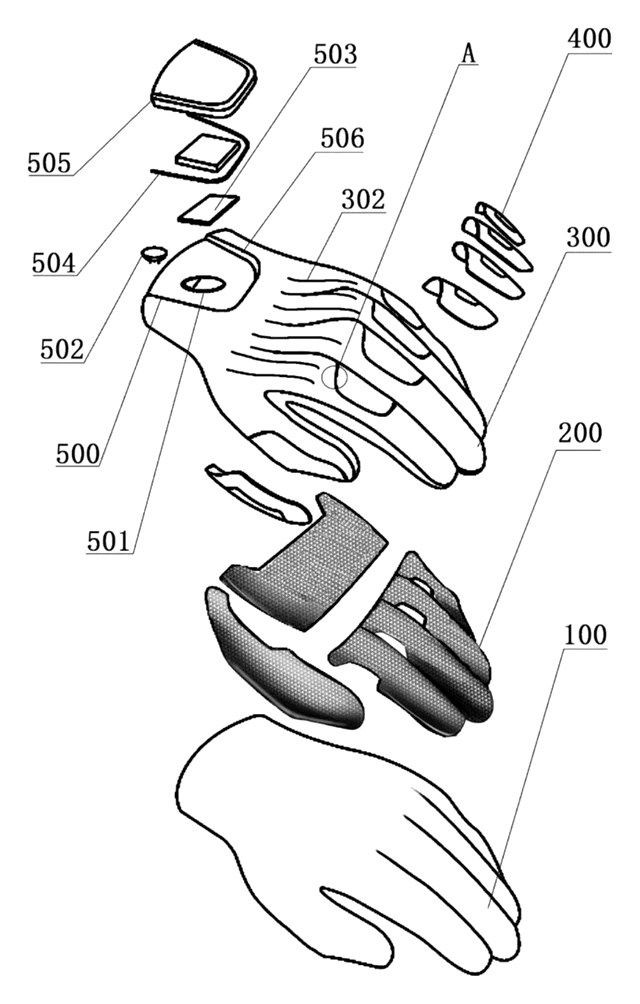
Impact-Resistant Glove with a 3D-Printed Lattice Layer
Work glove with a 3D-printed lattice impact layer, TPU knuckle guards and a light mounting area.
Patent CN213785583U
Apparel & Accessories
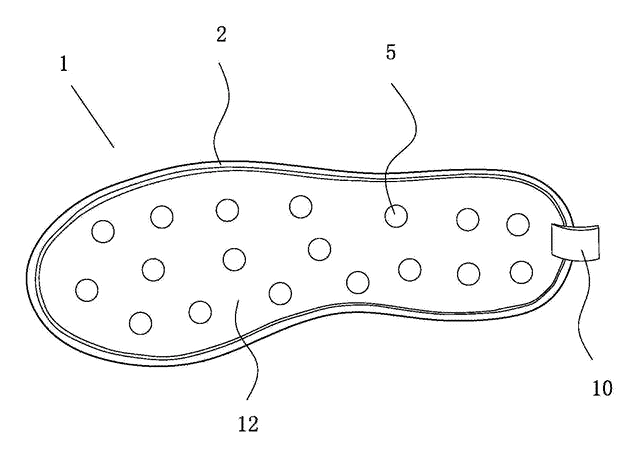
Massage Insole with Spring-Back Silicone Nubs and a Removable Top Layer
Layered insole: silicone nubs rise through a removable perforated top sheet and sink under each step.
Patent CN208286505U
Apparel & Accessories
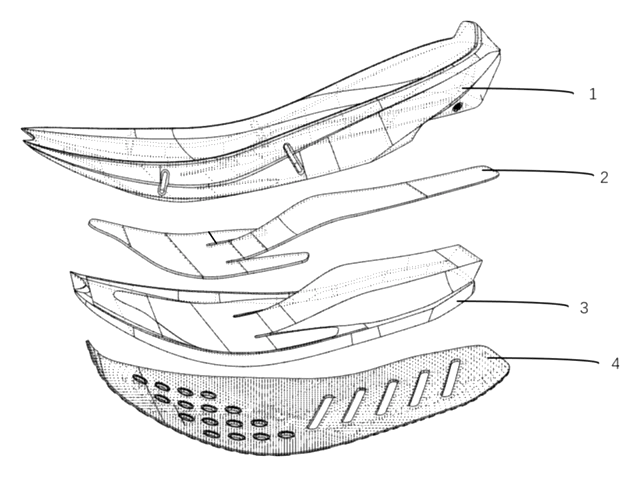
Heel-Less Carbon Plate Running Shoe Sole for Forefoot Strikers
Running sole for forefoot strikers: no ground-touching heel, winged carbon plate between two midsoles.
Patent CN216723354U
Apparel & Accessories
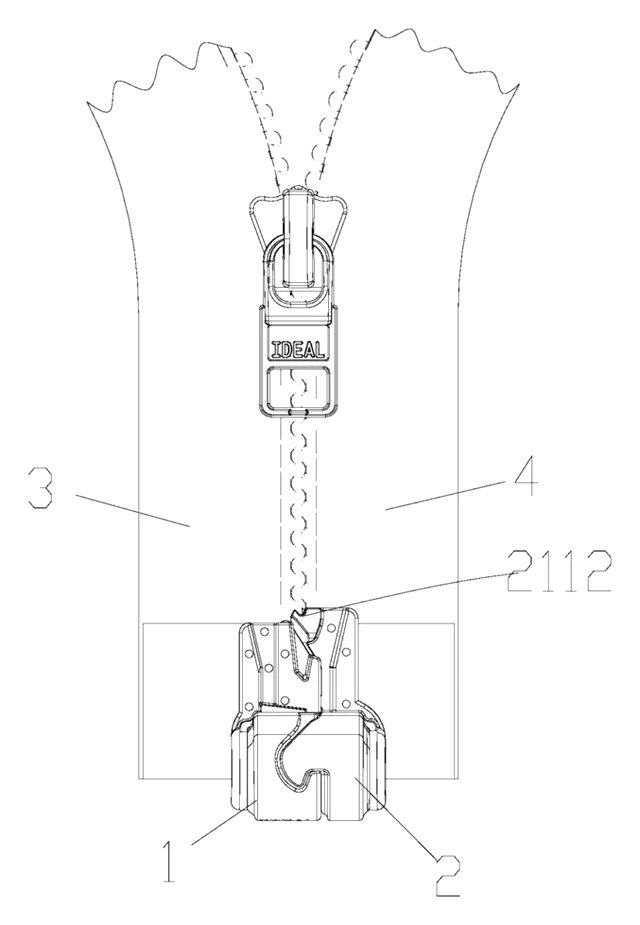
Waterproof Magnetic Zipper Stop That Snaps the Two Halves Together
Separating-zipper stop with sealed magnets: pin and box snap together one-handed, safe in rain and wash.
Patent CN215075936U
Apparel & Accessories
Left-Right Specific Soccer Socks: Grip for the Plant Foot, Touch Pads for the Kicking Foot
Soccer socks knitted as a left-right pair: grip zones for the plant foot, pads for the kicking foot.
Patent CN212728807U
Browse by category
- Apparel & Accessories (22)
- Baby & Kids (16)
- Bags & Luggage (9)
- Bath & Personal Care (16)
- Car Accessories (10)
- Furniture, Bedding & Storage (12)
- Garden & Outdoor (18)
- Health & Wellness (8)
- Home, Kitchen & Cleaning (24)
- Lighting (12)
- Packaging & Containers (6)
- Pet Products (6)
- Phone & Camera Accessories (4)
- Retail Display (13)
- School, Office & Art (19)
- Sports & Recreation (25)
- Tools & Workshop (27)
- Toys & Games (12)
This page is based on the public patent document CN105996204B, assigned to Zhumadian Sunshine Comfort Home Hvac Equipment Co ltd. IP2M is an independent manufacturing service and is not affiliated with, endorsed by or licensed by the patent owner. Images marked as concept renderings are illustrations, not photos of an existing product. Patent status information is provided for reference only and is not legal advice; confirm freedom to operate for your market before production. Full disclaimer.