At a glance
| Patent number | CN106110633B (application CN201610736287) |
| Type | China invention patent (发明专利) - protects product shape, structure and method |
| Original title | Ice skate brake (溜冰鞋刹车器) |
| Patent owner | Individual |
| Inventors | Luo Ding |
| Filing date | 2016-08-26 |
| Grant date | 2018-05-08 |
| Status (China) | Lapsed - terminated for non-payment of annual fees (recorded 2022-08-12) |
| Patent family | Chinese filings only - no US, European, Japanese, PCT or other filings listed |
| Cited by | 0 later documents |
| Source | Google Patents (search for CN106110633B) |
What the claims cover, in plain language
Claim 1 - an ice skate brake comprising a directive wheel, a brake member, a supporting rack, an ice skate connector, and opposite first and second connecting plates arranged in parallel. The directive wheel sits between the two plates and rotates on them. It includes a fixing axle. One end of the supporting rack is hinged to the fixing axle, and the other end connects to the brake member. The brake member rotates between the first and second connecting plates. The ice skate connector attaches the plates to the skate.
Claim 2 - the supporting rack and brake member are linked by an adjusting bolt that sets the brake member’s deflection angle. The bolt has a threaded shaft and a nut; moving the nut closer to the rack deflects the brake member toward the rack, and moving it away deflects the member outward. Claim 3 - the brake member includes a connecting block, a shoe piece and a fixed screw; the shoe piece attaches to the block via the screw and is detachable. Claims 4-5 - the shoe piece has a first surface and an opposite second surface contacting the block. In one version the fixed screw passes through both surfaces into the block and the first surface is concave; in another, one end of the screw embeds inside the shoe piece from the second surface while the other end passes through the block. Claim 6 - the ice skate connector includes a rotation axis, parallel first and second clamping plates with corresponding axis holes, and through-holes in the connecting plates; the rotation axis passes through all four holes to link the connector, plates and skate rotatably. Claim 7 onward - a double-threaded screw passes through bar holes in the clamping plates and the skate’s roller bearing to fix the brake to the skate. Set screws limit excessive rotation of the connecting block, and compression springs wrapped on those set screws pass through the connecting plates to return the brake to its original state.
This is a simplified reading for orientation only. The legal scope is defined by the exact claim wording in the official Chinese document.
What this means for US production
This patent was filed only in China and is lapsed (terminated for non-payment of annual fees, recorded 2022-08-12), so it no longer restricts anyone in China either. It has no US or other foreign counterpart.
Two points to settle early:
- Other patents may exist. Inline skate braking systems and frame attachments are covered by various US and international patents held by major skate manufacturers. Although no foreign patents cite this specific document, a freedom-to-operate (FTO) review of the tiptoe-activated lever mechanism and roller-contact shoe piece is needed before tooling.
- Wheelbase compatibility. The distance between the directive wheel and the rear roller varies across skate sizes; the connecting plates and supporting rack dimensions must match the target skate frame.
Customization and manufacturing
What can be customized
| Area | Options |
|---|---|
| Frame fit | Plate spacing and connector hole patterns for different skate brands and sizes |
| Shoe piece material | Rubber, polyurethane or composite compounds to adjust friction and wear rate |
| Spring force | Compression spring stiffness to change the return speed and resting tension |
| Directive wheel | Diameter and durometer for smooth ground contact on indoor or outdoor surfaces |
| Finish | Anodized, powder-coated or painted metal plates |
| Adjustment range | Bolt thread pitch and length for fine-tuning the shoe deflection angle |
Things to plan for (US market)
- ASTM F963 - if marketed for children under 12, the toy safety standard applies, covering mechanical hazards, sharp edges and small parts.
- CPSC 16 CFR 1501 - small parts regulation for products intended for children under 3 years old.
- California Prop 65 - plastics, rubber compounds and plated metals must be screened for listed chemicals.
- General Certificate of Conformity (GCC) / CPC - required documentation depending on whether the product is classified as sporting goods or a children’s product.
How a project runs
- Inquiry - skate frame dimensions, target age group, shoe piece material and quantity.
- Design - CAD modeling of the connecting plates, rack geometry, bolt threads and spring seats to match the specified skate.
- Prototype - machined or 3D-printed samples assembled on actual skate frames to verify the tiptoe activation travel and braking friction.
- Pilot run - stamped and formed metal parts, molded shoe pieces and springs; cycle testing for repeated braking and spring return.
- Production - progressive die stamping for plates, injection molding for shoe pieces, assembly and packaging.
Quantities & timeline
The connecting plates and clamping plates require stamping dies sized for each skate frame family. The shoe pieces and directive wheels need injection molds, and the springs are sourced to the specified wire gauge and coil count. Certification tests such as ASTM F963 add lead time if the product targets children. Send us your skate frame specifications, target user age, shoe piece material preference, estimated quantity and target price and we will reply with options.
Patent drawings
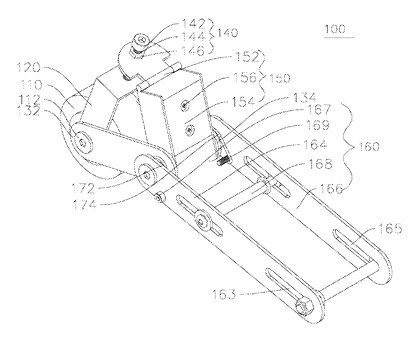
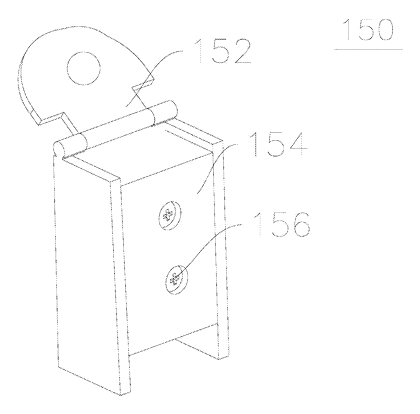
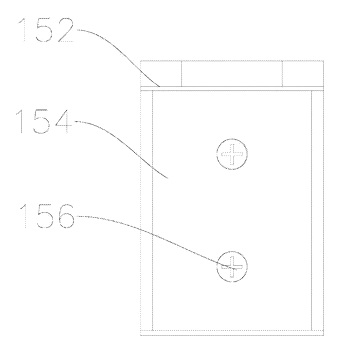
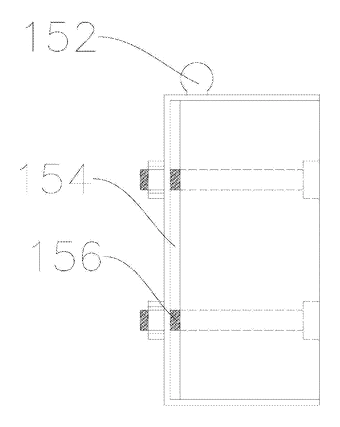
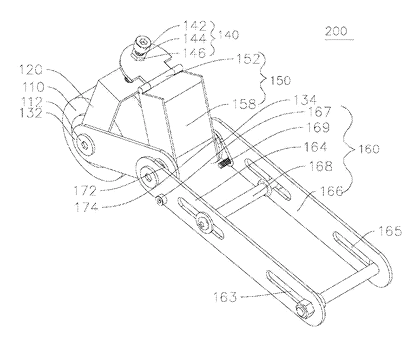
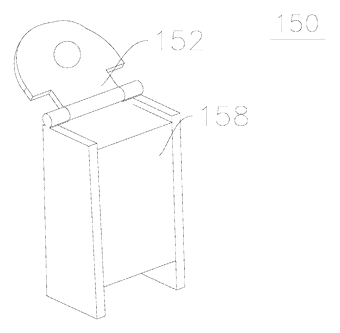
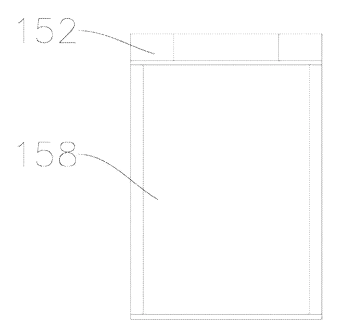
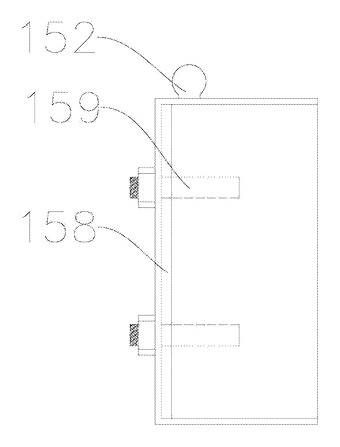
Drawings reproduced from the public patent document for reference.