
Patent CN106144192B
Updated October 27, 2026Cylindrical Plastic Bottle Cap with Built-In Soup Ladle
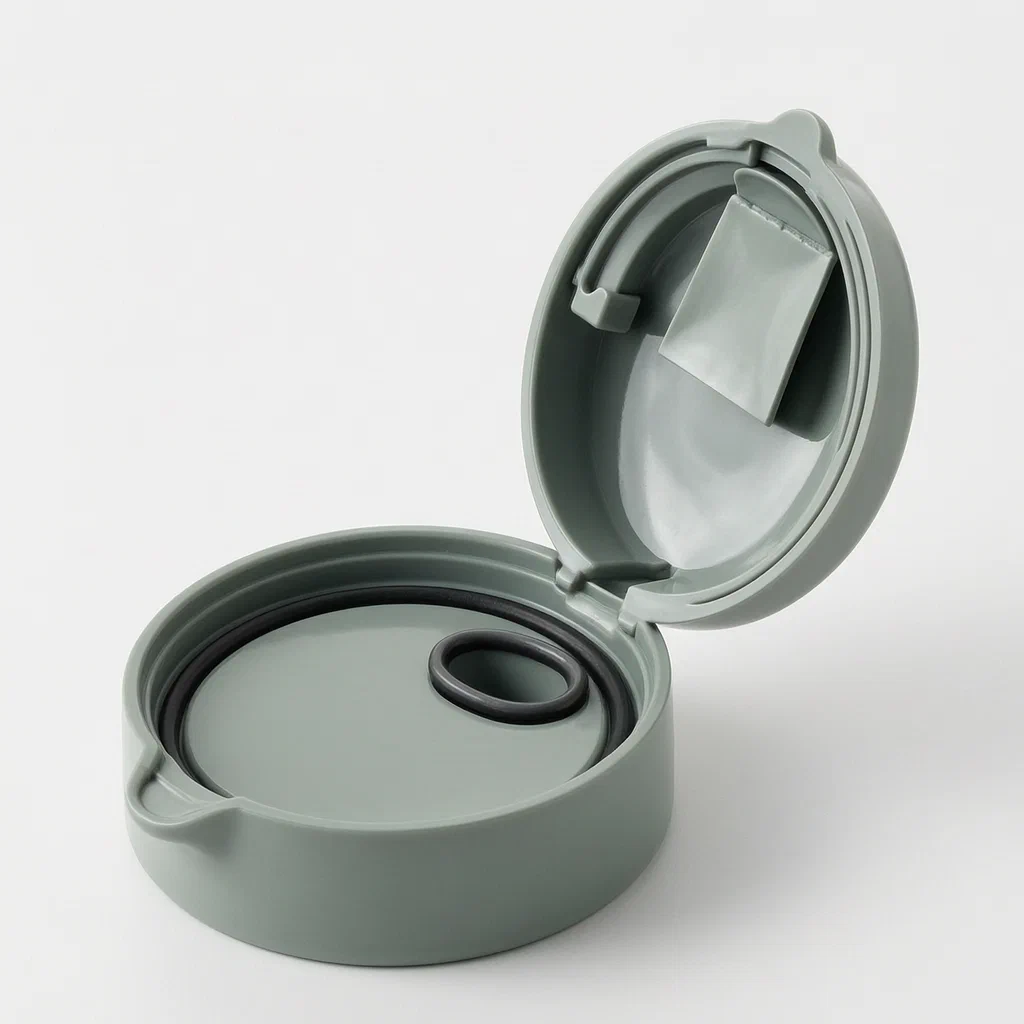
Selling liquid foods or powders that need a scoop means dealing with lost spoons, messy storage and broken tamper seals. This cylindrical cap keeps a soup ladle stored inside the flip-top lid itself, so the measuring tool is always attached to the bottle. The design combines three sealing stages: a flip-top lid that snaps shut with an arc block tongue, a tamper-evident easy-tearing disc underneath, and a hinged inner closure with an elastic sealing strip that seats into a groove on the internal flange. The inner closure hangs straight down when opened, clearing the bottle mouth, and clicks back into place using a globe joint pressed into a spherical socket. The patent further details a specific plastic material made from modified montmorillonite, polyethylene and other components processed through twin-screw extrusion.
- China invention patent - in force
- Chinese filings only
- Containers & packaging
- Modified montmorillonite plastic compound
Splat! What let you down?
🥄
Built-in ladle storage
A chamber inside the flip-top lid holds a soup ladle, keeping it attached to the bottle.
🔒
Three-stage sealing
Flip-top lid, tamper-evident tear disc, and a hinged inner closure with an elastic sealing strip.
⚖️
Gravity-hung inner closure
The inner disc drops vertically under its own weight when unclipped, clearing the bottle opening.
🧪
Special plastic compound
The patent describes a modified montmorillonite plastic mixture for molding the cap parts.
Bring this product to market
- ✓ Patent vetted China-only family and legal status checked
- 2 Product brief · now How it works, uses and options written up
- 3 Prototype First samples for buyers to review
- 4 Pilot run Small first batch for launch customers
- 5 Volume production Repeat orders at scale
Buyer interest
– of 100 buyers needed to start prototyping
One click, no sign-up. Each vote is one real visitor, and products with the most interest go to prototyping first.
Build team: no members yet. Need a partner, co-funding or skills to build this? Join and we introduce the team once it forms.
The problem
Liquid foods, beverage concentrates, powdered drink mixes and bulk condiments often require a measuring spoon or ladle. When the scoop is packed loosely inside the bottle, it sinks into the product, becomes coated in liquid, or is lost after the first use. Separate scoops also add packing steps on the production line. Standard screw caps do not provide a dedicated, clean space to store a utensil, and adding one externally increases shipping volume. Furthermore, buyers and consumers look for visible tamper evidence and reliable re-sealing after every use. A cap that fails to close tightly allows moisture or air to enter, affecting the contents.
The solution
This patent describes a cylindrical plastic bottle cap that integrates a soup ladle directly into the flip-top lid. The design solves storage, sealing and tamper-evidence issues in one molded assembly:
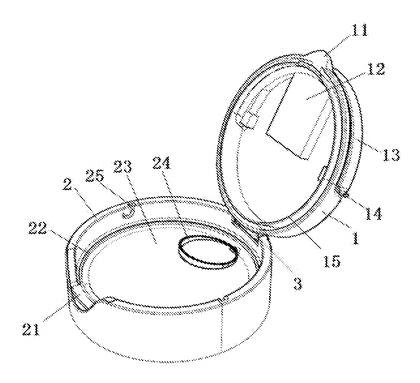
- A fixed lid (2) connects to the bottle neck. Inside, an annular flange (22) divides the upper and lower sections.
- An easy tearing lid (23) sits below the flange, connected by a tear structure and fitted with a draw ring (24) for removal.
- A turnover lid (1) hinges onto the top of the fixed lid. Its inner surface contains a soup ladle chamber (12) that holds the soup ladle (4).
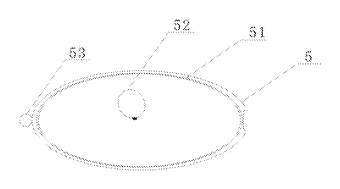
- Below the easy tearing lid, a circular closure (5) is hinged to the fixed lid’s inner wall. It carries an annular elastic sealing strip (51) that fits into a seal groove on the flange’s lower surface.
- A globe joint (53) on the closure snaps into a matching spherical groove on the fixed lid wall, holding the closure shut. When released, the closure hangs vertically downward under its own weight.
Who it is for
- Food and beverage brands selling liquid concentrates, broths or syrups who want a measuring ladle permanently attached to the packaging without loose inserts.
- Powdered supplement manufacturers needing a scoop stored cleanly outside the powder mass, with a secure resealable barrier to keep moisture out.
- Condiment and sauce wholesalers looking for a tamper-evident dispensing cap that doubles as a portion-control tool for food service or retail buyers.
- Custom packaging converters seeking a multi-part closure design that can be molded from specialized plastic compounds for distinct shelf appeal.
How it works
The main parts
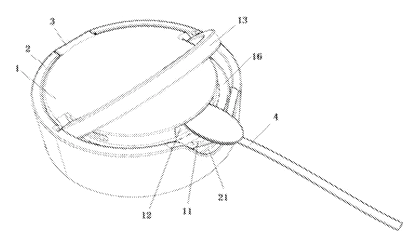
| No. | Part | What it does |
|---|---|---|
| 1 | Turnover lid | Hinged top cover; houses the soup ladle chamber (12) and inner ring (15). |
| 11 | Arc block tongue | Locks the turnover lid into the arc bayonet socket (21) on the fixed lid. |
| 13 | Pull-up handle | Sits in a semicircular groove on the turnover lid; blocks the ladle chamber opening. |
| 2 | Fixed lid | Hollow cylindrical base attached to the bottle neck. |
| 22 | Flange | Internal annular rim separating the upper and lower interior spaces. |
| 23 | Easy tearing lid | Tamper-evident seal below the flange, removed via draw ring (24). |
| 4 | Soup ladle | Measuring utensil stored inside the turnover lid chamber. |
| 5 | Closure | Circular inner disc hinged inside the fixed lid, larger than the flange’s inner diameter. |
| 51 | Sealing strip | Annular elastic strip on the closure that seats into the flange’s seal groove. |
| 53 | Globe joint | Ball-shaped protrusion that interference-fits into a spherical groove to lock the closure. |
Operating steps
- First opening: Unlock the turnover lid (1) by disengaging the arc block tongue (11) from the arc bayonet socket (21). Lift the pull-up handle (13) and remove the soup ladle (4) from the soup ladle chamber (12).
- Breaking the seal: Pull the draw ring (24) to tear the easy tearing lid (23) away from the flange (22), exposing the inner closure (5).
- Opening the inner closure: Press down on the end of the closure (5) opposite the shackle (52). The globe joint (53) releases from its spherical groove. The closure then hangs vertically downward under its own weight, leaving the bottle mouth open.
- Dispensing: Use the soup ladle (4) to take the contents from the bottle.
- Resealing: Pull the shackle (52) upward to press the globe joint (53) back into the spherical groove. The elastic sealing strip (51) compresses into the seal groove on the flange (22), restoring the internal seal. Close the turnover lid (1) to complete the second stage of sealing.
Applications
Liquid food concentrates
Brands selling broth, soup bases or cooking stocks need a way for consumers to measure portions accurately. Storing the ladle inside the cap prevents it from sinking into the liquid or requiring a separate package insert.
Powdered beverages and supplements
Powder clumps easily when exposed to humidity. The inner closure with its elastic sealing strip provides a secondary barrier beneath the flip-top lid, while the ladle stays dry in its dedicated chamber above the tear disc.
Bulk condiments for food service
Restaurants buying large bottles of sauces or dressings often lose measuring spoons during busy shifts. A cap with an integrated ladle ensures the portioning tool remains attached to the container between uses.
Agricultural or chemical liquids
Non-food liquids that require measured dosing benefit from a dedicated scoop that does not sit inside the chemical reservoir. The tamper-evident tear strip shows whether the container has been opened before purchase.
Where it is less suitable
- Standard water or carbonated drinks - these products do not require a ladle, and the complex multi-part cap adds unnecessary cost and weight.
- Very small bottle necks - the soup ladle chamber requires a certain diameter to hold a functional scoop; narrow necks cannot accommodate the turnover lid dimensions.
- Single-use sachets - disposable, single-serve packaging does not need a resealable cap with a stored utensil.
Frequently asked questions
How is the soup ladle stored?
The turnover lid (1) has a dedicated soup ladle chamber (12) molded into its inner surface. The ladle sits inside this chamber, and a pull-up handle (13) rests in a groove over the opening to block it from falling out.
How many seals does the cap have?
The design uses three sealing stages. First, the turnover lid locks down via an arc block tongue (11) engaging an arc bayonet socket (21). Second, an easy tearing lid (23) acts as a tamper-evident barrier. Third, a hinged inner closure (5) presses an elastic sealing strip (51) into a groove on the internal flange (22).
How does the inner closure stay open?
The closure (5) features a globe joint (53) on one side that snaps into a spherical groove to lock it shut. When you press the opposite end, the globe joint releases. Because of its weight distribution, the closure then hangs vertically downward under its own weight, leaving the bottle mouth clear.
What plastic is this made from?
The patent describes a specific compound using modified montmorillonite, polyethylene, polyamide, glass fiber, cornstarch and other additives processed through twin-screw extrusion. For commercial production, standard food-grade resins like PP or PE can also be used, subject to application requirements.
Is the tamper-evident strip easy to remove?
The easy tearing lid (23) is connected to the internal flange by a tear structure and includes a draw ring (24) at its front end. The exact pull force is set in design and confirmed on prototypes to balance security with usability.
Can the ladle volume be changed?
Yes. The soup ladle chamber (12) and the ladle (4) itself are molded parts. Their dimensions can be adjusted during the design phase to hold the required volume for your specific product.
Can this design be made and sold in the US?
The patent was filed only in China and is in force in China until at most 2036-08-31 (if annual fees are paid); it has no US counterpart, so it does not restrict the design in the US. However, other companies, such as Sharkninja Operating Llc, hold later US patents in this product field citing this document. We recommend a freedom-to-operate check before volume production.
Are you affiliated with the patent owner?
No. IP2M is an independent design and manufacturing service working from the public patent document.
Request a quote
Click Request a Quote below to see our email address - copy it, or open your email app with a ready-made message. Please mention patent CN106144192B in the subject.
Helpful details to include:
- Your company and channel (food brand, supplement brand, packaging converter, wholesaler)
- Bottle neck finish dimensions and thread type
- Ladle volume required
- Material preference (standard food-grade resin or custom compound)
- Estimated quantity and target price
- Timeline - when you would like samples and the first shipment
You can also reach us at (332) 203-9997.
Explore this product
Interested in building this?
Tell us your target market, quantity and timeline. We reply with options for prototyping, small-batch runs or volume production.
Send your inquiry to
Please put CN106144192B in the subject line and tell us your company, country, estimated quantity and timeline.
Prefer to talk? Call (332) 203-9997.
More product-ready patents
All Packaging & Containers patents →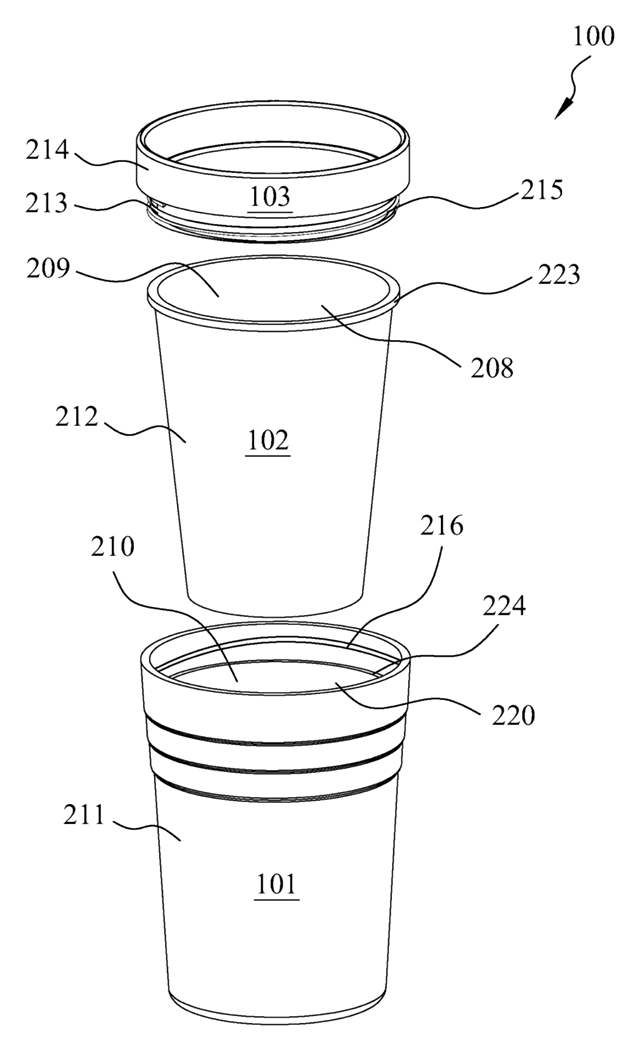
Packaging & Containers
Rigid Shell Container with Removable Silicone Liner
Cup or food box with a rigid outer shell and a removable, leak-tight silicone liner.
Patent CN212638395U
Packaging & Containers
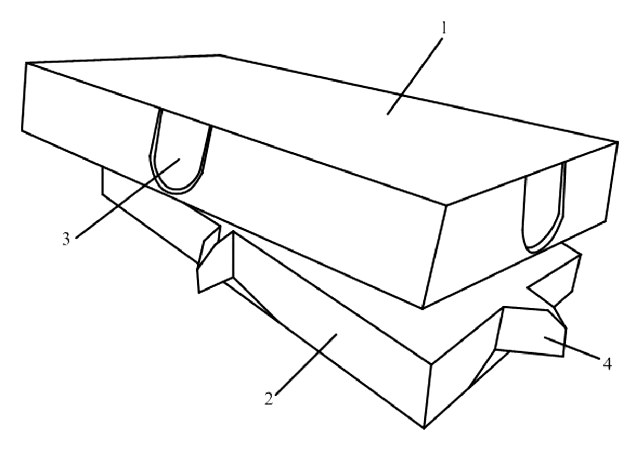
Child-Resistant Paperboard Medicine Box with Three-Point Opening
Paperboard medicine box that opens only when press points on three sides are pushed together.
Patent CN107117365B
Packaging & Containers
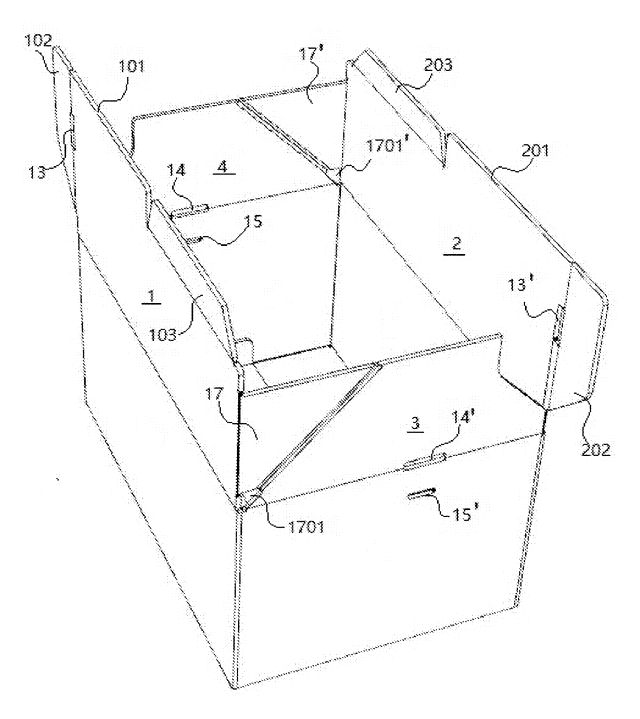
Tape-Free Reusable Shipping Box with Zigzag Interlocking Flaps
Reusable carton closed without tape: zigzag flaps interlock, tabs tuck in, a U-clip locks the lid.
Patent CN207242262U
Packaging & Containers
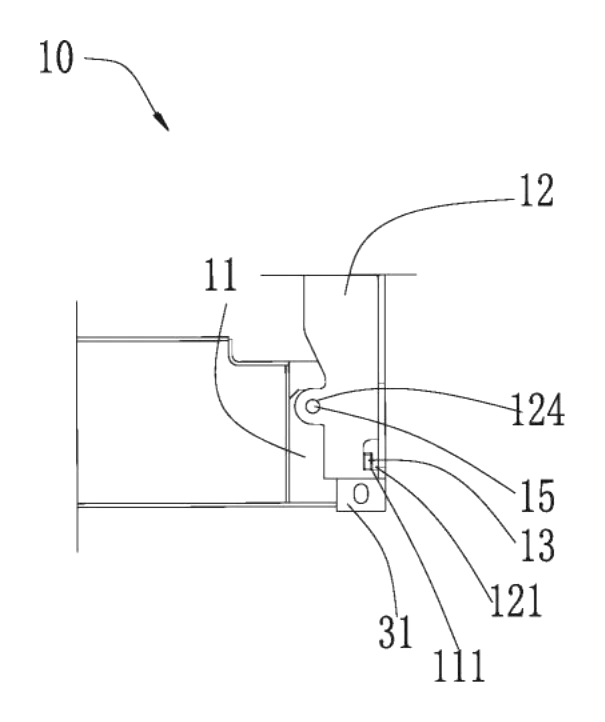
Hinge Device for Folding Containers with Integrated Twistlock Hole
Folding container hinge with a built-in twistlock hole and observation port.
Patent CN113460518B
Packaging & Containers
Insulated Food Packaging Box with Detachable Liner and Self-Heating Cavity
Detachable insulated food box with a sealed cavity for a self-heating sheet and a temperature sticker.
Patent CN108372980B
Phone & Camera Accessories
Extendable Support Leg and Monopod with Single-Knob Locking
Three-section monopod leg locked and released from one top knob via a transmission rod.
Patent CN113090903B
Browse by category
- Apparel & Accessories (22)
- Baby & Kids (16)
- Bags & Luggage (9)
- Bath & Personal Care (16)
- Car Accessories (10)
- Furniture, Bedding & Storage (12)
- Garden & Outdoor (18)
- Health & Wellness (8)
- Home, Kitchen & Cleaning (24)
- Lighting (12)
- Packaging & Containers (6)
- Pet Products (6)
- Phone & Camera Accessories (4)
- Retail Display (13)
- School, Office & Art (19)
- Sports & Recreation (25)
- Tools & Workshop (27)
- Toys & Games (12)
This page is based on the public patent document CN106144192B, assigned to Shandong Loqi Intelligent Technology Co Ltd. IP2M is an independent manufacturing service and is not affiliated with, endorsed by or licensed by the patent owner. Images marked as concept renderings are illustrations, not photos of an existing product. Patent status information is provided for reference only and is not legal advice; confirm freedom to operate for your market before production. Full disclaimer.