
Patent CN106240195B
Updated November 7, 2026Fountain Pen with Pressurized Ink Bottle for Easy Refilling
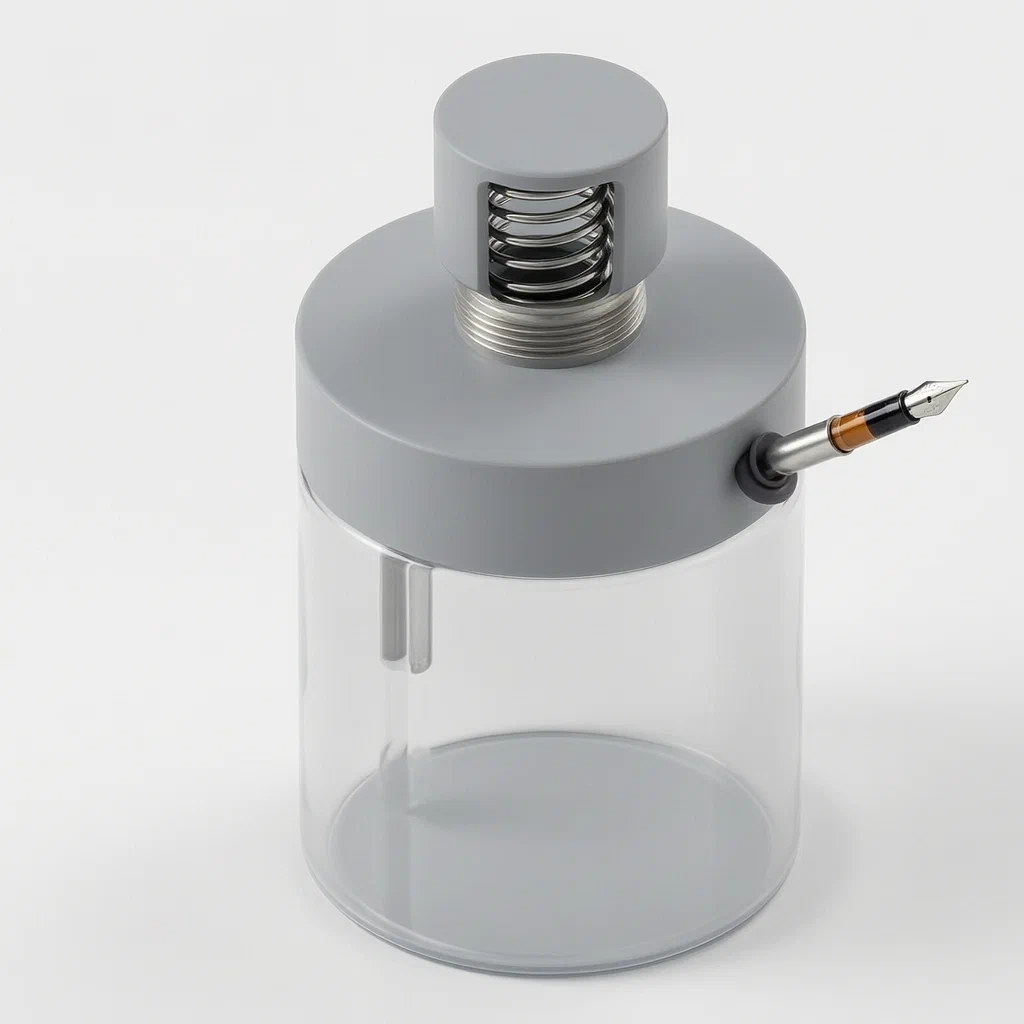
Traditional fountain pens require dipping the nib into an open ink well, often leading to spills, stained fingers, and inconsistent ink flow. Cartridge systems are clean but limit ink choice and create waste. This patent describes a hybrid approach: a dedicated ink bottle with a built-in mechanical pump. The bottle has a protruding bottleneck topped with a spring-loaded plunger (polishing head). A side pipeline with a valve connects the interior to the outside. To refill, you remove the pen's tail cap, insert the pen's opening into the bottle's pipeline, unscrew the valve, and press the plunger. The spring mechanism pushes air or ink pressure downward, forcing ink into the pen's clear capsule. You can see exactly how much ink is being transferred. Once filled, close the valve, screw the tail cap back on—the cap’s internal bar and rubber plug seal the capsule—and you have a ready-to-write pen without touching the nib or spilling a drop.
- China invention patent - lapsed
- No filings outside China
- Writing instruments
- Spring-loaded bottle plunger, transparent ink capsule
Splat! What let you down?
🖊️
Mess-free refilling
Ink flows from bottle to pen via a sealed pipeline; no dipping required.
⚙️
Spring-loaded plunger
A polishing head with an internal pushing ram and spring pressurizes the bottle.
🔍
Visible ink level
The pen uses a transparent rigid material capsule so users can see the fill status.
🛑
Sealed storage
The pen tail cap includes an abutting bar and rubber stopper to block the capsule opening.
Bring this product to market
- ✓ Patent review Patent family and legal status reviewed in the relevant jurisdictions.
- 2 Product brief · now How it works, uses and options written up
- 3 Prototype First samples for buyers to review
- 4 Pilot run Small first batch for launch customers
- 5 Volume production Repeat orders at scale
Buyer interest
– of 100 buyers needed to start prototyping
One click, no sign-up. Each vote is one real visitor, and products with the most interest go to prototyping first.
Build team: no members yet. Need a partner, co-funding or skills to build this? Join and we introduce the team once it forms.
Patent Rights & Team Participation
Before joining a development team, participants should ensure they have the necessary rights or authorization to participate in the project.
Participation is generally appropriate where:
- You own the relevant patent rights or have obtained permission or a license from the rights holder.
- The relevant patent rights have expired or have been legally invalidated in the jurisdictions where the planned activities will take place.
- The planned development, manufacturing, and commercialization activities have been independently assessed and do not infringe applicable patent rights in the relevant jurisdictions.
Important: Being located outside a country where a patent is protected does not automatically exempt you from patent infringement risks. Patent rights may apply based on where development, manufacturing, use, sale, or import activities take place.
IP2M does not grant any patent license or authorization through team participation. Joining a project does not provide permission to use, manufacture, or commercialize patented technology.
The problem
Refilling standard fountain pens is often messy. Users must dip the nib into an open ink well, risking spills onto desks, clothes, and hands. Ink wells also expose ink to air, which can cause drying or contamination. While cartridge converters offer cleanliness, they restrict ink choices to proprietary cartridges or require complex converter mechanisms that can leak. There is a need for a system that allows users to choose bottled ink while maintaining a clean, controlled, and visible refilling process without direct contact between the nib and the ink reservoir.
The solution
This patent describes a two-part system: a specific fountain pen and a matching ink bottle designed to work together.
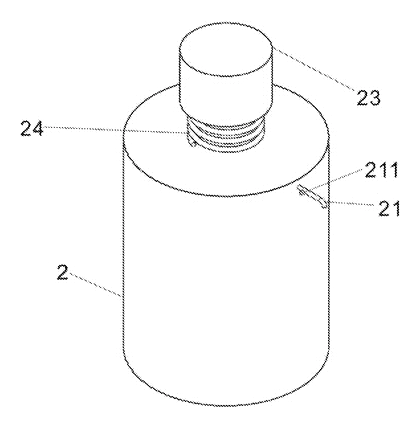
- The Ink Bottle: The bottle body has a side wall with a pipeline extending into the interior. This pipeline has a downward-opening end and contains a valve. On top of the bottle is a protruding bottleneck equipped with a pressure device. This device consists of a “polishing head” containing a central pushing ram. Two annular stops surround the ram. A spring is positioned between these stops, contacting the bottom of the polishing head and the top surface of the bottle.
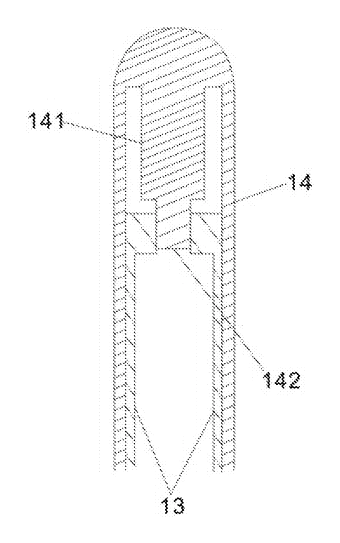
- The Fountain Pen: The pen includes a nib, a connecting portion, and a hollow ink storage capsule made of transparent hard rigid material (such as glass or clear plastic). The top of the capsule has an opening. The pen tail cap screws onto the back and contains an internal abutting bar made of hard rigid material (like stainless steel) with a first rubber stopper at its tip. When screwed tight, this stopper blocks the capsule’s opening.
- The Interaction: To refill, the user removes the tail cap, inserts the pen’s capsule opening into the bottle’s pipeline, opens the valve, and presses the polishing head. The pushing ram moves down, compressing the spring or increasing pressure inside the bottle, forcing ink up through the pipeline and into the pen’s capsule. The transparent capsule allows the user to monitor the ink level in real-time.
Who it is for
- Stationery Brands looking for differentiated writing sets that solve the common pain point of messy ink refills.
- Educational Suppliers providing durable, easy-to-use fountain pens for students who struggle with traditional dipping methods.
- Corporate Gift Makers seeking premium-looking writing instruments with unique functional selling points for office environments.
- Hobbyist Writers who prefer bottled ink variety but want the convenience and cleanliness of a closed-system refill.
How it works
The main parts
| No. | Part | What it does |
|---|---|---|
| 11 | Fountain Pen Nibs | Standard writing tip attached to the connecting portion. |
| 13 | Ink Storage Capsule | Hollow container made of transparent rigid material to hold ink. |
| 131 | Capsule Opening | Top inlet for ink transfer, sealed by the tail cap. |
| 14 | Pen Tail Cap | Screws onto the pen; contains the sealing mechanism. |
| 141 | Abutting Bar | Internal rod in the cap, pushes against the capsule opening. |
| 142 | First Rubber Stopper | Seals the opening when the cap is tightened. |
| 2 | Bottle Body | Main container for ink. |
| 21 | Pipeline | Side tube connecting the exterior to the bottle interior. |
| 211 | Valve | Controls flow through the pipeline. |
| 22 | Protruding Bottleneck | Top mount for the pressure device. |
| 23 | Polishing Head | External button/plunger assembly. |
| 231 | Pushing Ram | Internal piston within the polishing head. |
| 24 | Spring | Provides return force and maintains pressure integrity. |
Operating steps
- Preparation: Remove the pen’s tail cap (14). Ensure the ink bottle (2) is placed on a stable surface.
- Connection: Insert the top opening (131) of the pen’s ink storage capsule (13) into the downward-facing opening of the bottle’s pipeline (21).
- Activation: Unscrew or open the valve (211) on the pipeline. Press down on the polishing head (23).
- Transfer: The pushing ram (231) descends along the bottleneck (22), increasing pressure inside the bottle. Ink is forced upward through the pipeline and into the transparent capsule (13).
- Monitoring: Observe the ink level rising in the transparent capsule. Stop pressing when the desired amount is reached.
- Sealing: Close the valve (211). Withdraw the pen. Screw the tail cap (14) back on. The abutting bar (141) and rubber stopper (142) seal the capsule opening (131) to prevent leaks during storage.
Applications
Student Writing Kits
Students often spill ink when dipping nibs. This system keeps desks clean and teaches proper pen maintenance without the frustration of messy refills. The transparent capsule helps them learn when to refill.
Office Desk Sets
Executives and professionals use fountain pens for signatures and notes. A pressurized bottle system allows quick, clean refills at a desk without needing paper towels or careful handling of open ink wells.
Travel Writing
For writers on the go, the sealed nature of the pen (when capped) and the contained bottle reduce the risk of ink stains in bags. The robust connection prevents accidental disconnection during travel.
Calligraphy Practice
Calligraphers use various ink types. This system allows them to load specific inks into their pens easily without cross-contamination from dipping multiple nibs into shared wells. The visual feedback ensures consistent ink loads for steady strokes.
Where it is less suitable
- Standard Cartridge Pens: This design requires a specific bottle and pen interface; it cannot replace universal international converters or standard cartridges without modification.
- Large Volume Production: The complexity of the spring-loaded bottle and the precision fit of the pen capsule may increase manufacturing costs compared to simple open-well bottles.
- High Viscosity Inks: The pipeline diameter and pressure mechanism are optimized for standard fountain pen ink; very thick or particle-heavy inks might clog the valve or fail to flow under the described pressure.
Patent & Production
At a glance
| Patent number | CN106240195B (application CN201610778376) |
| Type | China invention patent (发明专利) - protects product structure and method |
| Original title | A kind of fountain pen convenient for filling ink and matching ink bottle (一种方便灌墨的钢笔及配套的墨水瓶) |
| Patent owner | Jining High Tech Keda Technology Project Service Co ltd |
| Inventors | Shi Wangming, Dong Baoping |
| Filing date | 2016-08-30 |
| Grant date | 2018-05-25 |
| Status (China) | Lapsed - terminated for non-payment of annual fees (recorded 2024-08-30) |
| Patent family | Public record shows Chinese filings only - no US, European, Japanese, PCT or other filings listed |
| Cited by | 0 later documents |
| Source | Google Patents (search for CN106240195B) |
What the claims cover, in plain language
Claim 1 - An ink bottle comprising a bottle body with a side wall featuring a pipeline extending into the interior. The pipeline has a valve and an opening facing downward. The bottle top has a protruding bottleneck equipped with a pressure device. This device includes a polishing head with an intermediate pushing ram surrounded by two annular stops. The ram, bottleneck, and first stop are mutually socketed. A spring is arranged between the second stop and the first stop, contacting the bottom of the polishing head and the top surface of the bottle.
Claim 2 - The pipeline is located on the upper part of the bottle side wall. Its inner passage extends from top to bottom along the interior, finally passing to the bottom of the bottle.
This is a simplified reading for orientation only. The legal scope is defined by the exact claim wording in the official Chinese document.
What this means for US production
This patent was filed in China and is now lapsed due to non-payment of annual fees. The public record shows no US or other foreign counterpart.
Two points to settle early:
- Other patents may exist. Fountain pen refilling mechanisms are a competitive field with many active patents regarding converters, piston fillers, and safety caps. A freedom-to-operate (FTO) review is needed to ensure the specific combination of the side-pipeline bottle and the tail-cap-sealed capsule does not infringe existing US utility patents.
- Material Safety. Since this involves writing instruments potentially used by children or in schools, material toxicity (lead, phthalates) and small part regulations are critical compliance areas beyond just the patent landscape.
Customization and manufacturing
What can be customized
| Area | Options |
|---|---|
| Bottle Capacity | 30ml, 50ml, or custom sizes based on mold cavity |
| Plunger Mechanism | Spring stiffness, travel distance, ergonomic shape of polishing head |
| Pen Material | ABS, PP, or Glass for the transparent capsule; Stainless Steel for nibs |
| Sealing Components | Rubber hardness (Shore A) for the tail cap stopper and pipeline valve |
| Aesthetics | Color injection, printing on bottle/pen, metallic finishes on plunger |
| Valve Type | Screw-on vs. push-button valve for the pipeline |
Things to plan for (US market)
- ASTM D4236 - Labeling of art materials for chronic health hazards (if sold as art supplies).
- CPSC 16 CFR 1501 - Small parts regulation if marketed to children under 3 years (though fountain pens are typically for older students/adults, caution is advised).
- California Prop 65 - Screening for lead, cadmium, and phthalates in plastics and metal components.
- FDA 21 CFR - If any component is intended for food-contact-like usage (unlikely for ink, but relevant for packaging materials).
How a project runs
- Inquiry - Define capacity, pen style, and target demographic.
- Design - CAD modeling of the bottle-plunger interface and pen-capsule alignment.
- Prototype - 3D-printed samples for fit checks and off-the-shelf springs for initial function tests.
- Pilot Run - Injection molding of trial parts, assembly, and cycle testing of the plunger mechanism.
- Production - Mass molding, printing, spring assembly, and packaging.
Quantities & timeline
The bottle requires molds for the body, bottleneck, and plunger components. The pen requires molds for the barrel, tail cap, and transparent capsule. Tooling for multi-component plastic assemblies takes significant time. Send us your capacity, material preferences, branding requirements, quantity and target price and we will reply with options.
Patent drawings
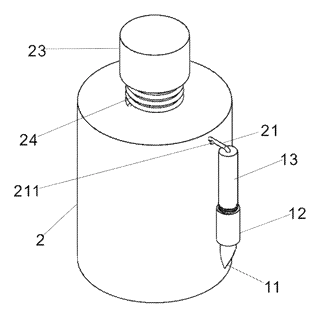
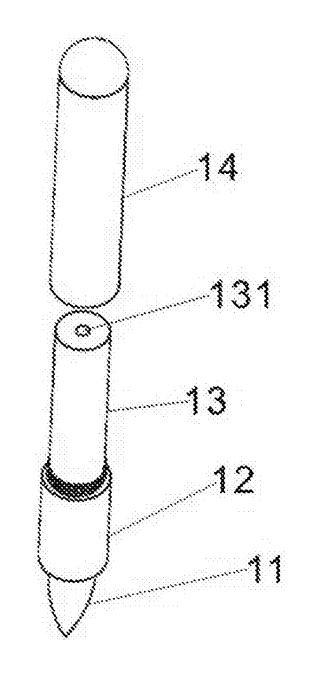
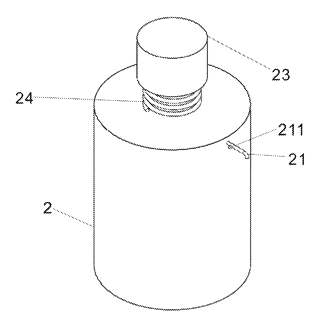
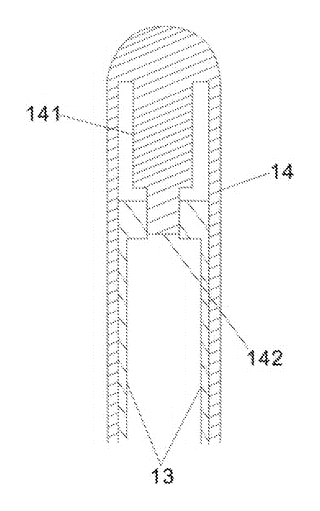
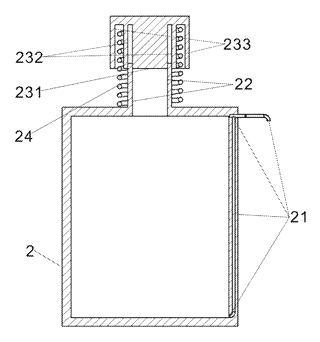
Drawings reproduced from the public patent document for reference.
Production notes
Tooling and process
ABS or PP injection molding is likely used for the bottle body, plunger housing, and pen components. Stamping may be required for the metal abutting bar in the tail cap if stainless steel is specified. Spring assembly is a key manual or automated step.
Cost drivers
The number of molds is typically high due to the multi-part bottle and pen system. Spring quality affects cost and reliability. Print setup for branding adds minor cost. Assembly steps involving the delicate rubber stoppers and valve mechanisms increase labor time.
Prototyping path
We would typically start with a 3D-printed sample to verify the geometric fit between the pen opening and bottle pipeline. Use off-the-shelf springs for initial function and cycle tests to check pressure consistency. Proceed to tooling after validating the sealing performance.
What we would change before tooling
We would likely adjust the tolerance fits between the pushing ram and the bottleneck to ensure smooth operation without leakage. We might test different Shore hardness values for the rubber stoppers to optimize sealing force versus ease of insertion.
Common failure points
Clip spring loss or fatigue could render the plunger ineffective. Sharp edges on molded parts can injure users. Ink compatibility issues may arise if the rubber seals degrade with certain ink solvents. Cover cracking on the transparent capsule is a risk if the material is too brittle. Thread engagement on the tail cap must be robust to maintain seal pressure.
Frequently asked questions
How does the refilling mechanism actually work?
You place the pen’s open ink capsule into a side tube on the bottle. Then, you press a plunger on top of the bottle. This creates pressure that forces ink up through the tube and into the pen. It is a closed system, so you do not dip the nib.
Is the ink bottle reusable?
Yes. The bottle is designed as a permanent container for your preferred ink. You can refill the bottle itself from larger bulk containers, then use the pressure mechanism to fill your pen repeatedly.
Can I use any fountain pen with this bottle?
No. This system requires a specific pen design with a compatible opening size and shape to fit into the bottle’s pipeline. The pen also needs a special tail cap with an internal sealing bar.
Why is the pen’s ink capsule transparent?
The patent specifies a transparent hard rigid material (like glass or clear plastic) so the user can visually monitor the ink level while filling. This prevents overfilling and helps track consumption.
Does the pen leak when stored?
When the tail cap is screwed on, an internal abutting bar with a rubber stopper seals the top of the ink capsule. This design aims to prevent leaks during storage and transport, provided the cap is tightened correctly.
Are there safety concerns for children?
As with all writing instruments, small parts like the tail cap should be kept away from young children to avoid choking hazards. The materials must comply with local safety standards for heavy metals and phthalates.
Can this design be made and sold in the US?
The patent was filed in China and is now lapsed, and the public record shows no US counterpart, so it does not restrict the design in the US or in China. However, other US patents may cover similar refilling mechanisms, so we recommend a freedom-to-operate check before volume production.
Are you affiliated with the patent owner?
No. IP2M is an independent design and manufacturing service working from the public patent document.
Request a quote
Click Request a Quote below to see our email address - copy it, or open your email app with a ready-made message. Please mention patent CN106240195B in the subject.
Helpful details to include:
- Your company and channel (stationery brand, educational supplier, corporate gift maker)
- Capacity of the ink bottle and pen
- Materials preference (ABS, PP, Glass, Metal)
- Branding needs (colors, logos, printing)
- Estimated quantity and target price
- Timeline - when you would like samples and the first shipment
You can also reach us at (332) 203-9997.
Page editor: Daniel Chen, Product Research Editor · IP2M
Last updated November 7, 2026. If something on this page looks wrong, email [email protected] and we will check it against the patent.
Interested in building this?
Tell us your target market, quantity and timeline. We reply with options for prototyping, small-batch runs or volume production.
Send your inquiry to
Please put CN106240195B in the subject line and tell us your company, country, estimated quantity and timeline.
Prefer to talk? Call (332) 203-9997.
More product-ready patents
All School, Office & Art patents →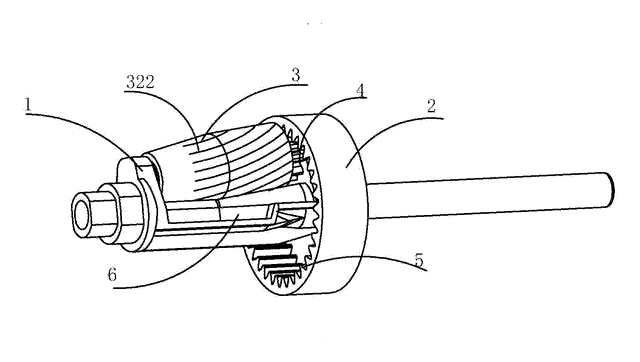
School, Office & Art
Long-Point Sketch Pencil Sharpener
Crank sharpener that cuts only the wood of sketch pencils, leaving a long, round lead about 30 mm long.
Patent CN207241257U
School, Office & Art
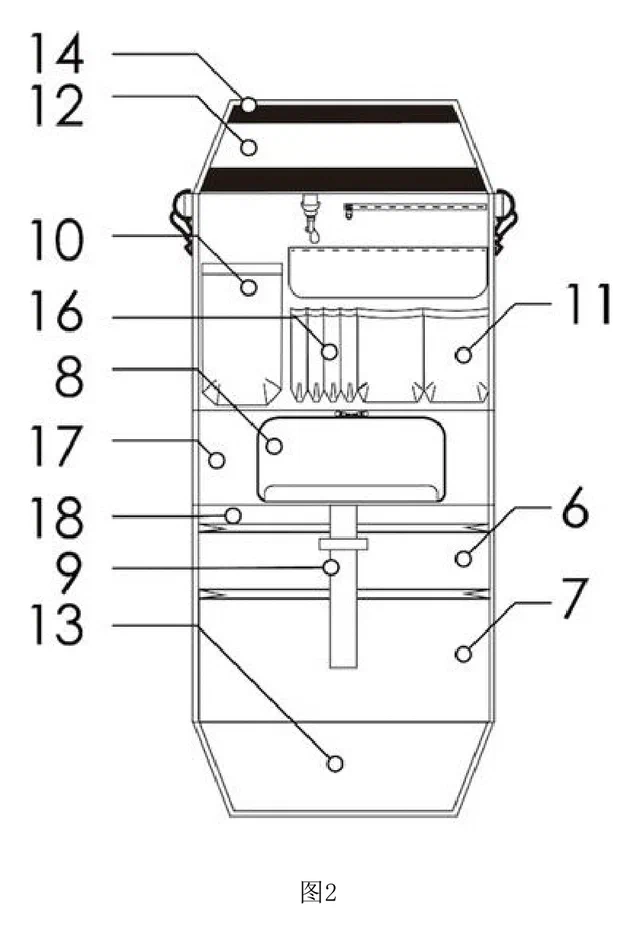
Fold-Out Desk Organizer Insert for School Backpacks
Backpack insert that unfolds into a hanging desk organizer for workbooks, stationery and a water bottle.
Patent CN209436546U
School, Office & Art
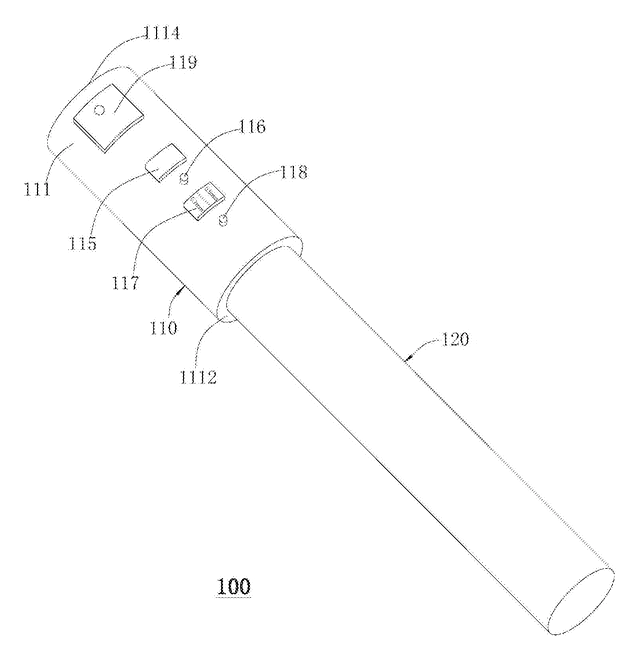
Smart Pencil Cap That Checks the Point with a Camera
Electronic pencil cap that photographs the point, measures it and reminds you to sharpen.
Patent CN106427302B
School, Office & Art
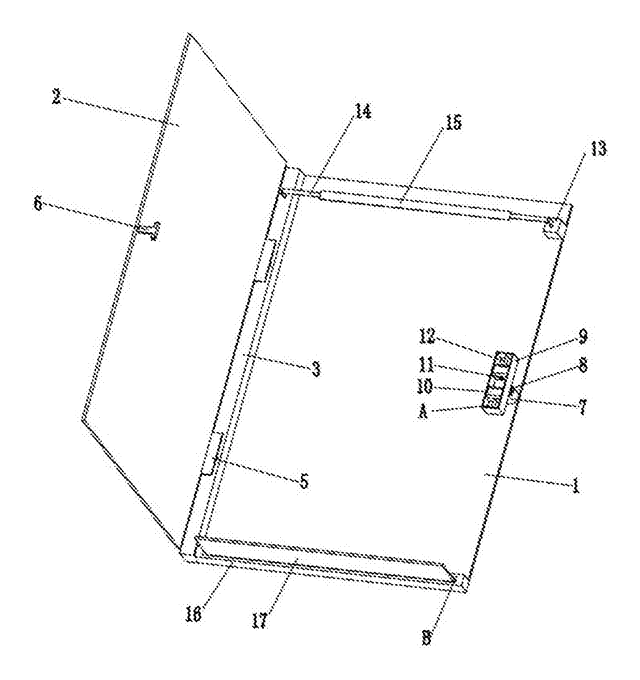
Expanding Clipboard Folder with Spring-Mounted Hinge and Catch
Hard folder whose spring-mounted hinge and catch let the cover clamp any thickness of paper.
Patent CN105667120B
School, Office & Art
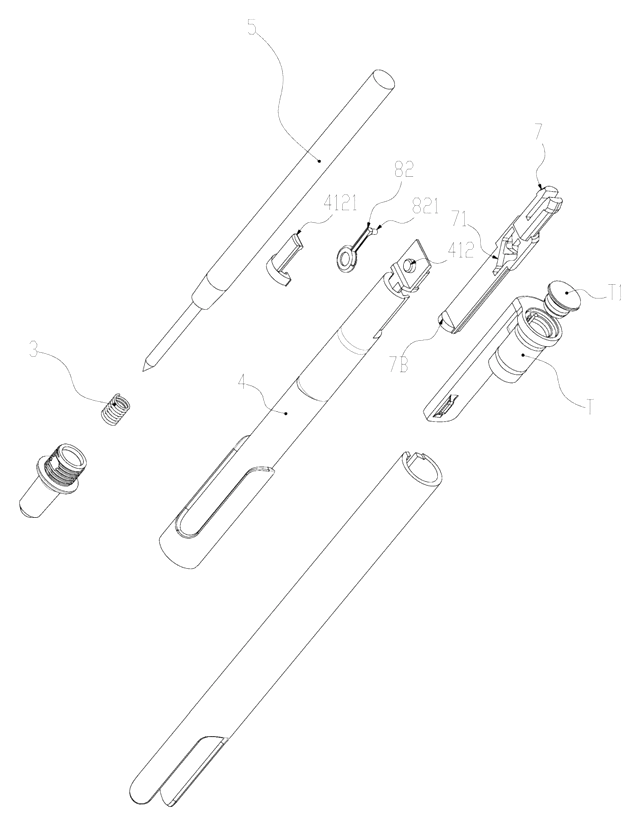
Slide-Action Retractable Pen with a Friction-Loaded Cam That Ignores Gravity
Slide-action retractable pen whose spring-pressed cam latch stays put whichever way the pen is held.
Patent CN217671900U
School, Office & Art
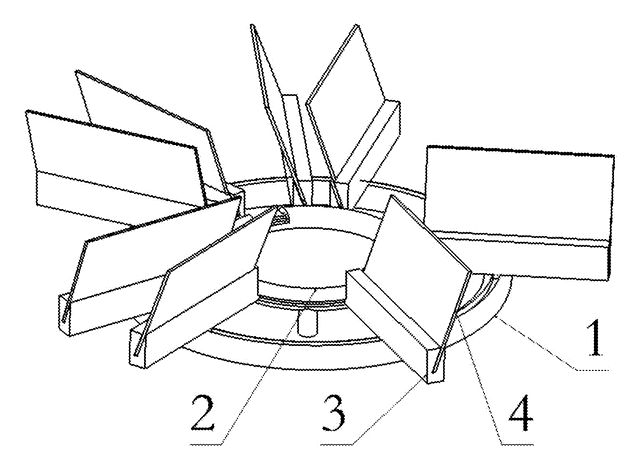
Carousel Business Card Holder with Rolling Card Trays on Twin Ring Tracks
Desk card holder: angled card trays roll on wheels around two concentric ring tracks and lift out.
Patent CN105774300B
Browse by category
- Apparel & Accessories (48)
- Baby & Kids (29)
- Bags & Luggage (17)
- Bath & Personal Care (32)
- Car Accessories (25)
- Furniture, Bedding & Storage (24)
- Garden & Outdoor (32)
- Health & Wellness (14)
- Home, Kitchen & Cleaning (50)
- Lighting (23)
- Packaging & Containers (12)
- Pet Products (11)
- Phone & Camera Accessories (9)
- Retail Display (25)
- School, Office & Art (36)
- Sports & Recreation (46)
- Tools & Workshop (54)
- Toys & Games (22)
This page is based on the public patent document CN106240195B, assigned to Jining High Tech Keda Technology Project Service Co ltd. IP2M is an independent manufacturing service and is not affiliated with, endorsed by or licensed by the patent owner. Images marked as concept renderings are illustrations, not photos of an existing product. Patent status information is provided for reference only and is not legal advice; confirm freedom to operate for your market before production. Full disclaimer.