
Patent CN106390429B
Updated November 8, 2026Foldable Skateboard with Self-Locking Hinge Mechanism
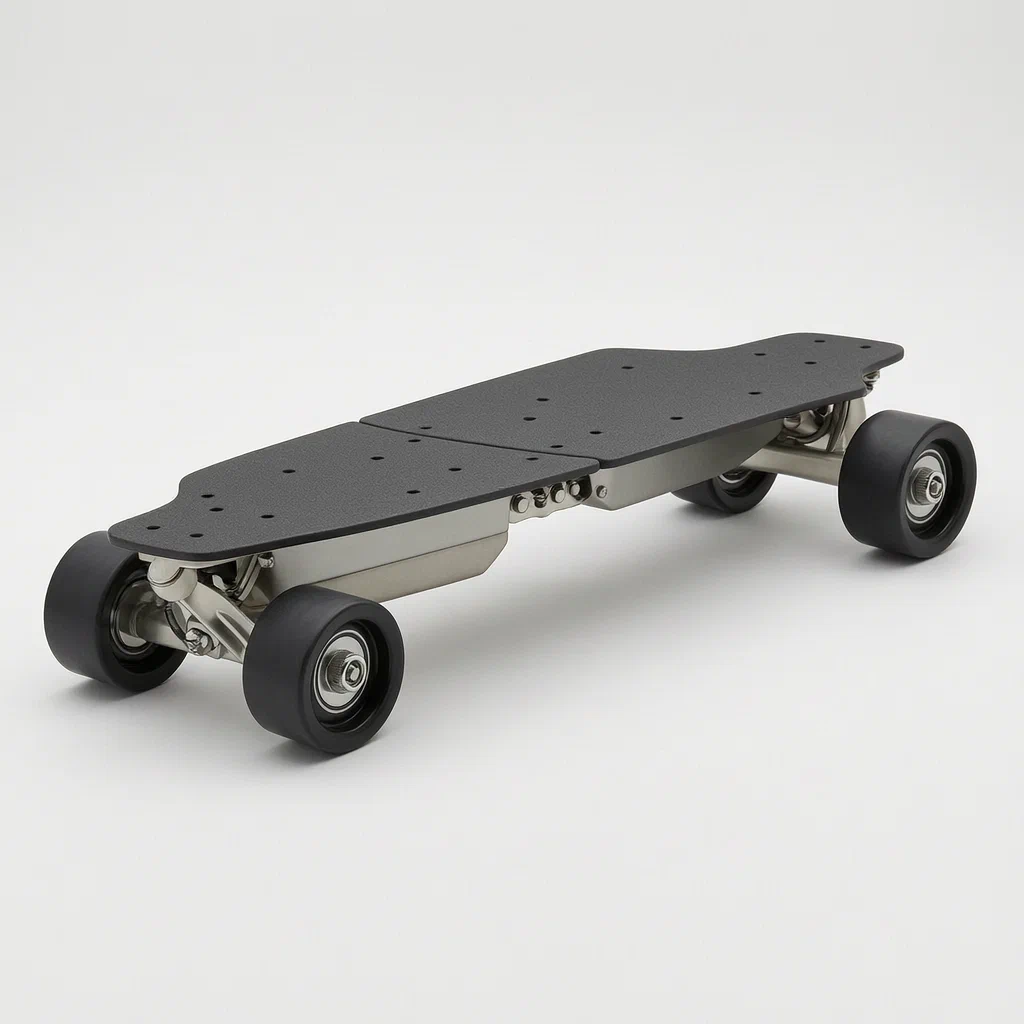
Traditional skateboards are bulky and hard to store or carry on public transport. Foldable boards exist but often suffer from loose hinges that wobble during riding or fail under sudden impact. This design solves that by integrating a self-locking hinge directly into the deck's pivot point. It uses a spring-loaded cam system where a sliding part engages with a follower when the board is flat, creating a rigid bridge. When you lift one side of the board to fold it, the rotation forces the sliding part back, releasing the lock smoothly. This ensures the board stays tight while riding but folds easily when needed.
- China invention patent - in force
- No filings outside China
- Skateboard hardware
- Spring-loaded cam locking mechanism
Splat! What let you down?
🔒
Self-Locking Hinge
Cam-and-sliding parts engage automatically when the deck is flat, preventing wobble.
📦
Compact Folding
Deck splits into two halves; wheels stagger front-to-back to minimize thickness.
⚡
Smooth Release
Folding motion pushes the slider back via cam action, no manual latch required.
🛞
Staggered Wheels
Wheel groups offset vertically when folded, reducing the overall package size.
Bring this product to market
- ✓ Patent review Patent family and legal status reviewed in the relevant jurisdictions.
- 2 Product brief · now How it works, uses and options written up
- 3 Prototype First samples for buyers to review
- 4 Pilot run Small first batch for launch customers
- 5 Volume production Repeat orders at scale
Buyer interest
– of 100 buyers needed to start prototyping
One click, no sign-up. Each vote is one real visitor, and products with the most interest go to prototyping first.
Build team: no members yet. Need a partner, co-funding or skills to build this? Join and we introduce the team once it forms.
Patent Rights & Team Participation
Before joining a development team, participants should ensure they have the necessary rights or authorization to participate in the project.
Participation is generally appropriate where:
- You own the relevant patent rights or have obtained permission or a license from the rights holder.
- The relevant patent rights have expired or have been legally invalidated in the jurisdictions where the planned activities will take place.
- The planned development, manufacturing, and commercialization activities have been independently assessed and do not infringe applicable patent rights in the relevant jurisdictions.
Important: Being located outside a country where a patent is protected does not automatically exempt you from patent infringement risks. Patent rights may apply based on where development, manufacturing, use, sale, or import activities take place.
IP2M does not grant any patent license or authorization through team participation. Joining a project does not provide permission to use, manufacture, or commercialize patented technology.
The problem
Standard skateboards are difficult to store in small apartments or carry onto buses and trains because of their fixed length. Existing foldable models often use simple latches or friction hinges that loosen over time, causing the deck to twist or wobble during aggressive riding. This instability can lead to loss of control or structural failure at the hinge point. Users need a board that feels as solid as a traditional one while riding but collapses instantly without fiddling with separate locks.
The solution
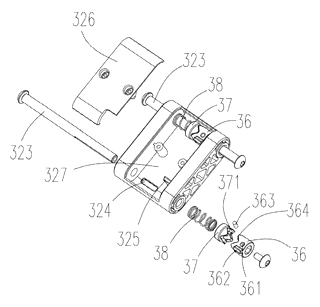
The patent describes a foldable skateboard consisting of two deck sections connected by a central support hinge. The core innovation is the internal locking mechanism within the hinge assembly. Each pivot axis holds an elastic component (spring), a sliding part, and a follower.
When the deck is unfolded to its flat riding position, the follower rotates slightly due to the geometry of the connection, causing its first cam part to mesh with the second cam part of the sliding part. The spring presses these components together, locking the two deck halves rigidly in place. This creates a continuous, stable platform capable of bearing rider weight and impact.
To fold the board, the user lifts one deck section. This rotation drives the follower, which uses the cam profile to push the sliding part axially along the pivot shaft against the spring tension. As the sliding part retracts, the cam parts disengage, unlocking the hinge. The two deck sections then pivot down toward each other. In the folded state, the wheel groups attached to the underside of each deck section are positioned so that they are staggered front-to-back rather than aligned, significantly reducing the total thickness of the folded package.
Who it is for
- Urban Commuters who need a portable board for last-mile travel on subways or buses, requiring quick folding and compact storage.
- Freestyle Skaters looking for a trick-friendly board that maintains rigidity during landings but offers convenience for carrying gear.
- Recreational Riders with limited home storage space who want a functional skateboard that fits in a closet or under a bed.
- OEM Brands entering the electric mobility or lightweight sports market, seeking a reliable mechanical folding solution without complex electronics.
How it works
The main parts
| No. | Part | What it does |
|---|---|---|
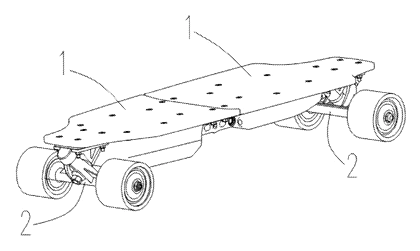
| 1 | Deck Sections | Two pedal pieces that form the riding surface. |
| 2 | Wheel Groups | Trucks and wheels mounted on the underside of each deck. |
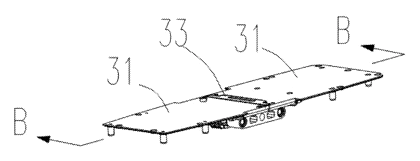
| 3 | Support Hinge | Central connector joining the two deck sections. |
| 31 | Pivotal Parts | Arms connecting the decks to the hinge axes. |
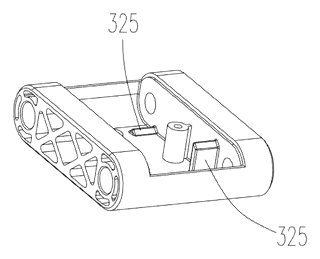
| 32 | Connector | Central body housing the locking mechanism. |
| 323 | Pivot Axes | Shafts around which the pivotal parts rotate. |
| 341 | Locking Assembly | Includes elastic component, sliding part, and follower. |
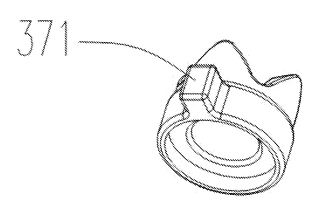
| 3411 | Guide/Sliding Part | Moves linearly along the axis; has cam teeth. |
| 3412 | Follower | Rotates with the axis; meshes with the sliding part. |
Opening and Closing
- Unfold the Deck: Pull the two deck sections apart until they align flat.
- Automatic Locking: As the sections reach the flat position, the followers rotate into engagement with the sliding parts. The spring forces the cam teeth together, locking the hinge rigidly.
- Ride the Board: The locked hinge prevents twisting or separation under rider weight and impact.
- Fold the Board: Lift one deck section upward. The rotation of the pivotal arm turns the follower, which pushes the sliding part backward via cam action, compressing the spring.
- Collapse: Once unlocked, the deck sections fold down toward each other. The wheel groups nestle into the gap between the decks, staggered to keep the profile thin.
Applications
Urban Commuting
Commuters can fold the board in seconds to step onto a crowded subway car or store it under a desk at work, avoiding the hassle of dragging a long, rigid board through busy streets.
Apartment Living
Residents in small urban apartments benefit from the reduced footprint. The staggered wheel design allows the folded board to fit in narrow closets or behind doors, maximizing living space.
Travel and Transport
Travelers can pack the board in standard luggage or carry it easily as hand baggage. The self-locking mechanism ensures it doesn’t accidentally unfold inside a bag, protecting both the board and other items.
Recreational Parks
Users at parks can quickly deploy the board for a session and fold it immediately after to walk to nearby cafes or shops, keeping the setup process minimal and intuitive.
Where it is less suitable
- Downhill Speed Riding: High-speed stability might be compromised compared to single-piece decks if the hinge flexes under extreme vibration.
- Heavy Cargo Carrying: The folding mechanism adds complexity; dedicated cargo bikes or longboards are better for transporting heavy goods.
- Extreme Vert Ramp Use: While the lock is strong, repeated high-impact stress on a moving joint may require more frequent maintenance than static bolts.
Patent & Production
At a glance
| Patent number | CN106390429B (application CN201610939051) |
| Type | China invention patent (发明专利) - protects product structure and method |
| Original title | Foldable Skateboard and Its Support Hinge (可折叠的滑板及其支撑铰链) |
| Patent owner | CHANGZHOU MOBEN INTELLIGENT TECHNOLOGY Co Ltd |
| Inventors | Not disclosed in publication |
| Filing date | 2016-10-25 |
| Grant date | 2018-12-11 |
| Status (China) | In force - valid until at most 2036-10-25, provided annual fees are paid |
| Patent family | Public record shows Chinese filings only - no US, European, Japanese, PCT or other filings listed |
| Cited by | 0 later documents |
| Source | Google Patents (search for CN106390429B) |
What the claims cover, in plain language
Claim 1 defines a support hinge comprising a connector with pivot axes on both sides. Pivotal parts attach to these axes. A groove in the middle of the connector houses an elastic component (spring), a sliding part, and a follower. The spring pushes the sliding part against the follower. The follower has a first cam part, and the sliding part has a second cam part. When the pivotal parts are flat, the cams mesh to lock the hinge. When the parts move to a folded position, the follower rotates and pushes the sliding part along the axis, disengaging the cams.
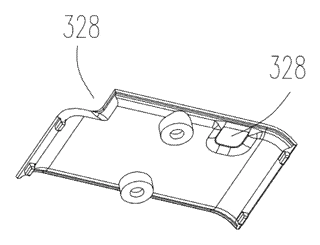
Claims 2-7 detail variations such as gear limiting sections, covers with notches, guide grooves for the sliding parts, and fasteners securing the follower to the axis. Claim 6 specifies that the pivotal parts abut each other in the flat position.
Claim 8 extends this hinge to a foldable slide plate (skateboard) with two deck sections and wheel groups, where the decks pivot between flat and collapsed positions.
Claim 9 specifies that when folded, the two wheel groups are staggered front-to-back to reduce thickness.
Claim 10 mentions power and motion control modules housed in cavities within the pivotal parts, suggesting potential integration with electric assist systems.
This is a simplified reading for orientation only. The legal scope is defined by the exact claim wording in the official Chinese document.
What this means for US production
This patent was filed in China and is currently in force. Making or selling this specific hinge design in China requires the owner’s permission. However, the public record shows no US counterpart. Therefore, manufacturing or selling this design in the United States does not infringe this specific Chinese patent.
Two points to settle early:
- Other patents may exist. Skateboard folding mechanisms are a competitive field. While this specific cam-lock arrangement appears unique in the public record, prior art regarding spring-loaded latches, multi-axis hinges, or electric skateboard structures may exist in US patents. A freedom-to-operate (FTO) review is strongly recommended before tooling.
- Material and Safety Standards. US buyers will expect compliance with consumer safety standards for recreational products, particularly regarding load-bearing joints and sharp edges.
Customization and manufacturing
What can be customized
| Area | Options |
|---|---|
| Deck Material | Maple wood veneer, bamboo composite, or glass-filled nylon plastic. |
| Hinge Finish | Anodized aluminum, powder-coated steel, or raw machined look. |
| Locking Force | Spring rate can be adjusted to change the effort required to fold/unfold. |
| Wheel Configuration | Standard polyurethane wheels, cruiser soft wheels, or integrated brake hubs. |
| Electric Integration | Optional motor/battery module placement in pivotal parts (per Claim 10). |
| Colorways | Custom graphics on deck surfaces and colored hardware accents. |
Things to plan for (US market)
- ASTM F1724 - Standard specification for skateboards, covering performance requirements for trucks, wheels, and decks.
- CPSC General Requirements - Compliance with general consumer product safety rules, including labeling and hazard warnings.
- RoHS / REACH - If exporting to global markets beyond the US, material restrictions apply to plastics and metals.
- Battery UN 38.3 - Only applicable if the electric variant (Claim 10) is produced; lithium-ion batteries must pass transport testing.
How a project runs
- Inquiry - Define target price, quantity, and whether the version is manual or electric.
- Design - Finalize hinge dimensions, spring specs, and deck curvature.
- Prototype - Create functional samples for lock reliability and folding ease tests.
- Pilot run - Small batch production for durability testing (cycling the hinge 10,000+ times).
- Production - Injection molding for hinge parts, CNC/machining for connectors, assembly.
Quantities & timeline
Tooling for the complex hinge internals (sliding parts, followers) requires precision molds. Deck stamping or molding depends on the chosen material. Certification testing is scheduled before volume production. Send us your target volume, material preference, and electric/non-electric requirement and we will reply with options.
Production notes
Tooling and process
The hinge components likely require injection molding for the plastic or metal powder sintering parts, while the connector body typically involves aluminum extrusion. Stamping is used for any sheet-metal brackets or covers.
Cost drivers
Weight reduction in the deck typically affects material choice. The number of molds for the intricate cam parts increases upfront costs. Fastener count and packaging complexity also drive cost.
Prototyping path
Initial prototypes typically use 3D-printed parts for fit checks. Extruded frames serve as functional samples for load testing. Impact test samples verify the locking mechanism’s strength before tooling.
What we would change before tooling
We would likely optimize wall thickness and joint design of the sliding parts to prevent cracking. Shaft and bearing alignment tolerances must be tightened to ensure smooth cam engagement without binding.
Common failure points
Cracking under impact is a risk if materials are too brittle. Bolts loosening can occur if vibration dampens poorly. Spring fatigue may reduce locking force over time. UV degradation affects exposed plastic components.
Patent drawings
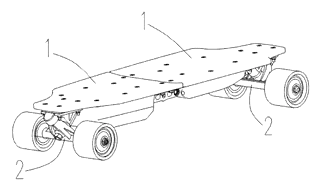
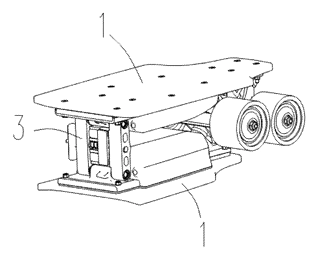
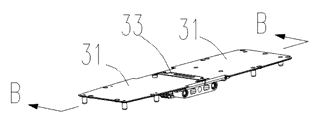
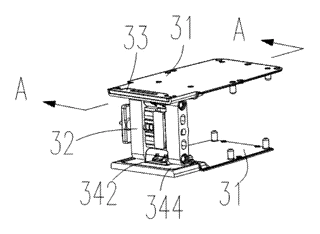
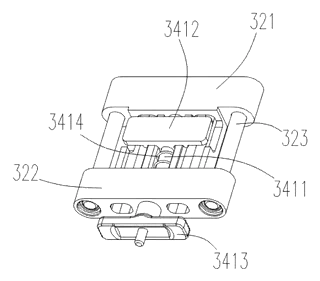
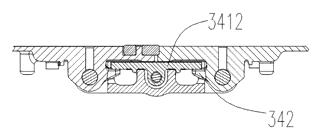
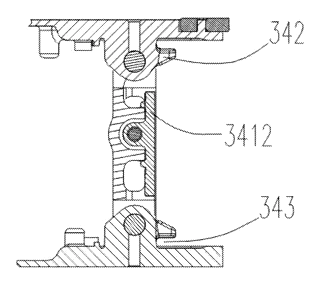
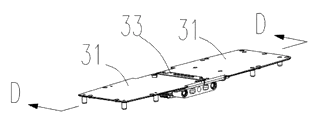
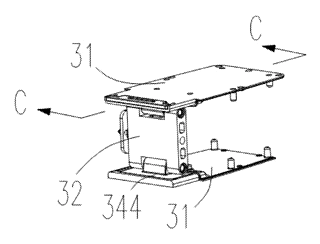
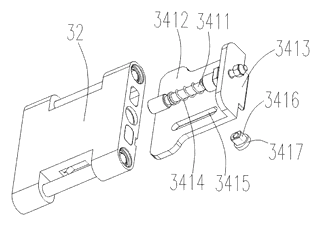
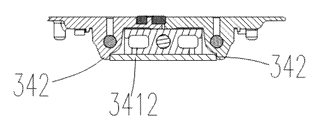
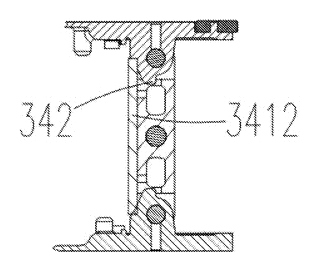
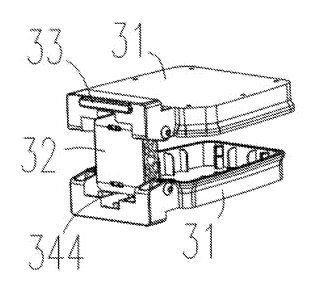
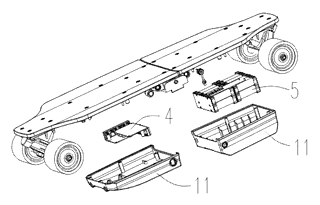
Drawings reproduced from the public patent document for reference.
Frequently asked questions
How does the hinge stay locked while riding?
The design uses a spring-loaded cam mechanism. When the deck is fully extended, the rotating followers push against sliding parts, engaging their teeth. The spring keeps these parts meshed, creating a rigid lock that prevents the deck from twisting or separating under rider weight.
Is it hard to fold?
No. You simply lift one side of the deck. The rotation of the pivotal arm naturally drives the follower, which pushes the sliding part back against the spring. This releases the lock automatically, allowing the deck to collapse without needing to press buttons or pull levers.
Why are the wheels staggered?
When folded, the two deck sections come together. If the wheels were aligned, they would hit each other, making the board thick. By staggering them front-to-back, the wheels nest into the gaps between the decks, significantly reducing the overall thickness for easier storage and transport.
Can this handle heavy riders?
The patent focuses on the mechanical structure. Load capacity depends on the material of the deck and the hinge pins. For production, we select impact-grade materials and test the hinge boss and pivot wear to meet ASTM standards for typical adult weights.
Does the lock ever slip?
The cam geometry is designed to resist back-driving. Under normal riding loads, the force tends to tighten the mesh rather than loosen it. Slipping could occur only if the spring fails or debris blocks the sliding parts, which is mitigated by sealed covers in some embodiments.
Can I add electric motors?
Yes, Claim 10 mentions power and motion control modules placed in cavities within the pivotal parts. This suggests the design can accommodate battery packs and controllers, turning it into an electric-assist foldable skateboard.
Can this design be made and sold in the US?
The patent is filed in China and is in force there. However, the public record shows no US counterpart, so this specific Chinese patent does not restrict manufacturing or sales in the United States. We recommend a freedom-to-operate check to ensure no other US patents cover similar folding mechanisms.
Are you affiliated with the patent owner?
No. IP2M is an independent design and manufacturing service working from the public patent document.
Request a quote
Click Request a Quote below to see our email address - copy it, or open your email app with a ready-made message. Please mention patent CN106390429B in the subject.
Helpful details to include:
- Your company and channel (sports brand, commuter gear maker, e-skate startup)
- Deck material (wood, plastic, carbon fiber)
- Target load rating and rider demographic
- Electric vs. Manual configuration
- Estimated quantity and target price
- Timeline - when you would like samples and the first shipment
You can also reach us at (332) 203-9997.
Page editor: Emily Zhang, Product Editor · IP2M
Last updated November 8, 2026. If something on this page looks wrong, email [email protected] and we will check it against the patent.
Interested in building this?
Tell us your target market, quantity and timeline. We reply with options for prototyping, small-batch runs or volume production.
Send your inquiry to
Please put CN106390429B in the subject line and tell us your company, country, estimated quantity and timeline.
Prefer to talk? Call (332) 203-9997.
More product-ready patents
All Sports & Recreation patents →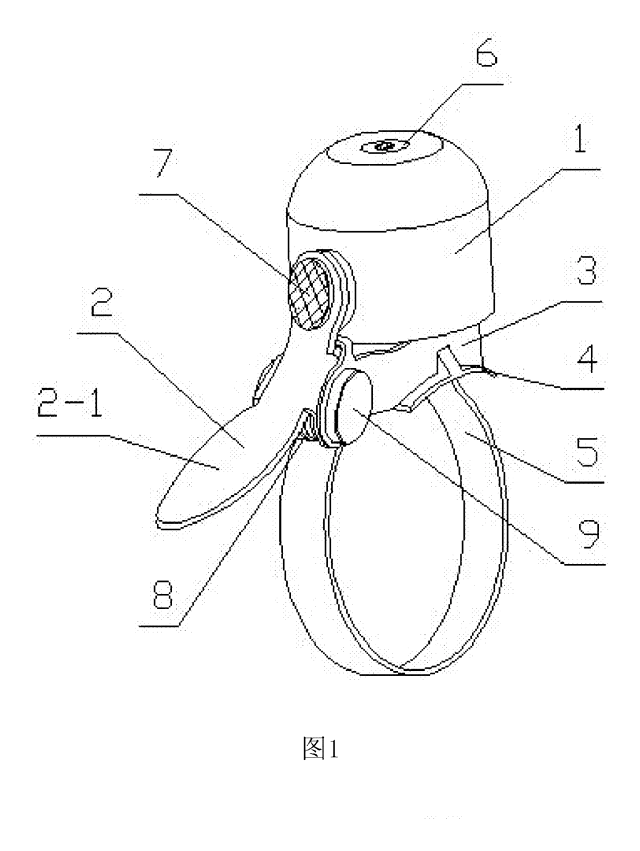
Sports & Recreation
Compact Torsion-Spring Bike Bell
Mini bike bell with a standard torsion spring and a rubber-floated dome - small size, clear tone, quick strap mount.
Patent CN205819384U
Sports & Recreation
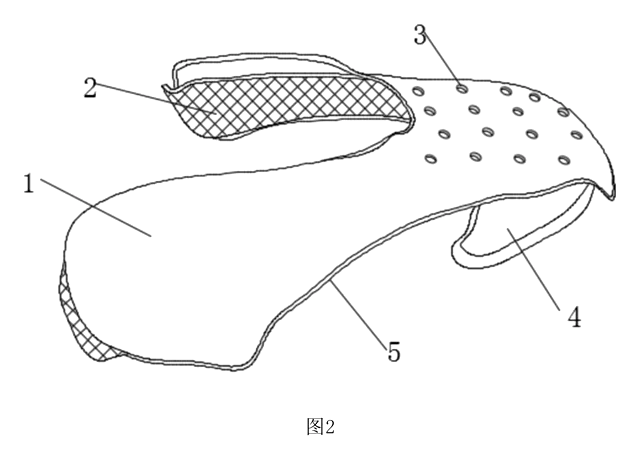
Padded Toe-Box Shield for Sneakers
Ventilated, silicone-lined toe-box insert that supports the front of a sneaker and cushions the toes.
Patent CN209473731U
Sports & Recreation
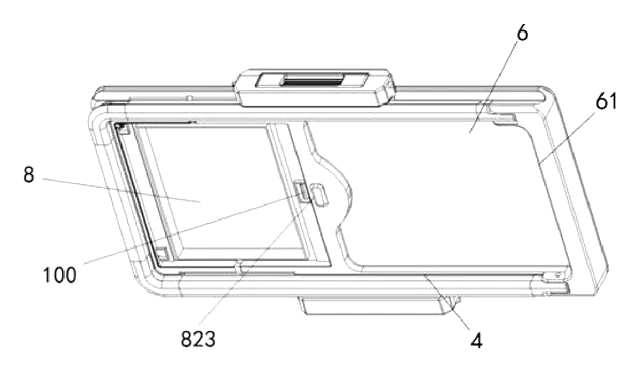
Reversible Fishing Seat-Box Lid with Backrest
Fishing seat-box lid that flips on removable hinge pins: cushion, backrest and storage on one face.
Patent CN208624426U
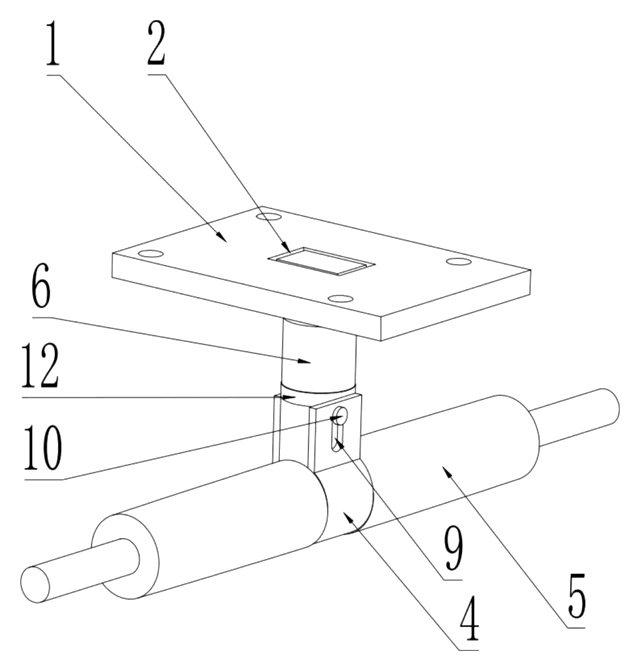
Sports & Recreation
Swivel-Pin Skateboard Truck with Rubber Sleeve
Skateboard truck with a turning center pin, a tilting axle clamp and a rubber sleeve that centers it.
Patent CN216777880U
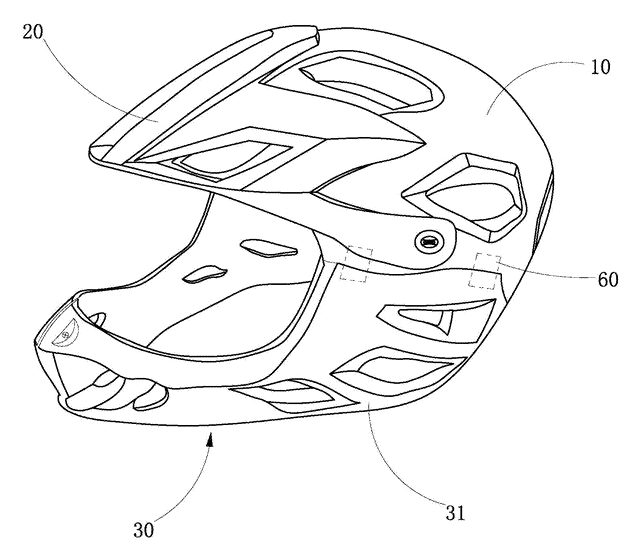
Sports & Recreation
Full-Face Bike Helmet with Magnetic Detachable Chin Bar
Full-face cycling helmet whose chin bar clips on and off with magnetic, latching side connectors.
Patent CN206630067U
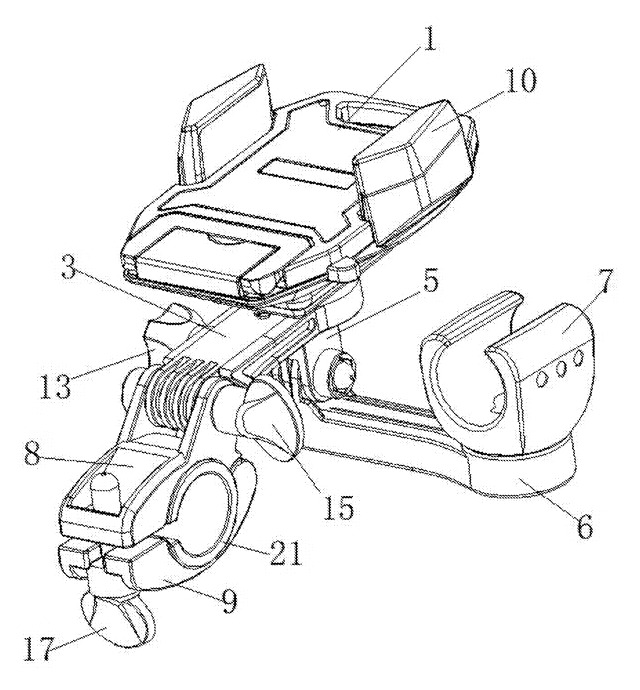
Sports & Recreation
Bike Phone Holder with Built-In Flashlight Clamp
Handlebar mount with a phone cradle on top and a flashlight clamp below, on one arm.
Patent CN206077485U
Browse by category
- Apparel & Accessories (51)
- Baby & Kids (30)
- Bags & Luggage (17)
- Bath & Personal Care (33)
- Car Accessories (27)
- Furniture, Bedding & Storage (25)
- Garden & Outdoor (34)
- Health & Wellness (15)
- Home, Kitchen & Cleaning (52)
- Lighting (25)
- Packaging & Containers (13)
- Pet Products (12)
- Phone & Camera Accessories (10)
- Retail Display (27)
- School, Office & Art (38)
- Sports & Recreation (49)
- Tools & Workshop (57)
- Toys & Games (24)
This page is based on the public patent document CN106390429B, assigned to CHANGZHOU MOBEN INTELLIGENT TECHNOLOGY Co Ltd. IP2M is an independent manufacturing service and is not affiliated with, endorsed by or licensed by the patent owner. Images marked as concept renderings are illustrations, not photos of an existing product. Patent status information is provided for reference only and is not legal advice; confirm freedom to operate for your market before production. Full disclaimer.