
Patent CN106419522B
Updated November 4, 2026Pressure Cooker Lid Safety Interlock with Spring-Loaded Driven Plate
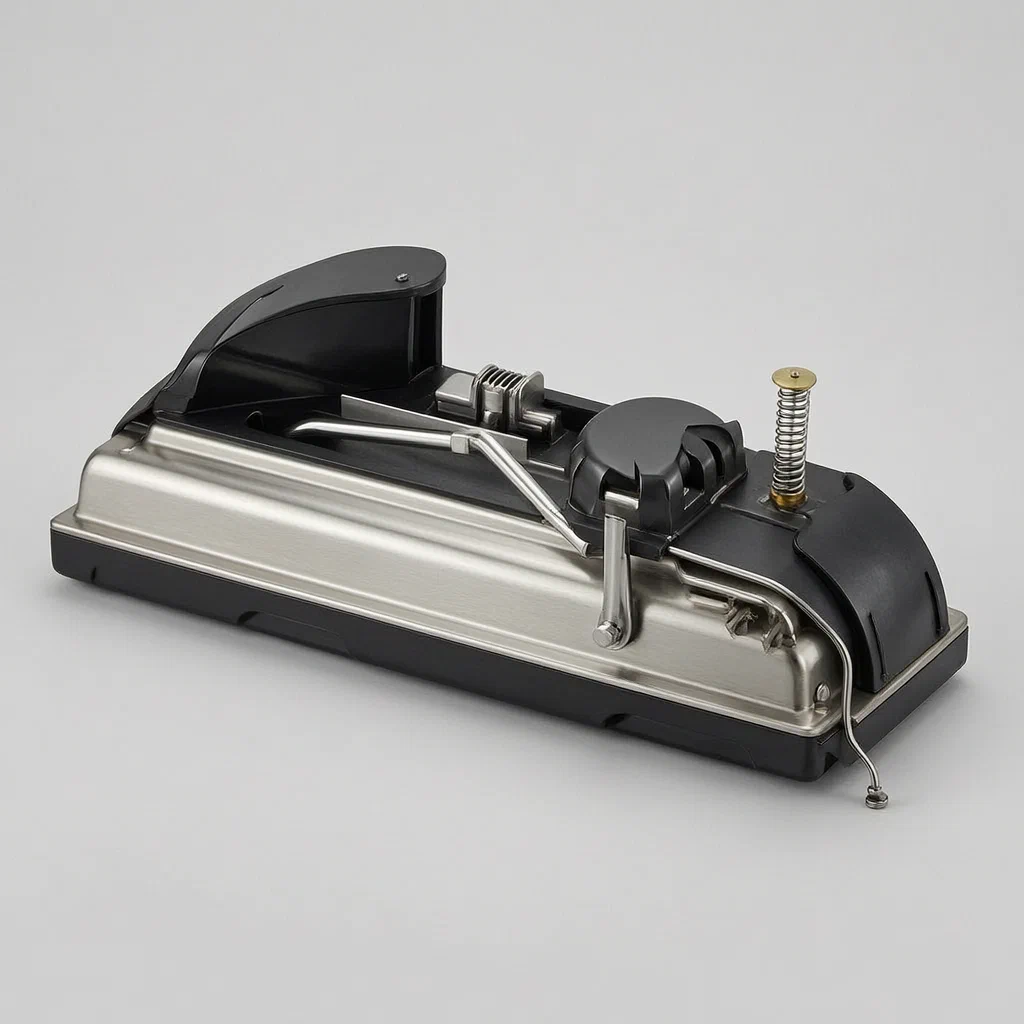
Traditional pressure cookers rely on the user hearing a click or seeing an indicator to know if the lid is safe to open. If the seal fails or the user misjudges the pressure release, dangerous steam can escape before the lid is fully unlocked. This patent describes a passive mechanical interlock inside the lid. It uses a spring-loaded 'driven pinch plate' that physically blocks the float valve from rising unless the lid is rotated into its final locking position. Once locked, the rotation of the lid against the pot body moves a driving rod, which releases the pinch plate. This allows the float valve to engage only when the lid is correctly seated, preventing accidental opening during cooking.
- China invention patent - active
- No filings outside China
- Kitchen appliance components
- Steel and plastic lid assembly with spring mechanisms
Splat! What let you down?
🔒
Mechanical Interlock
A driven pinch plate blocks the float valve until the lid is fully rotated into the locked position.
⚙️
Spring-Actuated Release
Lid rotation drives an external rod inward, compressing a return spring to align the safety holes.
🛡️
Passive Safety
The mechanism works without electronics; it relies on physical alignment of the pot teeth and lid.
🍳
Standard Integration
Designed to fit within existing steel and plastic lid structures used in modern pressure cookers.
Bring this product to market
- ✓ Patent review Patent family and legal status reviewed in the relevant jurisdictions.
- 2 Product brief · now How it works, uses and options written up
- 3 Prototype First samples for buyers to review
- 4 Pilot run Small first batch for launch customers
- 5 Volume production Repeat orders at scale
Buyer interest
– of 100 buyers needed to start prototyping
One click, no sign-up. Each vote is one real visitor, and products with the most interest go to prototyping first.
Build team: no members yet. Need a partner, co-funding or skills to build this? Join and we introduce the team once it forms.
Patent Rights & Team Participation
Before joining a development team, participants should ensure they have the necessary rights or authorization to participate in the project.
Participation is generally appropriate where:
- You own the relevant patent rights or have obtained permission or a license from the rights holder.
- The relevant patent rights have expired or have been legally invalidated in the jurisdictions where the planned activities will take place.
- The planned development, manufacturing, and commercialization activities have been independently assessed and do not infringe applicable patent rights in the relevant jurisdictions.
Important: Being located outside a country where a patent is protected does not automatically exempt you from patent infringement risks. Patent rights may apply based on where development, manufacturing, use, sale, or import activities take place.
IP2M does not grant any patent license or authorization through team participation. Joining a project does not provide permission to use, manufacture, or commercialize patented technology.
The problem
In many pressure cookers, the safety of the lid depends on the correct seating of the float valve. If the lid is not fully locked, or if the user attempts to open the lid while pressure remains inside, the float valve may drop prematurely, allowing the lid to be removed. This can lead to sudden steam release and potential burns. Existing designs often rely on visual indicators or audible clicks, which users might miss or misinterpret. There is a need for a passive mechanical system that physically prevents the float valve from engaging or disengaging incorrectly based on the rotational position of the lid relative to the pot body.
The solution
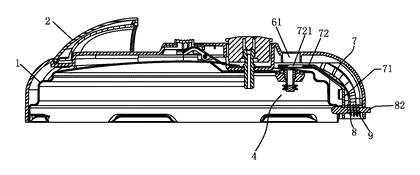
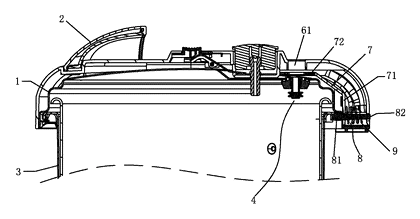
- Lid Structure: The assembly consists of a steel cover (1) and a plastic surface cover (2). Between them lies a cavity formed by the upper cavity (6) of the plastic cover, the lower cavity (5) of the steel cover, and the circumferential wall of the steel cover.
- Connecting Mechanism: A connecting plate (7) is housed within this cavity. It has an active part (71) and a driven part (72). The driven part contains a through hole (721).
- Float Valve Interaction: A float valve (4) sits in the steel cover. In the unlocked state, the driven part (72) blocks the top of the float, preventing it from rising even if pressure builds up.
- Driving Rod System: A driven pinch plate (13) is mounted on a pivot seat (12). It includes a driving end (131), a pivot portion (132), and a pinch plate portion (133). A driving rod (10) is attached to the driving end (131) and extends through a guide hole in the steel cover to interact with the pot teeth.
- Spring Action: A return spring (11) pushes the driving end (131) outward, keeping the pinch plate portion (133) engaged with the active part (71) of the connecting plate. This maintains the blocked state of the float valve.
Who it is for
- Appliance Manufacturers: Brands producing electric or stovetop pressure cookers looking to enhance their safety features without adding complex electronic sensors.
- OEM Suppliers: Component suppliers providing lid assemblies to major kitchenware brands who require reliable, passive mechanical locks.
- Safety-Certified Product Designers: Engineers designing products for markets with strict safety standards (like UL or CE) where mechanical redundancy is preferred over software-dependent locks.
- Aftermarket Part Providers: Companies selling replacement lids or repair kits for existing pressure cooker models that use similar tooth-and-latch geometries.
How it works
The main parts
| No. | Part | What it does |
|---|---|---|
| 1 | Steel Cover | Main structural lid component with guide holes and cavities. |
| 2 | Plastic Surface Cover | Top aesthetic layer forming the upper cavity. |
| 3 | Pot Body | Contains the pot teeth (locking ridges) that interact with the lid. |
| 4 | Float Valve | Pressure indicator that rises when sealed and pressurized. |
| 7 | Connecting Plate | Internal linkage with active and driven parts. |
| 8 | Push Rod | Moves the connecting plate as the lid rotates. |
| 10 | Driving Rod | Extends outward to contact pot teeth; triggers the release. |
| 11 | Return Spring | Keeps the driven pinch plate in the blocking position. |
| 13 | Driven Pinch Plate | Pivots to release the connection plate when activated. |
Operating Steps
- Unlocked State: The return spring (11) holds the driven pinch plate (13) in place. Its pinch plate portion (133) presses against the active part (71) of the connecting plate (7). This forces the driven part (72) to block the float valve (4), preventing it from rising.
- Rotation Begins: As the user turns the lid clockwise or counterclockwise to lock it, the head of the push rod (8) slides along the outer circumference of the pot teeth. The driven part (72) continues to block the float.
- Release Trigger: As the lid approaches the final locked position, the driving rod (10) contacts the pot teeth. The geometry of the teeth forces the driving rod (10) radially inward toward the center of the lid.
- Pivot Action: The inward movement of the driving rod (10) compresses the return spring (11) and causes the driven pinch plate (13) to rotate around its pivot seat (12).
- Alignment: The rotation of the pinch plate (13) disengages its pinch plate portion (133) from the active part (71) of the connecting plate (7). This allows the connecting plate to move freely via the push rod (8).
- Locked State: When the lid is fully locked, the through hole (721) in the driven part (72) aligns with the axis of the float valve (4). If pressure builds inside, the float valve rises through this aligned hole, indicating the lid is sealed and safe.
Applications
Stovetop Pressure Cookers
This mechanism is ideal for traditional stainless steel pressure cookers where electronic displays are absent. It provides a tangible, mechanical assurance that the lid cannot be opened until the float valve drops, which is now directly tied to the lid’s rotational lock status.
Electric Multi-Cookers
Many electric multi-cookers use a similar lid-locking geometry. Integrating this passive safety interlock reduces reliance on electronic solenoids, potentially lowering failure rates and manufacturing costs while maintaining high safety standards required by electrical appliance certifications.
Commercial Kitchen Equipment
Large-volume commercial pressure cookers see heavy daily use. Mechanical simplicity means fewer parts to break. This design withstands frequent opening and closing cycles better than complex electronic locks, ensuring consistent safety performance in busy restaurant environments.
Replacement Lid Components
For manufacturers selling spare parts, this design offers a robust upgrade path for older models. The modular nature of the internal cavity components allows for easier assembly and quality control compared to single-piece molded lids, reducing defect rates in aftermarket sales.
Where it is less suitable
- Fully Electronic Smart Lids: Products that already rely entirely on digital sensors and motorized locks may find this mechanical addition redundant or difficult to integrate without redesigning the entire lid structure.
- Low-Pressure Cookers: Devices that do not build significant internal pressure (like some slow cookers with lids) do not require the float valve interlock, making this complexity unnecessary.
- Extreme High-Temperature Environments: While the materials are standard, prolonged exposure to very high heat beyond typical cooking ranges could affect spring tension or plastic deformation, requiring specialized material grades not specified in the patent.
Patent & Production
At a glance
| Patent number | CN106419522B (application CN201610882039) |
| Type | China invention patent (发明专利) - protects product method and structure |
| Original title | Pressure cooker provided with opening and closing cover protection safety device (一种设置开合盖保护安全装置的压力锅) |
| Patent owner | Guangdong Deqi Electric Appliance Industrial Co ltd |
| Inventors | Liu Meiwen |
| Filing date | 2016-10-08 |
| Grant date | 2018-03-27 |
| Status (China) | In force - valid until at most 2036-10-08, provided annual fees are paid |
| Patent family | Public record shows Chinese filings only - no US, European, Japanese, PCT or other filings listed |
| Cited by | 72 later documents |
| Source | Google Patents (search for CN106419522B) |
What the claims cover, in plain language
Claim 1 defines a pressure cooker lid assembly comprising a steel cover, plastic surface cover, pot body, and float valve. Key elements include a connecting plate with active and driven parts, a push rod, and a spring. The innovation lies in adding a driving rod, return spring, pivot seat, and driven pinch plate. The driven pinch plate pivots on the seat; its pinch portion engages the connecting plate’s active part. The driving rod connects to the pinch plate’s driving end and interacts with the pot teeth. The return spring biases the pinch plate to maintain engagement.
Claim 2 adds a spring guide rod fixed between the driven pinch plate’s driving end and the upper cavity wall to stabilize the return spring’s compression path.
Claim 3 details the operational states: In the natural (unlocked) state, the spring holds the pinch plate engaged, blocking the float valve. As the lid rotates, the push rod moves along the pot teeth. Near the locked position, the driving rod contacts the pot teeth, moves radially inward, compresses the spring, and pivots the pinch plate to disengage. This aligns the through hole in the driven part with the float valve axis, allowing the float to rise under pressure.
This is a simplified reading for orientation only. The legal scope is defined by the exact claim wording in the official Chinese document.
What this means for US production
This patent was filed in China and is currently in force there. Making or selling this specific configuration in China requires the owner’s permission. However, the public record shows no US counterpart. Therefore, this patent does not restrict manufacturing or sales in the United States based on its own claims.
Two points to settle early:
- Other patents may exist. Sharkninja Operating LLC holds several US patents (e.g., US10390656B2, US11033146B2, US11751710B2) that cite this document. These companies have developed later technologies in the pressure cooker field. A freedom-to-operate (FTO) review is essential to ensure your design does not infringe on these or other active US patents covering lid locking mechanisms, float valves, or safety interlocks.
- Regulatory Compliance. US pressure cookers must meet strict safety standards. The mechanical interlock described here helps satisfy stability and sealing requirements, but certification testing is mandatory.
Customization and manufacturing
What can be customized
| Area | Options |
|---|---|
| Materials | Steel grade (304 vs 430), Plastic type (PP vs ABS/Nylon for covers) |
| Geometry | Pot tooth profile, driving rod length, spring rate |
| Finish | Polished, brushed, or coated steel surfaces |
| Assembly | Snap-fit vs screw-fastened plastic/steel interfaces |
| Scale | Adjusted for different pot diameters (2L to 8L+) |
Things to plan for (US market)
- UL 1082 / IEC 60335: Safety standards for household electrically heated appliances. Mechanical strength and thermal resistance of the lid components are critical.
- FDA 21 CFR: Food contact regulations for all plastics and metals touching food or steam. Materials must be certified food-safe.
- CPSC Guidelines: Consumer Product Safety Commission rules regarding pressure vessel integrity and child safety features (though primarily focused on electrical appliances, mechanical failure modes are scrutinized).
How a project runs
- Inquiry - Define pot size, target price, and material preferences.
- Design - CAD modeling of the interlock mechanism, FEA analysis of spring loads and plastic stress.
- Prototype - CNC machined steel parts and 3D printed plastic housings for functional fit tests.
- Pilot Run - Injection molding tooling creation, assembly trials, and pressure cycle testing.
- Production - Mass injection molding, stamping, and automated assembly lines.
Quantities & timeline
Tooling for the plastic covers and steel stamps takes 8-12 weeks. Injection molds for the intricate internal components (pinch plate, connecting plate) require high precision due to tight tolerances needed for the interlock. Cycle testing to validate the safety mechanism typically takes 4-6 weeks. Send us your pot diameter, material specs, quantity and target price and we will reply with options.
Production notes
Tooling and process
The steel cover likely uses deep drawing or stamping, while the plastic components require multi-cavity injection molds. The internal mechanism involves small, precise parts like the driven pinch plate and connecting plate, which depend on high-tolerance molding. Assembly typically uses snap-fits or ultrasonic welding for the plastic covers to the steel base.
Cost drivers
Part count is moderate, but the complexity of the moving interlock typically raises mold costs. Material grade matters: 304 stainless steel is usually more expensive than 201 or 430. Surface finish (polishing) adds labor cost, and packaging volume affects shipping efficiency.
Prototyping path
Prototyping usually starts with a 3D model and interference check. Print the plastic parts and machine the steel cover for initial fit. Use CNC for stressed parts like the driving rod. Test the spring action and float valve alignment manually before tooling.
What we would change before tooling
We would verify the spring rate consistency across prototypes. Check for thin-wall warping in the plastic covers near the pivot seats. Ensure the pot tooth geometry matches the driving rod travel precisely to avoid binding.
Common failure points
Hinge or latch fatigue is a risk if the pivot seat wears. Spring fatigue can alter the release point. Trapped water or residue in the crevices of the cavity could hinder movement. Shaft and bearing alignment errors in the pivot seat may cause jamming.
Patent drawings
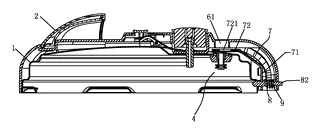
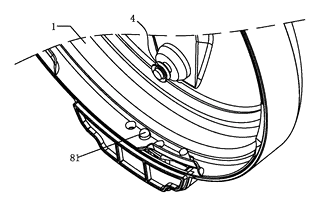
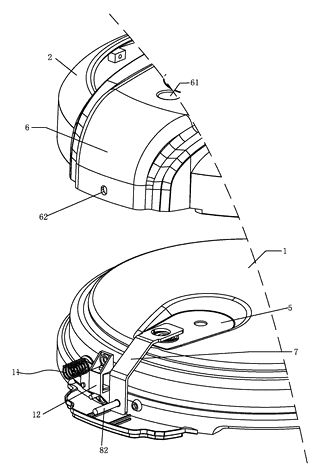
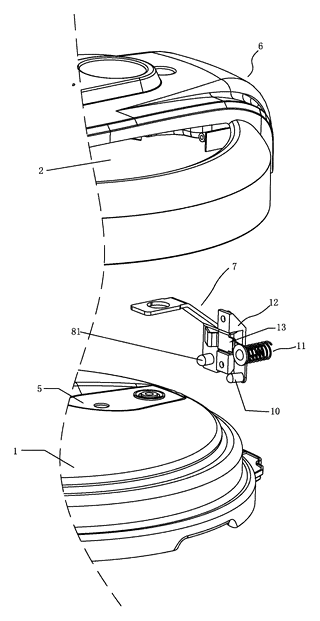
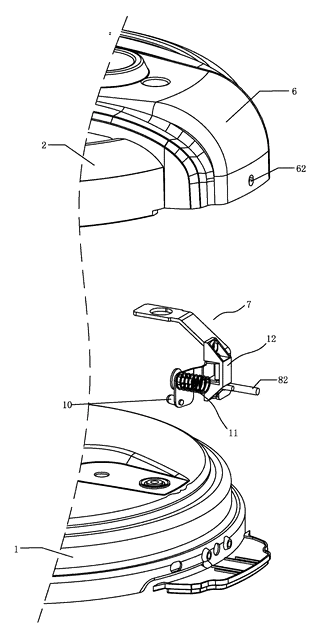
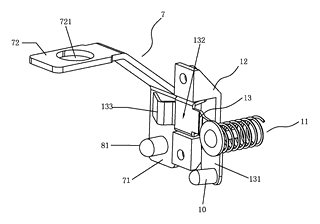
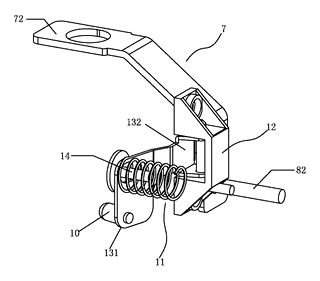
Drawings reproduced from the public patent document for reference.
Frequently asked questions
How does this safety device prevent opening?
It uses a mechanical interlock. When the lid is not fully locked, a spring-loaded “driven pinch plate” physically blocks the float valve from rising. Only when the lid is rotated to the final locked position does the pot teeth push a driving rod inward, releasing the pinch plate. This allows the float valve to rise, confirming the seal. If you try to open it while pressurized, the float valve stays up, and the mechanical lock remains engaged.
Is this compatible with existing pressure cooker designs?
Yes, it is designed to fit within the cavity between a standard steel cover and a plastic top cover. It replaces or augments simpler latching mechanisms. However, the specific geometry of the pot teeth and the lid’s rotation path must match the driving rod’s travel distance. We can adapt the dimensions to fit your existing pot body specifications.
What materials are used for the internal parts?
The patent mentions steel for the cover and plastic for the surface cover. The internal moving parts (connecting plate, pinch plate, rods) are typically made from durable engineering plastics (like POM or Nylon) or stamped metal, depending on the load requirements. Springs are usually stainless steel wire. Specific material grades are set in design and confirmed on prototypes.
Can this be used for electric multi-cookers?
Yes. The mechanism is purely mechanical and does not require electricity. It is suitable for both stovetop and electric pressure cookers, provided the lid structure allows space for the internal cavity components. It adds a layer of passive safety that complements electronic sensors.
Does it require maintenance?
The design minimizes exposed moving parts by enclosing them in the lid cavity. However, food particles or steam condensation could theoretically enter if seals degrade. Regular cleaning of the exterior and checking the float valve for free movement is recommended. The springs and pivots are designed for long-term durability under normal cooking cycles.
Are there any US patents blocking this technology?
The public record shows no US counterpart for this specific Chinese patent. However, other companies like SharkNinja hold US patents in this field. We recommend a freedom-to-operate (FTO) search to ensure your specific implementation does not infringe on active US patents before mass production.
Can this design be made and sold in the US?
The patent was filed in China and is in force there. The public record shows no US counterpart, so this specific patent does not restrict the design in the US. However, pressure cookers are regulated products. You must ensure compliance with US safety standards (such as UL or ETL listings) and conduct a thorough patent landscape review to avoid infringing on other active US patents.
Are you affiliated with the patent owner?
No. IP2M is an independent design and manufacturing service working from the public patent document.
Request a quote
Click Request a Quote below to see our email address - copy it, or open your email app with a ready-made message. Please mention patent CN106419522B in the subject.
Helpful details to include:
- Your company and channel (appliance brand, OEM supplier, aftermarket parts distributor)
- Pot diameter and capacity (e.g., 22cm, 6L)
- Material preferences (Stainless steel grade, Plastic type)
- Current lid design (photos or drawings if available)
- Estimated quantity and target price
- Timeline - when you would like samples and the first shipment
You can also reach us at (332) 203-9997.
Page editor: Daniel Chen, Product Research Editor · IP2M
Last updated November 4, 2026. If something on this page looks wrong, email [email protected] and we will check it against the patent.
Interested in building this?
Tell us your target market, quantity and timeline. We reply with options for prototyping, small-batch runs or volume production.
Send your inquiry to
Please put CN106419522B in the subject line and tell us your company, country, estimated quantity and timeline.
Prefer to talk? Call (332) 203-9997.
More product-ready patents
All Home, Kitchen & Cleaning patents →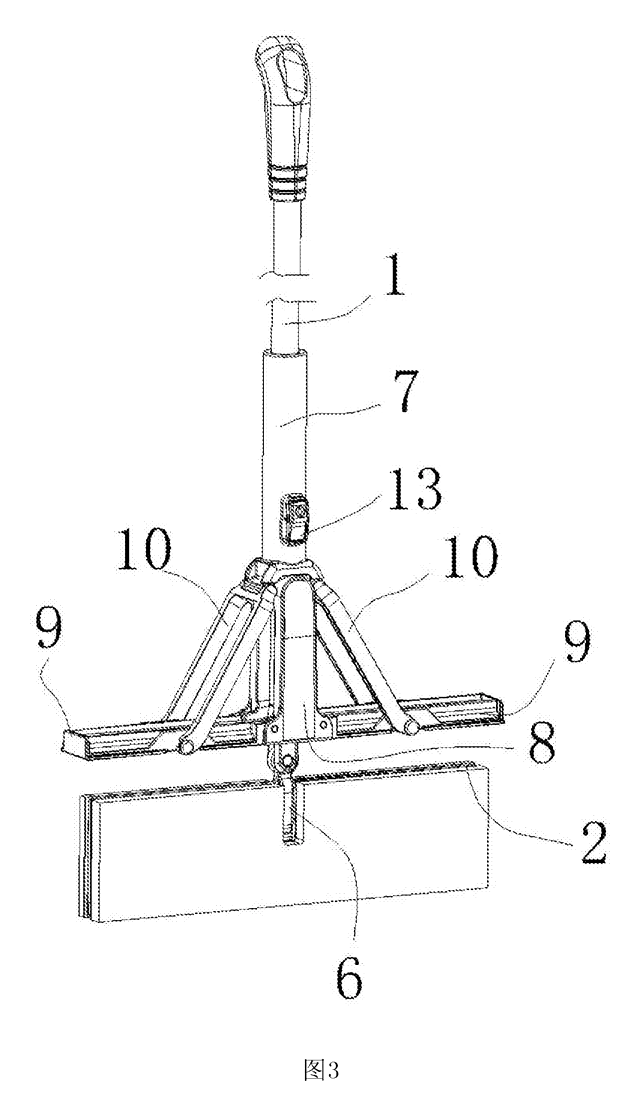
Home, Kitchen & Cleaning
Self-Wringing Flat Mop with Fold-Away Wringer
Flat mop with a built-in wringer that opens only when you wring and folds flat against the pole when you mop.
Patent CN207734114U
Home, Kitchen & Cleaning
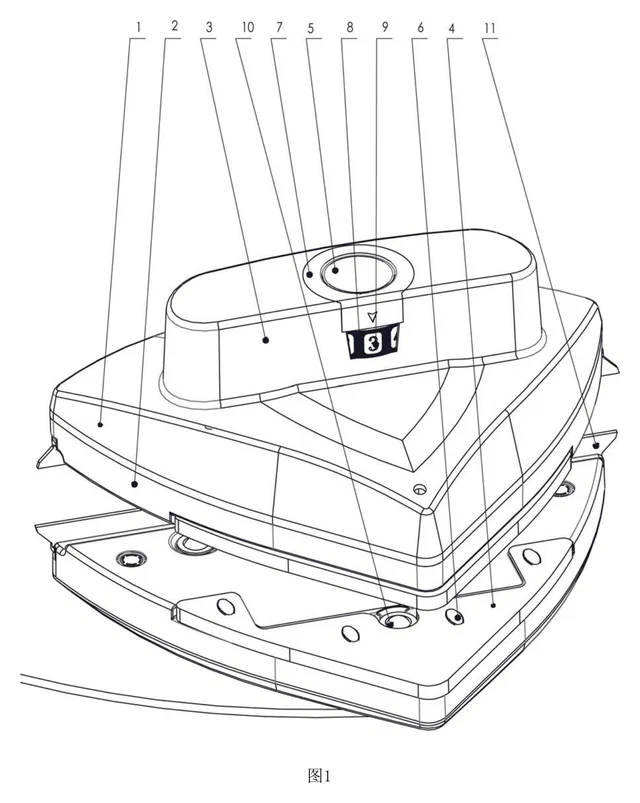
Magnetic Double-Sided Window Cleaner with Dial-Set Magnet Strength
Magnetic window cleaner with a sealed, sliding magnet, dial-set strength for different glass thicknesses and a spring-held idle position.
Patent CN209360543U
Home, Kitchen & Cleaning
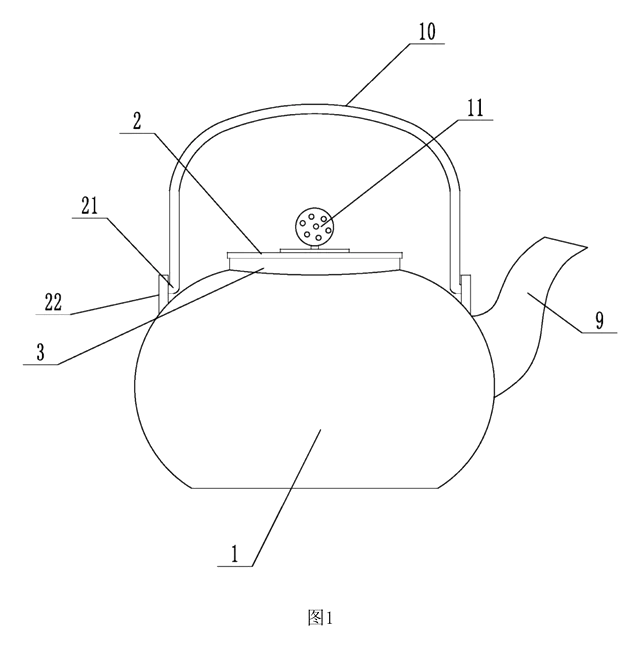
Metal Kettle with Magnetic Lid That Stays On When Pouring
Metal teapot/kettle with a magnet-held lid that does not fall off when pouring, and an insulated, vented lid knob.
Patent CN210540477U
Home, Kitchen & Cleaning
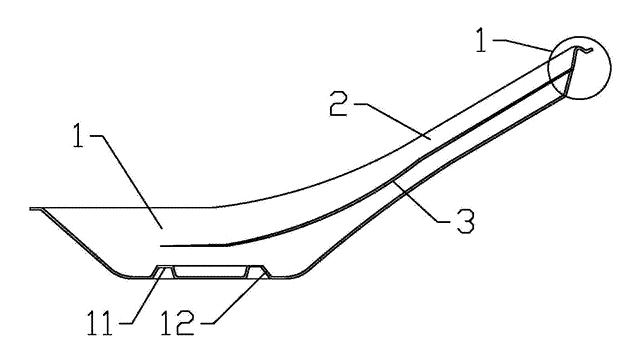
Reinforced Disposable Soup Spoon
Disposable soup spoon with a handle-to-bowl rib, stiffened edges and a ring foot to resist breaking.
Patent CN206964482U
Home, Kitchen & Cleaning
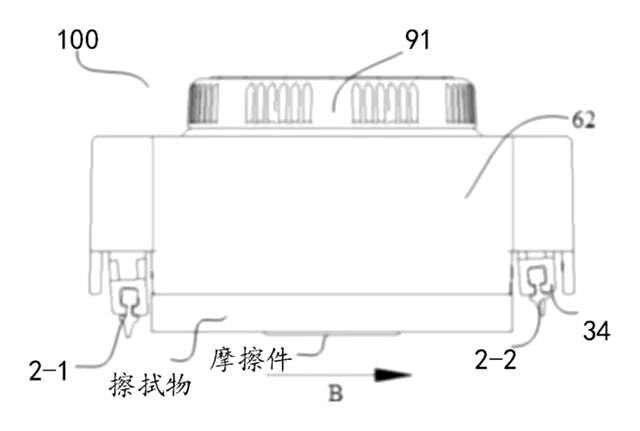
Self-Switching Double-Squeegee Window Cleaner
Cleaning head with two squeegee blades that switch automatically with the direction of movement.
Patent CN212630655U
Home, Kitchen & Cleaning
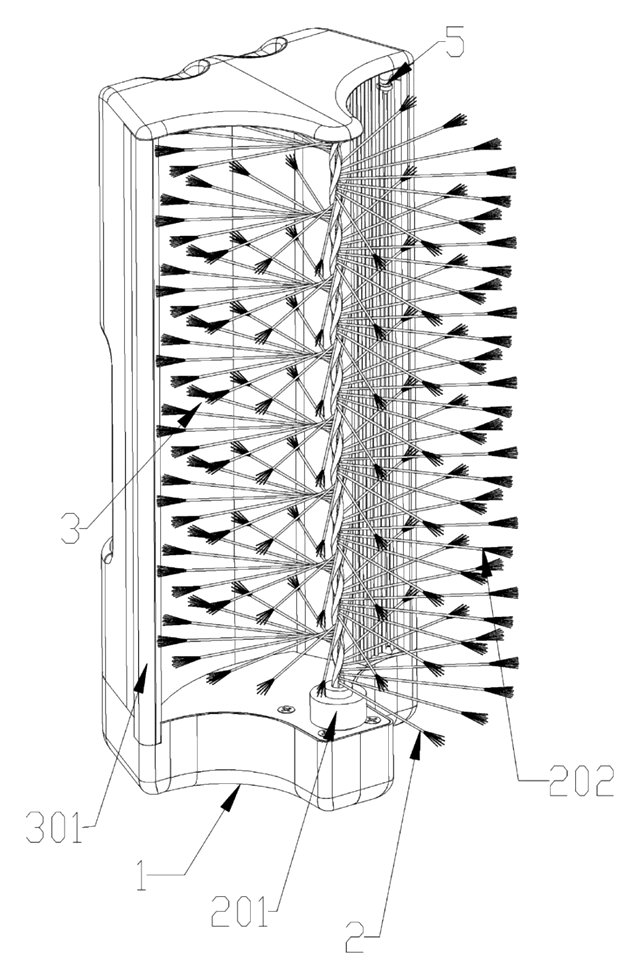
Self-Rinsing Roller Scrub Brush with Dirty-Water Tank
Powered roller brush that rinses and spins its bristles clean inside the body and stores the dirty water.
Patent CN210076909U
Browse by category
- Apparel & Accessories (38)
- Baby & Kids (26)
- Bags & Luggage (15)
- Bath & Personal Care (26)
- Car Accessories (21)
- Furniture, Bedding & Storage (20)
- Garden & Outdoor (28)
- Health & Wellness (12)
- Home, Kitchen & Cleaning (43)
- Lighting (20)
- Packaging & Containers (10)
- Pet Products (9)
- Phone & Camera Accessories (8)
- Retail Display (21)
- School, Office & Art (30)
- Sports & Recreation (37)
- Tools & Workshop (46)
- Toys & Games (19)
This page is based on the public patent document CN106419522B, assigned to Guangdong Deqi Electric Appliance Industrial Co ltd. IP2M is an independent manufacturing service and is not affiliated with, endorsed by or licensed by the patent owner. Images marked as concept renderings are illustrations, not photos of an existing product. Patent status information is provided for reference only and is not legal advice; confirm freedom to operate for your market before production. Full disclaimer.