
Patent CN106427302B
Updated October 23, 2026Smart Pencil Cap That Checks the Point with a Camera
Blunt pencils make thick, smudgy lines, and nobody notices until the drawing or the test sheet is already spoiled. This pencil cap checks for you. A small camera sits in the closed end, looking straight at the point. Slide the pencil in, press the button, and a sensor confirms the pencil is there, the camera takes a picture, and a controller measures the width of the lead. If it is wider than the chosen limit - 0.5 mm or 0.7 mm - the cap reminds you to sharpen with a sound, light or vibration. A small screen shows the point inside a ring gauge, and an alarm can warn when the pencil is missing from the cap.
- China invention patent - lapsed
- No filings outside China
- Smart stationery
- Molded cap, camera module, small display
Splat! What let you down?
📷
Camera in the cap
A tiny image sensor in the closed end looks straight at the pencil point.
📏
Measures the point
The controller reads the lead width from the picture and compares it with a 0.5 or 0.7 mm limit.
🔔
Sharpen reminder
Sound, light or vibration when the point is too blunt; a screen shows it inside a ring gauge.
🚨
Missing-pencil alarm
An optional alarm goes off when the sensor finds no pencil in the cap.
Bring this product to market
- ✓ Patent vetted China-only family and legal status checked
- 2 Product brief · now How it works, uses and options written up
- 3 Prototype First samples for buyers to review
- 4 Pilot run Small first batch for launch customers
- 5 Volume production Repeat orders at scale
Buyer interest
– of 100 buyers needed to start prototyping
One click, no sign-up. Each vote is one real visitor, and products with the most interest go to prototyping first.
Build team: no members yet. Need a partner, co-funding or skills to build this? Join and we introduce the team once it forms.
The problem
Pencils wear down gradually, so people rarely notice when the point has become too thick - until the handwriting is fuzzy, a technical drawing has uneven lines, or a bubble on an answer sheet is badly filled. The patent names exactly this: people are busy, forget to sharpen, and the work suffers. A pencil cap is already on most pencils in a school bag; it is the obvious place for a check.
The solution
The patent turns the cap into a small measuring device:
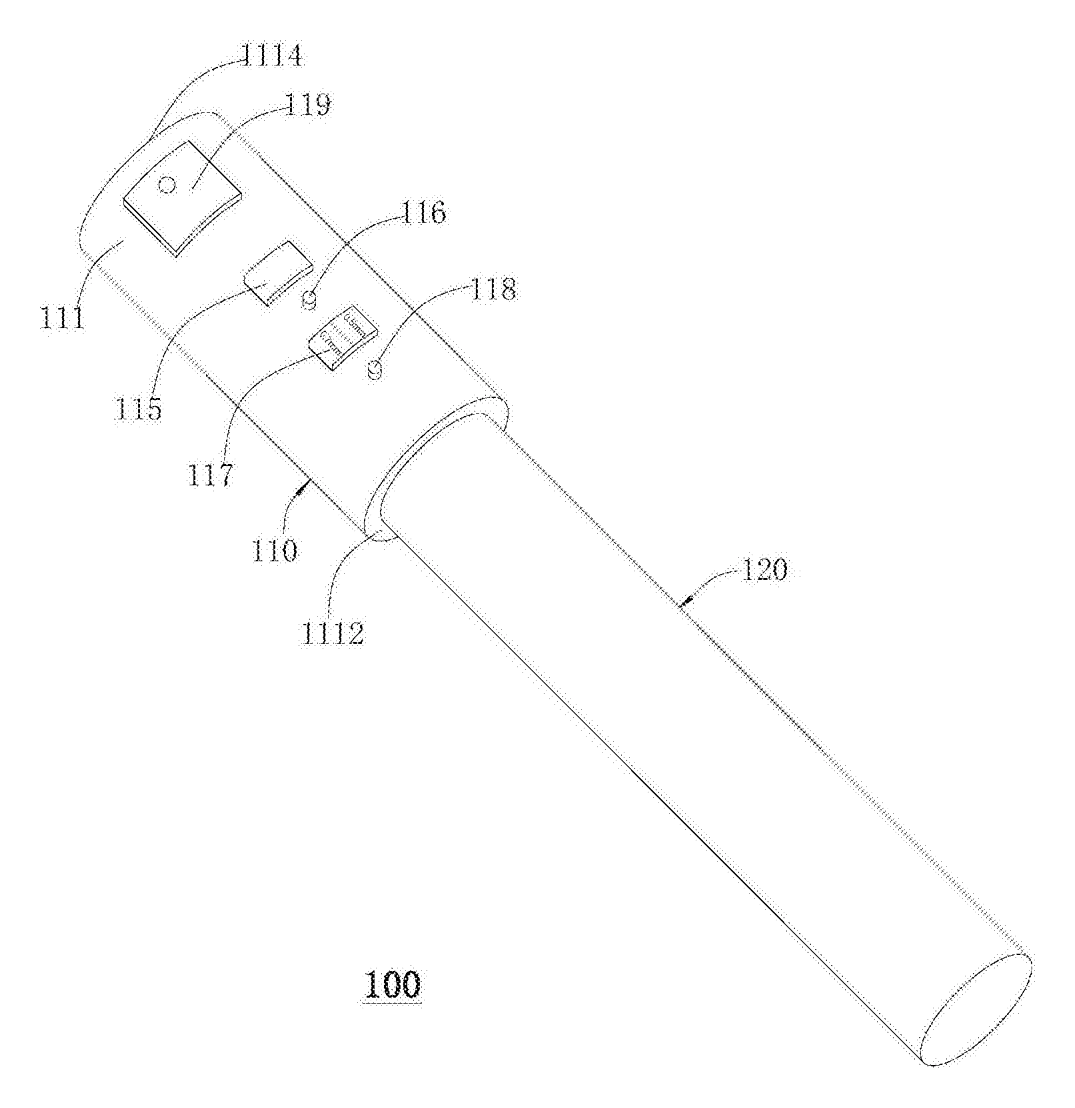
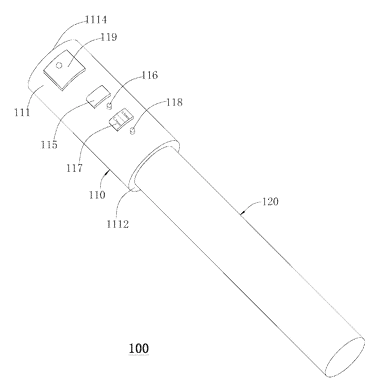
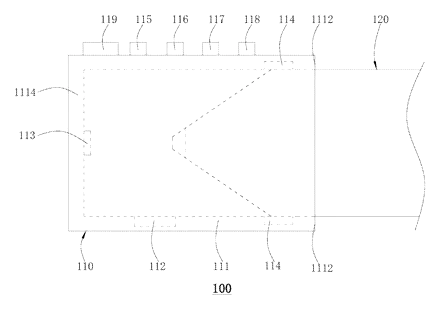
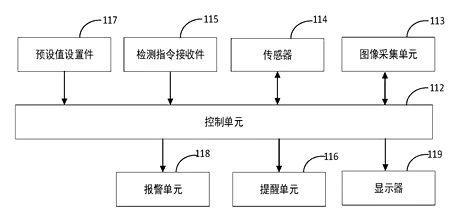
- The cap body (111) is a hollow tube with an open end (1112) for the pencil and a closed end (1114).
- An image unit (113) - a tiny camera - sits at the center of the closed end, right where the point arrives.
- A sensor (114) near the open end detects whether a pencil is inside.
- When the check button (115) is pressed, the controller (112) confirms a pencil is present, triggers the camera and reads the diameter of the lead at the point from the picture.
- If the diameter is larger than the set value, a reminder unit (116) signals by sound, light or vibration.
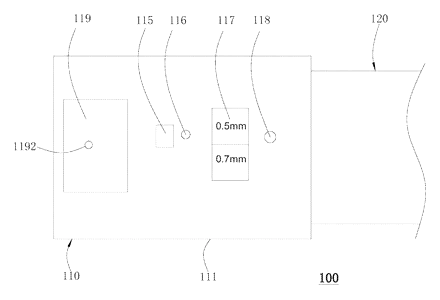
- Preset buttons (117) select the limit - 0.5 mm or 0.7 mm in the patent. A display (119) shows the point with a ring gauge (1192) of that size, and an alarm unit (118) can sound when no pencil is in the cap.
Who it is for
- Stationery and school-supply brands looking for a “smart” item with a simple, visible function.
- STEM and educational-toy companies - a cap that shows children how a camera and a controller measure something real.
- Art and drafting suppliers serving people who need a consistent line width.
- Gift and promotional suppliers wanting an unusual tech gadget for students.
How it works
The main parts
| No. | Part | What it does |
|---|---|---|
| 111 | Cap body | Hollow tube; open end (1112) for the pencil, closed end (1114). |
| 113 | Image unit | Camera at the closed end, aimed at the point. |
| 114 | Sensor | Detects whether a pencil is in the cap. |
| 112 | Controller | Triggers the camera, measures the lead width, compares it with the limit. |
| 115 | Check button | Starts a measurement. |
| 116 | Reminder unit | Sound, light or vibration when the point is too blunt. |
| 117 | Preset buttons | Choose the limit, e.g. 0.5 mm or 0.7 mm. |
| 118 | Alarm unit | Warns when no pencil is detected. |
| 119, 1192 | Display and ring gauge | Show the point inside a ring of the chosen size. |
Checking a pencil
- Cap the pencil.
- Choose the limit with a preset button (0.5 mm or 0.7 mm).
- Press the check button - the sensor confirms the pencil, the camera takes a picture.
- Read the result - the screen shows the point inside the ring; if it is wider, the cap beeps, lights or vibrates.
- Sharpen and check again.
The electronics
The patent describes the functions, not specific chips. In a modern product, a low-cost camera module and a small microcontroller can do the measurement; the patent also suggests a lanyard hook on the closed end and a ring inside the open end so the pencil does not fall out.
Applications
Exam preparation and standardized tests
Students checking pencils before tests that use pencil answer sheets.
Technical drawing and drafting classes
Students and draftspeople who need a consistent line width.
Sketching and fine art
Artists who keep several pencils at specific points.
STEM classrooms and coding kits
An open-source version of the cap as a project: camera, measurement, feedback.
Novelty gifts for students
A “smart” back-to-school gift that does something visible.
Where it is less suitable
- Mechanical pencils - their lead width is fixed by the lead, so a sharpen reminder is not needed.
- Very low price points - a camera and electronics cost far more than a plain cap; this is a premium or educational item.
Frequently asked questions
How does the cap know the pencil is blunt?
A camera in the closed end photographs the point, and the controller measures the width of the lead at the tip from the picture. If it is wider than the chosen limit, the cap gives a reminder.
Which limits can be set?
The patent describes preset buttons with 0.5 mm and 0.7 mm. Other values - for example for soft art pencils - can be added in design.
How accurate is it?
The patent gives no accuracy figures. Accuracy depends on the camera, the lighting inside the cap and calibration, and is measured on prototypes with real pencils.
Does it need a screen?
No. The patent includes a display with a ring gauge as a preferred option; a simpler version can use only a light, a beeper or vibration.
How is it powered?
The patent does not specify. A small rechargeable battery with USB-C, or a coin cell with a child-resistant compartment, are both possible.
Can it be sold as a STEM kit?
Yes - the camera, sensor and controller make a clear teaching project. We can supply an assembled cap or a kit version with documented code.
Can this design be made and sold in the US?
The patent was filed only in China and has lapsed, so it does not restrict the design in the US or in China. Smart writing tools may be covered by other patents - see Patent & Production - so we recommend a freedom-to-operate check before volume production.
Are you affiliated with the patent owner?
No. IP2M is an independent design and manufacturing service working from the public patent document.
Request a quote
Click Request a Quote below to see our email address - copy it, or open your email app with a ready-made message. Please mention patent CN106427302B in the subject.
Helpful details to include:
- Your company and sales channel (stationery, education, STEM kits, gifts, Amazon…)
- Target users (students, artists, classrooms) and age range
- Features - screen or no screen, feedback type, presets
- Power source and battery life
- Estimated quantity and target price
- Timeline - when you would like samples and the first shipment
You can also reach us at (332) 203-9997.
Explore this product
Interested in building this?
Tell us your target market, quantity and timeline. We reply with options for prototyping, small-batch runs or volume production.
Send your inquiry to
Please put CN106427302B in the subject line and tell us your company, country, estimated quantity and timeline.
Prefer to talk? Call (332) 203-9997.
More product-ready patents
All School, Office & Art patents →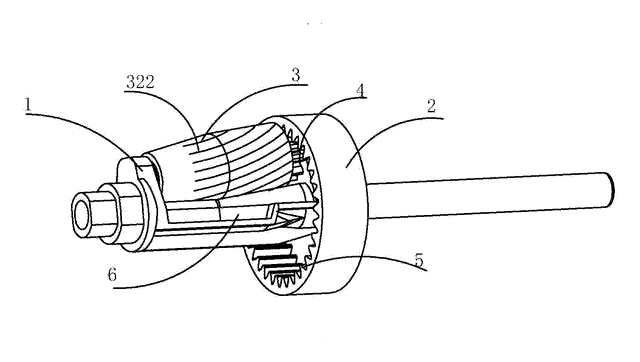
School, Office & Art
Long-Point Sketch Pencil Sharpener
Crank sharpener that cuts only the wood of sketch pencils, leaving a long, round lead about 30 mm long.
Patent CN207241257U
School, Office & Art
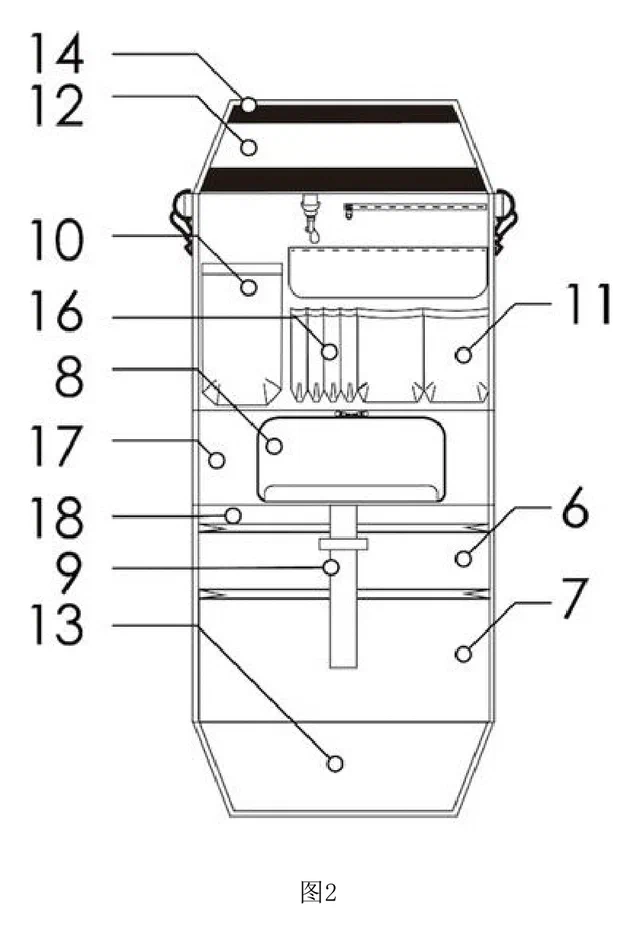
Fold-Out Desk Organizer Insert for School Backpacks
Backpack insert that unfolds into a hanging desk organizer for workbooks, stationery and a water bottle.
Patent CN209436546U
School, Office & Art
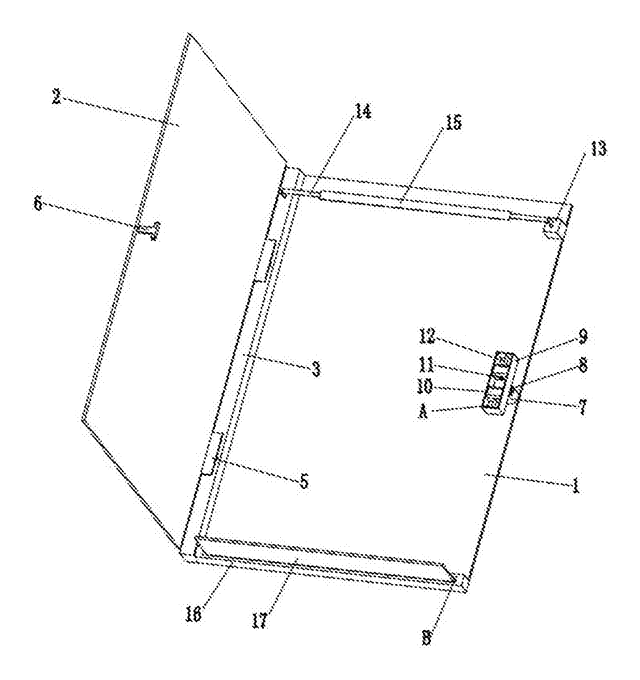
Expanding Clipboard Folder with Spring-Mounted Hinge and Catch
Hard folder whose spring-mounted hinge and catch let the cover clamp any thickness of paper.
Patent CN105667120B
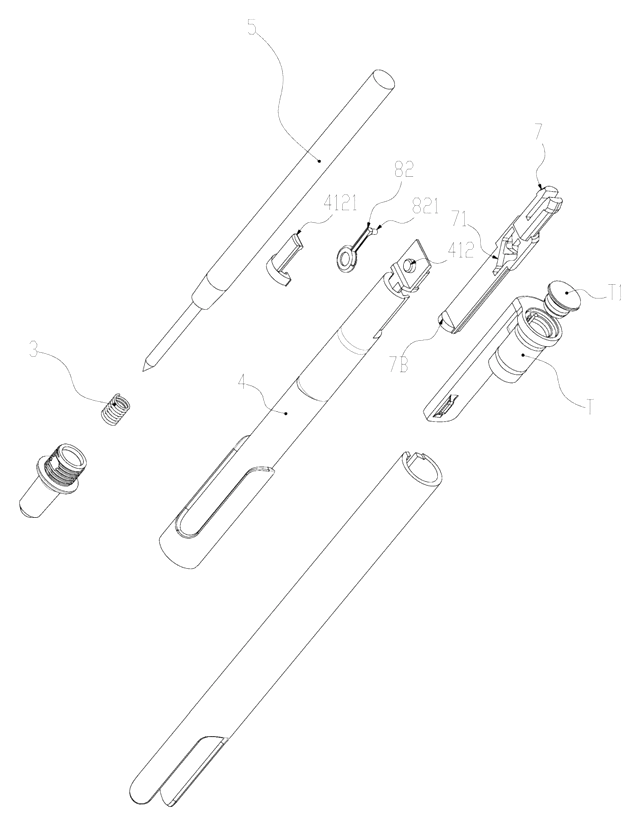
School, Office & Art
Slide-Action Retractable Pen with a Friction-Loaded Cam That Ignores Gravity
Slide-action retractable pen whose spring-pressed cam latch stays put whichever way the pen is held.
Patent CN217671900U
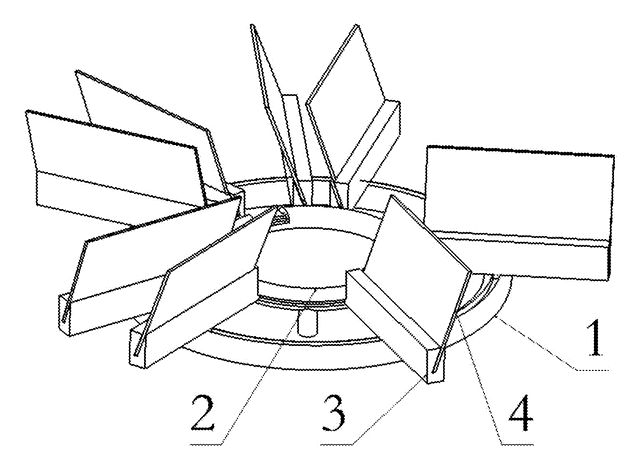
School, Office & Art
Carousel Business Card Holder with Rolling Card Trays on Twin Ring Tracks
Desk card holder: angled card trays roll on wheels around two concentric ring tracks and lift out.
Patent CN105774300B
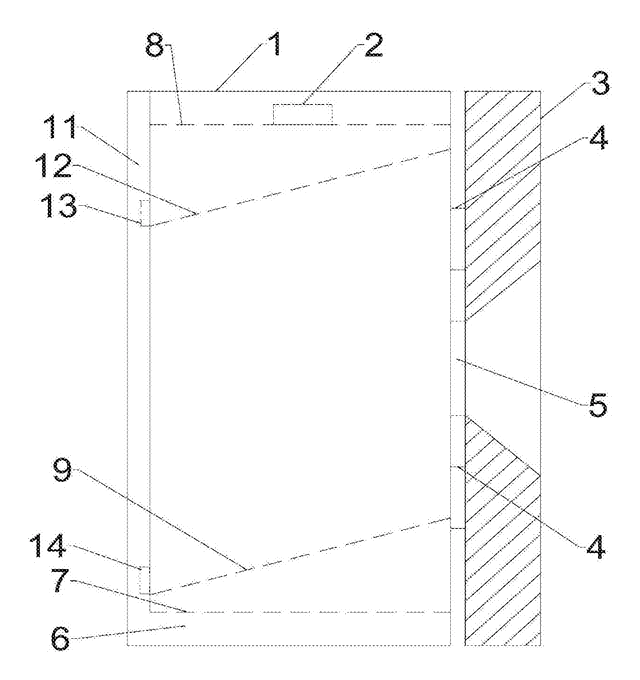
School, Office & Art
Dust-Collecting Chalkboard Eraser with Rotating Ring Brush and Electrostatic Trap
Chalkboard eraser: ring brush airflow plus electrostatic plates collect chalk dust into a removable bin.
Patent CN106515284B
Browse by category
- Apparel & Accessories (22)
- Baby & Kids (16)
- Bags & Luggage (9)
- Bath & Personal Care (16)
- Car Accessories (10)
- Furniture, Bedding & Storage (12)
- Garden & Outdoor (18)
- Health & Wellness (8)
- Home, Kitchen & Cleaning (24)
- Lighting (12)
- Packaging & Containers (6)
- Pet Products (6)
- Phone & Camera Accessories (4)
- Retail Display (13)
- School, Office & Art (19)
- Sports & Recreation (25)
- Tools & Workshop (27)
- Toys & Games (12)
This page is based on the public patent document CN106427302B, assigned to Nanjing Lianhan Machinery Co., Ltd. (current owner; originally filed by Yancheng City Experimental Primary School). IP2M is an independent manufacturing service and is not affiliated with, endorsed by or licensed by the patent owner. Images marked as concept renderings are illustrations, not photos of an existing product. Patent status information is provided for reference only and is not legal advice; confirm freedom to operate for your market before production. Full disclaimer.