
Patent CN106427328B
Updated October 28, 2026Two-Way Pencil Sharpener with Shared Blade and Opposite Cutting Directions
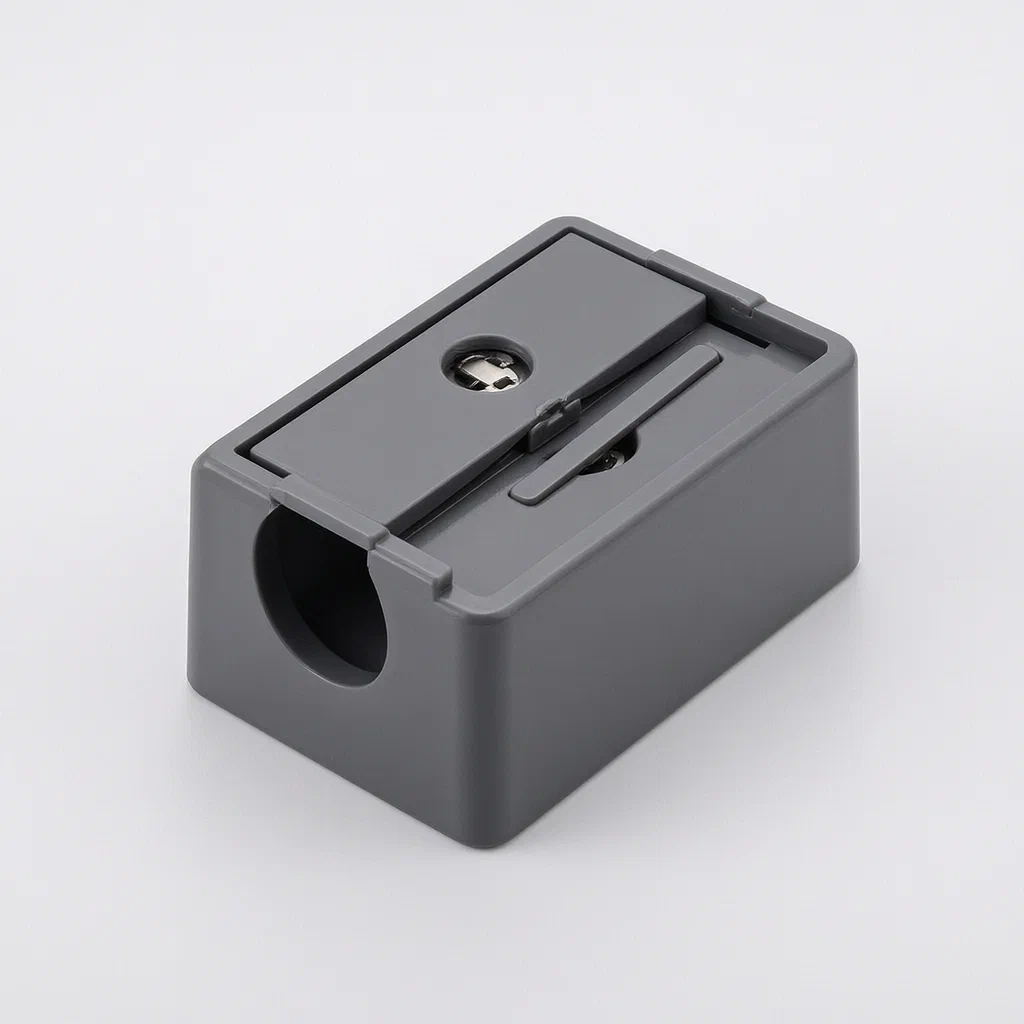
Standard pencil sharpeners cut the wood and the graphite together, which shortens the lead quickly and wastes material when a long exposed core is needed for shading or drafting. This two-way design solves that by placing a second conical hole on the opposite face of the sharpener body. Both holes share one blade and one chip groove, but their central axes are tilted relative to each other so the pencil rotates in opposite directions on each side. Sharpen the point normally on the A side, then flip the pencil into the B side: the geometry lets the blade trim only the wood, leaving the lead untouched. The result is a long exposed core from a single compact tool. Movable hole inserts and adjustable baffles control the cutting depth so the point stops exactly where you want it.
- China invention patent - lapsed
- No filings outside China
- Drawing & office tools
- Plastic body, steel blade, shared chip groove
Splat! What let you down?
✏️
Long exposed lead
The B side trims only the wooden barrel after the A side shapes the point, leaving the graphite core untouched.
🔪
One shared blade
Opposite conical holes are tilted at an inclination angle so both sides use a single blade and chip groove.
🔄
Opposite rotation
The pencil turns in reverse on the B side compared to the A side, enabling the wood-only cutting action.
🛑
Adjustable baffle
A liftable baffle plate slides along the hole axis to set the cutting depth and prevent over-sharpening.
Bring this product to market
- ✓ Patent vetted China-only family and legal status checked
- 2 Product brief · now How it works, uses and options written up
- 3 Prototype First samples for buyers to review
- 4 Pilot run Small first batch for launch customers
- 5 Volume production Repeat orders at scale
Buyer interest
– of 100 buyers needed to start prototyping
One click, no sign-up. Each vote is one real visitor, and products with the most interest go to prototyping first.
Build team: no members yet. Need a partner, co-funding or skills to build this? Join and we introduce the team once it forms.
The problem
When artists, draftsmen, or students need a long exposed pencil lead for broad shading or precise line work, a standard sharpener removes both wood and graphite at the same time. Each pass shortens the core, wasting material and requiring frequent re-sharpening. If the tip breaks inside the hole, the broken fragment often jams the blade because there is no secondary path to push it out. Separate tools for shaping the point and exposing the lead add bulk to a pencil case and increase cost.
The solution
This patent describes a two-way pencil sharpener that handles both tasks in one body.
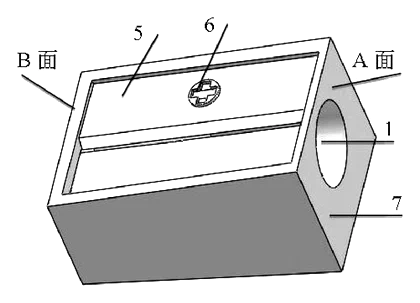
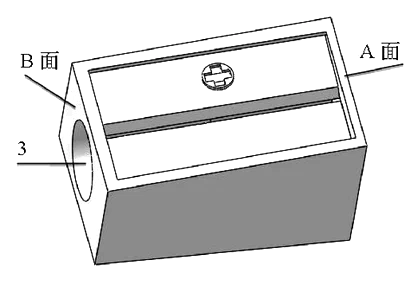
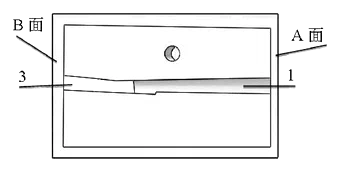
- The body (7) has an A-side conical sharpening hole (1) and a B-side conical sharpening hole (3) on the opposite face. Their central axes are set at an inclination angle to each other.
- Both holes share a single blade (5), fastened by a screw (6), and the same chip groove. Because of the tilt, the pencil rotates in opposite directions on each side.
- A movable conical hole section can be fitted at the front end of either or both holes. Its dimensions match the original taper, forming a complete conical hole during cutting.
- On the A side, the pencil is sharpened normally to form the point.
- The pencil is then inserted into the B side. The reversed rotation and angled geometry allow the blade to cut only the wooden barrel, leaving the lead unchanged and producing a long exposed core.
- Optional baffle plates (2 on the A side, 4 on the B side) lift when a pencil enters and fall when it is removed. Sliding the baffle along the hole axis sets the maximum insertion depth, stopping the cut before the lead becomes too thin.
Who it is for
- Art supply brands looking for a compact sharpener that gives colored-pencil and graphite users a long exposed lead without a separate knife.
- Stationery wholesalers serving schools, offices, and art stores who want a dual-function tool in a single SKU.
- Amazon private-label sellers in the drawing-tools category seeking a differentiated manual sharpener with clear visual features for listing images.
- Promotional product distributors sourcing branded desk accessories for creative agencies, architecture firms, or school programs.
How it works
The main parts
| No. | Part | What it does |
|---|---|---|
| 1 | A-side conical hole | Primary sharpening hole that shapes the pencil point. |
| 2 | A-side baffle | Controls cutting depth on the A side; lifts during use, falls when idle. |
| 3 | B-side conical hole | Secondary hole on the opposite face; shares the blade, cuts wood only. |
| 4 | B-side baffle | Controls cutting depth on the B side. |
| 5 | Blade | Single steel blade used by both holes. |
| 6 | Screw | Fastens the blade to the body. |
| 7 | Body | Main housing containing the holes, chip groove, and blade seat. |
Operating steps
- Insert the pencil into the A-side hole (1) and rotate it clockwise. The blade (5) cuts the wood and graphite to form a standard point. The A-side baffle (2) lifts to admit the pencil and limits insertion depth.
- Remove the pencil from the A side. The baffle (2) falls back automatically.
- Flip the pencil and insert it into the B-side hole (3). Because the B-side axis is tilted relative to the A-side axis, the pencil must be rotated in the opposite direction.
- Rotate the pencil counter-clockwise. The shared blade now engages only the wooden barrel. The graphite core passes through without being cut, resulting in a long exposed lead.
- Remove the pencil. The B-side baffle (4) falls back. Shavings exit through the shared chip groove.
Applications
Fine art and sketching
Artists using graphite or charcoal pencils frequently need a long exposed core for broad tonal shading. The B side trims the wood away while preserving the lead shaped on the A side, reducing the number of times the pencil must be re-sharpened during a session.
Architectural and technical drafting
Draftsmen working with harder lead grades require consistent point lengths for accurate line weights. The adjustable baffle plates let the user set a fixed cutting depth on both sides, preventing the core from becoming too thin and snapping under pressure.
Colored pencil illustration
Colored pencil cores are softer and wider than graphite, making them prone to breakage in standard sharpeners. By adjusting the B-side hole diameter to about 8 or 9 mm as described in the patent, the tool accommodates thicker barrels and exposes the soft lead gently without crushing it.
Classroom and office stationery
Schools and offices go through large volumes of standard pencils. A single two-way body replaces the need for a sharpener plus a separate lead pointer, simplifying procurement and reducing desk clutter for students and clerks.
Where it is less suitable
- Electric or crank sharpeners - this patent covers a manual, hand-held body; motorized mechanisms require different engineering.
- Cosmetic pencils - eyeliner or lip liners use waxy cores that may clog a shared chip groove designed for wood and graphite.
- Carpentry pencils - flat or oval carpentry pencils do not fit the round conical holes described here.
Frequently asked questions
How can one blade serve two holes?
The A-side and B-side conical holes are on opposite faces of the body, and their central axes are set at an inclination angle. This tilt allows the single blade to sit across both paths. The pencil is rotated in opposite directions on each side, so the blade edge engages correctly for both the normal point and the wood-only cut.
Does the B side really leave the lead alone?
According to the patent, after the pencil is sharpened on the A side, inserting it into the B side performs a secondary cut only on the wooden barrel. The reversed rotation and the angled axis keep the blade from engaging the graphite core, resulting in a long exposed lead.
What is the movable conical hole for?
It is a sleeve that fits over the front end of either or both holes. Its internal geometry matches the original taper. When the pencil is inserted, the sleeve and the main hole combine to form a complete conical guide, which helps center the pencil and can be removed for cleaning.
Do I need the baffle plates?
They are optional. The patent describes baffles that lift when a pencil enters and fall when it is removed. Sliding the baffle along the hole axis sets a hard stop for insertion depth, preventing over-sharpening. For simpler or lower-cost versions, the sharpener functions without them.
What pencil sizes does it fit?
The patent references a common pencil diameter of about 7.2 mm and a lead diameter of about 2.65 mm, and suggests the B-side macro hole can be designed to about 8 or 9 mm. Exact dimensions for production are set in design and confirmed on prototypes to match the specific pencils you intend to sell it with.
What materials are used?
The patent specifies a body, a blade, and a screw. In production, the body is typically injection-molded plastic, and the blade is stamped steel. Specific resins and blade grades are selected during the design phase based on cost and durability targets.
Can this design be made and sold in the US?
The patent was filed only in China and is lapsed due to non-payment of annual fees, so it does not restrict the design in the US or in China. Pencil sharpeners may be covered by other US or foreign patents - see Patent & Production - so we recommend a freedom-to-operate check before volume production.
Are you affiliated with the patent owner?
No. IP2M is an independent design and manufacturing service working from the public patent document.
Request a quote
Click Request a Quote below to see our email address - copy it, or open your email app with a ready-made message. Please mention patent CN106427328B in the subject.
Helpful details to include:
- Your company and channel (art supply brand, stationery wholesaler, Amazon seller, promotional distributor)
- Target pencil types (standard graphite, colored pencils, thick-barrel pencils)
- Body material and color preferences
- Features required (movable hole inserts, baffle plates, or bare-bones version)
- Estimated quantity and target price
- Timeline - when you would like samples and the first shipment
You can also reach us at (332) 203-9997.
Explore this product
Interested in building this?
Tell us your target market, quantity and timeline. We reply with options for prototyping, small-batch runs or volume production.
Send your inquiry to
Please put CN106427328B in the subject line and tell us your company, country, estimated quantity and timeline.
Prefer to talk? Call (332) 203-9997.
More product-ready patents
All School, Office & Art patents →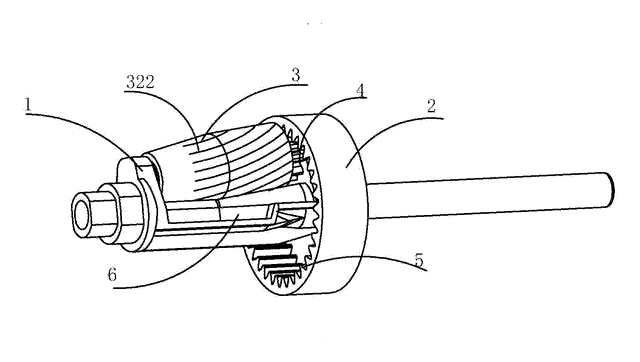
School, Office & Art
Long-Point Sketch Pencil Sharpener
Crank sharpener that cuts only the wood of sketch pencils, leaving a long, round lead about 30 mm long.
Patent CN207241257U
School, Office & Art
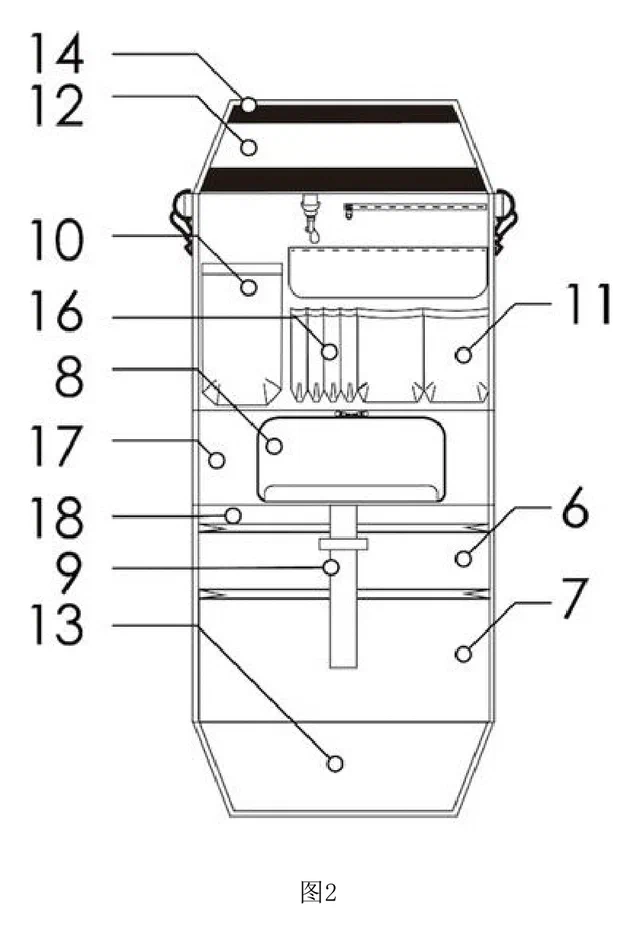
Fold-Out Desk Organizer Insert for School Backpacks
Backpack insert that unfolds into a hanging desk organizer for workbooks, stationery and a water bottle.
Patent CN209436546U
School, Office & Art
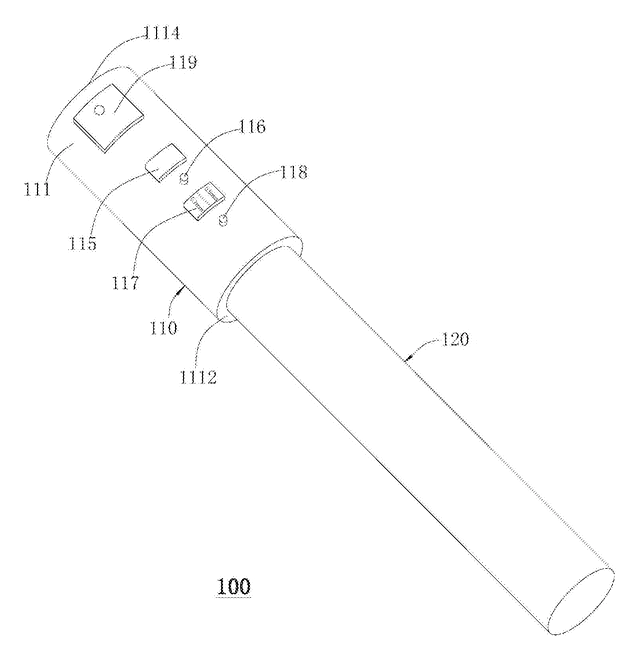
Smart Pencil Cap That Checks the Point with a Camera
Electronic pencil cap that photographs the point, measures it and reminds you to sharpen.
Patent CN106427302B
School, Office & Art
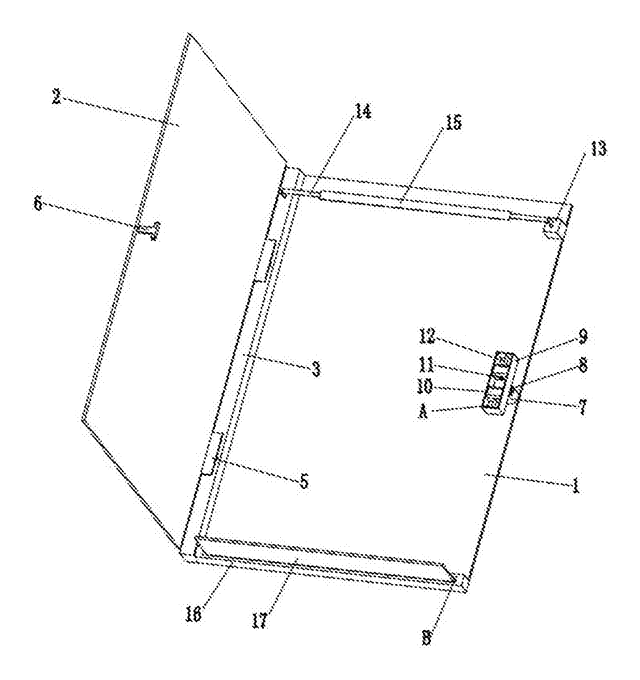
Expanding Clipboard Folder with Spring-Mounted Hinge and Catch
Hard folder whose spring-mounted hinge and catch let the cover clamp any thickness of paper.
Patent CN105667120B
School, Office & Art
Slide-Action Retractable Pen with a Friction-Loaded Cam That Ignores Gravity
Slide-action retractable pen whose spring-pressed cam latch stays put whichever way the pen is held.
Patent CN217671900U
School, Office & Art
Carousel Business Card Holder with Rolling Card Trays on Twin Ring Tracks
Desk card holder: angled card trays roll on wheels around two concentric ring tracks and lift out.
Patent CN105774300B
Browse by category
- Apparel & Accessories (22)
- Baby & Kids (16)
- Bags & Luggage (9)
- Bath & Personal Care (16)
- Car Accessories (10)
- Furniture, Bedding & Storage (12)
- Garden & Outdoor (18)
- Health & Wellness (8)
- Home, Kitchen & Cleaning (24)
- Lighting (12)
- Packaging & Containers (6)
- Pet Products (6)
- Phone & Camera Accessories (4)
- Retail Display (13)
- School, Office & Art (19)
- Sports & Recreation (25)
- Tools & Workshop (27)
- Toys & Games (12)
This page is based on the public patent document CN106427328B, assigned to Individual. IP2M is an independent manufacturing service and is not affiliated with, endorsed by or licensed by the patent owner. Images marked as concept renderings are illustrations, not photos of an existing product. Patent status information is provided for reference only and is not legal advice; confirm freedom to operate for your market before production. Full disclaimer.