At a glance
| Patent number | CN106427328B (application CN201610865486) |
| Type | China invention patent (发明专利) - protects product shape, structure and method |
| Original title | A two-way pencil sharpener and design method (一种双向卷笔刀及设计方法) |
| Patent owner | Individual |
| Inventors | Li Jianmin |
| Filing date | 2016-09-30 |
| Grant date | 2019-02-15 |
| Status (China) | Lapsed - terminated for non-payment of annual fees (recorded 2025-09-26) |
| Patent family | Chinese filings only - no US, European, Japanese, PCT or other filings listed |
| Cited by | 1 later document (EISEN GmbH, EP3988323A1) |
| Source | Google Patents (search for CN106427328B) |
What the claims cover, in plain language
Claim 1 - a design method for a two-way pencil sharpener. On the B side, opposite the front end of the A-side conical sharpening hole (1), a B-side conical sharpening hole (3) sized for a pencil diameter is provided. The central axis of the A-side hole and the central axis of the B-side hole have an inclination angle. Both holes share one blade, and the pencil cutting rotation directions on the A and B sides are opposite. A movable conical sharpening hole matching the original geometry can be set at the front end of the A-side hole, the B-side hole, or both, so that during cutting the original hole and the movable section together form a complete conical hole.
Claim 2 - a pencil sharpened on the A side is inserted into the B side where the lead is not cut a second time; only the wooden part undergoes secondary cutting, producing a long exposed lead.
Claim 3 - baffle plates are arranged on the A side, the B side, or both. The baffle shape is three-dimensional, planar, or a combination. When a pencil is cut, the baffle lifts; when not in use, it falls. Moving the baffle along the hole axis controls the cutting length and prevents over-cutting.
Claim 4 - the physical two-way pencil sharpener comprising a body (7), a blade (5), and conical holes, structured according to the method in Claim 1, including the shared blade, the inclination angle between the A-side hole (1) and B-side hole (3), and the optional movable conical hole sections.
This is a simplified reading for orientation only. The legal scope is defined by the exact claim wording in the official Chinese document.
What this means for US production
This patent was filed only in China and is lapsed due to non-payment of annual fees, so it no longer restricts anyone in China either. It has no US or other foreign counterpart.
Two points to settle early:
- Other patents may exist. Manual pencil sharpeners are a mature field with many active designs. EISEN GmbH holds a later European patent (EP3988323A1) that cites this document, indicating ongoing patent activity in pencil sharpening mechanisms. A freedom-to-operate (FTO) review of the dual-hole geometry, shared blade arrangement, and movable hole inserts is recommended before committing to tooling.
- Hole dimensions and angles. The patent mentions reference diameters such as 8 or 9 mm for the B-side hole and a 2.65 mm front-end setting for the lead clearance, but states these are examples. The exact inclination angle between the two axes and the final hole tapers must be set in design and confirmed on prototypes to ensure the B side cuts wood without touching the graphite.
Customization and manufacturing
What can be customized
| Area | Options |
|---|---|
| Body material | Injection-molded ABS, PS, or transparent acrylic |
| Hole sizes | Taper diameters set in design for standard 7.2 mm pencils, thicker colored pencils, or custom barrel sizes |
| Blade | Standard carbon steel or stainless steel replaceable blade |
| Colors | Pantone-matched body colors, two-tone A/B sides |
| Baffles | Included or omitted per Claim 3; baffle travel distance set in design |
| Movable hole inserts | Snap-fit or press-fit sleeves at the front end of either or both holes |
| Branding | Pad-printed logo, debossed text, or custom mold engraving |
Things to plan for (US market)
- ASTM F963 - if marketed for children under 12, the sharpener is treated as a toy/school article and must meet mechanical and chemical requirements, including small-parts testing for the blade screw and movable inserts.
- CPSIA Section 101 - lead content limits apply to surface coatings and substrates of products designed primarily for children 12 and under.
- California Prop 65 - plastics, pigments, and metal blades must be screened for listed chemicals.
- FDA 21 CFR - not applicable unless the item is repurposed for cosmetic pencils intended for use around the eyes or lips; standard writing pencils fall outside FDA jurisdiction.
How a project runs
- Inquiry - target market, pencil types, body material, colors, and quantity.
- Design - CAD modeling of the body, calculation of the inclination angle between the A and B axes, baffle mechanism, and movable insert tolerances.
- Prototype - 3D-printed or CNC-machined samples to test the wood-only cutting action on the B side and verify that the lead remains untouched.
- Pilot run - injection molding trial, blade mounting tests, and any required ASTM or CPSIA lab submissions.
- Production - mass injection molding, blade stamping and assembly, pad printing, and packaging.
Quantities & timeline
The body requires a multi-cavity injection mold; the movable conical inserts and baffle plates need separate molds if included. Blade stamping dies are standard but must be matched to the shared-blade seat geometry. Certification testing for children’s markets adds time before shipment. Send us your target pencil sizes, body material, color preferences, feature list, quantity and target price and we will reply with options.
Patent drawings
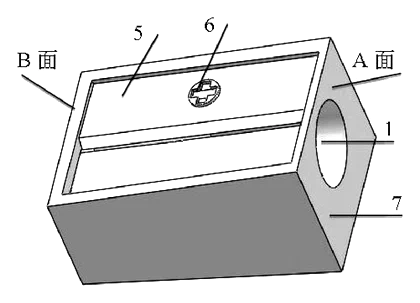
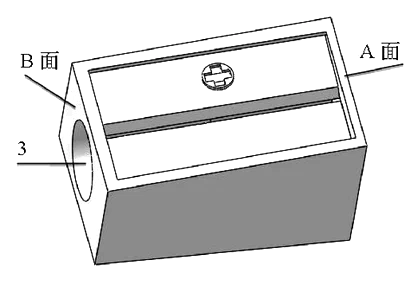
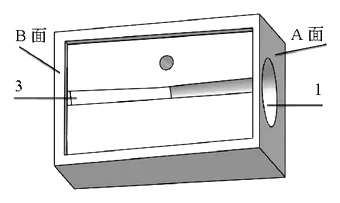
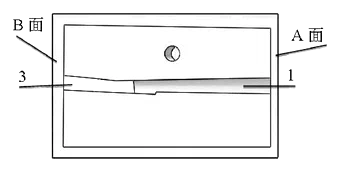
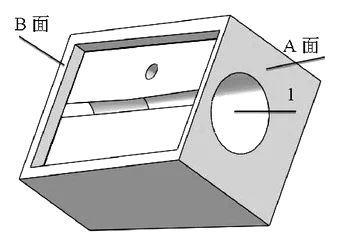
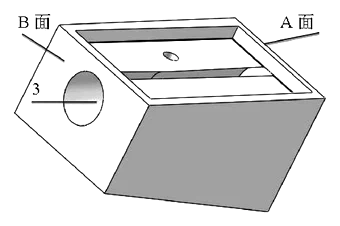
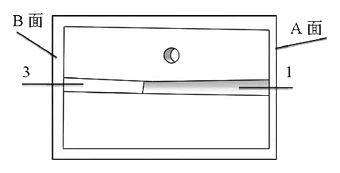
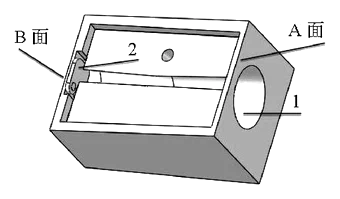
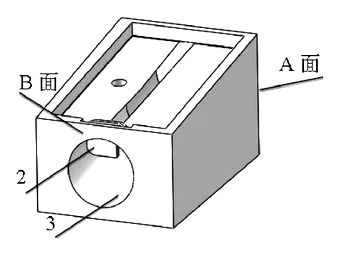
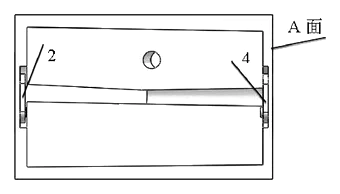
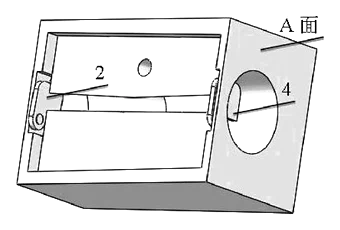
Drawings reproduced from the public patent document for reference.