
Patent CN106515284B
Updated October 25, 2026Dust-Collecting Chalkboard Eraser with Rotating Ring Brush and Electrostatic Trap
Chalkboards are still common in classrooms, lecture halls, cafes and homes, and every wipe sends a cloud of chalk dust over the teacher, the front row and the floor. Battery eraser vacuums exist, but a motor, fan and battery make them heavy and noisy. This design collects dust without a fan. A ring brush turns on a rail on the wiping face, around a suction opening. The fast-turning brush creates an airflow that carries dust into the hollow body. Two slanted glass plates guide the larger particles into a side channel and down into a removable bin. Fine particles, charged by the brushing, are caught by an electric field between a cathode plate at the top and an anode plate above the bin.
- China invention patent - lapsed
- No filings outside China
- Classroom & chalkboard supplies
- Molded plastic body, glass plates, small power supply
Splat! What let you down?
🌀
Rotating ring brush
A ring brush turns on a rail around a central suction opening and creates the airflow.
📐
Slanted guide plates
Two glass plates set at 45 degrees steer coarse dust into a side channel.
⚡
Electrostatic trap
A cathode and an anode plate catch fine charged particles - no fan or motor.
🗑️
Removable dust bin
Collected chalk dust drops into a bin at the bottom that slides out for emptying.
Bring this product to market
- ✓ Patent vetted China-only family and legal status checked
- 2 Product brief · now How it works, uses and options written up
- 3 Prototype First samples for buyers to review
- 4 Pilot run Small first batch for launch customers
- 5 Volume production Repeat orders at scale
Buyer interest
– of 100 buyers needed to start prototyping
One click, no sign-up. Each vote is one real visitor, and products with the most interest go to prototyping first.
Build team: no members yet. Need a partner, co-funding or skills to build this? Join and we introduce the team once it forms.
The problem
Wiping a chalkboard throws chalk dust into the air; much of it settles on the board ledge, the floor and the person wiping, and some is breathed in. According to the patent, teachers who wipe boards every day often complain of nose and throat discomfort. Earlier dust-absorbing erasers combined a motor, fan, battery and wet sponge, which made them heavy, power-hungry and noisy.
The solution
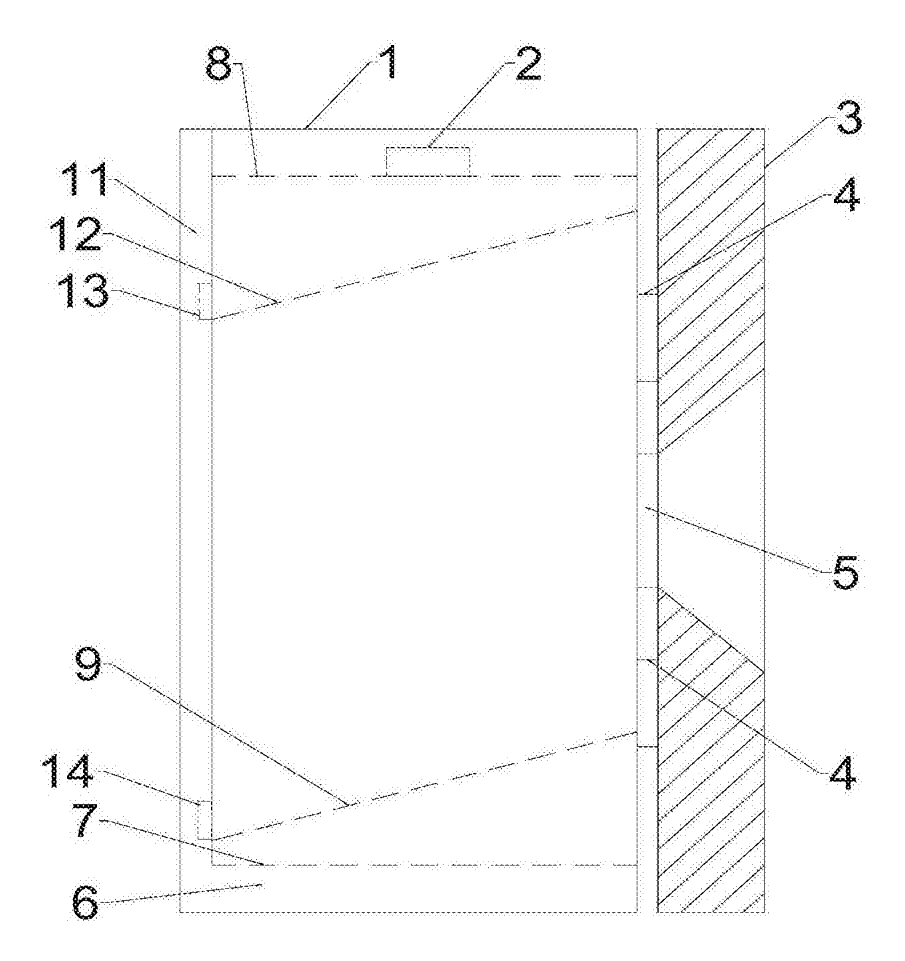
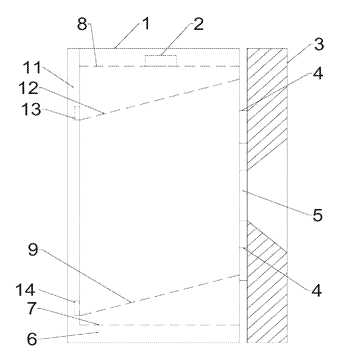
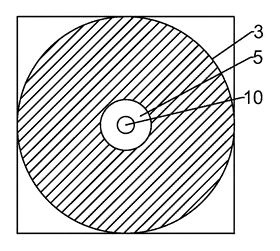
- The housing (1) is hollow. On its wiping face, an annular rail (4) carries a ring brush (3), with a dust suction opening (5) in its center.
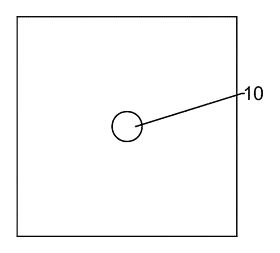
- As the brush turns quickly, according to the patent it creates a high-pressure airflow that carries chalk dust into the housing; an air vent (10) on the side keeps air moving through.
- A first guide plate (12) near the top and a second guide plate (9) near the bottom, both glass and slanted at 45 degrees, direct the dust toward a channel (11) on the far side.
- The channel has a first vent (13) and a second vent (14) that take in the dust from each plate and lead it to a storage bin (6) at the bottom, which is removable.
- An electrostatic system - a cathode plate (8) at the top, an anode plate (7) above the bin and a power supply (2) - catches the fine particles that become charged by friction while brushing.
- A switch button on the housing turns the power supply on and off.
Who it is for
- School-supply brands and distributors selling classroom essentials to schools and districts that still use chalkboards.
- Education procurement suppliers in markets where chalkboards are common and teachers ask for less dust.
- Cafe, restaurant and retail sign suppliers whose chalkboard menus and A-frame signs are rewritten daily.
- Home and craft stores selling chalkboard walls, kids’ easels and chalkboard paint.
How it works
The main parts
| No. | Part | What it does |
|---|---|---|
| 1 | Housing | Hollow body. |
| 3 | Ring brush | Bristle brush that wipes and creates airflow. |
| 4 | Annular rail | Carries the turning brush. |
| 5 | Suction opening | Dust inlet in the center of the brush. |
| 12, 9 | First and second guide plates | Slanted glass plates steering dust. |
| 11 | Channel | Leads dust from the vents (13, 14) to the bin. |
| 10 | Air vent | Keeps air flowing through the housing. |
| 6 | Storage bin | Removable dust container. |
| 8, 7, 2 | Cathode, anode, power supply | Electrostatic trap for fine dust. |
Using it
- Switch on the electrostatic trap with the button on the housing.
- Wipe the board - the ring brush turns and draws dust into the central opening.
- Coarse dust is steered by the guide plates into the channel and bin; fine dust is caught between the charged plates.
- Empty the bin by sliding it out and tapping it over a waste basket.
Applications
Classrooms with chalkboards
Teachers wipe the board many times a day; less dust on hands, clothes and the front desks.
Lecture halls and training rooms
Large boards in universities and training centers create the most dust per wipe.
Cafe and restaurant menu boards
Staff rewriting daily specials keep dust off counters and food areas.
Homes and kids’ easels
Parents with chalkboard walls or easels can keep dust off floors and furniture.
Sports and coaching boards
Coaches using chalk tactic boards in locker rooms keep the room cleaner.
Where it is less suitable
- Whiteboards - dry-erase markers leave no dust; this is a chalkboard tool only.
- Very large boards wiped in one sweep - a long felt eraser may be faster for big areas, with less dust capture.
- Lowest-price school buying - a powered eraser costs more than a felt block.
Frequently asked questions
Does it have a motor or fan?
No. The patent collects dust with the airflow from the turning ring brush and an electrostatic trap, instead of the motor, fan and sponge of older vacuum erasers.
What does the electrostatic part do?
A cathode plate at the top and an anode plate above the bin form an electric field powered by a small supply. Fine chalk particles, charged by brushing, are attracted to it and drop toward the bin.
How much dust does it catch?
The patent gives no figures. Capture depends on brush, plate spacing and voltage, and is measured on prototypes.
How do I empty it?
The storage bin at the bottom is detachable; slide it out, tip it over a waste basket and refit it.
What powers it?
The patent names a power supply and a switch. In production we use replaceable cells or a rechargeable battery with a small enclosed high-voltage module.
Can the brush be replaced?
The patent uses a bristle ring brush. A snap-in replaceable ring is a straightforward design option.
Can this design be made and sold in the US?
The patent was filed only in China and has lapsed, so it does not restrict the design in the US or in China. Dust-collecting erasers may be covered by other US patents - see Patent & Production - so we recommend a freedom-to-operate check before volume production.
Are you affiliated with the patent owner?
No. IP2M is an independent design and manufacturing service working from the public patent document.
Request a quote
Click Request a Quote below to see our email address - copy it, or open your email app with a ready-made message. Please mention patent CN106515284B in the subject.
Helpful details to include:
- Your company and channel (school supplies, education procurement, hospitality signs, retail)
- Eraser size and brush type
- Power (batteries or rechargeable)
- Colors and branding
- Estimated quantity and target price
- Timeline - when you would like samples and the first shipment
You can also reach us at (332) 203-9997.
Explore this product
Interested in building this?
Tell us your target market, quantity and timeline. We reply with options for prototyping, small-batch runs or volume production.
Send your inquiry to
Please put CN106515284B in the subject line and tell us your company, country, estimated quantity and timeline.
Prefer to talk? Call (332) 203-9997.
More product-ready patents
All School, Office & Art patents →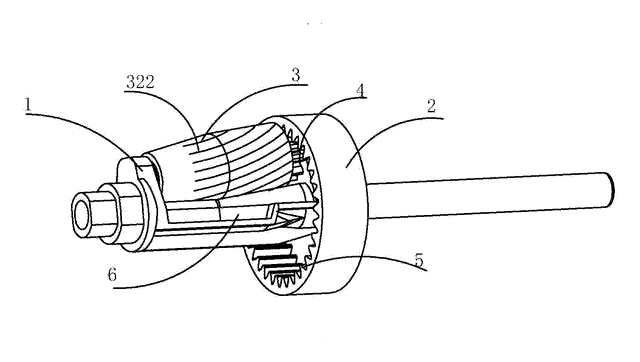
School, Office & Art
Long-Point Sketch Pencil Sharpener
Crank sharpener that cuts only the wood of sketch pencils, leaving a long, round lead about 30 mm long.
Patent CN207241257U
School, Office & Art
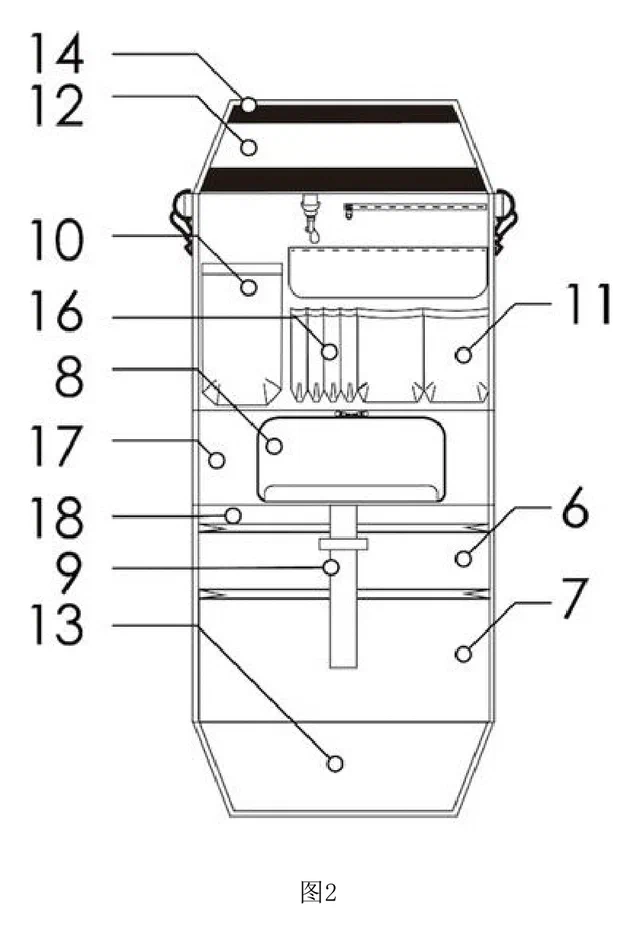
Fold-Out Desk Organizer Insert for School Backpacks
Backpack insert that unfolds into a hanging desk organizer for workbooks, stationery and a water bottle.
Patent CN209436546U
School, Office & Art
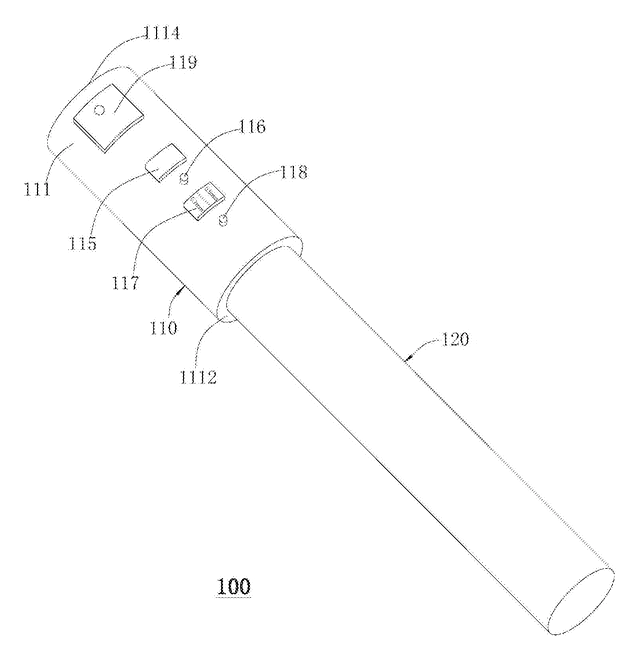
Smart Pencil Cap That Checks the Point with a Camera
Electronic pencil cap that photographs the point, measures it and reminds you to sharpen.
Patent CN106427302B
School, Office & Art
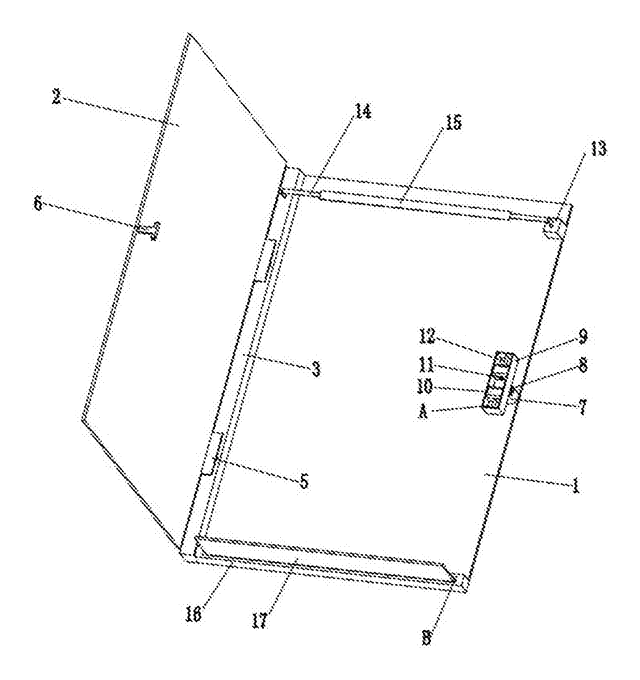
Expanding Clipboard Folder with Spring-Mounted Hinge and Catch
Hard folder whose spring-mounted hinge and catch let the cover clamp any thickness of paper.
Patent CN105667120B
School, Office & Art
Slide-Action Retractable Pen with a Friction-Loaded Cam That Ignores Gravity
Slide-action retractable pen whose spring-pressed cam latch stays put whichever way the pen is held.
Patent CN217671900U
School, Office & Art
Carousel Business Card Holder with Rolling Card Trays on Twin Ring Tracks
Desk card holder: angled card trays roll on wheels around two concentric ring tracks and lift out.
Patent CN105774300B
Browse by category
- Apparel & Accessories (22)
- Baby & Kids (16)
- Bags & Luggage (9)
- Bath & Personal Care (16)
- Car Accessories (10)
- Furniture, Bedding & Storage (12)
- Garden & Outdoor (18)
- Health & Wellness (8)
- Home, Kitchen & Cleaning (24)
- Lighting (12)
- Packaging & Containers (6)
- Pet Products (6)
- Phone & Camera Accessories (4)
- Retail Display (13)
- School, Office & Art (19)
- Sports & Recreation (25)
- Tools & Workshop (27)
- Toys & Games (12)
This page is based on the public patent document CN106515284B, assigned to Haimen Huanghai Pioneer Park Services Co., Ltd.. IP2M is an independent manufacturing service and is not affiliated with, endorsed by or licensed by the patent owner. Images marked as concept renderings are illustrations, not photos of an existing product. Patent status information is provided for reference only and is not legal advice; confirm freedom to operate for your market before production. Full disclaimer.