At a glance
| Patent number | CN106618998B (application CN201611252609) |
| Type | China invention patent (发明专利) - protects product shape, structure and method |
| Original title | Massage machine (一种按摩机) |
| Patent owner | Ogawa Intelligent Health Technology Group Co Ltd, Zhangzhou Easepal Industrial Co Ltd |
| Inventors | Tang Guoyun, Leng Lei, other inventors requested not to disclose names |
| Filing date | 2016-12-30 |
| Grant date | 2020-08-28 |
| Status (China) | In force in China until at most 2036-12-30 (if annual fees are paid) |
| Patent family | Chinese filings only - no US, European, Japanese, PCT or other filings listed |
| Cited by | 16 later documents |
| Source | Google Patents (search for CN106618998B) |
What the claims cover, in plain language
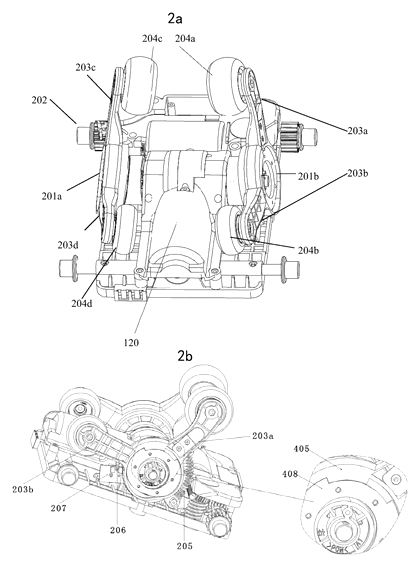
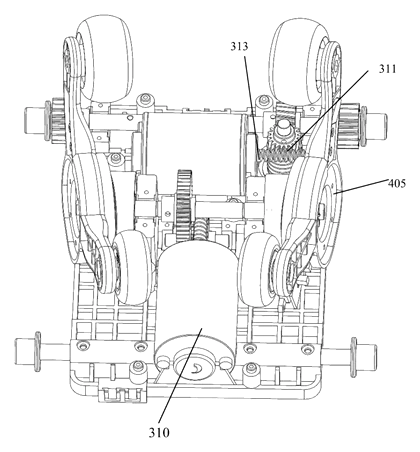
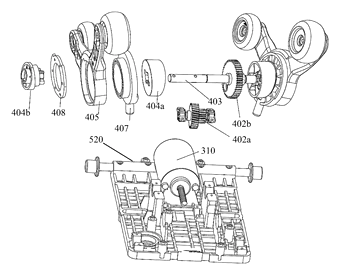
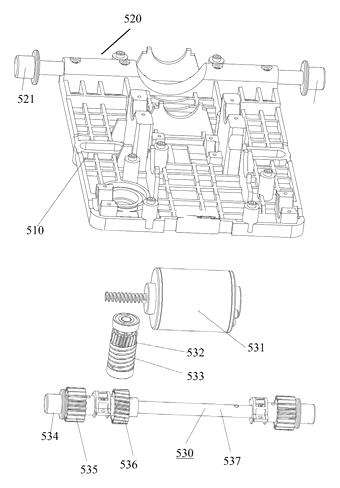
Claim 1 covers a massage machine with a backrest, a massage movement core that travels up and down, and a control circuit. The core has at least one pair of massage assemblies that move toward or away from each other across the back width, driven by a motor, transmission mechanism, transmission shaft, and cylindrical cam. Each assembly has upper and lower massage swing arms inclined to form a fork opening that clamps the shoulder, ending in massage heads. The assembly is mounted on a cylindrical boss so it can turn over when the user presses against a single swing arm. A tensioning spring and a limiting structure (an arc-shaped notch and a stop block) restrict its rotation range. The control circuit includes a detection module that senses when the assembly reaches a set overturned position, and a judgment module that uses this signal to determine the shoulder location and adjust the massage operation.
Claim 2 specifies that the detection module uses a trigger piece on the massage member and a position sensor on the base. Claim 3 defines the sensor types: a photoelectric sensor paired with a light-shielding sheet, or a Hall sensor paired with a magnet.
This is a simplified reading for orientation only. The legal scope is defined by the exact claim wording in the official Chinese document.
What this means for US production
This patent was filed only in China and is currently in force in China until at most 2036-12-30 (if annual fees are paid). It has no US or other foreign counterpart. However, making or selling this specific mechanism in China needs the owner’s permission while the patent remains active.
Two points to settle early:
- Other patents may exist. Therabody, Inc. holds later US patents in this field (including US11813221B2, US11857481B2, and US11890253B2) that cite this Chinese document. A freedom-to-operate (FTO) review covering shoulder-detection mechanisms, fork-arm geometries, and cam-driven massage cores is required before starting US production or sales.
- Electrical safety and emissions. The motor, sensors, and control circuit must be selected to meet US electrical standards for powered furniture.
Customization and manufacturing
What can be customized
| Area | Options |
|---|---|
| Backrest dimensions | Width and height to match the target chair frame |
| Swing arm geometry | Angle and length of the fork opening to suit different shoulder widths |
| Massage heads | Shape and durometer of the soft rubber rollers |
| Sensor type | Photoelectric (shading sheet) or Hall effect (magnet) |
| Drive motor | Voltage, torque, and speed ratings |
| Upholstery interface | Mounting points for the outer padding and leather/fabric covers |
Things to plan for (US market)
- UL 1647 - Standard for Safety for Motor-Operated Massage Chairs and Exercise Machines; required by most US retailers for mains-powered massage seating.
- FCC Part 15 - The control circuit, motor drivers, and sensors emit radio frequency energy and must comply with FCC limits for unintentional radiators.
- California Proposition 65 - Soft rubber rollers, plastics, and wire insulation must be screened for listed chemicals.
- CPSC general requirements - While adult massage chairs lack a single specific CPSC rule like cribs, they must not present unreasonable risks of injury under the Consumer Product Safety Act.
How a project runs
- Inquiry - define the chair dimensions, target user size range, electrical specs, and volume.
- Design - engineer the swing arms, cylindrical cam profile, sensor placement, and control logic.
- Prototype - build functional samples to verify the overturn detection and shoulder mapping accuracy.
- Pilot run - test cycle life of the cam and arms, run UL and FCC pre-compliance checks.
- Production - manufacture the metal core, mold the rubber rollers, assemble the PCB, and integrate into the final upholstery.
Quantities & timeline
The mechanism requires custom injection molds for the rubber massage heads and plastic sensor housings, precision machining for the cylindrical cam and transmission shaft, and stamped or cast bases. Certification testing for UL and FCC takes significant calendar time after prototypes are finalized. Send us your chair dimensions, target user size range, electrical specifications, estimated quantity and target price, and we will reply with options.
Patent drawings
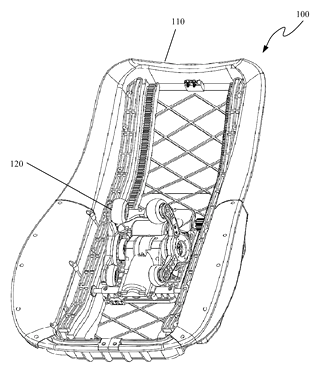
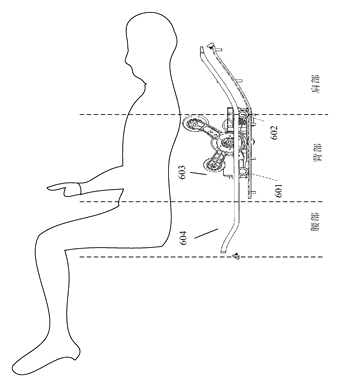
Drawings reproduced from the public patent document for reference.