
Patent CN106723766B
Updated October 31, 2026Back-Mounted Umbrella Stand with Automatic Vertical Balance
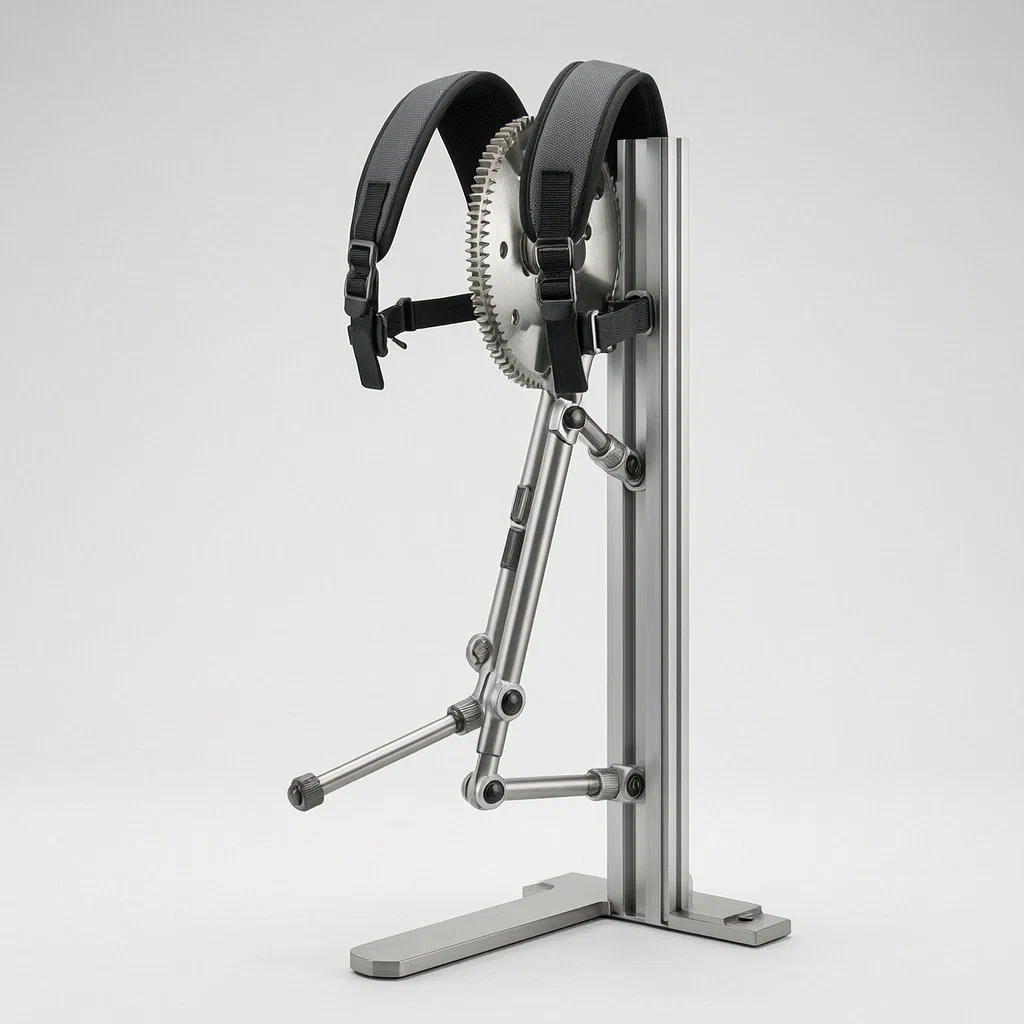
Carrying an umbrella on your back usually means it tilts when you bend over, leaving you exposed to sun or rain. Holding it takes away one hand. This patent describes a back-mounted frame with a linkage system that keeps the umbrella vertical regardless of body posture. The core is a set of hinged rods: an upper rod holds the umbrella handle, a lower rod connects to the waist, and intermediate connecting rods link them through a pivot point. As the user bends at the waist, the lower rod moves, driving the linkage to rotate the upper rod in the opposite direction. This counter-movement keeps the umbrella shaft upright. A tension spring assists in returning the umbrella to vertical when standing up. Optional hinge points allow adjustment for different heights and bending angles.
- China invention patent - lapsed
- No filings outside China
- Outdoor accessories
- Linkage mechanism, tension spring, adjustable hinges
Splat! What let you down?
⚖️
Auto-vertical balance
Linkage rods adjust the umbrella angle as the user bends, keeping the canopy upright.
🎒
Hands-free carrying
Double-shoulder straps free both hands for work or walking while providing shade.
🔧
Adjustable geometry
Multiple hinge points allow tuning for different user heights and bending angles.
🔄
Spring-assisted return
A tension spring helps reset the umbrella to vertical when the user stands up.
Bring this product to market
- ✓ Patent vetted China-only family and legal status checked
- 2 Product brief · now How it works, uses and options written up
- 3 Prototype First samples for buyers to review
- 4 Pilot run Small first batch for launch customers
- 5 Volume production Repeat orders at scale
Buyer interest
– of 100 buyers needed to start prototyping
One click, no sign-up. Each vote is one real visitor, and products with the most interest go to prototyping first.
Build team: no members yet. Need a partner, co-funding or skills to build this? Join and we introduce the team once it forms.
The problem
Standard backpacks can carry closed umbrellas, but they cannot provide active protection from sun or rain while worn. Handheld umbrellas occupy one hand, limiting mobility and task performance. Some existing back-mount solutions rely on rigid attachments that tilt with the user’s torso; when the wearer bends forward to work or walk downhill, the umbrella canopy tilts too, failing to block overhead elements effectively. There is a need for a wearable structure that maintains the umbrella’s vertical alignment relative to the ground despite changes in the wearer’s body posture.
The solution
The patent describes a double-shoulder back frame equipped with a mechanical linkage system designed to automatically maintain the vertical balance of an attached umbrella.
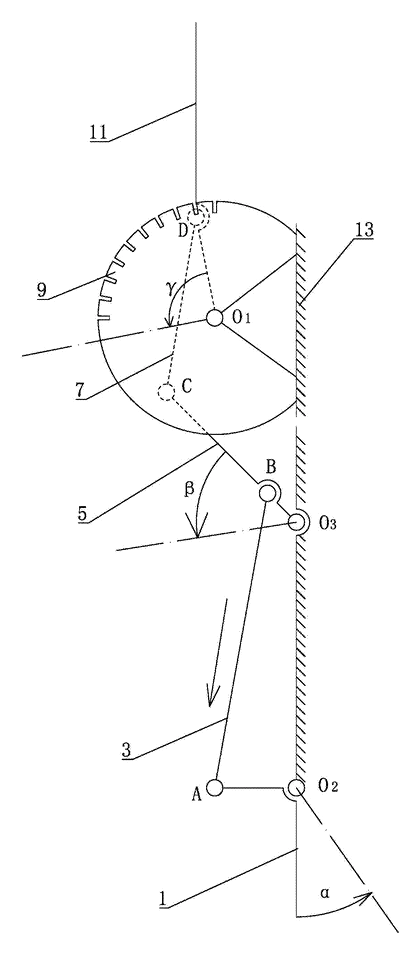
- An upper support rod (11) holds the umbrella handle and is hinged to the back frame via a first fulcrum shaft.
- A lower support rod (1) connects to the user’s waist area and is hinged to the back frame via a second fulcrum shaft.
- A corner enlargement support rod (5) acts as a central pivot hub, hinged to the back frame via a third fulcrum shaft.
- Two connecting rods (7 and 3) link the upper and lower support rods to the corner enlargement support rod.
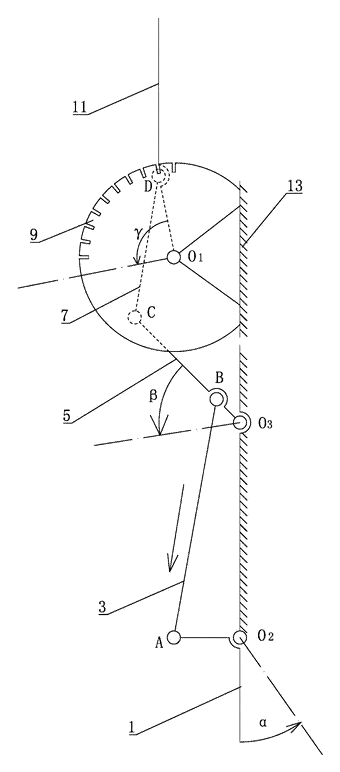
- The geometric arrangement of these hinges creates a parallelogram-like linkage. When the user bends at the waist, the lower rod rotates, driving the connecting rods to rotate the upper rod in the opposite direction.
- This counter-rotation keeps the upper support rod (and thus the umbrella) vertical relative to the ground, rather than tilted with the torso.
- A tension spring between the upper rod and the back frame assists in resetting the position when the user returns to an upright stance.
Who it is for
- Outdoor laborers: Farmers, construction workers, or gardeners who need constant sun protection while working with both hands.
- Commuters and pedestrians: Individuals walking in rain or intense sun who want to use their phones, carry bags, or push carts without holding an umbrella.
- Tourism and event organizers: Companies looking for novelty wearables for outdoor festivals or guided tours where hands-free convenience is valued.
- Product developers: Brands exploring ergonomic outdoor accessories that solve specific posture-related utility problems.
How it works
The main parts
| No. | Part | What it does |
|---|---|---|
| 1 | Lower support rod | Connects to the waist belt; rotates with the torso’s bending motion. |
| 3 | Second connecting rod | Links the lower rod to the central pivot hub. |
| 5 | Corner enlargement support rod | Central pivot hub; houses multiple hinge points. |
| 7 | First connecting rod | Links the central hub to the upper rod. |
| 11 | Upper support rod | Holds the umbrella handle; rotates to stay vertical. |
| 13 | Back frame | Double-shoulder strap assembly supporting the mechanism. |
| 9 | Sector gear | Fastened to the first fulcrum shaft (optional feature for locking/adjustment). |
| - | Tension spring | Provides force to assist in returning the upper rod to vertical. |
Operating steps
- Setup: The user wears the back frame like a backpack. The umbrella handle is fixed to the upper support rod (11). The lower support rod (1) is secured to the user’s waist belt.
- Standing: In an upright position, the linkage rests in its neutral configuration, keeping the umbrella shaft vertical.
- Bending Forward: As the user bends at the waist, the lower support rod rotates backward relative to the torso.
- Linkage Action: This rotation drives the second connecting rod (3), which moves the corner enlargement support rod (5). The movement is transferred through the first connecting rod (7) to the upper support rod (11).
- Counter-Rotation: The upper support rod rotates forward (opposite to the torso’s tilt) by a calculated angle, maintaining the umbrella’s vertical alignment.
- Returning Upright: When the user stands up, the tension spring pulls the upper rod back toward its initial vertical position, assisted by the reverse movement of the lower rod.
Applications
Agricultural fieldwork
Farmers tending crops often bend deeply into rows. This device allows them to keep an umbrella overhead for sun protection without stopping to reposition it or sacrificing hand use for tools.
Construction site supervision
Site managers moving around uneven terrain or crouching to inspect foundations benefit from consistent shade. The hands-free nature allows them to hold clipboards or radios while staying protected.
Outdoor tourism and guiding
Tour guides leading groups in sunny or rainy climates can gesture freely and manage equipment while the umbrella provides passive protection for themselves.
Fishing and boating
Anglers sitting or leaning on boat decks need shade from direct sunlight. A back-mounted umbrella that stays vertical even when the angler leans forward to cast or retrieve lines improves comfort.
Where it is less suitable
- High-wind environments: The large surface area of an open umbrella combined with the lever arm of the back mount may create significant torque, making it unstable or uncomfortable in strong gusts.
- Crowded urban settings: The protruding umbrella and wide back frame may be impractical in dense pedestrian traffic where space is limited.
- Heavy-duty industrial safety: This is not a certified protective equipment; it offers no impact protection and should not replace hard hats or specialized safety gear.
Frequently asked questions
How does the umbrella stay vertical when I bend?
The device uses a four-bar linkage system. When you bend at the waist, the lower rod attached to your belt moves. This movement is transferred through connecting rods to the upper rod holding the umbrella. The geometry causes the upper rod to rotate in the opposite direction, canceling out the tilt of your torso and keeping the umbrella shaft vertical relative to the ground.
Can I adjust it for my height?
Yes. The patent describes optional hinge points on the central pivot rod. By choosing different hole positions for the connecting rods, you can tune the mechanism to match your torso length and typical bending angle. This ensures the umbrella stays vertical whether you are tall or short.
Does it work with any umbrella?
It requires an umbrella with a straight handle that can be securely clamped to the upper support rod. Standard golf umbrellas or long-handled rain umbrellas are suitable. Compact folding umbrellas may not provide enough leverage or stability for the mechanism to work effectively.
Is the spring necessary?
The tension spring helps pull the umbrella back to a vertical position when you stand up from a bent posture. Without it, gravity and friction might leave the umbrella slightly tilted until you manually readjust or the next movement corrects it. The spring makes the transition smoother.
How durable are the hinges?
The patent notes that the all-hinged strut structure has a long service life and low failure rate compared to sliding or telescopic mechanisms. Durability depends on the material choice (e.g., stainless steel pins vs. plastic bushings) and proper lubrication during use.
Can this design be made and sold in the US?
The patent was filed only in China and has lapsed due to non-payment of fees, so it does not restrict the design in the US or in China. However, other patents may exist in the wearable accessory field. We recommend a freedom-to-operate check before volume production.
Are you affiliated with the patent owner?
No. IP2M is an independent design and manufacturing service working from the public patent document.
Request a quote
Click Request a Quote below to see our email address - copy it, or open your email app with a ready-made message. Please mention patent CN106723766B in the subject.
Helpful details to include:
- Your company and channel (outdoor brand, agricultural supply, tourist gear, personal care)
- Target user (adults, children, professional workers)
- Umbrella types to be supported (handle diameter, canopy size)
- Material preferences (lightweight aluminum, durable steel, plastic components)
- Estimated quantity and target price
- Timeline - when you would like samples and the first shipment
You can also reach us at (332) 203-9997.
Explore this product
Interested in building this?
Tell us your target market, quantity and timeline. We reply with options for prototyping, small-batch runs or volume production.
Send your inquiry to
Please put CN106723766B in the subject line and tell us your company, country, estimated quantity and timeline.
Prefer to talk? Call (332) 203-9997.
More product-ready patents
All Bags & Luggage patents →
Bags & Luggage
Quick-Access Luggage with Fold-Down Back Compartment
Hard-shell suitcase with a fold-down compartment in the back panel for phone, passport and power bank - no need to open the case.
Patent CN210076793U
Bags & Luggage
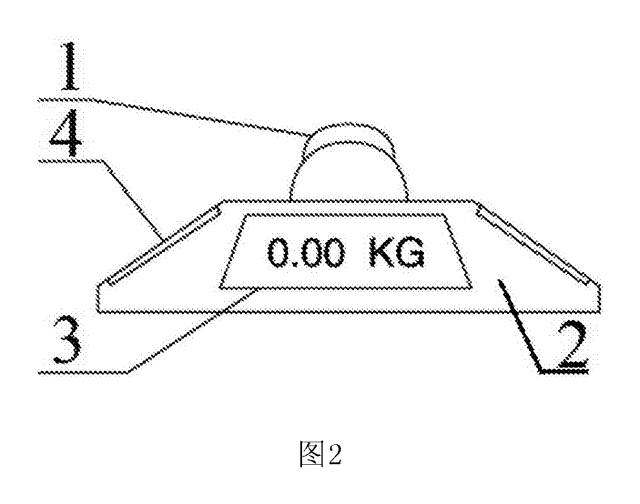
Luggage Handle with Built-In Scale
Suitcase carry handle with a built-in weighing sensor and display - lift the bag and read its weight.
Patent CN206670777U
Bags & Luggage
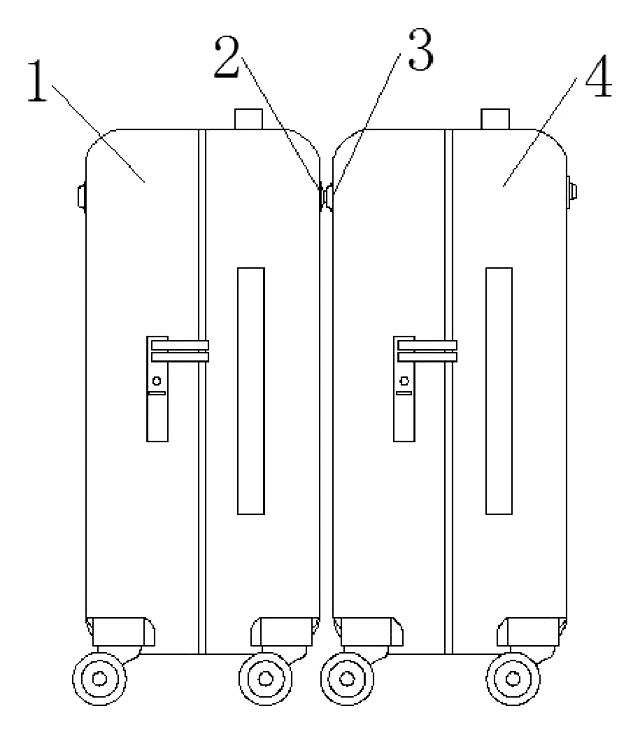
Snap-Together Luggage Connector
Stud-and-socket snap built into suitcases so two cases lock together and roll with one hand.
Patent CN209862619U
Bags & Luggage
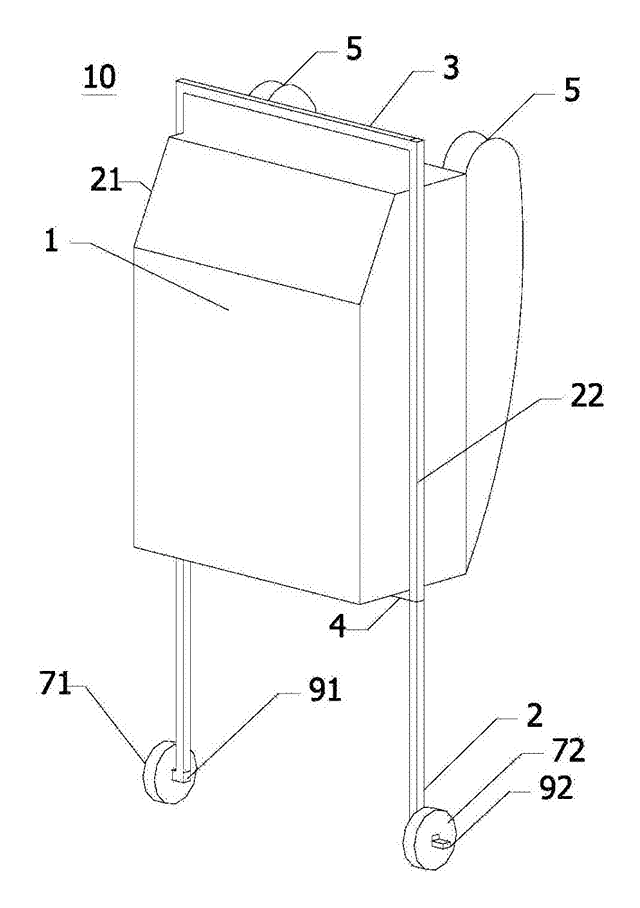
Side-Rail Rolling Backpack with Raised Wheels
Rolling backpack with pull rails on the sides, not the back, and rails that lower the wheels.
Patent CN207733803U
Bags & Luggage
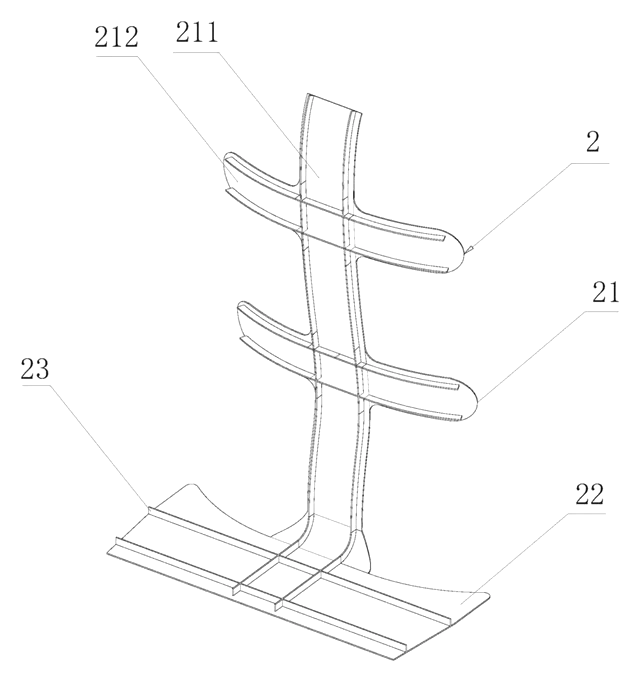
Backpack with Removable Body-Shaped Inner Frame
Backpack with a lift-out inner frame shaped to the back that spreads the load to the back and hips.
Patent CN216534262U
Bags & Luggage
Hard-Shell Luggage Case with a Built-In Lift Table
Hard-shell luggage with a telescopic rod and desktop that rises from the lid.
Patent CN107485137B
Browse by category
- Apparel & Accessories (23)
- Baby & Kids (17)
- Bags & Luggage (12)
- Bath & Personal Care (17)
- Car Accessories (12)
- Furniture, Bedding & Storage (13)
- Garden & Outdoor (19)
- Health & Wellness (8)
- Home, Kitchen & Cleaning (27)
- Lighting (12)
- Packaging & Containers (6)
- Pet Products (6)
- Phone & Camera Accessories (4)
- Retail Display (14)
- School, Office & Art (20)
- Sports & Recreation (26)
- Tools & Workshop (30)
- Toys & Games (13)
This page is based on the public patent document CN106723766B, assigned to Lin Jiaqiang (Individual). IP2M is an independent manufacturing service and is not affiliated with, endorsed by or licensed by the patent owner. Images marked as concept renderings are illustrations, not photos of an existing product. Patent status information is provided for reference only and is not legal advice; confirm freedom to operate for your market before production. Full disclaimer.