At a glance
| Patent number | CN106723766B (application CN201710105534) |
| Type | China invention patent (发明专利) - protects product shape, structure, and method |
| Original title | Automatically keep the both shoulders back of the body umbrella stand that umbrella balances vertically (自动保持伞竖直平衡的双肩背伞架) |
| Patent owner | Lin Jiaqiang (Individual) |
| Inventors | Lin Jiaqiang |
| Filing date | 2017-02-26 |
| Grant date | 2018-08-21 |
| Status (China) | Lapsed - terminated for non-payment of annual fees (recorded 2025-02-28) |
| Patent family | Chinese filings only - no US, European, Japanese, PCT or other filings listed |
| Cited by | 0 later documents |
| Source | Google Patents (search for CN106723766B) |
What the claims cover, in plain language
Claim 1 - defines the core mechanical structure: a back frame with double shoulder straps, an upper support rod (11) hinged to the frame, a lower support rod (1) hinged to the frame, and a corner enlargement support rod (5) hinged to the frame. Two connecting rods (7 and 3) link the upper/lower rods to the corner rod. The key feature is the specific geometric relationship of the hinge points: the distance from the first connecting rod’s hinge on the corner rod to the third fulcrum axis is larger than the distance from the second connecting rod’s hinge on the corner rod to the same axis. A tension spring connects the upper rod to the back frame.
Claim 2 - specifies that the corner enlargement support rod has no less than two optional hinge points for the second connecting rod, allowing adjustment. Claim 3 - specifies that the corner enlargement support rod has no less than two optional hinge points for the first connecting rod, allowing adjustment. Claim 4 - adds a sector gear (9) fastened to the first fulcrum shaft, likely for locking or fine-tuning the upper rod’s angle.
This is a simplified reading for orientation only. The legal scope is defined by the exact claim wording in the official Chinese document.
What this means for US production
This patent was filed only in China and has lapsed, so it no longer restricts anyone in China either. It has no US or other foreign counterpart.
Two points to settle early:
- Other patents may exist. Wearable outdoor accessories and umbrella mechanisms are a competitive field. While this specific linkage design appears unique, broader concepts of back-mounted sun shades or adjustable frames may be covered by other US patents. A freedom-to-operate (FTO) review is recommended before tooling.
- Mechanical complexity. The reliance on multiple precise hinges and springs introduces tolerance challenges. Manufacturing consistency is critical for the auto-balancing function to work smoothly across different user heights.
Customization and manufacturing
What can be customized
| Area | Options |
|---|---|
| Frame material | Aluminum alloy tubes, reinforced nylon webbing, or carbon fiber for weight reduction. |
| Hinge points | Number and spacing of adjustable holes on the corner rod for height fitting. |
| Spring type | Tension spring stiffness adjusted for umbrella size and wind resistance. |
| Umbrella interface | Clamps or sockets for different umbrella handle diameters (standard golf vs. compact). |
| Strap system | Padding thickness, quick-release buckles, and chest/waist strap integration. |
| Finish | Anodized aluminum colors, powder-coated steel parts, or molded plastic covers for aesthetics. |
Things to plan for (US market)
- CPSC General Conformity Certificate (GCC): Required for consumer products; testing must verify stability and durability.
- ASTM F963 (if marketed to children): If sold for kids, strict small parts and pinch-point rules apply. For adults, general safe design principles still matter.
- California Prop 65: Lead and phthalate limits for plastics and metal finishes.
- Textile Flammability: Upholstered flammability standards may apply if padding is used extensively.
How a project runs
- Inquiry - target user demographics, umbrella sizes, and quantity.
- Design - CAD modeling of the linkage geometry to ensure vertical maintenance across bending ranges.
- Prototype - 3D printed or CNC machined samples for fit testing and mechanism smoothness.
- Pilot run - fatigue testing of hinges and springs; weather resistance tests.
- Production - injection molding for plastic parts, tube bending/cutting for metal frames, assembly.
Quantities & timeline
Injection molds are needed for hinge housings and connectors. Metal tubes require cutting, drilling, and finishing processes. Assembly involves installing springs and aligning multiple pivot points. Development time focuses heavily on tuning the linkage ratios for reliable auto-balancing. Send us your target materials, umbrella compatibility, estimated quantity and target price and we will reply with options.
Patent drawings
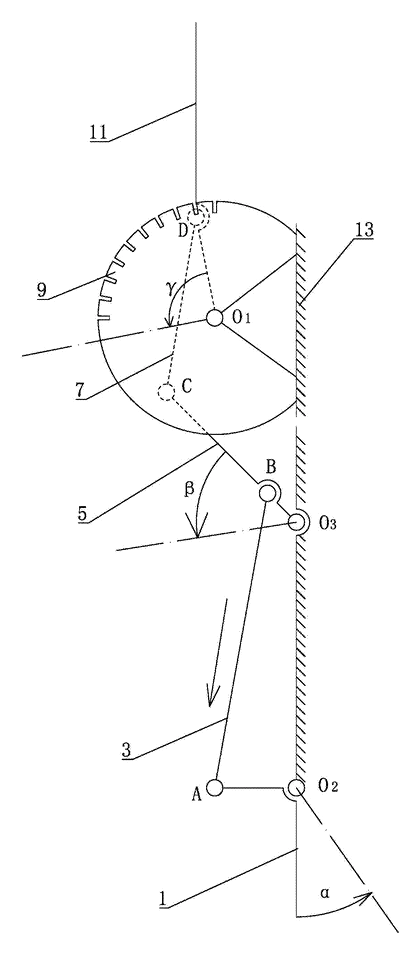
Drawings reproduced from the public patent document for reference.