
Patent CN106739658B
Updated October 26, 2026Posture-Correcting Retractable Ballpoint Pen with Finger-Guide Elastic Portions
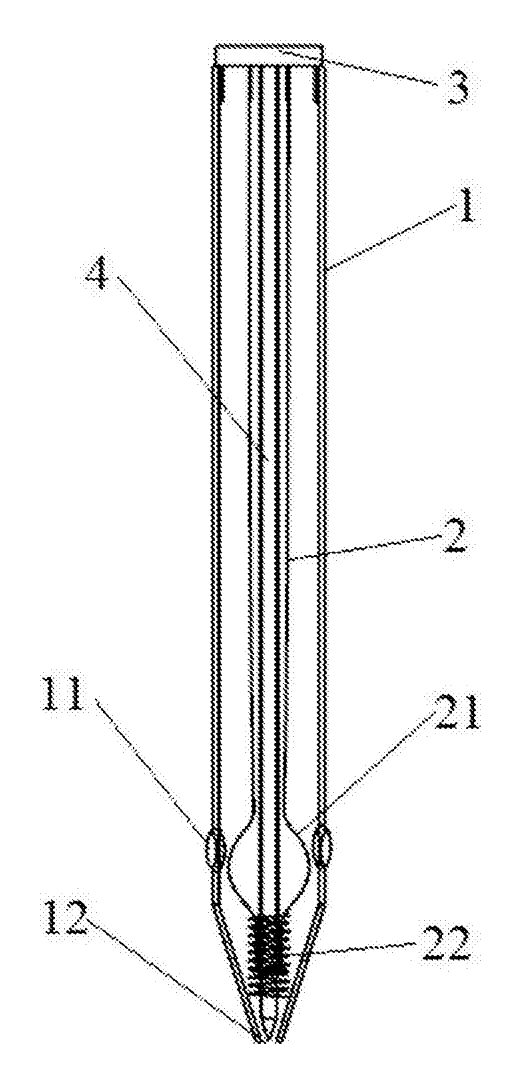
Standard pens let users hold them in any way they like, which often leads to awkward finger placement and poor writing posture. This ballpoint pen addresses that by building a physical guide directly into the barrel. Two elastic portions on the lower side of the shell mark the correct gripping position. Only when fingers press these elastic portions does the mechanism engage: the elastic portions push inward against a circular arc-shaped lug boss on the inner casing, driving the casing downward so the nib extends through the hole at the bottom. If the fingers are placed anywhere else, the elastic portions stay unpressed, the inner casing does not move, and the pen cannot write. A spring under the lug boss returns the casing upward when the grip is released, pulling the nib back inside the shell. The head cover combines an elastic outer layer with a hard inner connecting portion so the whole assembly moves smoothly during use.
- China invention patent - lapsed
- No filings outside China
- Writing instruments
- Elastic shell portions, spring-retracted inner casing
Splat! What let you down?
✍️
Grip-guided extension
Two elastic portions on the shell sit at the correct finger position; pressing them drives the nib out.
🔄
Automatic retraction
Releasing the grip allows the internal spring to pull the inner casing up, hiding the nib safely inside.
⚙️
Arc-shaped lug boss
The inner casing has a circular arc lug boss just below the elastic portions to translate finger pressure into downward motion.
🛡️
Dual-layer head cover
An elastic outer layer stretches with the casing while a hard inner connecting portion keeps the refill aligned.
Bring this product to market
- ✓ Patent vetted China-only family and legal status checked
- 2 Product brief · now How it works, uses and options written up
- 3 Prototype First samples for buyers to review
- 4 Pilot run Small first batch for launch customers
- 5 Volume production Repeat orders at scale
Buyer interest
– of 100 buyers needed to start prototyping
One click, no sign-up. Each vote is one real visitor, and products with the most interest go to prototyping first.
Build team: no members yet. Need a partner, co-funding or skills to build this? Join and we introduce the team once it forms.
The problem
When students and office workers hold a standard ballpoint pen, their fingers often slide too close to the tip or wrap around the barrel at awkward angles. Over long writing sessions, incorrect finger placement contributes to hand fatigue and makes it difficult to develop a consistent, comfortable writing style. Traditional pens offer no mechanical feedback to encourage better habits, and separate rubber grips can slip or be removed entirely. Furthermore, leaving the nib exposed when the pen is set down risks ink stains on paper, clothing, and desks.
The solution
This pen integrates the grip guide and the extension mechanism into the barrel itself.
- An outer shell (1) houses the entire mechanism and provides the surface the user holds.
- The lower side of the shell carries two elastic portions (11) located precisely at the correct pen-gripping position.
- Inside the shell, an inner casing (2) holds the refill for ball-point pen (4). The inner casing features a circular arc-shaped lug boss (21). The elastic portions (11) are positioned slightly above the maximum gauge position of this lug boss.
- A spring (22) sits beneath the lug boss, contacting both the lower part of the lug boss and the bottom of the shell.
- The bottom of the shell includes a nib hole (12) for the tip to pass through.
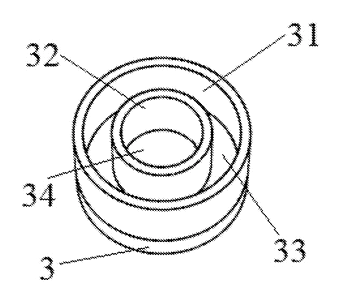
- A head cover (3) attaches to the top of the shell via an outer connecting portion (31). Inside, a circular interior connecting portion (32) divides the head cover into an outer layer (33) and an internal layer (34). The outer layer has elasticity, while the internal layer is made of hard material.

Who it is for
- Educational stationery brands looking for teaching tools that physically demonstrate the correct finger placement to young students learning to write.
- Wholesalers supplying school districts who need durable, self-correcting pens that reduce the need for constant teacher intervention regarding handwriting posture.
- Office supply distributors seeking ergonomic desk pens that encourage a relaxed grip during long periods of note-taking or form-filling.
- Promotional product companies wanting a distinctive item for tutoring centers or educational conferences that functions as both a writing instrument and a training aid.
How it works
The main parts
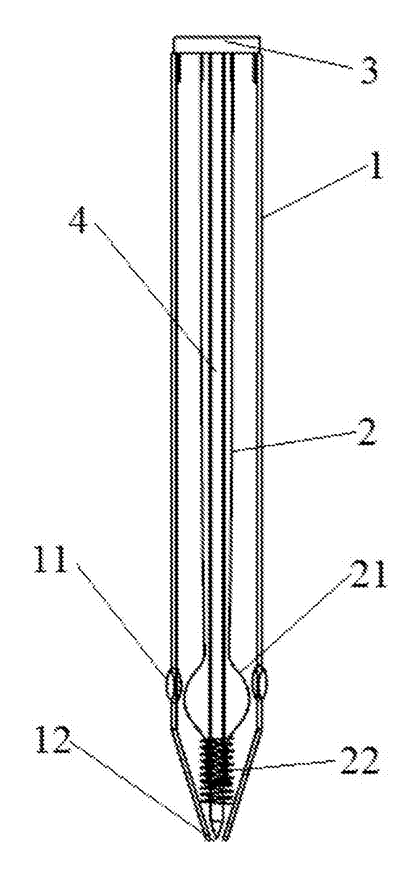
| No. | Part | What it does |
|---|---|---|
| 1 | Shell | Outer barrel held by the user; contains the inner casing. |
| 2 | Inner casing | Holds the refill; moves up and down inside the shell. |
| 3 | Head cover | Caps the top; divided into outer and internal layers. |
| 4 | Refill for ball-point pen | The ink cartridge and nib assembly. |
| 11 | Elastic portions | Two flexible areas on the shell’s lower side at the grip position. |
| 12 | Nib hole | Opening at the bottom of the shell for the nib to extend through. |
| 21 | Lug boss | Circular arc protrusion on the inner casing, situated below the elastic portions. |
| 22 | Spring | Pushes the inner casing upward to retract the nib when released. |
| 31 | Outer connecting portion | Raised section attaching the head cover to the shell. |
| 32 | Interior connecting portion | Internal raised ring dividing the head cover layers; made of hard material. |
| 33 | Outer layer | Elastic upper section of the head cover that deforms during use. |
| 34 | Internal layer | Hard inner section of the head cover that supports the refill’s afterbody. |
Operating steps
- Resting state - The spring (22) pushes the inner casing (2) upward. The nib of the refill (4) is hidden inside the shell (1), though the tip of the refill exposes past the inner casing but remains within the shell. The afterbody of the refill rests completely against the interior connecting portion (32) of the head cover (3).
- Correct grip applied - The user places two fingers on the elastic portions (11). Pressing inward clutches the elastic portions, causing them to contract inside the shell. They press against the lug boss (21) on the inner casing.
- Nib extension - Because the elastic portions are slightly above the maximum gauge position of the lug boss, the fingers have a tendency to move upward along the arc of the lug boss while simultaneously squeezing the inner casing downward. The inner casing slides down, pushing the nib out through the nib hole (12). Simultaneously, the elastic outer layer (33) of the head cover stretches to accommodate this movement without hindering the inner casing or the refill.
- Incorrect grip - If the fingers are not placed on the elastic portions (11), the clutching action cannot occur. The inner casing does not move down, and the nib cannot be extended for writing.
- Retraction - When writing is finished, releasing the elastic portions allows the spring (22) to push the inner casing back to its resting position. The nib retracts automatically inside the shell, preventing pollution or accidental marks.
Applications
Classroom handwriting practice
Elementary students often struggle to maintain a proper tripod grip. Teachers provide these pens so the pen itself refuses to write unless the fingers are placed on the designated elastic portions. This gives immediate physical feedback, helping children build muscle memory for correct handwriting posture without constant verbal reminders.
Tutoring and special education
Tutors working one-on-one with students who have fine motor difficulties use tools that simplify instruction. The pen’s requirement to press specific spots before the nib appears breaks the writing process into clear steps. It removes the frustration of trying to write with an awkward grip, allowing the student to focus on letter formation once the correct hold is achieved.
Office desk work
Adults who take extensive handwritten notes may develop tension from gripping a pen too tightly or too low. Using this pen at a desk encourages placing the fingers at the engineered elastic portions. When the user sets the pen down between calls or tasks, the spring automatically pulls the nib inside the shell, keeping the workspace free of stray ink marks.
Calligraphy and art clubs
Hobbyists practicing basic strokes benefit from a consistent starting grip every time they pick up the pen. The mechanical linkage ensures the nib only extends when the hand is positioned uniformly. Club instructors can distribute these pens to beginners to establish a standardized baseline before moving on to specialized brush pens or markers.
Where it is less suitable
- High-speed continuous writing environments - Users who rely on rapid, varied grip shifts during fast transcription may find the required pressure on the elastic portions restrictive.
- Heavy-duty industrial marking - The internal spring and moving casing are designed for standard writing pressures, not for pressing hard against rough surfaces like cardboard or metal.
- Left-handed over-the-top grips - The elastic portions are arranged for a standard grip; unconventional left-handed styles that hook over the top of the barrel may not align with the designated areas.
Frequently asked questions
How does the pen know if my grip is correct?
The outer shell has two elastic portions located exactly where fingers should rest. When you press them, they flex inward and push against a circular arc-shaped lug boss on the inner casing. This forces the casing down, extending the nib through the hole at the bottom. If your fingers miss those spots, the casing stays up and the pen will not write.
Does the nib stay out while I write?
Yes. As long as you maintain pressure on the elastic portions, the inner casing remains pushed down against the spring, keeping the nib exposed through the nib hole.
What happens when I stop writing?
When you release your fingers, the elastic portions return to their original shape. The spring underneath the lug boss pushes the inner casing back up, automatically retracting the nib inside the shell so it cannot stain pockets or paper.
Can I replace the ink refill?
The inner casing is internally provided with a standard refill for a ball-point pen. The shell and head cover connect via threaded coupling or an engaging connection, allowing the pen to be opened so the refill can be swapped when empty.
Why does the head cover have two different layers?
The head cover is divided by an interior connecting portion into an outer layer and an internal layer. The outer layer has elasticity so it can stretch when the inner casing moves down during writing. The internal layer is made of hard material to firmly support the afterbody of the refill.
Is this pen meant for children or adults?
The patent describes the design as a way to effectively correct the posture to hold a pen and cultivate good writing style. It can be sized and styled for either group, depending on the manufacturer’s target market.
Can this design be made and sold in the US?
The patent was filed only in China and is lapsed due to non-payment of annual fees, so it does not restrict the design in the US or in China. Writing instruments may be covered by other US patents - see Patent & Production - so we recommend a freedom-to-operate check before volume production.
Are you affiliated with the patent owner?
No. IP2M is an independent design and manufacturing service working from the public patent document.
Request a quote
Click Request a Quote below to see our email address - copy it, or open your email app with a ready-made message. Please mention patent CN106739658B in the subject.
Helpful details to include:
- Your company and channel (stationery brand, school supplier, promotional distributor)
- Target audience (children, students, office workers)
- Material preferences for the shell and elastic portions
- Refill specifications (ink color, tip size)
- Estimated quantity and target price
- Timeline - when you would like prototypes and the first shipment
You can also reach us at (332) 203-9997.
Explore this product
Interested in building this?
Tell us your target market, quantity and timeline. We reply with options for prototyping, small-batch runs or volume production.
Send your inquiry to
Please put CN106739658B in the subject line and tell us your company, country, estimated quantity and timeline.
Prefer to talk? Call (332) 203-9997.
More product-ready patents
All School, Office & Art patents →
School, Office & Art
Long-Point Sketch Pencil Sharpener
Crank sharpener that cuts only the wood of sketch pencils, leaving a long, round lead about 30 mm long.
Patent CN207241257U
School, Office & Art
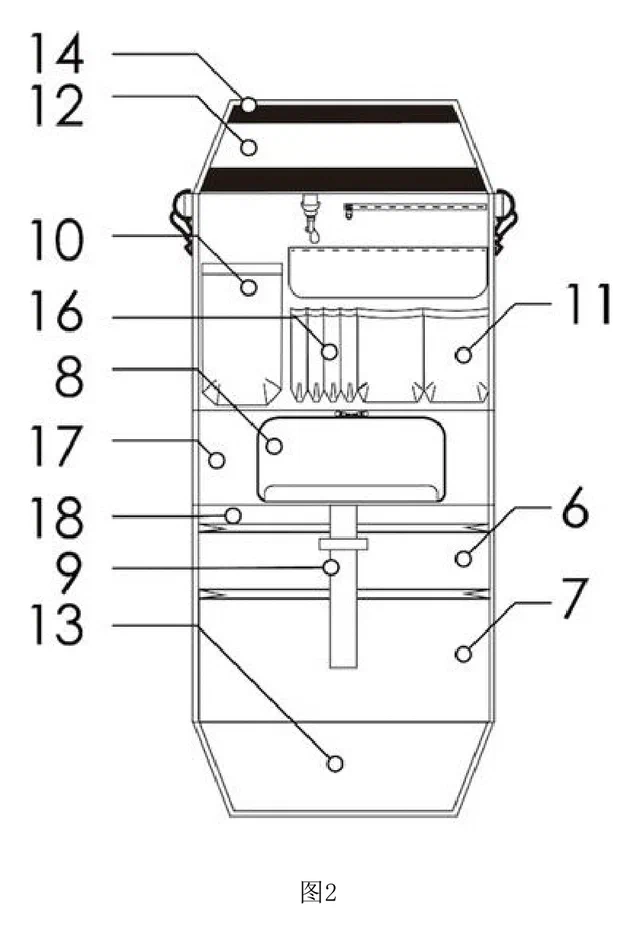
Fold-Out Desk Organizer Insert for School Backpacks
Backpack insert that unfolds into a hanging desk organizer for workbooks, stationery and a water bottle.
Patent CN209436546U
School, Office & Art
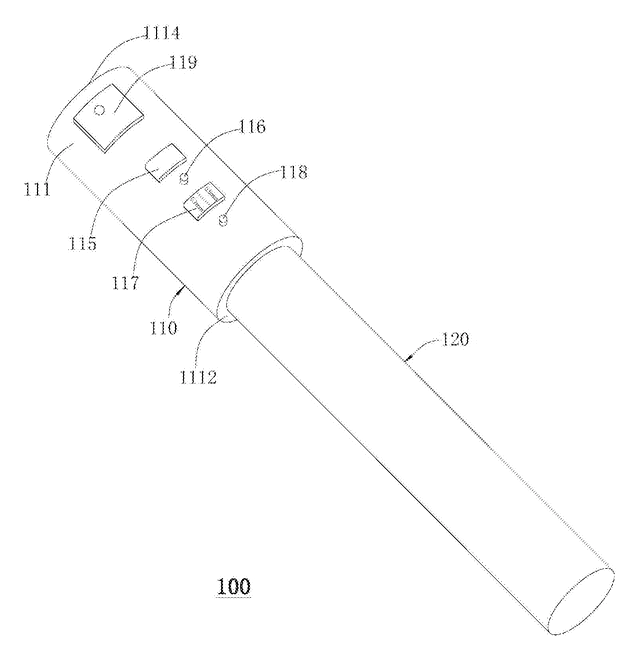
Smart Pencil Cap That Checks the Point with a Camera
Electronic pencil cap that photographs the point, measures it and reminds you to sharpen.
Patent CN106427302B
School, Office & Art
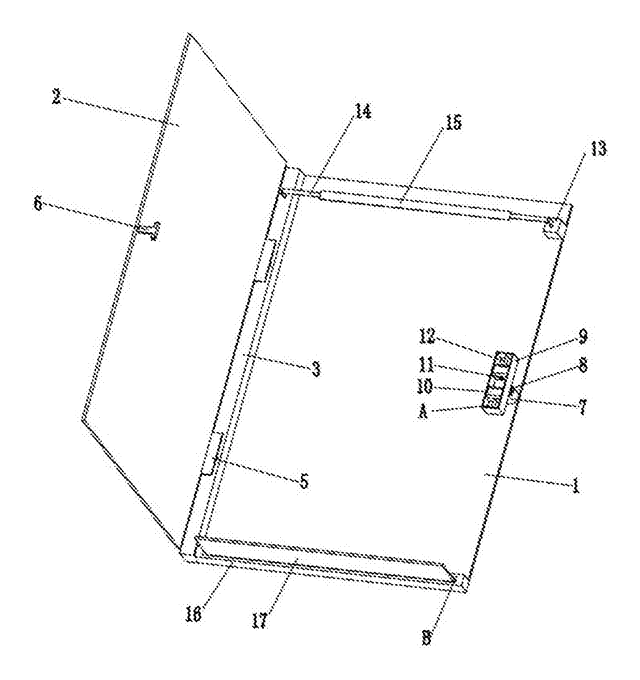
Expanding Clipboard Folder with Spring-Mounted Hinge and Catch
Hard folder whose spring-mounted hinge and catch let the cover clamp any thickness of paper.
Patent CN105667120B
School, Office & Art
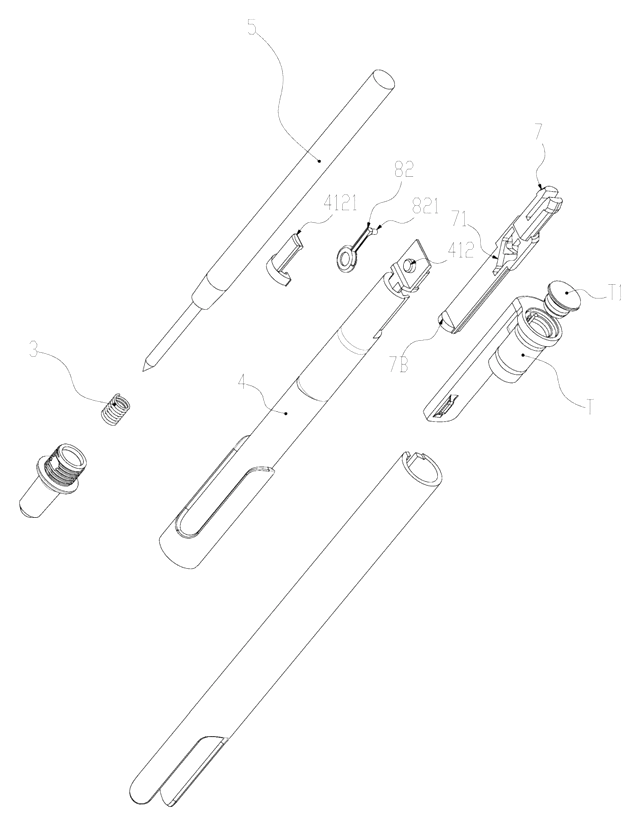
Slide-Action Retractable Pen with a Friction-Loaded Cam That Ignores Gravity
Slide-action retractable pen whose spring-pressed cam latch stays put whichever way the pen is held.
Patent CN217671900U
School, Office & Art
Carousel Business Card Holder with Rolling Card Trays on Twin Ring Tracks
Desk card holder: angled card trays roll on wheels around two concentric ring tracks and lift out.
Patent CN105774300B
Browse by category
- Apparel & Accessories (22)
- Baby & Kids (16)
- Bags & Luggage (9)
- Bath & Personal Care (16)
- Car Accessories (10)
- Furniture, Bedding & Storage (12)
- Garden & Outdoor (18)
- Health & Wellness (8)
- Home, Kitchen & Cleaning (24)
- Lighting (12)
- Packaging & Containers (6)
- Pet Products (6)
- Phone & Camera Accessories (4)
- Retail Display (13)
- School, Office & Art (19)
- Sports & Recreation (25)
- Tools & Workshop (27)
- Toys & Games (12)
This page is based on the public patent document CN106739658B, assigned to Individual. IP2M is an independent manufacturing service and is not affiliated with, endorsed by or licensed by the patent owner. Images marked as concept renderings are illustrations, not photos of an existing product. Patent status information is provided for reference only and is not legal advice; confirm freedom to operate for your market before production. Full disclaimer.