
Patent CN106805345B
Updated October 24, 2026Cooling Helmet That Blows Water-Chilled Air over the Head
Traffic officers, couriers and other riders who wear helmets outdoors all summer have few options beyond vents and sweat liners. This patent builds an active cooling system into the helmet. Behind the inner shell sits a water tank with a thermoelectric (Peltier) cooling plate on its wall and a radiator on the outside. A micro air pump draws outside air through a filter and releases it under the water; the air bubbles up, is cooled and rinsed, and is pushed out through a nozzle at the top front of the inner shell over the wearer's head. A lithium battery and controller run the system, a solar panel on the crown helps recharge it, and a float-operated sensor sounds an alarm when the tank needs refilling.
- China invention patent - lapsed
- No filings outside China
- Cooling headwear & riding helmets
- Peltier module, micro pump, Li-ion battery, solar cell
Splat! What let you down?
❄️
Chilled-water air
Outside air bubbles through a Peltier-cooled tank before it is blown over the head.
🌬️
Front air nozzle
Cooled air leaves a nozzle at the top front of the rigid inner shell, under a 3D mesh liner.
☀️
Solar top
A photovoltaic panel under a clear cover on the crown helps charge the lithium battery; USB charging too.
🔔
Low-water alarm
A float in the tank works with a proximity sensor to warn when it is time to refill.
Bring this product to market
- ✓ Patent vetted China-only family and legal status checked
- 2 Product brief · now How it works, uses and options written up
- 3 Prototype First samples for buyers to review
- 4 Pilot run Small first batch for launch customers
- 5 Volume production Repeat orders at scale
Buyer interest
– of 100 buyers needed to start prototyping
One click, no sign-up. Each vote is one real visitor, and products with the most interest go to prototyping first.
Build team: no members yet. Need a partner, co-funding or skills to build this? Join and we introduce the team once it forms.
The problem
People who must wear helmets outdoors in summer - traffic police on duty, delivery riders, motorcycle commuters - spend hours with a hot, closed shell on their heads. Vents help only while moving, and cooling liners or wet bandanas lose their effect quickly. The patent describes the aim as keeping the head cool and fresh for these outdoor workers in hot weather, which it presents as a way to help prevent heatstroke.
The solution
The patent places a small cooling plant between the inner shell and the back of the helmet:
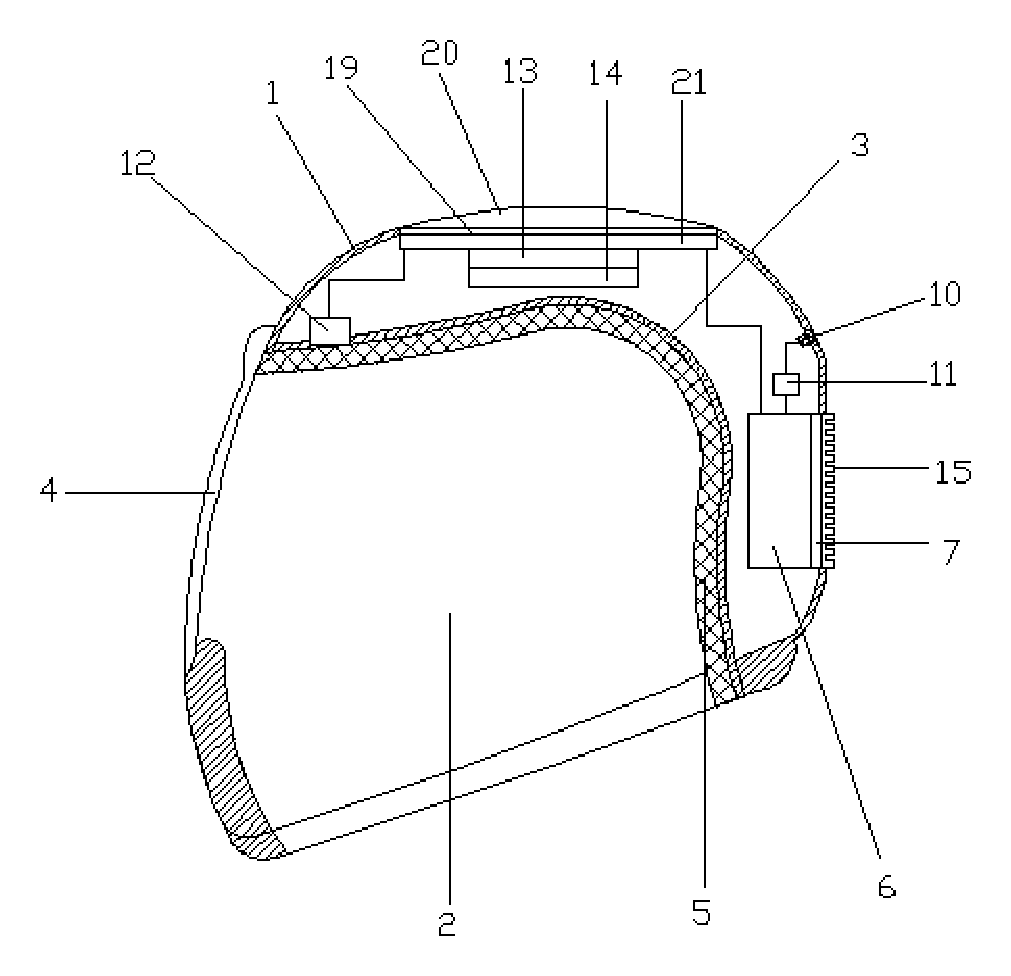
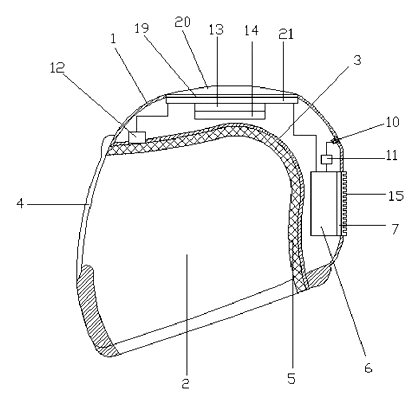
- The helmet body (1) has a hinged visor (4) at the front and a rigid inner shell (3) lined with a 3D mesh fabric layer (5).
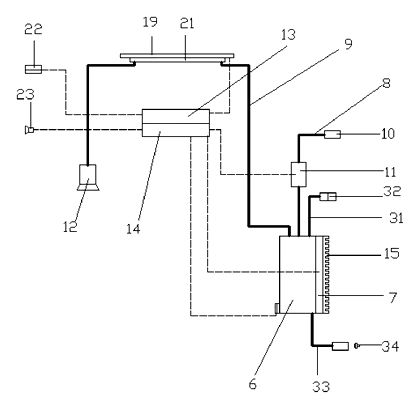
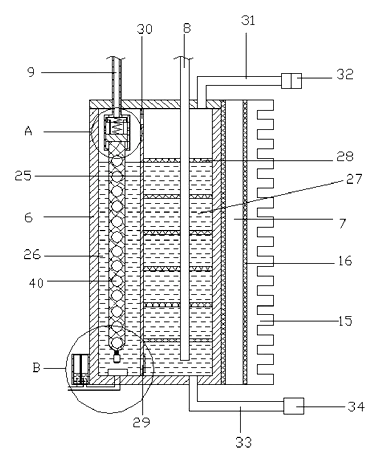
- A water tank (6) sits between the inner shell and the rear wall. A thermoelectric cooling plate (7) on the tank wall chills the water; its hot side is joined by thermal glue (16) to a radiator (15) at the back of the helmet, with a deflector (17) guiding air over it.
- An air inlet pipe (8) runs from outside the helmet, through a filter (10) and a micro air pump (11), and ends below the water level.
- An outlet pipe (9) starts above the water level and leads to an air nozzle (12) at the top front of the inner shell.
- A lithium battery (13) and controller (14) at the top inside run the pump and the cooling plate. A solar panel (19) under a clear cover (20) on the crown and a USB port (22) charge the battery.
- Inside the tank, a partition (25) separates a refill chamber from a filter chamber (27) with a strainer (28). A float rod (40) moves a piston (36) in a sleeve (35) at the outlet pipe, and a proximity sensor (43) at the bottom triggers an alarm (23) when the water is low. Two tilt switches (44) sit in the sensor circuit.
According to the patent, hot outside air is cooled as it passes through the chilled water, and the patent also says the water helps clean the air before it reaches the wearer.
Who it is for
- Motorcycle and e-bike helmet brands looking for a premium summer feature for delivery and commuter riders.
- Workwear and PPE suppliers serving police, traffic, road-works and logistics fleets in hot regions.
- Cooling-gear companies that already sell neck fans and cooling vests and want a head-mounted product.
- Fleet operators and delivery platforms that buy riding gear in volume for their riders.
How it works
The main parts
| No. | Part | What it does |
|---|---|---|
| 1, 4 | Helmet body and visor | Outer shell with a hinged clear visor. |
| 3, 5 | Inner shell and 3D mesh liner | Rigid inner shell; the liner lets air spread over the head. |
| 6 | Water tank | Holds the cooling water behind the inner shell. |
| 7, 15 | Cooling plate and radiator | Peltier module chills the water; radiator sheds its heat outside. |
| 8, 10, 11 | Inlet pipe, filter and pump | Draw outside air in and release it under water. |
| 9, 12 | Outlet pipe and nozzle | Carry cooled air to the front of the inner shell. |
| 13, 14, 19, 22 | Battery, controller, solar panel, USB port | Power and control. |
| 36, 40, 43, 23 | Piston, float rod, proximity sensor, alarm | Manage the outlet and warn of low water. |
| 29, 31, 33 | Fill hole, filling pipe and drain pipe | Refill and empty the tank. |
Using it
- Fill the tank through the filling pipe, which has a one-way valve; the drain pipe has a sealing plug.
- Charge the battery by USB; the solar panel tops it up during the day.
- Switch on. The cooling plate chills the water while the pump bubbles filtered outside air through it.
- Cooled air flows from the nozzle over the head, spreading through the mesh liner.
- Refill when the alarm sounds - the float has dropped to the sensor’s set level, adjustable by a threaded sleeve on the float rod.
Applications
Traffic police and road-side staff
Officers directing traffic stand in the sun for whole shifts; a cooling helmet adds comfort without the need for a separate cooling vest.
Delivery and courier riders
Food and parcel riders in hot cities ride stop-and-go, when vents do little. Fleet buyers can equip riders with a branded cooling model.
Motorcycle commuting in hot climates
Commuters in hot regions face slow traffic and long waits at lights; an active cooling module is a clear upgrade feature for a premium helmet line.
Outdoor work helmets
The same tank-and-nozzle system could be adapted to a hard hat for road works or construction, subject to that product’s safety standard.
Cooling modules for existing helmets
The tank, pump and battery could be developed as a module that fits specific helmet shells, sold as an accessory.
Where it is less suitable
- Bicycle racing and lightweight sport helmets - the tank, battery and pump add weight that road cyclists will not accept.
- Crash-critical designs without re-certification - adding a tank and electronics to a certified helmet changes it; every version must be tested to its standard again.
Frequently asked questions
How does the helmet cool the air?
A thermoelectric plate chills the water in a tank at the back of the helmet. A micro pump pushes filtered outside air in below the water level; the air bubbles up through the cold water and leaves through a nozzle at the front of the inner shell, spreading over the head through a mesh liner.
How long does it run on one charge?
The patent gives no figures. Run time depends on battery capacity, cooling-plate power and pump flow, which are chosen in design and measured on prototypes. The solar panel on the crown helps top up the battery outdoors.
How often must the tank be refilled?
There is no figure in the patent. A float and proximity sensor sound an alarm when the water drops to a set level, and the level can be adjusted with a threaded sleeve on the float rod.
Will water get into the air line?
The outlet pipe starts above the water level and ends in a sleeve with a float-linked piston, which the patent uses to manage the outlet as the water level moves. Leak and tilt behaviour are verified on samples.
How heavy is it?
Tank, battery and electronics add weight compared with a normal helmet. Capacity and battery size are balanced in design; a lighter fan-only version is also possible.
Can it be certified as a motorcycle helmet?
Yes, if the complete helmet with the cooling system fitted passes FMVSS 218 testing. The shell and liner are designed around the tank from the start for that reason.
Can this design be made and sold in the US?
The patent was filed only in China and has lapsed, so it does not restrict the design in the US or in China. Cooled helmets may be covered by other US patents - see Patent & Production - so we recommend a freedom-to-operate check before volume production.
Are you affiliated with the patent owner?
No. IP2M is an independent design and manufacturing service working from the public patent document.
Request a quote
Click Request a Quote below to see our email address - copy it, or open your email app with a ready-made message. Please mention patent CN106805345B in the subject.
Helpful details to include:
- Your company and channel (helmet brand, PPE supplier, fleet operator, resale)
- Helmet type - motorcycle, scooter, work hard hat
- Cooling and run-time targets
- Battery and charging preferences, solar or not
- Estimated quantity and target price
- Timeline - when you would like samples and the first shipment
You can also reach us at (332) 203-9997.
Explore this product
Interested in building this?
Tell us your target market, quantity and timeline. We reply with options for prototyping, small-batch runs or volume production.
Send your inquiry to
Please put CN106805345B in the subject line and tell us your company, country, estimated quantity and timeline.
Prefer to talk? Call (332) 203-9997.
More product-ready patents
All Sports & Recreation patents →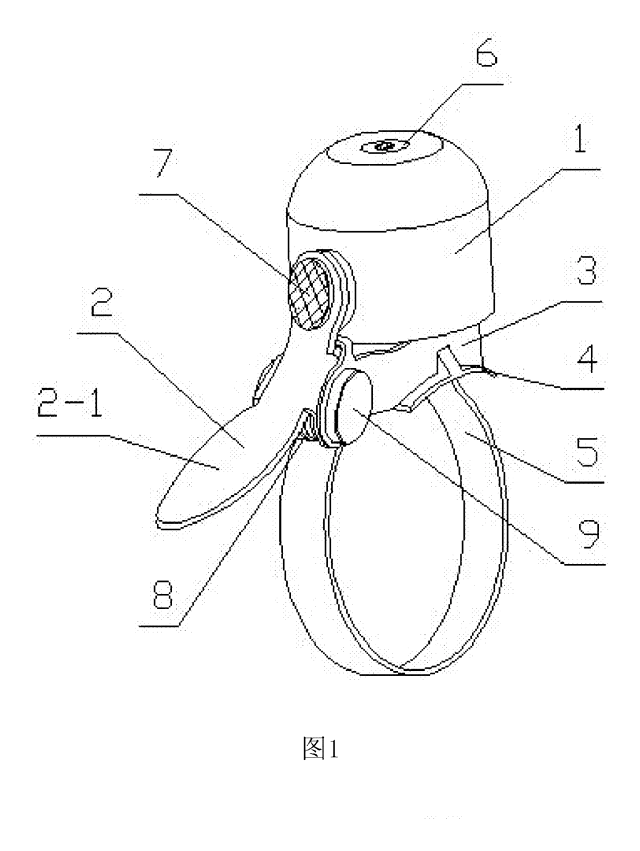
Sports & Recreation
Compact Torsion-Spring Bike Bell
Mini bike bell with a standard torsion spring and a rubber-floated dome - small size, clear tone, quick strap mount.
Patent CN205819384U
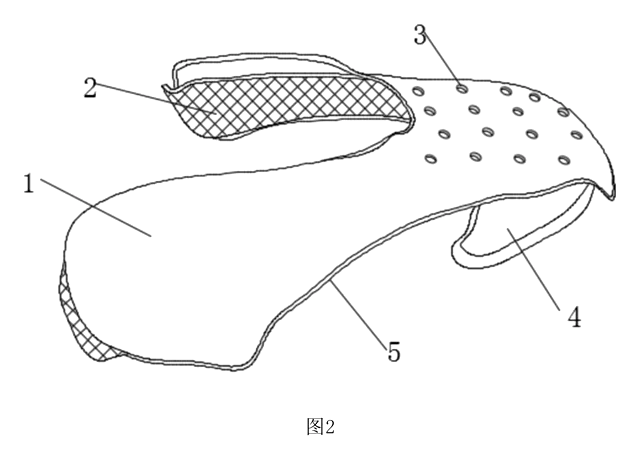
Sports & Recreation
Padded Toe-Box Shield for Sneakers
Ventilated, silicone-lined toe-box insert that supports the front of a sneaker and cushions the toes.
Patent CN209473731U
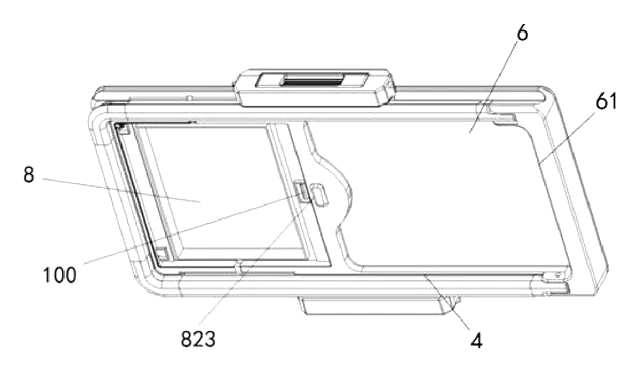
Sports & Recreation
Reversible Fishing Seat-Box Lid with Backrest
Fishing seat-box lid that flips on removable hinge pins: cushion, backrest and storage on one face.
Patent CN208624426U
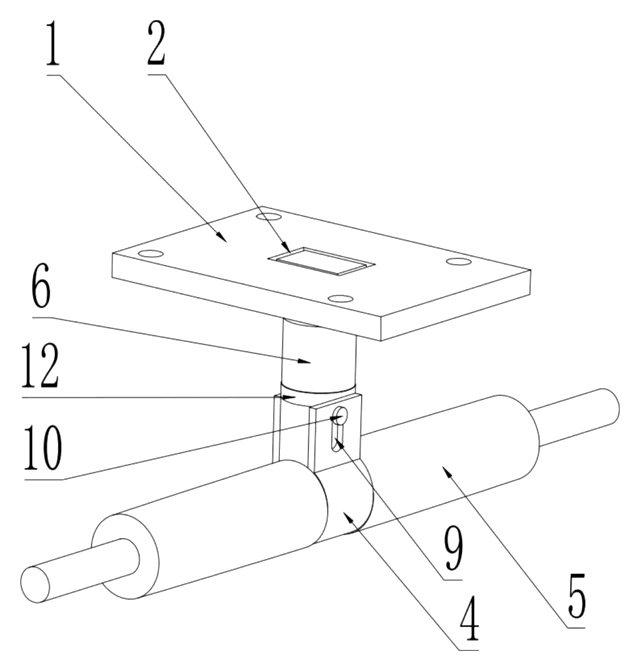
Sports & Recreation
Swivel-Pin Skateboard Truck with Rubber Sleeve
Skateboard truck with a turning center pin, a tilting axle clamp and a rubber sleeve that centers it.
Patent CN216777880U
Sports & Recreation
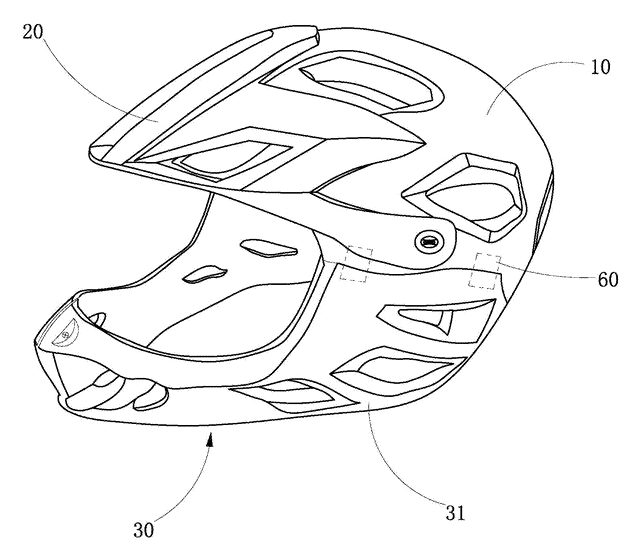
Full-Face Bike Helmet with Magnetic Detachable Chin Bar
Full-face cycling helmet whose chin bar clips on and off with magnetic, latching side connectors.
Patent CN206630067U
Sports & Recreation
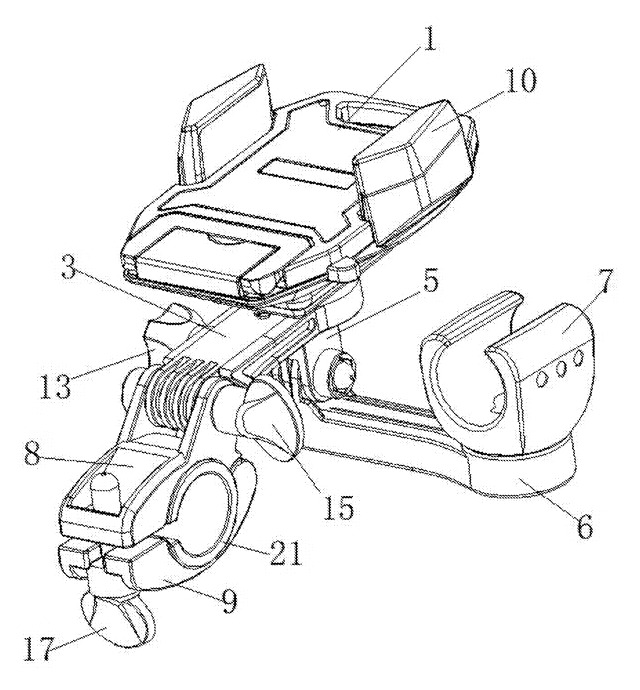
Bike Phone Holder with Built-In Flashlight Clamp
Handlebar mount with a phone cradle on top and a flashlight clamp below, on one arm.
Patent CN206077485U
Browse by category
- Apparel & Accessories (22)
- Baby & Kids (16)
- Bags & Luggage (9)
- Bath & Personal Care (16)
- Car Accessories (10)
- Furniture, Bedding & Storage (12)
- Garden & Outdoor (18)
- Health & Wellness (8)
- Home, Kitchen & Cleaning (24)
- Lighting (12)
- Packaging & Containers (6)
- Pet Products (6)
- Phone & Camera Accessories (4)
- Retail Display (13)
- School, Office & Art (19)
- Sports & Recreation (25)
- Tools & Workshop (27)
- Toys & Games (12)
This page is based on the public patent document CN106805345B, assigned to Zhejiang Gongshang University (浙江工商大学). IP2M is an independent manufacturing service and is not affiliated with, endorsed by or licensed by the patent owner. Images marked as concept renderings are illustrations, not photos of an existing product. Patent status information is provided for reference only and is not legal advice; confirm freedom to operate for your market before production. Full disclaimer.