
Patent CN106901487B
Updated November 8, 2026Outdoor Cup Holder Stand with Spike Base and Foldable Arms
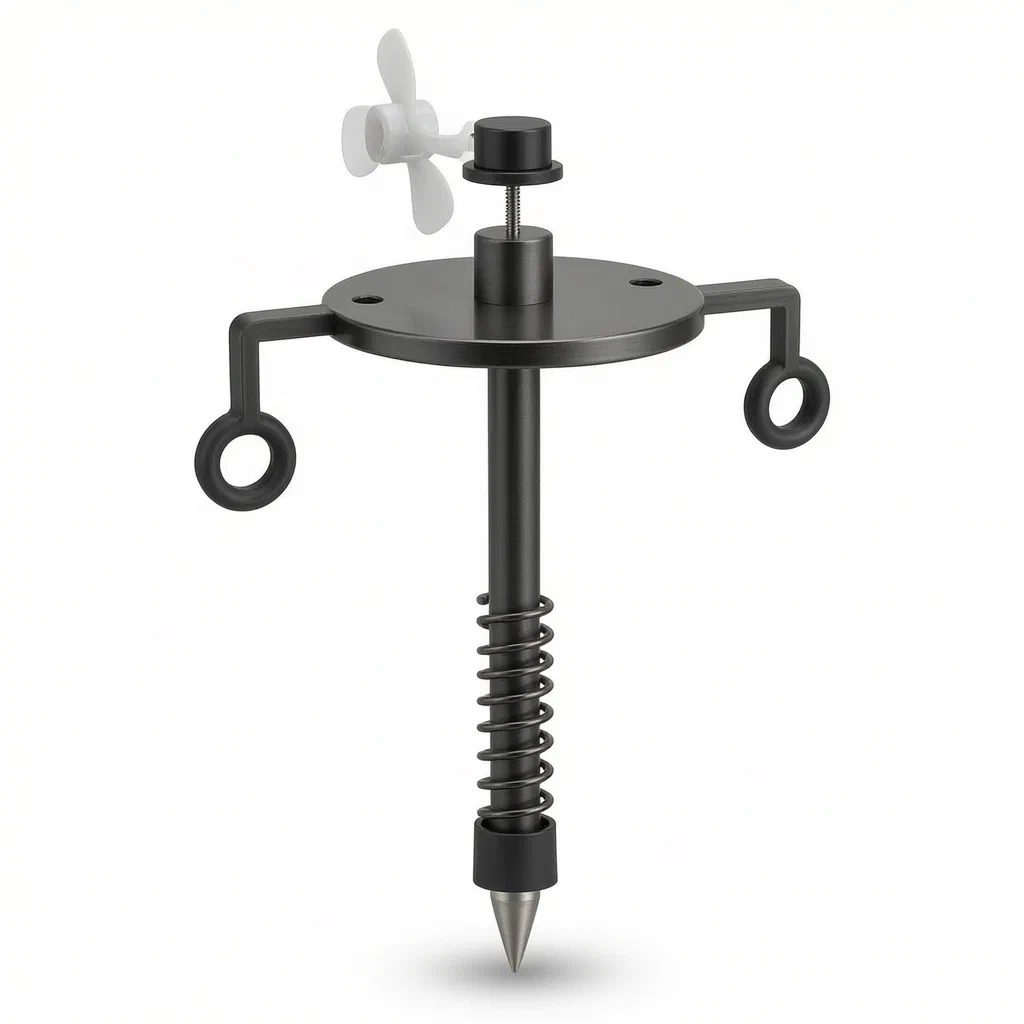
Standard picnic tables are often unavailable or unstable on soft ground. This design solves that by anchoring directly into the earth. The central rod ends in a spike, allowing it to be pushed into lawn or beach sand. The upper section features a disc with multiple arms that hinge outward. Each arm holds a cup ring. A spring pin system locks these arms in a horizontal position for stability or releases them to fold flat against the rod for compact storage. A sliding sleeve covers the spike tip when not in use, preventing injury during carrying.
- China invention patent - active
- No filings outside China
- Camping & Picnic Accessories
- Metal rod, plastic sleeves, spring mechanisms
Splat! What let you down?
🌱
Spike Base
The lower end is a sharp spike designed to be inserted directly into soil or sand.
🔄
Folding Arms
Multiple arms hinge from a top disc and lock horizontally via a spring pin system.
🛡️
Safety Cover
A protective sleeve covers the spike tip during transport to prevent injury.
💨
Optional Fan
A motorized fan unit can be attached to the central rod for personal cooling.
Bring this product to market
- ✓ Patent review Patent family and legal status reviewed in the relevant jurisdictions.
- 2 Product brief · now How it works, uses and options written up
- 3 Prototype First samples for buyers to review
- 4 Pilot run Small first batch for launch customers
- 5 Volume production Repeat orders at scale
Buyer interest
– of 100 buyers needed to start prototyping
One click, no sign-up. Each vote is one real visitor, and products with the most interest go to prototyping first.
Build team: no members yet. Need a partner, co-funding or skills to build this? Join and we introduce the team once it forms.
Patent Rights & Team Participation
Before joining a development team, participants should ensure they have the necessary rights or authorization to participate in the project.
Participation is generally appropriate where:
- You own the relevant patent rights or have obtained permission or a license from the rights holder.
- The relevant patent rights have expired or have been legally invalidated in the jurisdictions where the planned activities will take place.
- The planned development, manufacturing, and commercialization activities have been independently assessed and do not infringe applicable patent rights in the relevant jurisdictions.
Important: Being located outside a country where a patent is protected does not automatically exempt you from patent infringement risks. Patent rights may apply based on where development, manufacturing, use, sale, or import activities take place.
IP2M does not grant any patent license or authorization through team participation. Joining a project does not provide permission to use, manufacture, or commercialize patented technology.
The problem
When camping, picnicking, or relaxing on a beach, finding a stable place for drinks is difficult. Grass and sand are uneven surfaces where standard tripods wobble or sink. Placing cups directly on the ground risks tipping over, spilling beverages, or contaminating the drink with dirt and insects. Traditional portable stands are often bulky, heavy, and lack a secure way to anchor themselves without a flat table surface. Furthermore, carrying a stand with an exposed sharp base poses a safety risk to users and their gear.
The solution
This device provides a stable, portable platform for cups by anchoring itself into the ground.
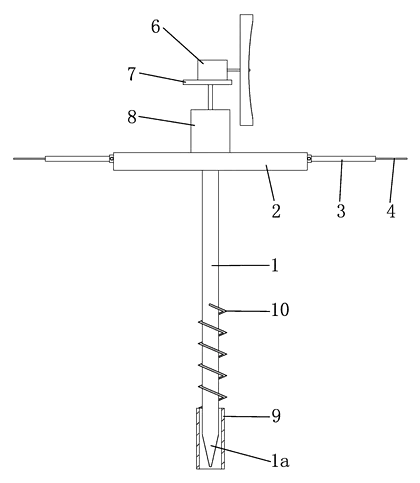
- A positioning rod serves as the central spine. Its lower end terminates in a spike-shaped introduction part, which is pushed into the soil to create a firm, vertical base.
- At the top of the rod sits a mounting disc. Several mounting rods (arms) are hinged to this disc. In the described embodiment, there are six arms, though the number can vary.
- Each mounting rod has a ring at its outer end to hold the cup securely.
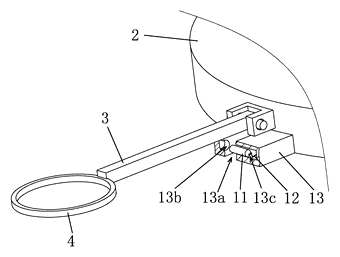
- A limiting structure controls the angle of the arms. It includes a block with a hidden slot, a spring, and a limiting rod (pin). When the arms are swung up to a horizontal position, the pin engages to lock them rigidly. When released, they can swing down to fold against the central rod.
- A protection structure slides along the central rod. It consists of a sleeve connected to a second spring. When the device is carried, the sleeve covers the sharp spike tip. When deployed, the sleeve retracts, exposing the spike for insertion.
- Optionally, a motor and fan assembly can be mounted to the central rod or disc, powered by a mobile power source, providing airflow for the user.
Who it is for
- Camping Gear Brands: Looking for lightweight, multi-functional accessories that solve specific pain points like drink stability on uneven terrain.
- Beach Resort Suppliers: Needing durable, easy-to-clean items for guests who want to keep drinks off the sand.
- Picnic and Event Rental Companies: Requiring equipment that is quick to set up, pack down, and store compactly between events.
- Garden and Patio Retailers: Offering novel outdoor furniture accessories that appeal to consumers looking for convenience and space-saving designs.
How it works
The main parts
| No. | Part | What it does |
|---|---|---|
| 1 | Positioning Rod | Central shaft; connects the base to the top. |
| 1a | Introduction Part | Spike at the bottom for soil insertion. |
| 2 | Mounting Disc | Top hub where arms attach. |
| 3 | Mounting Rods | Hinged arms holding the cup rings. |
| 4 | Placement Ring | Circular holder at the end of each arm. |
| 11 | Limiting Rod | Pin that locks the arms in place. |
| 12 | First Spring | Pushes the limiting rod into engagement. |
| 13 | Mounting Block | Houses the limiting mechanism. |
| 9 | Protective Jacket | Sleeve covering the spike for safety. |
| 10 | Second Spring | Retains the protective jacket position. |
| 6, 7, 8 | Fan Assembly | Optional motor, fan, and plate for cooling. |
Operating Steps
- Deployment: Pull the protective jacket (9) down or retract it using the second spring (10) mechanism to expose the spike (1a).
- Anchoring: Press the spike firmly into the ground until the mounting disc (2) is at the desired height.
- Extending Arms: Swing the mounting rods (3) upward from their folded position against the central rod.
- Locking: As the arms reach a horizontal plane, the first spring (12) pushes the limiting rod (11) into the limit hole (13b), locking the arms rigidly.
- Use: Place cups in the placement rings (4).
- Storage: Pull the handle of the limiting rod to disengage the lock. Fold the arms down against the central rod. Slide the protective jacket back over the spike.
Applications
Camping and Hiking
Campers often sit on logs or rocks without tables. This stand anchors into the forest floor, keeping drinks stable and elevated away from mud and ants. The folding arms make it compact enough to fit in a backpack.
Beach Outings
Sand shifts easily, causing traditional stands to topple. The spike base bites into the sand, providing a steady platform for water bottles and coffee cups. The optional fan attachment adds comfort during hot days.
Garden Parties
Hosts can scatter multiple units across a lawn to serve guests without needing large tables. The uniform height and stable placement reduce spill accidents during social gatherings.
Fishing Spots
Anglers sitting on riverbanks or boat decks need hands-free drink holders. The robust metal construction withstands outdoor elements, while the spike secures the unit on soft banks or deck mats.
Where it is less suitable
- Hard Surfaces: The spike design requires soil, sand, or snow for stability. It cannot be used on concrete, asphalt, or wooden decks without a separate adapter.
- High-Wind Areas: While the spike helps, the tall profile and large surface area of the fan option may cause tipping in strong gusts if not anchored deeply.
- Heavy Industrial Use: Designed for light consumer loads (cups/bottles); it is not intended for supporting heavy machinery or large coolers.
Patent & Production
At a glance
| Patent number | CN106901487B (application CN201710258723) |
| Type | China invention patent (发明专利) - protects product shape, structure, and process |
| Original title | Outdoor Water Cup Placement Rack (一种户外的水杯放置架) |
| Patent owner | Jiangsu Xinyi Outdoor Furniture Co., Ltd. |
| Inventors | Jin Jin |
| Filing date | 2017-04-19 |
| Grant date | 2018-11-23 |
| Status (China) | In force - valid until at most 2037-04-19, subject to annual fee payments |
| Patent family | Public record shows Chinese filings only - no US, European, Japanese, PCT or other filings listed |
| Cited by | 0 later documents |
| Source | Google Patents (search for CN106901487B) |
What the claims cover, in plain language
Claim 1 defines an outdoor cup rack comprising a positioning rod with a mounting disc at the upper end. Several mounting rods (arms) are hinged to the disc, each terminating in a placement ring for a cup. The lower end of the positioning rod has a spike-shaped introduction part. A limiting structure on the disc uses a mounting block, a first spring, and a limiting rod to lock the arms in position. A protection structure on the rod includes a second spring and a protective jacket that covers the spike.
Claim 2 specifies that a handle is fixed to the middle of the limiting rod to facilitate operation.
Claim 3 adds a motor fixed to the mounting disc, with a fan attached to its output shaft via a bottom plate. The motor and fan connect to a mobile power source.
Claims 4 and 5 specify that the motor in Claim 3 can be a servo motor or a stepper motor.
This is a simplified reading for orientation only. The legal scope is defined by the exact claim wording in the official Chinese document.
What this means for US production
This patent was filed in China and is currently in force in China. Making or selling this specific design in China would require the owner’s permission. However, the public record shows no US counterpart or any foreign family members. Therefore, under current public records, this specific patent does not restrict making or selling this design in the United States.
Two points to settle early:
- Other patents may exist. Outdoor accessories and camping gear are a crowded field. While this specific patent has no citations, similar spike-based holders or folding arm mechanisms may be covered by other US patents held by major outdoor brands. A freedom-to-operate (FTO) review is strongly recommended before tooling.
- Material Safety. The spike tip and moving parts must meet general consumer product safety standards regarding sharp edges and pinch points, even if not explicitly detailed in the patent claims.
Customization and manufacturing
What can be customized
| Area | Options |
|---|---|
| Arm Count | Standard is 6; can range from 3 to 8 depending on disc size. |
| Ring Size | Adjustable clamps or fixed diameters for different cup types (tall cans vs. mugs). |
| Rod Material | Aluminum extrusion for weight reduction; steel for durability/cost. |
| Finish | Powder coating, anodizing, or raw metal. |
| Fan Module | Optional add-on; can be removed for simpler versions. |
| Packaging | Blister packs for retail; bulk boxes for B2B. |
Things to plan for (US market)
- CPSC Guidelines: General requirements for sharp objects and small parts (if applicable to children’s products, though this is adult-oriented).
- California Prop 65: If using certain plastics or coatings, warning labels may be required.
- FCC Part 15: If the optional fan/motor module contains electronic components or wireless connectivity (though the patent mentions simple wiring to a power bank, check final design).
- Battery Compliance: If shipped with batteries, UN 38.3 transport regulations apply.
How a project runs
- Inquiry - Define target market (camping vs. beach), load capacity, and feature set (fan included?).
- Design - Finalize rod diameter, arm geometry, spring rates, and injection mold layouts.
- Prototype - Create functional samples using machined frames and 3D-printed parts to test locking mechanism smoothness.
- Pilot Run - Small batch production to validate assembly tolerances and packaging.
- Production - Mass manufacture via stamping/extrusion and injection molding.
Quantities & timeline
Tooling involves molds for the plastic rings, protective sleeves, and internal blocks, plus dies for metal stamping or extrusion profiles. Development time focuses on tuning the spring tension for the locking mechanism. Send us your quantity estimates, material preferences, and target price and we will reply with options.
Production notes
Tooling and process
Likely requires aluminum extrusion for the central rod to balance weight and strength. Injection molding is typically used for the complex shapes of the mounting block, protective sleeve, and cup rings. Stamping may be employed for the metal limiting pins. Assembly relies heavily on screws and snap-fit connections for the spring mechanisms.
Cost drivers
Weight is a significant cost driver due to shipping logistics for outdoor gear. The number of molds impacts upfront tooling costs, especially if multiple colorways or sizes are planned. Fastener count affects labor time during assembly. Impact grade material selection for the spike tip ensures durability but may increase material costs.
Prototyping path
Start with machined frames for the central rod to test structural integrity. Use 3D-printed parts for the housing and rings to verify fit and function of the locking mechanism. Build a functional sample to assess the ease of deploying the arms and retracting the protective sleeve. Impact testing on the spike will likely follow, to check that it does not bend excessively under normal soil pressure.
What we would change before tooling
We would likely simplify the protective sleeve mechanism if it proves too complex to assemble reliably. The spring rate for the locking pin should typically be checked across prototypes to avoid jamming. We would also verify that the fan motor mount, if included, does not interfere with the folding arms’ clearance.
Common failure points
Spring fatigue is a potential issue if the locking mechanism is operated frequently. Hinge boss wear could lead to loose arms over time. UV degradation may affect plastic components if left outdoors for extended periods. Bolts loosening due to vibration during transport is another concern to address with thread-locking adhesives or self-locking nuts.
Patent drawings
Drawings reproduced from the public patent document for reference.
Frequently asked questions
How stable is it on soft ground?
The design uses a spike-shaped introduction part at the bottom. According to the patent, this spike is inserted directly into soil or sand, creating a firm anchor point that prevents the stand from tipping over on uneven surfaces like lawns or beaches.
Can the arms fold for storage?
Yes. The mounting rods (arms) are hinged to the top disc. A spring-loaded limiting rod allows the arms to be locked in a horizontal position for use. To store the unit, you pull the limiting rod to release the lock, allowing the arms to fold down against the central positioning rod.
Is the sharp spike dangerous to carry?
The patent describes a protection structure consisting of a protective jacket and a second spring. This jacket slides over the spike tip to cover it during transport, preventing accidental punctures or injuries when the item is packed in a bag or car trunk.
Does it come with a fan?
An optional motor and fan assembly can be attached to the mounting disc. The patent states that the motor connects to a mobile power source via wires. This feature is not mandatory and can be omitted for a simpler, lighter version.
What materials are used?
The patent mentions that the protective jacket can be made of plastic or stainless steel. The central rod and arms are implied to be metal (likely aluminum or steel given the context of outdoor furniture), while the rings and housing blocks are likely molded plastic for grip and insulation.
How many cups can it hold?
The specific embodiment in the patent describes six mounting rods. However, the claims refer to “several” mounting rods, meaning the number can be adjusted based on the size of the mounting disc and customer requirements.
Can this design be made and sold in the US?
The patent is currently in force in China, but the public record shows no US counterpart. Therefore, this specific patent does not restrict manufacturing or selling this design in the United States. However, other patents may exist in the outdoor accessory field, so a freedom-to-operate check is recommended.
Are you affiliated with the patent owner?
No. IP2M is an independent design and manufacturing service working from the public patent document.
Request a quote
Click Request a Quote below to see our email address - copy it, or open your email app with a ready-made message. Please mention patent CN106901487B in the subject.
Helpful details to include:
- Your company and channel (camping brand, resort supplier, retailer)
- Quantity and estimated annual volume
- Features needed (with or without fan, number of arms)
- Materials preference (aluminum vs. steel, plastic type)
- Target price per unit
- Timeline - when you would like samples and the first shipment
You can also reach us at (332) 203-9997.
Page editor: Emily Zhang, Product Editor · IP2M
Last updated November 8, 2026. If something on this page looks wrong, email [email protected] and we will check it against the patent.
Interested in building this?
Tell us your target market, quantity and timeline. We reply with options for prototyping, small-batch runs or volume production.
Send your inquiry to
Please put CN106901487B in the subject line and tell us your company, country, estimated quantity and timeline.
Prefer to talk? Call (332) 203-9997.
More product-ready patents
All Sports & Recreation patents →
Sports & Recreation
Compact Torsion-Spring Bike Bell
Mini bike bell with a standard torsion spring and a rubber-floated dome - small size, clear tone, quick strap mount.
Patent CN205819384U
Sports & Recreation
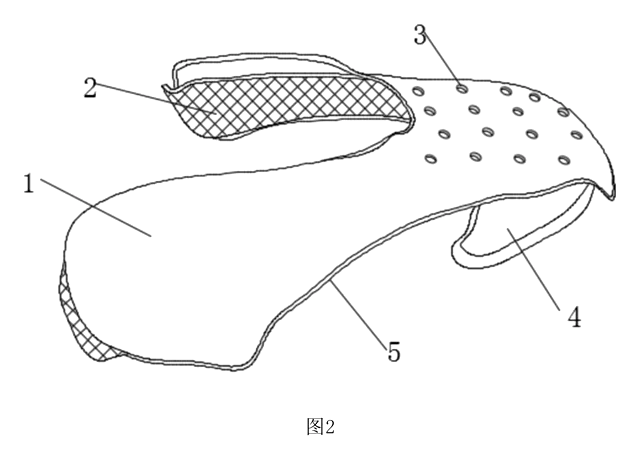
Padded Toe-Box Shield for Sneakers
Ventilated, silicone-lined toe-box insert that supports the front of a sneaker and cushions the toes.
Patent CN209473731U
Sports & Recreation
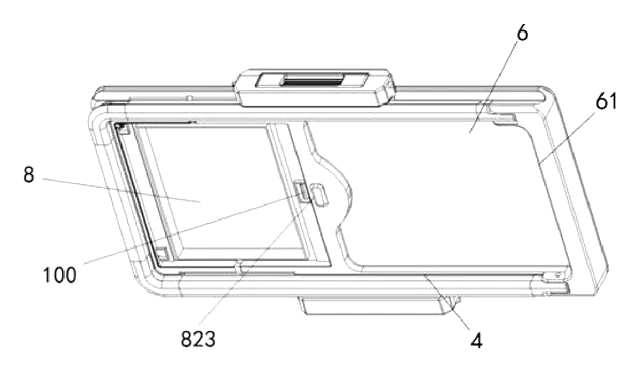
Reversible Fishing Seat-Box Lid with Backrest
Fishing seat-box lid that flips on removable hinge pins: cushion, backrest and storage on one face.
Patent CN208624426U
Sports & Recreation
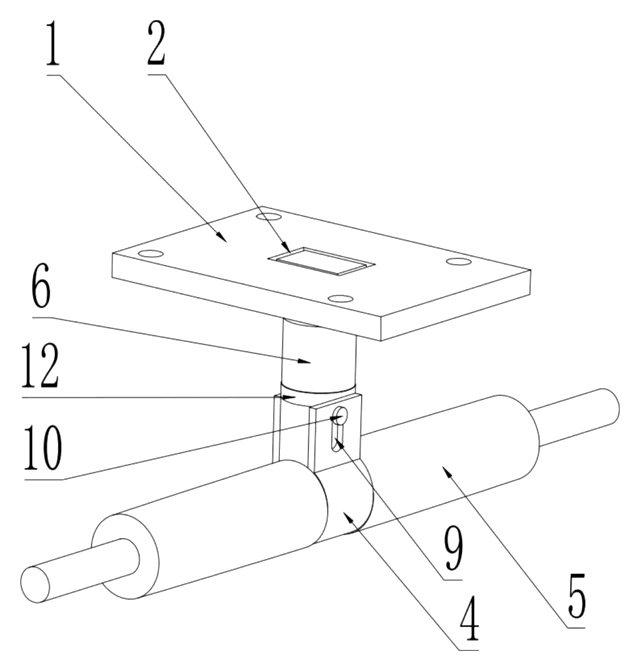
Swivel-Pin Skateboard Truck with Rubber Sleeve
Skateboard truck with a turning center pin, a tilting axle clamp and a rubber sleeve that centers it.
Patent CN216777880U
Sports & Recreation
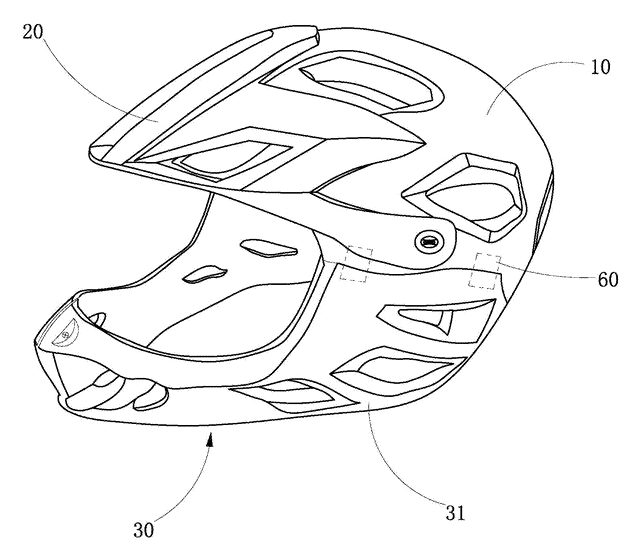
Full-Face Bike Helmet with Magnetic Detachable Chin Bar
Full-face cycling helmet whose chin bar clips on and off with magnetic, latching side connectors.
Patent CN206630067U
Sports & Recreation
Bike Phone Holder with Built-In Flashlight Clamp
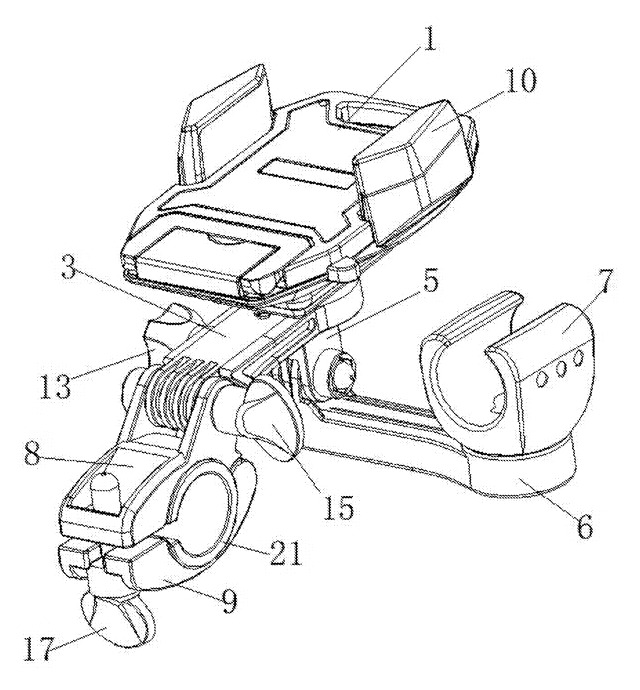
Handlebar mount with a phone cradle on top and a flashlight clamp below, on one arm.
Patent CN206077485U
Browse by category
- Apparel & Accessories (50)
- Baby & Kids (29)
- Bags & Luggage (17)
- Bath & Personal Care (33)
- Car Accessories (26)
- Furniture, Bedding & Storage (25)
- Garden & Outdoor (34)
- Health & Wellness (14)
- Home, Kitchen & Cleaning (52)
- Lighting (24)
- Packaging & Containers (13)
- Pet Products (12)
- Phone & Camera Accessories (9)
- Retail Display (26)
- School, Office & Art (38)
- Sports & Recreation (48)
- Tools & Workshop (56)
- Toys & Games (23)
This page is based on the public patent document CN106901487B, assigned to Jiangsu Xinyi Outdoor Furniture Co., Ltd.. IP2M is an independent manufacturing service and is not affiliated with, endorsed by or licensed by the patent owner. Images marked as concept renderings are illustrations, not photos of an existing product. Patent status information is provided for reference only and is not legal advice; confirm freedom to operate for your market before production. Full disclaimer.