
Patent CN106945426B
Updated November 4, 2026Portable Smart File Folder with Spring-Loaded Clamping Mechanism
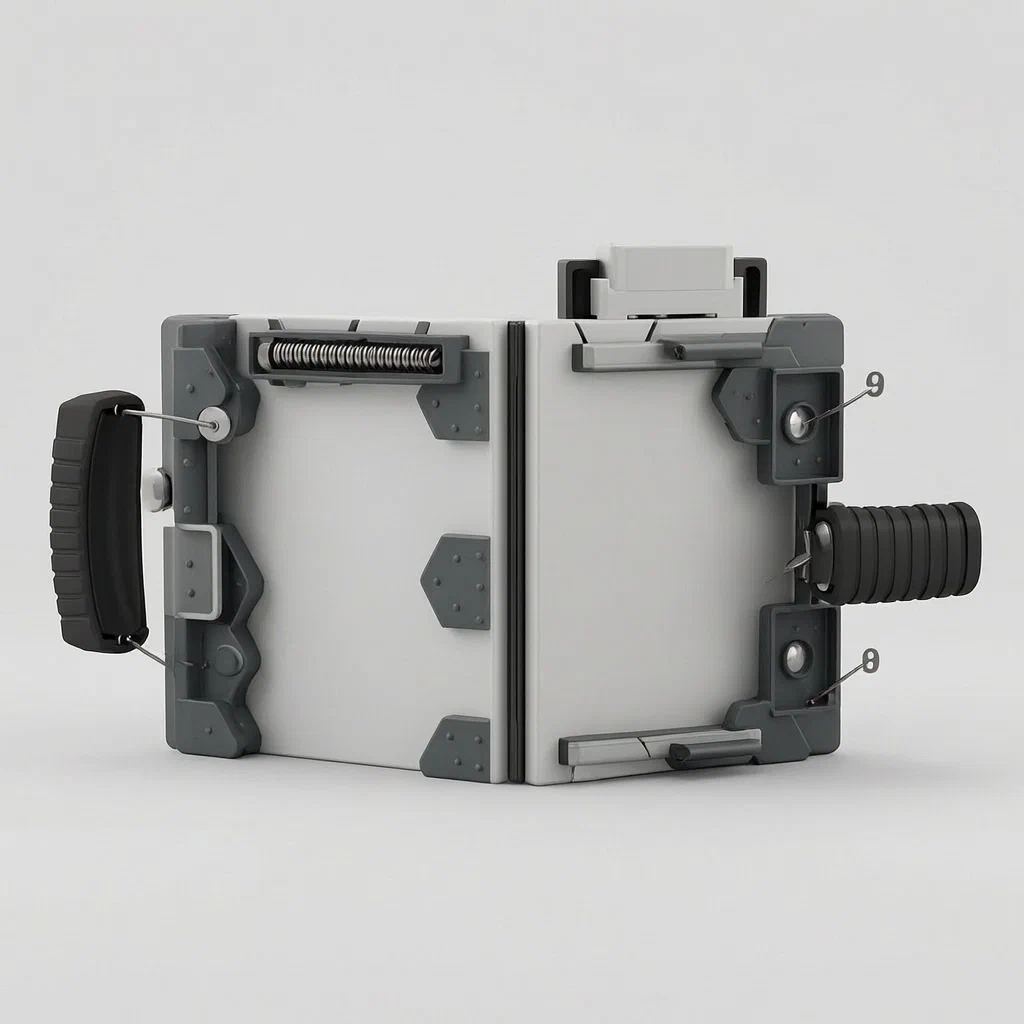
Standard file folders often fail to stay closed during transit, causing documents to spill out, and their flat edges make them difficult to carry securely without damaging contents. This smart folder solves both issues with an integrated mechanical lock and ergonomic handle. Two internal housings contain slide plates driven by return springs; when pressed, these plates move inward so that rubber-covered buffer blocks with protruding tabs clamp onto a fixed lever on the opposite side. This locks the folder shut without external clips or magnets. The handle features a non-slip rubber sleeve, and the entire unit is built for durability in daily office use.
- China invention patent - in force
- No filings outside China
- Office & School Supplies
- Plastic plates, rubber spine, metal springs
Splat! What let you down?
🔒
Internal Spring Lock
Two side housings use slide plates and return springs to clamp the folder closed automatically.
🤚
Non-Slip Handle
A top-mounted handle with a textured rubber sleeve ensures a secure grip during transport.
📄
Secure Document Retention
Protruding tabs on rubber blocks engage a fixed lever to prevent accidental opening.
🛡️
Anti-Slip Base
Fixed anti-slip blocks on the outer plates keep the folder steady on smooth surfaces.
Bring this product to market
- ✓ Patent vetted China-only family and legal status checked
- 2 Product brief · now How it works, uses and options written up
- 3 Prototype First samples for buyers to review
- 4 Pilot run Small first batch for launch customers
- 5 Volume production Repeat orders at scale
Buyer interest
– of 100 buyers needed to start prototyping
One click, no sign-up. Each vote is one real visitor, and products with the most interest go to prototyping first.
Build team: no members yet. Need a partner, co-funding or skills to build this? Join and we introduce the team once it forms.
The problem
Traditional file folders rely on gravity or simple flaps to keep papers inside. When carried by hand, tilted, or stacked loosely, these folders often open unexpectedly, allowing documents to slip out or get damaged. Furthermore, standard folders lack a dedicated carrying mechanism, forcing users to pinch the edge of the plastic or paper cover, which can be uncomfortable and prone to slipping if hands are sweaty or gloved. There is also no integrated locking system that allows for one-handed operation while maintaining a low profile when stored on a shelf.
The solution
This design introduces a mechanical clamping system integrated directly into the folder’s structure.
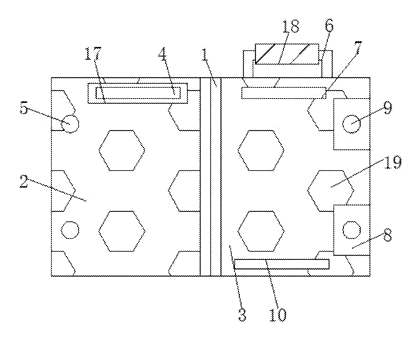
- Dual Plate Structure: The folder consists of a first plate body (2) and a second plate body (3) joined by a flexible rubber strip (1), allowing the folder to fold open and close.
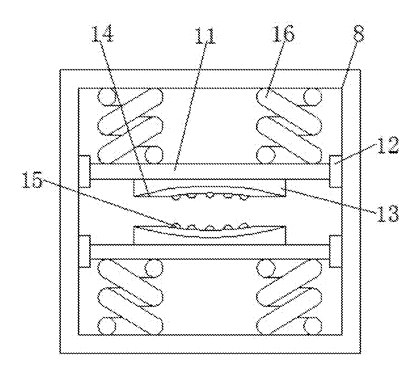
- Clamping Housings: Two housings (8) are fixed to the upper surface of the second plate body (3). Inside each housing are two slide plates (11) equipped with sliders (12) that run along the inner walls.
- Spring Mechanism: Each slide plate (11) is pushed outward by two return springs (16) attached to the housing wall. This creates tension that holds the plates apart when not engaged.
- Buffer and Grip Interface: On the inner facing sides of the slide plates, buffer blocks (13) are mounted. Attached to these are rubber blocks (14) featuring ten protruding blocks (15) distributed across the contact face.
- Engagement Lever: The first plate body (2) has a fixed block (17) with a through hole (4) and two clamping rods (5) positioned to the left of the fixed block.
- Locking Action: When the folder is closed, the protruding blocks (15) on the rubber interface press against the clamping rods (5). The spring tension keeps the slide plates pressed inward, ensuring the rubber blocks maintain firm contact with the rods, effectively locking the folder shut.
- Handle Integration: A handle (6) is fixed to the top of the second plate body (3), covered with a rubber sleeve (18) featuring anti-slip textures for comfortable carrying.
Who it is for
- Office Supply Brands: Companies looking to differentiate their product lines with functional, lockable document holders that appeal to professionals who commute with loose papers.
- Educational Institutions: Schools and universities needing durable, secure folders for students to transport assignments and exams without risk of loss.
- Corporate Gifting Suppliers: Businesses seeking practical, branded items for employee welcome kits or client gifts, where utility and unique design matter.
- Legal and Administrative Professionals: Individuals handling sensitive documents who require a physical barrier against accidental exposure during transit.
How it works
The main parts
| No. | Part | What it does |
|---|---|---|
| 1 | Rubber Strip | Connects the two plates, acting as a hinge/spine. |
| 2, 3 | Plate Bodies | Form the front and back covers of the folder. |
| 4 | Through Hole | Located on the fixed block (17) for potential labeling or attachment. |
| 5 | Clamping Rods | Two rods on Plate 2 that interact with the locking mechanism. |
| 6 | Handle | Fixed to Plate 3 for carrying. |
| 7 | Card Block | A structural element on Plate 3 near the housings. |
| 8 | Housings | Enclose the sliding mechanism; feature openings (9) on top. |
| 11 | Slide Plates | Move laterally inside the housings. |
| 12 | Sliders | Guide the movement of the slide plates within the housing. |
| 13 | Buffer Blocks | Cushioning elements attached to the slide plates. |
| 14 | Rubber Blocks | Provide friction and grip; hold the protruding tabs. |
| 15 | Protruding Blocks | Ten tabs that engage with the clamping rods (5). |
| 16 | Return Springs | Push the slide plates toward the center to lock the folder. |
| 17 | Fixed Block | Mounting point for the clamping rods on Plate 2. |
| 18 | Rubber Sleeve | Covers the handle for non-slip grip. |
| 19 | Anti-Slip Blocks | Prevent the folder from sliding on desks. |
Operating Steps
- Open the Folder: Pull the plates apart using the rubber spine (1) as a hinge. The slide plates (11) remain stationary relative to their housing.
- Insert Documents: Place papers between the two plate bodies.
- Close the Folder: Fold the plates together. As they meet, the protruding blocks (15) on the rubber blocks (14) align with the clamping rods (5).
- Engage Lock: The return springs (16) push the slide plates (11) inward. This forces the rubber blocks (14) against the clamping rods (5), creating friction and mechanical interference that prevents the folder from opening spontaneously.
- Carry: Lift by the handle (6). The rubber sleeve (18) ensures a secure grip.
Applications
Commuter Office Work
Professionals moving between home and office need to protect printed reports. The spring-lock mechanism ensures documents stay inside even if the bag is jostled, preventing pages from sticking out or getting torn.
Student Exam Transport
Schools require secure ways to distribute and collect exam papers. These folders allow students to carry tests safely. The anti-slip base keeps the folder stable on classroom desks during writing sessions.
Legal Document Handling
Lawyers and paralegals often carry case files. The robust clamping system offers peace of mind that confidential notes won’t accidentally spill in courtrooms or client meetings, providing a physical security layer beyond simple zippers.
Corporate Welcome Kits
New employees receive folders for onboarding materials. The unique handle and locking mechanism add perceived value to the kit, distinguishing it from generic stationery while serving a practical function for organizing paperwork.
Where it is less suitable
- High-Volume Archiving: For storing thousands of documents in boxes, this folder’s individual locking mechanism is slower than simple tabbed dividers.
- Extreme Temperature Environments: Rubber components may degrade faster in high heat or direct sunlight compared to all-plastic or metal alternatives.
- Thick Book Binding: The folder is designed for loose papers or thin booklets; very thick manuals may not fit within the clamped space defined by the plate geometry.
Frequently asked questions
How does the locking mechanism work?
The folder contains two internal housings with slide plates pushed by return springs. When you close the folder, rubber blocks with protruding tabs on these plates press against fixed rods on the opposite side. The spring tension keeps these tabs engaged, locking the folder shut until you manually pull the plates apart or flex the spine enough to disengage the tabs.
Is the handle sturdy enough for heavy documents?
The handle is fixed to the second plate body. While the patent does not specify a weight limit, the design integrates the handle into the rigid plastic plate. Durability depends on the plastic grade (ABS/PP) and wall thickness chosen in production. For very heavy loads, reinforced ribbing around the handle mount is recommended.
Can the spring tension be adjusted?
Yes. The return springs (16) determine the force holding the lock closed. In manufacturing, we can select springs with different rates to provide a lighter touch for easy opening or stronger tension for secure transport. This is set in design and confirmed on prototypes.
What materials are used for the plates?
The plates are typically made from injection-molded thermoplastics like ABS or PP. The rubber strip (spine) and handle sleeve are usually silicone or TPE for flexibility and grip. Anti-slip blocks are often rubber or textured plastic. Specific material grades depend on the desired rigidity and safety certifications.
Does it come in different sizes?
The patent describes the mechanism, not specific dimensions. Standard A4 or Letter size folders are typical applications. Custom sizes can be produced, but the placement of the housings and clamping rods must be scaled appropriately to maintain the locking functionality.
Is it safe for children?
If marketed for school use, the small protruding blocks and springs must comply with small parts regulations (e.g., CPSC in the US). The design itself does not have obvious sharp edges, but production quality control is essential to remove flash or burrs from the molded parts.
Can this design be made and sold in the US?
The patent is filed only in China and is in force there. It has no US counterpart. However, freedom-to-operate checks are recommended because office supply mechanisms are heavily patented in the US. Manufacturing in China requires permission from the current patent holder.
Are you affiliated with the patent owner?
No. IP2M is an independent design and manufacturing service working from the public patent document.
Request a quote
Click Request a Quote below to see our email address - copy it, or open your email app with a ready-made message. Please mention patent CN106945426B in the subject.
Helpful details to include:
- Your company and channel (office supply brand, school distributor, corporate gift supplier)
- Target size (A4, Letter, or custom dimensions)
- Material preferences (ABS, PP, rubber types)
- Color scheme and branding/logo requirements
- Estimated quantity and target price
- Timeline - when you would like samples and the first shipment
You can also reach us at (332) 203-9997.
Explore this product
Interested in building this?
Tell us your target market, quantity and timeline. We reply with options for prototyping, small-batch runs or volume production.
Send your inquiry to
Please put CN106945426B in the subject line and tell us your company, country, estimated quantity and timeline.
Prefer to talk? Call (332) 203-9997.
More product-ready patents
All School, Office & Art patents →
School, Office & Art
Long-Point Sketch Pencil Sharpener
Crank sharpener that cuts only the wood of sketch pencils, leaving a long, round lead about 30 mm long.
Patent CN207241257U
School, Office & Art
Fold-Out Desk Organizer Insert for School Backpacks
Backpack insert that unfolds into a hanging desk organizer for workbooks, stationery and a water bottle.
Patent CN209436546U
School, Office & Art
Smart Pencil Cap That Checks the Point with a Camera
Electronic pencil cap that photographs the point, measures it and reminds you to sharpen.
Patent CN106427302B
School, Office & Art
Expanding Clipboard Folder with Spring-Mounted Hinge and Catch
Hard folder whose spring-mounted hinge and catch let the cover clamp any thickness of paper.
Patent CN105667120B
School, Office & Art
Slide-Action Retractable Pen with a Friction-Loaded Cam That Ignores Gravity
Slide-action retractable pen whose spring-pressed cam latch stays put whichever way the pen is held.
Patent CN217671900U
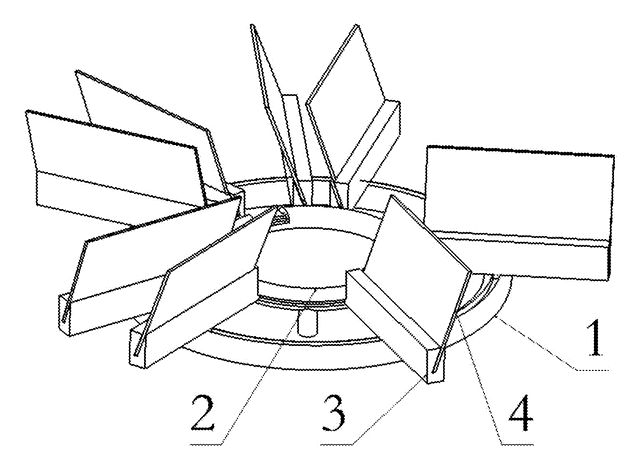
School, Office & Art
Carousel Business Card Holder with Rolling Card Trays on Twin Ring Tracks
Desk card holder: angled card trays roll on wheels around two concentric ring tracks and lift out.
Patent CN105774300B
Browse by category
- Apparel & Accessories (36)
- Baby & Kids (25)
- Bags & Luggage (15)
- Bath & Personal Care (25)
- Car Accessories (21)
- Furniture, Bedding & Storage (19)
- Garden & Outdoor (27)
- Health & Wellness (12)
- Home, Kitchen & Cleaning (40)
- Lighting (20)
- Packaging & Containers (10)
- Pet Products (9)
- Phone & Camera Accessories (7)
- Retail Display (21)
- School, Office & Art (30)
- Sports & Recreation (37)
- Tools & Workshop (46)
- Toys & Games (19)
This page is based on the public patent document CN106945426B, assigned to Beijing Tianchu Technology Co ltd. IP2M is an independent manufacturing service and is not affiliated with, endorsed by or licensed by the patent owner. Images marked as concept renderings are illustrations, not photos of an existing product. Patent status information is provided for reference only and is not legal advice; confirm freedom to operate for your market before production. Full disclaimer.