
Patent CN106974520B
Updated October 27, 2026Temperature-Sensing Safety Children's Spoon with Auto-Bending Handle
Young children often eat too fast and may swallow food before it has cooled enough. This spoon uses a sealed air chamber inside the bowl and a sliding mechanism in the handle to sense temperature mechanically. When the food is too hot, expanding gas pushes a sliding block that releases a locking buckle at the handle joint. The handle then bends under gravity, dropping the food back into the bowl so the child cannot eat it until it cools. Once the temperature falls, built-in permanent magnets pull the handle straight again, snapping the buckle back into place so the spoon is ready for the next bite. No batteries or electronics are involved.
- China invention patent - lapsed
- No filings outside China
- Baby feeding & tableware
- Mechanical temperature sensing, no electronics
Splat! What let you down?
🌡️
Mechanical heat sensing
An air chamber in the bowl holds evaporation liquid; heat expands the gas to drive a sliding block.
↩️
Auto-bending handle
The block pushes a limit buckle out of its hole, releasing the pivot so the spoon head drops.
🧲
Magnetic reset
Permanent magnets in the joint pull the handle straight again once the food cools.
🔒
Sealed air path
The chamber and slide cartridge are airtight, keeping the mechanism isolated from food.
Bring this product to market
- ✓ Patent vetted China-only family and legal status checked
- 2 Product brief · now How it works, uses and options written up
- 3 Prototype First samples for buyers to review
- 4 Pilot run Small first batch for launch customers
- 5 Volume production Repeat orders at scale
Buyer interest
– of 100 buyers needed to start prototyping
One click, no sign-up. Each vote is one real visitor, and products with the most interest go to prototyping first.
Build team: no members yet. Need a partner, co-funding or skills to build this? Join and we introduce the team once it forms.
The problem
When young children feed themselves or are fed by caregivers, they tend to eat quickly without testing the temperature first. Hot purees, soups, or porridge can cause mouth burns because a child lacks the patience or awareness to wait. Caregivers must constantly blow on the food or test it with their own lips, which interrupts feeding and does not always prevent a burn if the bowl heats unevenly. Electronic temperature-sensing spoons exist, but they require batteries, can fail if washed improperly, and add cost that many families prefer to avoid.
The solution
This design solves the problem with a purely mechanical system built into the spoon itself.
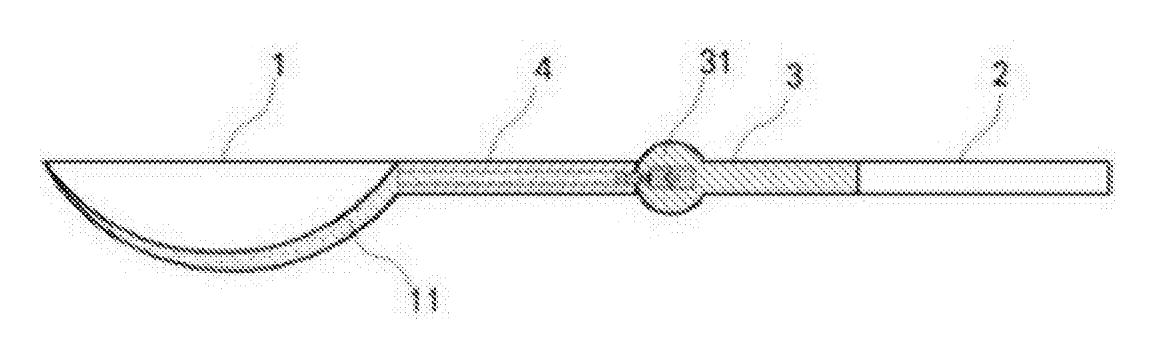
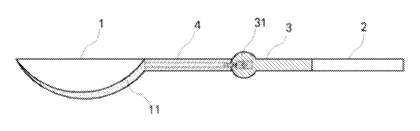
- The spoon head (1) contains a sealed middle air chamber (11) filled with an evaporation liquid.
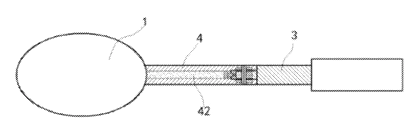
- A front bar (4) is fixed to the spoon head and houses a slide cartridge (42) that is in airtight communication with the air chamber.
- Inside the slide cartridge sits a sliding block (421) that moves only along the cartridge while maintaining the seal.
- The front bar connects to a rear bar (3) via a rotation axis (5), forming a two-piece handle. An inserted sheet (31) on the rear bar fits into a slot (41) on the front bar.
- A limit buckle (6) on the inserted sheet engages a limit hole (61) at the bottom of the slot, locking the handle straight under normal conditions.
- When food is too hot, the evaporation liquid vaporizes, expanding gas pushes the sliding block forward, and the block forces the limit buckle out of the hole. The handle pivots freely, the spoon head sags, and the food drops back into the bowl.
Who it is for
- Baby product brands looking for a self-regulating feeding spoon that requires no electronics or batteries.
- Amazon private-label sellers in the infant tableware category who want a distinct mechanical feature for product listings.
- Wholesalers supplying daycare centers where staff feed multiple toddlers and need a passive safeguard against hot food.
- Injection-molding factories seeking licensed or public-domain designs to produce for existing baby-care clients.
How it works
The main parts
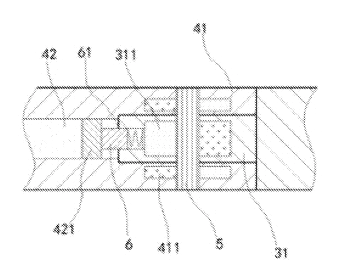
| No. | Part | What it does |
|---|---|---|
| 1 | Spoon head | Holds food; contains the middle air chamber (11). |
| 2 | Kettleholder | Handle grip area held by the caregiver or child. |
| 3 | Rear bar | Rear section of the connecting rod; carries the inserted sheet (31). |
| 4 | Front bar | Front section fixed to the spoon head; houses the slide cartridge (42). |
| 5 | Rotation axis | Pivot pin joining the front and rear bars. |
| 6 | Limit buckle | Locks the joint straight; includes a limited block and compression spring. |
| 11 | Middle air chamber | Sealed cavity filled with evaporation liquid. |
| 31 | Inserted sheet | Tongue on the rear bar that fits into the slot; carries the permanent magnetism column (311). |
| 41 | Slot | Recess in the front bar receiving the inserted sheet; contains the permanent magnetic strip (411). |
| 42 | Slide cartridge | Tube inside the front bar connected airtight to the air chamber. |
| 61 | Limit hole | Opening at the slot bottom where the limit buckle seats. |
| 311 | Permanent magnetism column | Magnet inside the inserted sheet, poles parallel to the rear bar axis. |
| 411 | Permanent magnetic strip | Magnet inside the slot wall, poles parallel to the front bar axis. |
| 421 | Sliding block | Piston inside the slide cartridge that moves under gas pressure. |
Operating steps
- Dip the spoon into warm or hot food. Heat transfers rapidly through the spoon head into the middle air chamber.
- Liquid evaporates. If the food is excessively hot, the evaporation liquid vaporizes quickly, raising pressure inside the sealed air chamber and slide cartridge.
- Block advances. The pressure drives the sliding block toward the end of the slide cartridge.
- Buckle releases. At full travel, the sliding block presses the limit buckle, squeezing it out of the limit hole against its compression spring.
- Handle bends. With the buckle disengaged, the front bar and rear bar rotate freely around the rotation axis. Gravity causes the spoon head to sag downward.
- Food drops. Because the bowl tilts, any scooped food falls back into the dish, preventing the child from eating it.
- Cooling and reset. As the food and spoon cool, pressure drops and the sliding block retreats. Opposite-pole attraction between the permanent magnetic strip and the permanent magnetism column pulls the front and rear bars back into alignment. The limit buckle snaps into the limit hole, locking the handle straight for the next bite.
Applications
Home feeding for toddlers
Parents feeding infants pureed vegetables or cereal often struggle to judge the exact temperature throughout the bowl. This spoon provides a physical signal—bending—that tells both parent and child the food needs more time to cool. It removes the guesswork of blowing on each bite.
Daycare and nursery settings
Caregivers in group settings move quickly between children and may not test every spoonful thoroughly. A passive, mechanical safety feature reduces the risk of accidental burns across multiple high chairs without requiring staff training on electronic devices.
Travel and on-the-go meals
Families eating away from home may not have access to a microwave with precise temperature control or a separate thermometer. The spoon operates independently of power sources, making it practical for restaurant visits or picnics where food temperature varies.
Teaching patience during meals
According to the patent, the automatic bending action helps control eating speed and improves the user’s eating habits. The physical pause gives the child a moment to wait while the food reaches a safe temperature, encouraging slower, calmer meals.
Where it is less suitable
- Older children and adults who already understand how to test food temperature do not need the auto-bending mechanism, and the added weight of the internal parts may feel unnecessary.
- Cold foods such as yogurt or ice cream will never trigger the evaporation liquid, so the mechanism remains permanently locked straight and adds complexity without benefit.
- Commercial dishwasher environments where high-temperature wash cycles could repeatedly expand the gas and stress the limit buckle spring over thousands of cycles beyond what is set in design.
Frequently asked questions
How does the spoon know the food is too hot?
The bowl contains a sealed air chamber filled with an evaporation liquid. When hot food heats the chamber, the liquid vaporizes and the gas expands. This pressure pushes a sliding block down a tube inside the handle, which forces a locking buckle out of its hole. Once unlocked, the handle pivots and the bowl tips downward.
Does it need batteries or electronics?
No. The entire mechanism relies on gas expansion from heat and a mechanical latch. There are no circuits, sensors or batteries inside the spoon.
How does the handle become straight again?
According to the patent, permanent magnets are placed inside the front and rear sections of the handle joint. Their opposite poles attract each other. When the food cools and the gas pressure drops, the sliding block retreats, and the magnetic attraction pulls the two handle sections back into a straight line, snapping the buckle back into the lock hole.
What happens to the food when the handle bends?
Because the spoon head sags under gravity, the food slides off the bowl and drops back into the plate or cup. This prevents the child from swallowing it while it is still too hot.
Is the evaporation liquid safe if the spoon breaks?
The liquid is sealed inside the middle air chamber and slide cartridge. However, for any children’s product sold in the US, the internal fluids and all surrounding plastics must pass FDA food-contact and CPSC safety testing to ensure no hazardous exposure even under abuse testing.
What age range is this designed for?
The patent describes it as a “children’s spoon” aimed at preventing scalding and controlling eating speed. Specific age grading and small-parts compliance are set in design and confirmed by CPSC testing protocols.
Can the activation temperature be changed?
Yes. The temperature at which the handle bends depends on the type and amount of evaporation liquid used and the volume of the air chamber. These parameters are adjusted during product development to match the desired safety threshold.
Can this design be made and sold in the US?
The patent was filed only in China and is lapsed due to non-payment of annual fees, so it does not restrict the design in the US or in China. Other companies may hold US patents related to temperature-sensing feeding products - see Patent & Production - so we recommend a freedom-to-operate check before volume production.
Are you affiliated with the patent owner?
No. IP2M is an independent design and manufacturing service working from the public patent document.
Request a quote
Click Request a Quote below to see our email address - copy it, or open your email app with a ready-made message. Please mention patent CN106974520B in the subject.
Helpful details to include:
- Your company and channel (baby brand, Amazon seller, daycare supplier, wholesaler)
- Target age range and bowl size preferences
- Desired activation temperature for the bending mechanism
- Material and color requirements for the outer shell
- Estimated quantity and packaging format
- Timeline - when you would like prototypes and the first shipment
You can also reach us at (332) 203-9997.
Explore this product
Interested in building this?
Tell us your target market, quantity and timeline. We reply with options for prototyping, small-batch runs or volume production.
Send your inquiry to
Please put CN106974520B in the subject line and tell us your company, country, estimated quantity and timeline.
Prefer to talk? Call (332) 203-9997.
More product-ready patents
All Baby & Kids patents →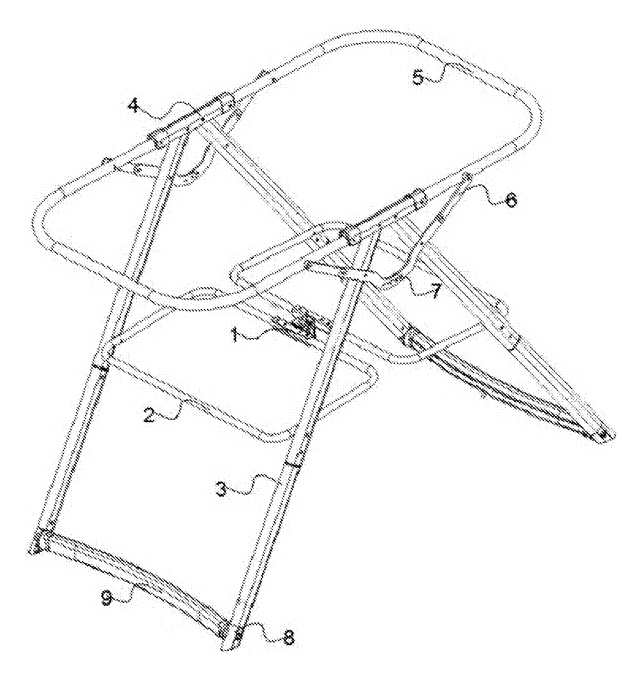
Baby & Kids
Portable Folding Rocking Bassinet Frame
Rocking bassinet frame that folds flat: telescopic hub, folding rails, two-part legs, curved rockers.
Patent CN206910143U
Baby & Kids
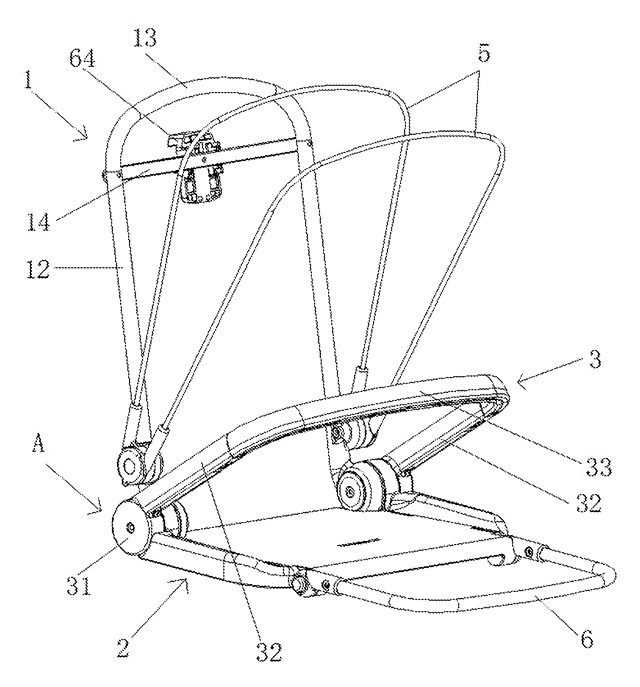
Stroller Seat with Linked Fold-Away Armrest
Stroller seat whose armrest unlocks and folds automatically when the backrest is folded forward.
Patent CN206856772U
Baby & Kids
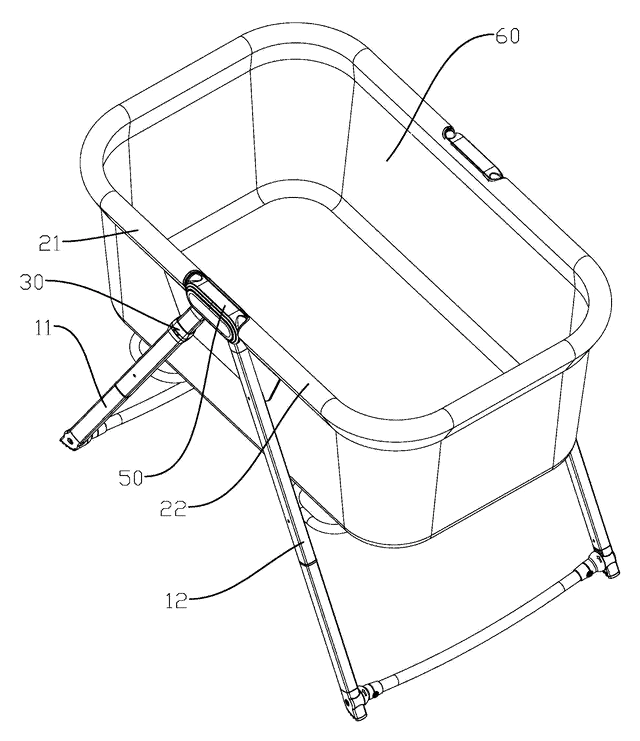
One-Motion Folding Baby Crib with Linked Frame
Portable baby crib whose top rails fold down automatically as the A-frame legs are closed.
Patent CN207202585U
Baby & Kids
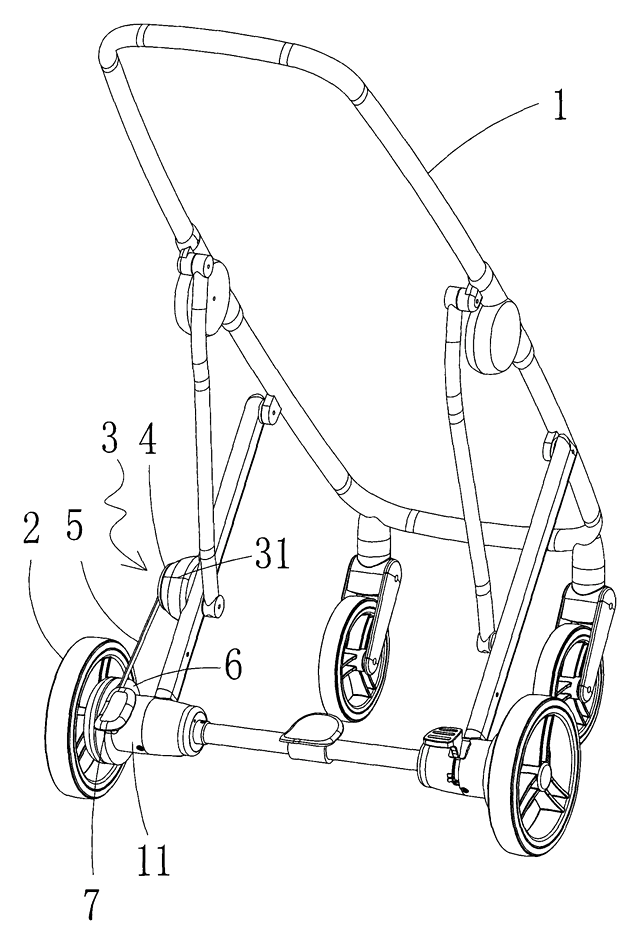
Motorized Rocking Stroller That Rocks by Turning Its Wheels
Baby rocker or stroller whose motor turns the wheels back and forth; a clutch switches to pushing.
Patent CN208119238U
Baby & Kids
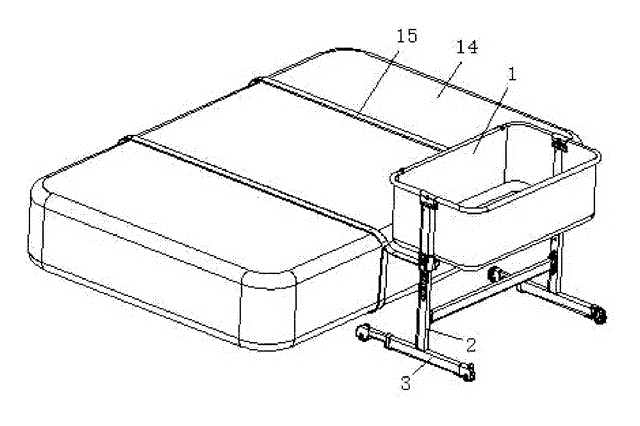
Bedside Crib Base with Spring-Loaded Telescoping Caster Legs
Bedside crib feet with spring-loaded sliding casters: wide when alone, short to sit flush at the bed.
Patent CN207168269U
Baby & Kids
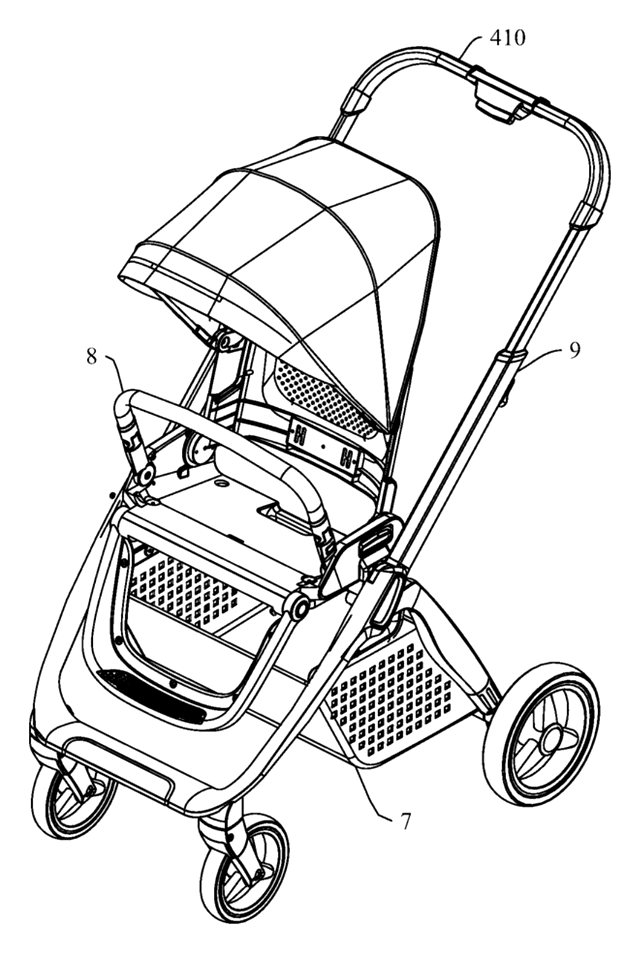
Compact-Fold Stroller with a Four-Bar Side Frame and Telescoping Handle
Stroller with four-bar side frames: handle and rear leg fold onto the front leg, handle telescopes.
Patent CN213799844U
Browse by category
- Apparel & Accessories (22)
- Baby & Kids (16)
- Bags & Luggage (9)
- Bath & Personal Care (16)
- Car Accessories (10)
- Furniture, Bedding & Storage (12)
- Garden & Outdoor (18)
- Health & Wellness (8)
- Home, Kitchen & Cleaning (24)
- Lighting (12)
- Packaging & Containers (6)
- Pet Products (6)
- Phone & Camera Accessories (4)
- Retail Display (13)
- School, Office & Art (19)
- Sports & Recreation (25)
- Tools & Workshop (27)
- Toys & Games (12)
This page is based on the public patent document CN106974520B, assigned to ZHEJIANG EMC PLASTIC Co Ltd. IP2M is an independent manufacturing service and is not affiliated with, endorsed by or licensed by the patent owner. Images marked as concept renderings are illustrations, not photos of an existing product. Patent status information is provided for reference only and is not legal advice; confirm freedom to operate for your market before production. Full disclaimer.