
Patent CN107048558B
Updated October 29, 2026Solar-Powered Smart Sun Hat with Motorized Cooling Fan and Angle Adjustment
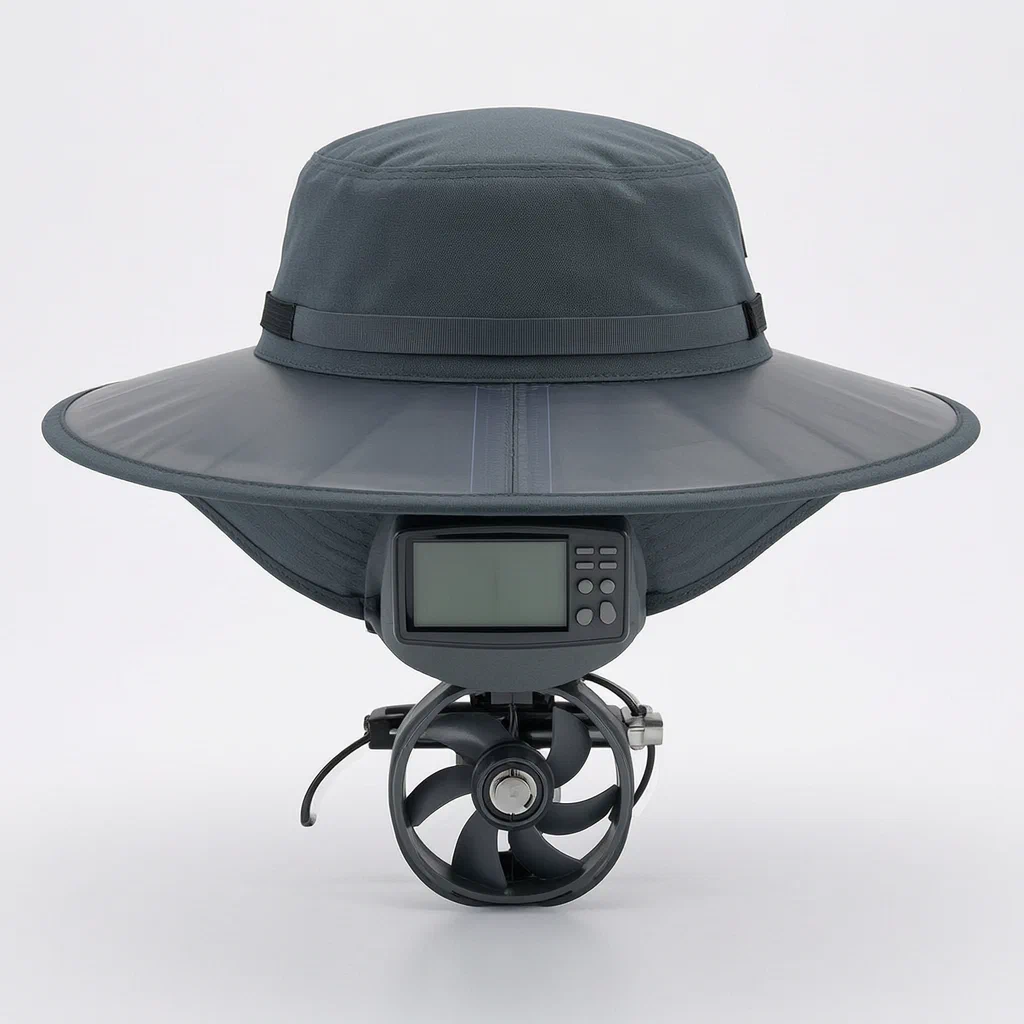
Standard sun hats block sunlight but trap heat underneath, leaving the wearer uncomfortable during extended outdoor activity. This smart sun hat adds a motorized cooling system directly to the visor. A small fan, driven by a third motor, blows air onto the user. A second motor and connecting rod tilt the fan up and down, while a horizontal moving assembly shifts it side to side, directing airflow where it is needed. Power comes from a solar cell panel mounted on the visor's control panel. An NE555 integrated circuit in the working power supply module regulates the output voltage by controlling a field effect transistor based on feedback. The entire system is managed by a PLC central control module, which connects to a display interface, control keys, status indicator lamps, and a wireless communication module.
- China invention patent - in force
- No filings outside China
- Headwear & outdoor gear
- Solar panel, PLC, NE555 IC, DC motors
Splat! What let you down?
☀️
Solar powered
A solar cell panel on the visor collects energy, managed by an electric energy acquisition module.
🌀
Motorized cooling
A third motor spins multiple blades to blow air directly onto the wearer.
📐
Adjustable airflow angle
A second motor and connecting rod tilt the fan, while a horizontal assembly moves it side to side.
⚡
Regulated power circuit
An NE555 integrated circuit controls a field effect transistor to stabilize the output voltage.
Bring this product to market
- ✓ Patent vetted China-only family and legal status checked
- 2 Product brief · now How it works, uses and options written up
- 3 Prototype First samples for buyers to review
- 4 Pilot run Small first batch for launch customers
- 5 Volume production Repeat orders at scale
Buyer interest
– of 100 buyers needed to start prototyping
One click, no sign-up. Each vote is one real visitor, and products with the most interest go to prototyping first.
Build team: no members yet. Need a partner, co-funding or skills to build this? Join and we introduce the team once it forms.
The problem
During outdoor activities in warm weather, standard sun hats block direct sunlight but do little to lower the temperature around the head. Heat builds up under the brim, causing discomfort and sweating. Handheld fans require one free hand, and battery-operated clip-on fans typically blow in a single fixed direction, missing different parts of the face and neck as the wearer moves. Managing battery life is also a constant concern when spending hours away from power outlets.
The solution
This design integrates a complete cooling and control system into the visor of a sun hat.
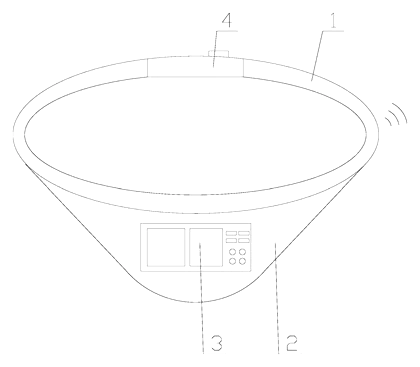
- A hat band (1) forms the base, with a visor (2) arranged in its middle.
- A central control mechanism (3) sits on the visor, housing a panel (15) with a solar cell panel (16), a display interface (17), a control key (18), and status indicator lamps (19). Inside the panel, a PLC central control module (20) coordinates the system.
- A cooling mechanism is mounted on the visor and electrically connected to the central control mechanism. It uses a horizontal moving assembly (5) to shift the fan laterally.
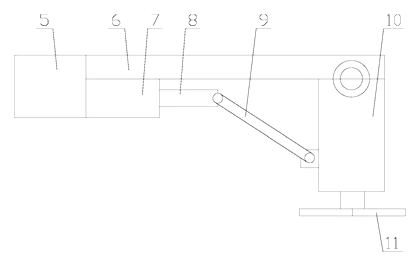
- An angle adjusting assembly features a horizontally arranged fixing plate (6), a second motor (7) below it, a second driving shaft (8), and a connecting rod (9). One end of the rod hinges to the shaft, the other to the fan motor.
- A cooling assembly contains a third motor (10) with blades (11) arranged uniformly around its driving shaft. The second motor extends or retracts the connecting rod, tilting the third motor to change the airflow angle.
- A working power supply module (27) uses an NE555 integrated circuit to collect and feed back output voltage, controlling a field effect transistor to keep the power stable.
Who it is for
- Outdoor apparel brands looking to add functional, tech-enabled headwear to their summer catalogs without relying on simple mesh vents.
- Promotional product suppliers serving corporate events, golf tournaments, or agricultural companies that need branded gear for workers in the sun.
- Amazon sellers and wholesalers targeting the growing market for personal cooling devices and wearable electronics for hikers, gardeners, and sports fans.
- Workwear manufacturers supplying uniforms for farming, construction, or landscaping crews who spend long hours outdoors and need hands-free cooling.
How it works
The main parts
| No. | Part | What it does |
|---|---|---|
| 1 | Hat band | Fits around the user’s head. |
| 2 | Visor | Supports the control and cooling mechanisms. |
| 3 | Central control mechanism | Houses the solar panel, PLC, display, keys, and indicators. |
| 5 | Horizontal moving assembly | Shifts the cooling assembly side to side. |
| 6 | Fixing plate | Horizontally arranged base for the angle adjuster. |
| 7 | Second motor | Drives the connecting rod to tilt the fan. |
| 8 | Second driving shaft | Connects the second motor to the rod. |
| 9 | Connecting rod | Hinged to the shaft and the lower half of the third motor. |
| 10 | Third motor | Spins the blades to generate airflow. |
| 11 | Blades | Uniformly arranged on the third motor’s shaft. |
| 15 | Panel | Outer housing on the visor for controls. |
| 16 | Solar cell panel | Collects light for the electric energy acquisition module. |
| 17 | Display interface | Shows system status. |
| 18 | Control key | Allows user input. |
| 19 | Status indicator lamps | Visual feedback for operating states. |
| 20 | Central control module | A PLC managing all connected modules. |
| 27 | Working power supply module | Regulates voltage using an NE555 IC and field effect transistor. |
Operating steps
- Power collection: The solar cell panel (16) absorbs sunlight, sending energy through the electric energy acquisition module (23) to the working power supply module (27).
- Voltage regulation: The NE555 integrated circuit monitors the output voltage and feeds it back to control the field effect transistor, stabilizing the power delivered to the components.
- User input: The wearer presses the control key (18) on the panel. The PLC central control module (20) processes this via the key control module (25).
- Cooling activation: The motor control module (21) activates the third motor (10), spinning the blades (11) to blow air.
- Angle and position adjustment: The second motor (7) drives the second driving shaft (8), pushing or pulling the connecting rod (9). Because the rod is hinged to the lower half of the third motor (10), the fan tilts. Simultaneously, the horizontal moving assembly (5) shifts the unit side to side.
- Feedback: Status indicator lamps (19) and the display interface (17) update the user on the current mode.
Applications
Hiking and trail walking
Hikers carry heavy packs and cannot hold a handheld fan. This hat provides continuous airflow powered by the sun, keeping the face and neck cool on exposed trails without draining carried battery banks.
Farming and landscaping
Agricultural workers spend hours in direct sunlight. The motorized fan directs air across the face, reducing sweat buildup under the brim. The solar panel removes the need to swap batteries during a long shift.
Golf and spectator sports
Golfers and spectators standing on open courses experience intense midday heat. The adjustable angle allows the wearer to direct the breeze precisely while keeping both hands free for clubs or binoculars.
Outdoor maintenance and construction
Workers repairing roofs or clearing lots need reliable shade and cooling. The PLC-controlled system operates automatically once set, and the status indicators confirm the fan is running properly without requiring the worker to stop and check.
Where it is less suitable
- Indoor or night use - the primary power source described is a solar cell panel; indoor lighting may not generate sufficient energy without a large backup battery, which is not detailed in the patent.
- Heavy rain environments - the patent describes electronic modules, motors, and a display interface on the visor, but does not specify waterproof sealing ratings.
- High-impact sports - the added weight of motors, panels, and the PLC on the visor makes it impractical for contact sports or fast-paced running where minimal gear is required.
Frequently asked questions
How does the fan move to cool different areas?
The patent describes a second motor connected to a driving shaft and a hinged connecting rod. When the second motor runs, it pushes or pulls the rod, which tilts the third motor (the fan) up and down. A separate horizontal moving assembly shifts the entire unit side to side, allowing airflow to reach different parts of the face and neck.
What powers the hat?
A solar cell panel is mounted on the visor’s control panel. It feeds into an electric energy acquisition module. The working power supply circuit uses an NE555 integrated circuit to monitor the voltage and control a field effect transistor, keeping the power output stable for the motors and PLC. Battery capacity for low-light operation is set in design / confirmed on prototypes.
Is the hat heavy with all those motors?
The patent does not list weights. The total mass depends on the chosen materials for the hat band, visor, motors, and solar panel. Weight distribution and comfort are set in design / confirmed on prototypes.
Can I control the fan speed and direction manually?
The central control mechanism includes a control key connected to a key control module, and a display interface. These allow the user to interact with the PLC central control module, which in turn commands the motor control module. Exact button functions and speed settings are set in design / confirmed on prototypes.
Does it connect to a smartphone?
The patent lists a wireless communication module connected to the central control module. The specific protocol (such as Bluetooth) and app functionality are determined during the engineering phase.
What sizes are available?
The patent mentions a hat band but gives no dimensions. Head circumference ranges and adjustment methods (e.g., snapbacks, Velcro straps) are set in design / confirmed on prototypes.
Can this design be made and sold in the US?
The patent was filed only in China and is in force there until at most 2037-02-18 (if annual fees are paid); it has no US counterpart, so it does not restrict making or selling the design in the US. However, wearable cooling and solar headwear may be covered by other US patents - see Patent & Production - so we recommend a freedom-to-operate check before volume production.
Are you affiliated with the patent owner?
No. IP2M is an independent design and manufacturing service working from the public patent document.
Request a quote
Click Request a Quote below to see our email address - copy it, or open your email app with a ready-made message. Please mention patent CN107048558B in the subject.
Helpful details to include:
- Your company and channel (outdoor apparel brand, promotional supplier, Amazon seller, workwear manufacturer)
- Target audience (adults, workers, general outdoor consumers)
- Materials preferred for the hat and visor
- Features required (wireless connectivity, display type, battery backup size)
- Estimated quantity and target price
- Timeline - when you would like samples and the first shipment
You can also reach us at (332) 203-9997.
Explore this product
Interested in building this?
Tell us your target market, quantity and timeline. We reply with options for prototyping, small-batch runs or volume production.
Send your inquiry to
Please put CN107048558B in the subject line and tell us your company, country, estimated quantity and timeline.
Prefer to talk? Call (332) 203-9997.
More product-ready patents
All Apparel & Accessories patents →
Apparel & Accessories
Stacked Zipper with Teeth That Mesh Top-to-Bottom
Zipper whose two identical tooth rows mesh on top of each other, closed by a simplified slider.
Patent CN205795062U
Apparel & Accessories
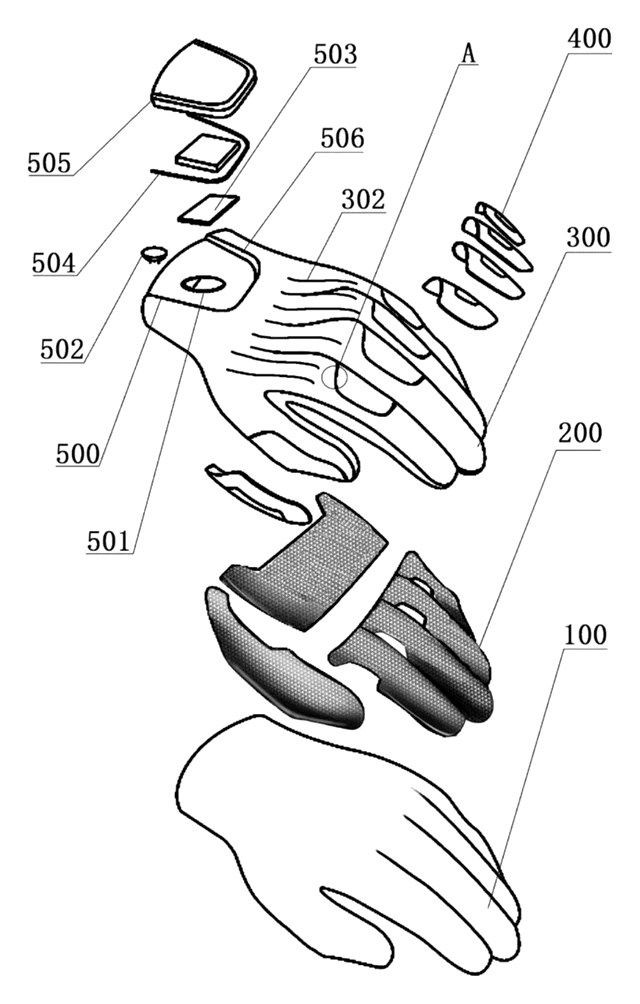
Impact-Resistant Glove with a 3D-Printed Lattice Layer
Work glove with a 3D-printed lattice impact layer, TPU knuckle guards and a light mounting area.
Patent CN213785583U
Apparel & Accessories
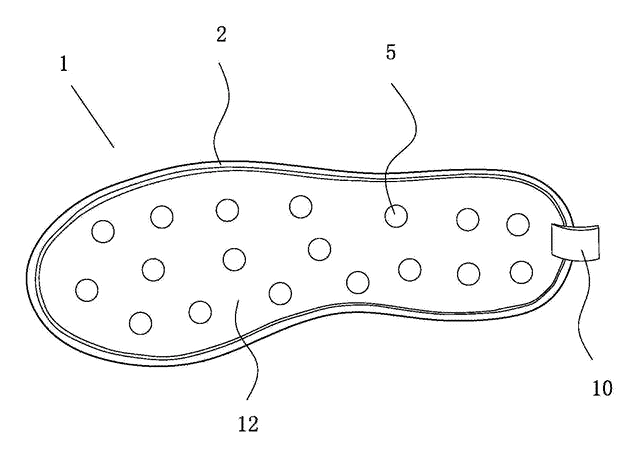
Massage Insole with Spring-Back Silicone Nubs and a Removable Top Layer
Layered insole: silicone nubs rise through a removable perforated top sheet and sink under each step.
Patent CN208286505U
Apparel & Accessories
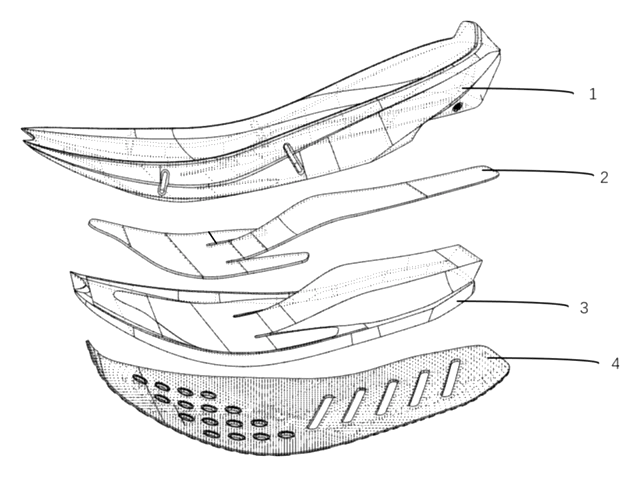
Heel-Less Carbon Plate Running Shoe Sole for Forefoot Strikers
Running sole for forefoot strikers: no ground-touching heel, winged carbon plate between two midsoles.
Patent CN216723354U
Apparel & Accessories
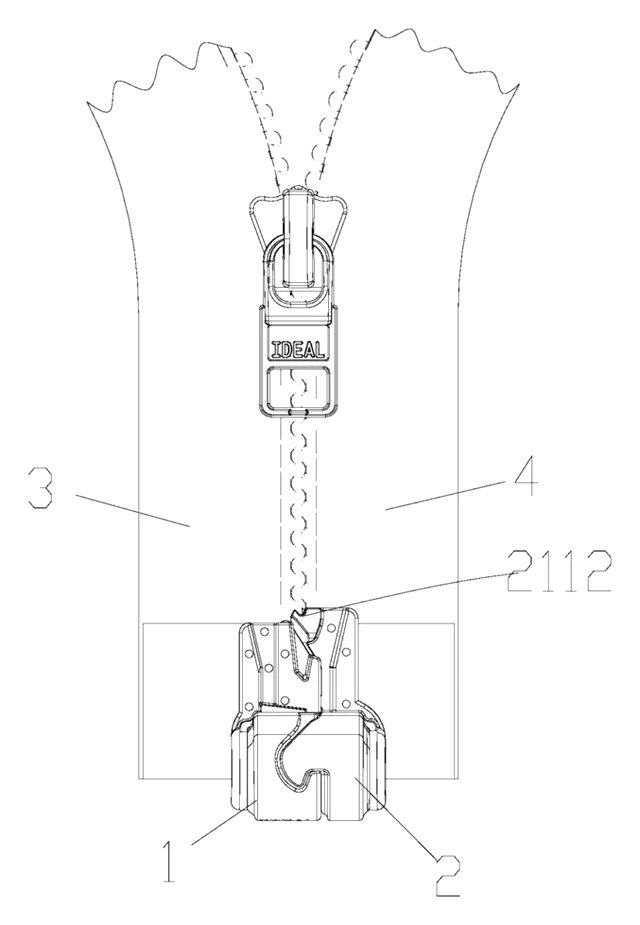
Waterproof Magnetic Zipper Stop That Snaps the Two Halves Together
Separating-zipper stop with sealed magnets: pin and box snap together one-handed, safe in rain and wash.
Patent CN215075936U
Apparel & Accessories
Left-Right Specific Soccer Socks: Grip for the Plant Foot, Touch Pads for the Kicking Foot
Soccer socks knitted as a left-right pair: grip zones for the plant foot, pads for the kicking foot.
Patent CN212728807U
Browse by category
- Apparel & Accessories (22)
- Baby & Kids (16)
- Bags & Luggage (9)
- Bath & Personal Care (16)
- Car Accessories (10)
- Furniture, Bedding & Storage (12)
- Garden & Outdoor (18)
- Health & Wellness (8)
- Home, Kitchen & Cleaning (24)
- Lighting (12)
- Packaging & Containers (6)
- Pet Products (6)
- Phone & Camera Accessories (4)
- Retail Display (13)
- School, Office & Art (19)
- Sports & Recreation (25)
- Tools & Workshop (27)
- Toys & Games (12)
This page is based on the public patent document CN107048558B, assigned to Hunan Yueningkang Biotechnology Co ltd. IP2M is an independent manufacturing service and is not affiliated with, endorsed by or licensed by the patent owner. Images marked as concept renderings are illustrations, not photos of an existing product. Patent status information is provided for reference only and is not legal advice; confirm freedom to operate for your market before production. Full disclaimer.