
Patent CN107087887B
Updated October 29, 2026Multifunctional Outdoor Backpack with Built-In Rest Stool and Emergency Stretcher
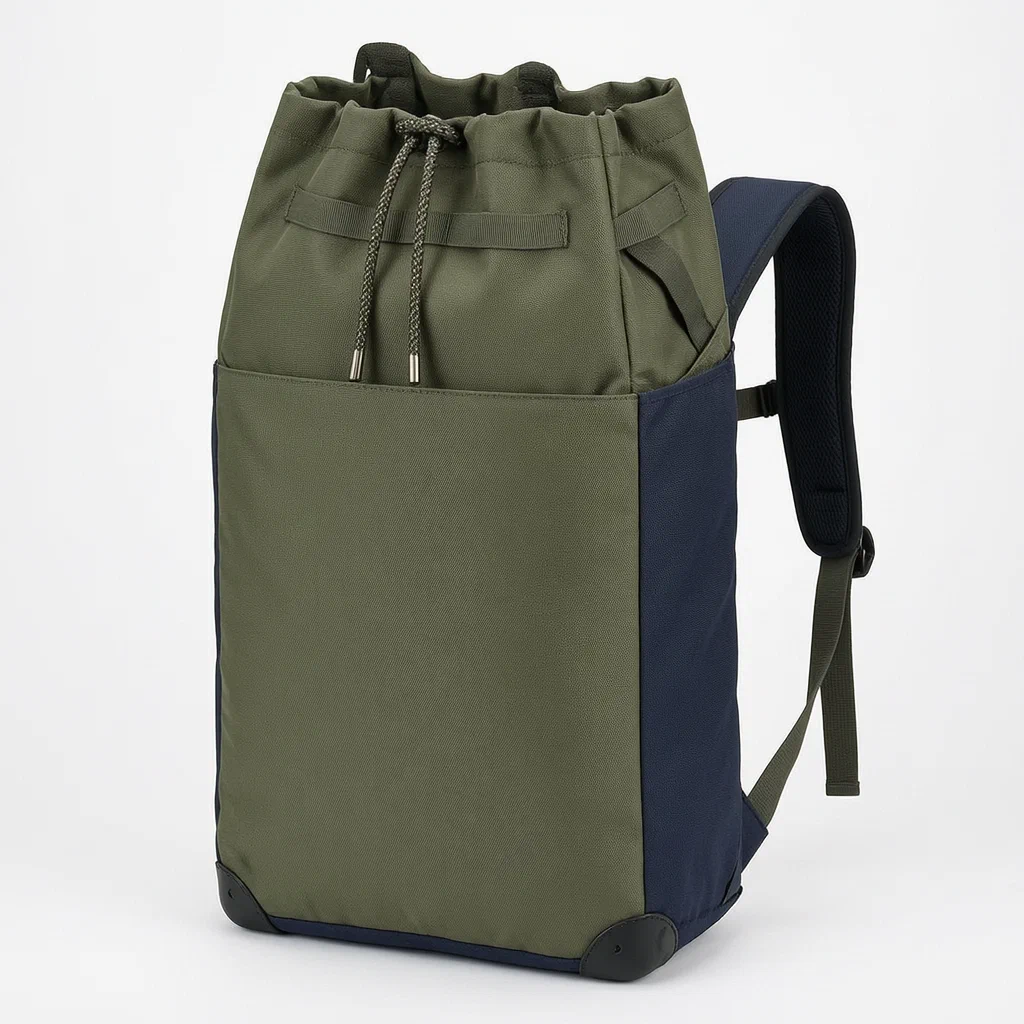
Standard hiking packs carry gear but offer no structural help when a group needs to rest or move an injured person. This design places a height-adjustable support frame inside the main compartment. When pulled through an opening, the frame tightens the fabric into a rigid seat. Inside dedicated compartments, four three-stage telescopic rods wait for assembly into two stretcher lift bars. Those bars, together with the upper and lower support plates detached from the frame, build an emergency stretcher. On flat ground, detachable universal wheels clip onto the plates or the bag corners, and one telescopic rod becomes a pull handle, turning the whole unit into a wheeled cart.
- China invention patent - lapsed
- No filings outside China
- Travel & outdoor gear
- Support frame, telescopic rods, universal wheels
Splat! What let you down?
🪑
Built-in rest stool
A height-adjustable support frame tightens the backpack body from the inside to create a rigid seat.
🛏️
Emergency stretcher
Four three-stage telescopic rods splice into two lift bars; combined with the support plates they form a stretcher.
🛒
Wheeled cart mode
Detachable universal wheels and a telescopic handle convert the frame into a transport cart on flat ground.
🎒
Dedicated storage
Elastic fixing rings and compartments keep all rods and plates organized inside the main body.
Bring this product to market
- ✓ Patent vetted China-only family and legal status checked
- 2 Product brief · now How it works, uses and options written up
- 3 Prototype First samples for buyers to review
- 4 Pilot run Small first batch for launch customers
- 5 Volume production Repeat orders at scale
Buyer interest
– of 100 buyers needed to start prototyping
One click, no sign-up. Each vote is one real visitor, and products with the most interest go to prototyping first.
Build team: no members yet. Need a partner, co-funding or skills to build this? Join and we introduce the team once it forms.
The problem
Hiking groups and field teams carry standard backpacks that hold supplies but provide no structural support for resting. When someone needs to sit, they rely on uneven ground or separate folding stools that add weight. If a team member is injured and cannot walk, the group must improvise a stretcher from branches or clothing, which takes time and may not be stable. Moving an injured person over flat terrain by hand is exhausting, and carrying separate stretchers, stools and carts defeats the purpose of traveling light.
The solution
This backpack integrates the parts needed for resting and emergency transport directly into its structure.
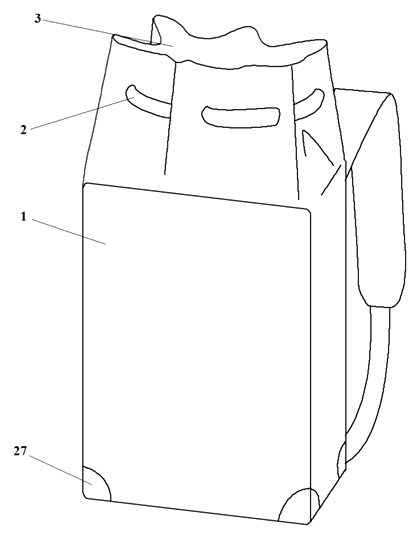
- A height-adjustable support frame sits inside the backpack main body (1). It passes through an opening (3) so the frame can tighten the fabric from the inside, forming a rigid rest stool.
- Four three-stage telescopic rods (13) are stored in dedicated compartments. They splice together end-to-end to form two stretcher lift bars (14).
- The upper support plate (5) and lower support plate (6) detach from the support frame. Together with the two lift bars, they assemble into an emergency stretcher.
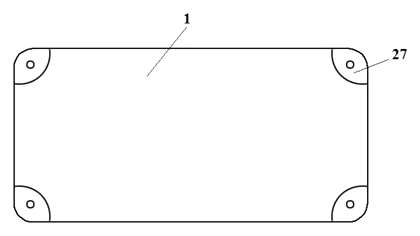
- Detachable universal wheels (25) clip onto mounting holes on the lower plate or hard mounts on the bag bottom, while one telescopic rod inserts into a handle hole on the upper plate to create a wheeled cart.
Who it is for
- Outdoor gear brands expanding their hiking and expedition pack lines with built-in safety functions.
- Wholesalers supplying scout troops and youth camps where groups need shared rest and emergency equipment without extra bulk.
- Adventure tour operators guiding multi-day hikes who want a standardized pack that doubles as rescue equipment.
- Amazon sellers targeting the preparedness niche looking for a differentiated travel bag with clear functional selling points.
How it works
The main parts
| No. | Part | What it does |
|---|---|---|
| 1 | Backpack main body | Holds all components and provides general cargo space. |
| 3 | Opening | Allows the support frame to extend outward. |
| 4 | Support frame | Height-adjustable structure that stiffens the bag into a stool. |
| 5 | Upper support plate | Top part of the frame; detaches for stretcher or cart use. |
| 6 | Lower support plate | Bottom part of the frame; accepts universal wheels. |
| 7 | Support rod | Crossed rods forming the frame, locked by bolts in strip holes. |
| 13 | Three-stage telescopic rod | Stores flat; splices into stretcher bars or serves as a cart handle. |
| 14 | Stretcher lift bar | Two assembled rods that support the plates in stretcher mode. |
| 18 | Stretcher support plate | Carries the protective liner and fastening straps. |
| 21 | Protective liner | Padded layer on the stretcher surface. |
| 22 | Fastening strap | Secures the liner to the lift bars through fastening holes. |
| 25 | Detachable universal wheel | Clips onto the lower plate or bag bottom for cart mode. |
| 27 | Universal wheel mount | Hard mount at the four bottom corners of the backpack. |
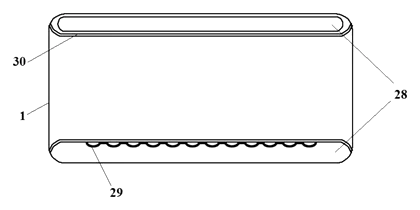
| 28 | Support plate accommodating compartment | Storage area on the top and bottom surfaces of the bag. |
| 29 | Elastic fixing ring | Holds rods and plates inside the compartments. |
| 30 | Elastic buffer layer | Cushioning layer on the inner top surface. |
| 31 | Through hole | Openings in the support plates. |
| 32 | Universal wheel mounting hole | Holes at the four corners of the lower support plate. |
Operating steps
- Rest stool mode - Pull the support frame (4) through the opening (3). Adjust the height. The crossed support rods (7) lock via fastening bolts (24) sliding in strip holes (23), tightening the backpack main body (1) into a seat.
- Stretcher mode - Remove the upper support plate (5) and lower support plate (6) from the frame. Take out the four three-stage telescopic rods (13) from the elastic fixing rings (29) in the compartments (28). Splice them into two stretcher lift bars (14). Attach the protective liner (21) by threading the fastening straps (22) through the fastening holes (19) on the lift bars.
- Cart mode - On flat ground, install the detachable universal wheels (25) into the universal wheel mounting holes (32) on the lower plate (6) or onto the hard mounts (27) at the bag corners. Insert one telescopic rod (13) into the handle mounting hole (26) on the upper plate (5) and pull.
Applications
Group hiking expeditions
When a hiking team stops for a break, members deploy the internal frame to create seats instead of sitting on wet or rocky ground. The backpack remains compact during movement because all parts store flat inside the compartments.
Wilderness injury response
If a hiker twists an ankle far from a trailhead, the group extracts the telescopic rods and support plates to build a stretcher. The protective liner and straps secure the patient, allowing the team to carry them out without improvising unstable poles.
Flat-terrain evacuation
Once the group reaches a dirt road or flat path, they attach the universal wheels to the lower plate and insert the handle rod. This converts the stretcher into a wheeled cart, reducing the physical strain of carrying the injured person over distance.
Scout and youth camp outings
Camp leaders distribute these packs to squads so each unit carries its own rest and rescue capability. During training exercises, scouts practice assembling the stretcher and cart modes, learning emergency procedures with standardized equipment.
Field research and survey work
Survey teams working in remote areas use the stool mode while recording data at stations. The remaining cargo space holds instruments and daily necessities alongside the structural components.
Where it is less suitable
- Ultralight solo backpacking - The frame, plates, rods and wheels add weight that solo hikers counting every ounce will avoid.
- Urban commuting - The specialized compartments and rigid parts make it bulkier than a standard daypack for city use.
- Technical rock climbing - Climbers need streamlined harness-compatible packs without protruding frames or hard plates.
Frequently asked questions
How does the backpack turn into a stool?
A height-adjustable support frame sits inside the main compartment. When extended through the top opening, the crossed support rods lock at the chosen height via bolts in slotted holes. This pulls the backpack fabric taut from the inside, creating a rigid seat surface.
How many people are needed to build the stretcher?
The patent describes the parts and assembly but does not specify crew size. In practice, two or more people are typically needed to splice the telescopic rods, attach the plates and secure the straps. This is set in design and confirmed on prototypes.
Are the telescopic rods heavy to carry?
The patent does not list material weights. Rod diameter, wall thickness and material choice such as aluminum or steel determine the final mass. These specifications are set in design based on the required load capacity.
Can the cart mode handle rough trails?
The patent states the wheeled cart is intended for relatively flat roads. Detachable universal wheels mount on the lower plate or the bag bottom, and a telescopic rod acts as a handle. Wheel diameter and tread type for off-road use are to be confirmed in design.
Do the support plates take up all the packing space?
The bag includes dedicated accommodating compartments on its top and bottom surfaces, secured by elastic fixing rings. The patent notes the backpack retains a large accommodation space for field necessities alongside the structural parts. Exact usable volume depends on the overall bag dimensions.
Is there padding for the person on the stretcher?
Yes. A protective liner is placed on the stretcher support plate, and an elastic buffer layer is provided on the inner top surface of the backpack main body. Fastening straps thread through holes on the lift bars to hold the liner in place.
Can this design be made and sold in the US?
The patent was filed only in China and is lapsed due to non-payment of annual fees, so it does not restrict the design in the US or in China. Convertible outdoor bags may be covered by other US patents - see Patent & Production - so we recommend a freedom-to-operate check before volume production.
Are you affiliated with the patent owner?
No. IP2M is an independent design and manufacturing service working from the public patent document.
Request a quote
Click Request a Quote below to see our email address - copy it, or open your email app with a ready-made message. Please mention patent CN107087887B in the subject.
Helpful details to include:
- Your company and channel (outdoor brand, wholesaler, adventure operator, Amazon seller)
- Target bag volume and external dimensions
- Preferred materials for fabric, frame rods and support plates
- Required modes (stool only, stretcher only, or all three including cart)
- Estimated quantity and target price
- Timeline - when you would like samples and the first shipment
You can also reach us at (332) 203-9997.
Explore this product
Interested in building this?
Tell us your target market, quantity and timeline. We reply with options for prototyping, small-batch runs or volume production.
Send your inquiry to
Please put CN107087887B in the subject line and tell us your company, country, estimated quantity and timeline.
Prefer to talk? Call (332) 203-9997.
More product-ready patents
All Sports & Recreation patents →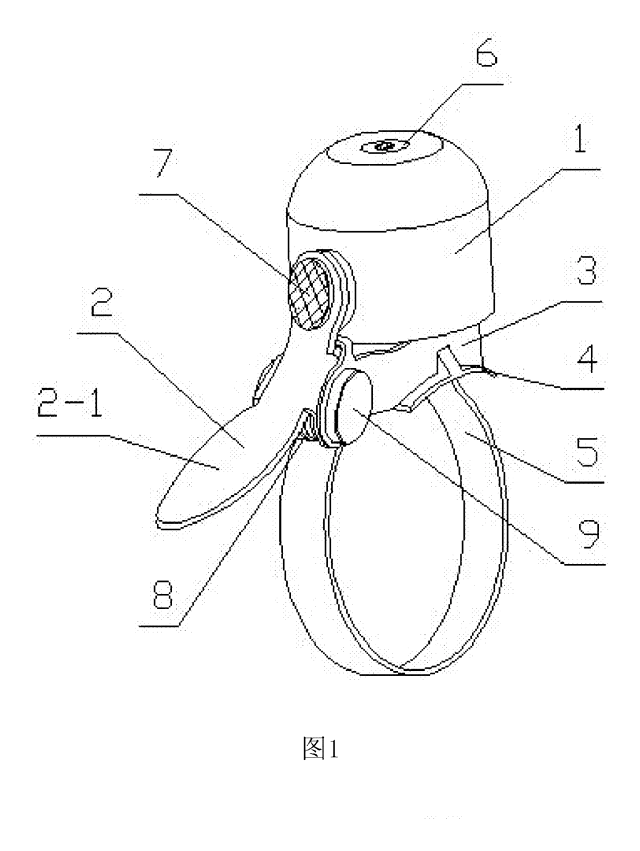
Sports & Recreation
Compact Torsion-Spring Bike Bell
Mini bike bell with a standard torsion spring and a rubber-floated dome - small size, clear tone, quick strap mount.
Patent CN205819384U
Sports & Recreation
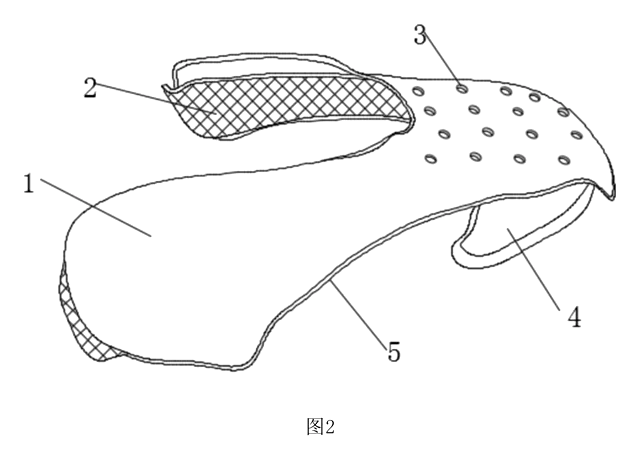
Padded Toe-Box Shield for Sneakers
Ventilated, silicone-lined toe-box insert that supports the front of a sneaker and cushions the toes.
Patent CN209473731U
Sports & Recreation
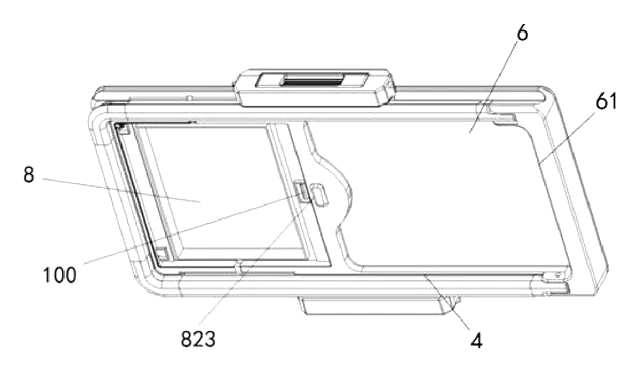
Reversible Fishing Seat-Box Lid with Backrest
Fishing seat-box lid that flips on removable hinge pins: cushion, backrest and storage on one face.
Patent CN208624426U
Sports & Recreation
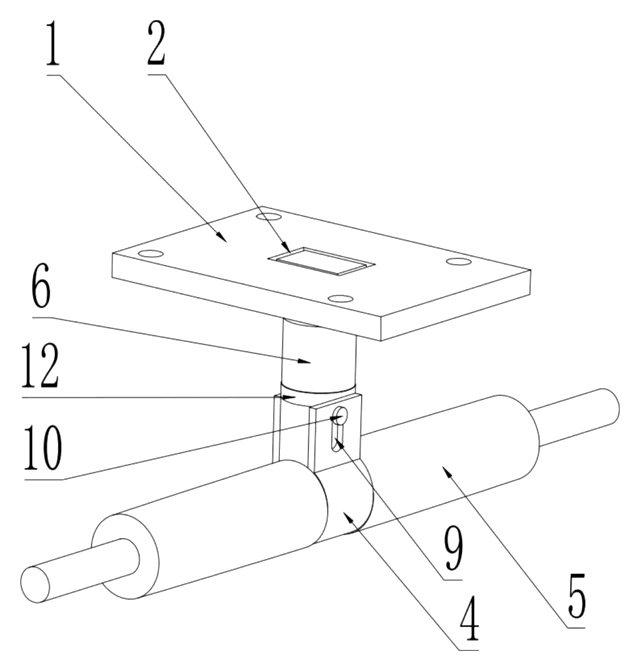
Swivel-Pin Skateboard Truck with Rubber Sleeve
Skateboard truck with a turning center pin, a tilting axle clamp and a rubber sleeve that centers it.
Patent CN216777880U
Sports & Recreation
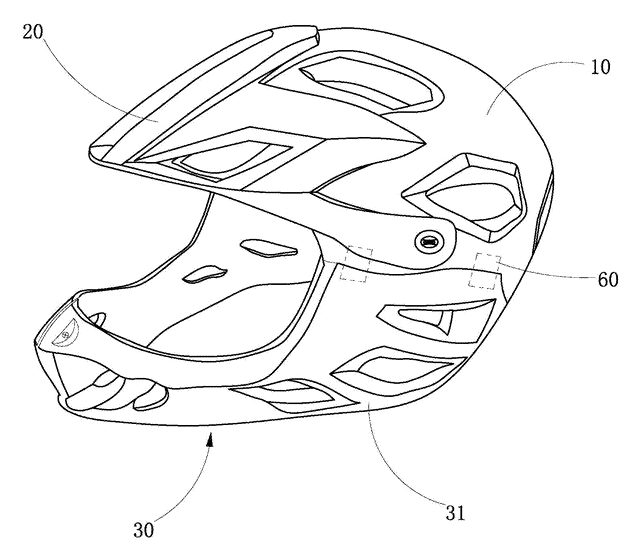
Full-Face Bike Helmet with Magnetic Detachable Chin Bar
Full-face cycling helmet whose chin bar clips on and off with magnetic, latching side connectors.
Patent CN206630067U
Sports & Recreation
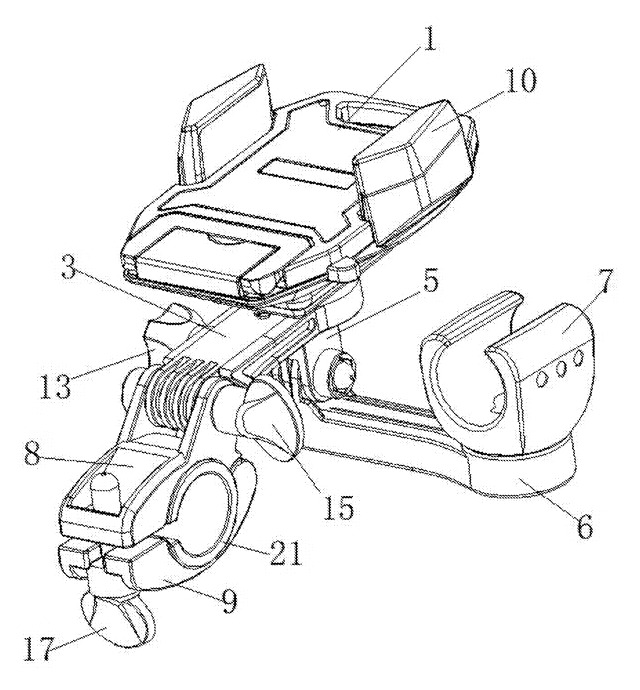
Bike Phone Holder with Built-In Flashlight Clamp
Handlebar mount with a phone cradle on top and a flashlight clamp below, on one arm.
Patent CN206077485U
Browse by category
- Apparel & Accessories (22)
- Baby & Kids (16)
- Bags & Luggage (9)
- Bath & Personal Care (16)
- Car Accessories (10)
- Furniture, Bedding & Storage (12)
- Garden & Outdoor (18)
- Health & Wellness (8)
- Home, Kitchen & Cleaning (24)
- Lighting (12)
- Packaging & Containers (6)
- Pet Products (6)
- Phone & Camera Accessories (4)
- Retail Display (13)
- School, Office & Art (19)
- Sports & Recreation (25)
- Tools & Workshop (27)
- Toys & Games (12)
This page is based on the public patent document CN107087887B, assigned to Individual. IP2M is an independent manufacturing service and is not affiliated with, endorsed by or licensed by the patent owner. Images marked as concept renderings are illustrations, not photos of an existing product. Patent status information is provided for reference only and is not legal advice; confirm freedom to operate for your market before production. Full disclaimer.