At a glance
| Patent number | CN107087887B (application CN201710500614) |
| Type | China invention patent (发明专利) - protects product shape, structure and method |
| Original title | Multifunctional field trip bag integrating rest and first aid (一种集休息和急救于一体的多功能野外旅行包) |
| Patent owner | Individual (Xu Bo’ang) |
| Inventors | Xu Bo’ang |
| Filing date | 2017-06-27 |
| Grant date | 2022-08-30 |
| Status (China) | Lapsed - terminated for non-payment of annual fees (recorded 2025-07-01) |
| Patent family | Chinese filings only - no US, European, Japanese, PCT or other filings listed |
| Cited by | 0 later documents |
| Source | Google Patents (search for CN107087887B) |
What the claims cover, in plain language
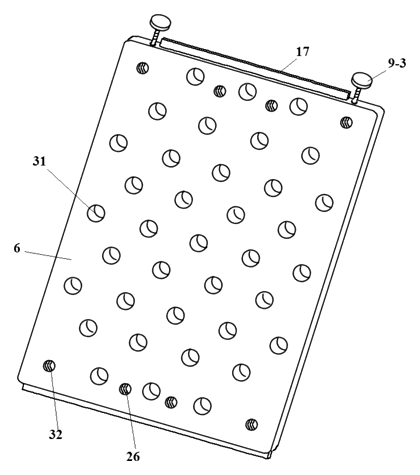
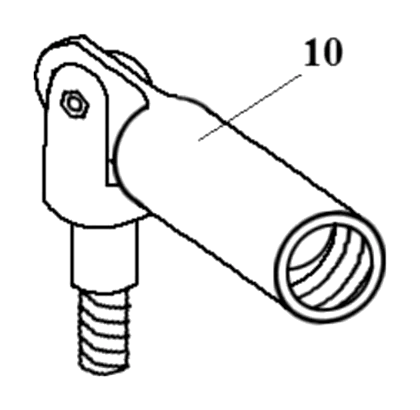
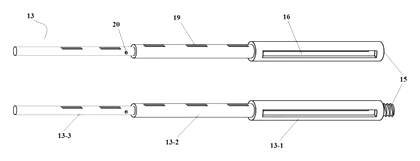
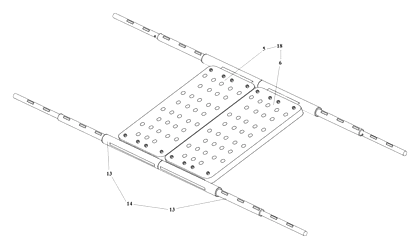
Claim 1 - A multifunctional field travel bag comprising a backpack main body, a height-adjustable support frame placed inside through an opening, and four three-stage telescopic rods. The frame tightens the backpack body to form a rest stool. The four rods splice into two stretcher lift bars. The lift bars, together with an upper support plate and a lower support plate detached from the frame, form an emergency stretcher. A stretcher support plate carries a protective liner with fastening straps threaded through fastening holes on the lift bars.
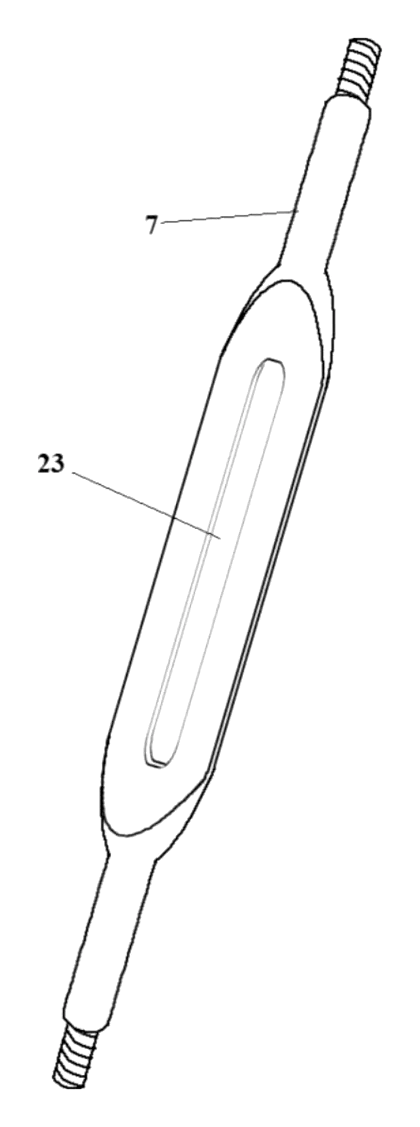
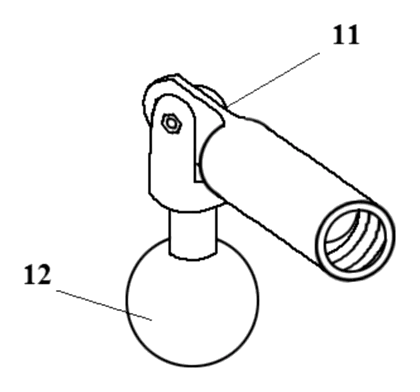
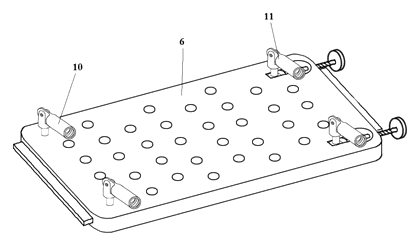
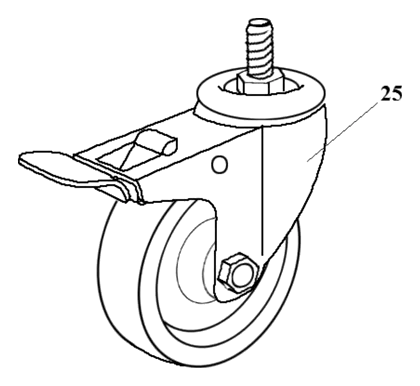
Claim 2 - The support rods cross each other and lock via a fastening bolt sliding in a strip hole in the middle of the rod. Claim 3 - The lower support plate has universal wheel mounting holes at its four corners for detachable universal wheels; the upper plate has a handle mounting hole accepting a telescopic rod as a handle to form an ambulance cart. Claim 4 - The cross-section size of the opening matches the cross-section of the backpack main body. Claim 5 - The bottom of the backpack main body has hard universal wheel mounts at its four corners for detachable wheels. Claim 6 - The top and bottom surfaces of the backpack have support plate accommodating compartments with elastic fixing rings to hold the rods and plates. Claim 7 - An elastic buffer layer is provided on the inner top surface of the backpack. Claim 8 - The upper and lower support plates have multiple through holes.
This is a simplified reading for orientation only. The legal scope is defined by the exact claim wording in the official Chinese document.
What this means for US production
This patent was filed only in China and is now lapsed due to non-payment of annual fees, so it no longer restricts anyone in China either. It has no US or other foreign counterpart.
Two points to settle early:
- Other patents may exist. Convertible backpacks, integrated stretcher systems and modular outdoor bags are active development areas. While no foreign patents cite this specific document, a freedom-to-operate (FTO) review covering frame mechanisms, telescopic rod splicing and wheel-mounting features is recommended before tooling.
- Structural load testing. The support frame and stretcher joints must bear human weight safely. Rod wall thickness, plate material and locking bolt shear strength are set in design and confirmed on prototypes.
Customization and manufacturing
What can be customized
| Area | Options |
|---|---|
| Bag volume and dimensions | To be confirmed in design based on target capacity |
| Fabric | Nylon, polyester, Cordura-type woven fabrics; DWR coating |
| Frame material | Aluminum alloy tubes, steel rods or reinforced polymer |
| Telescopic rods | Three-stage aluminum or steel; length and diameter set in design |
| Plates | Injection-molded plastic, stamped aluminum or composite panels |
| Wheels | Diameter, tread type and bearing grade for expected terrain |
| Color and branding | Custom dye lots, screen printing or woven labels |
Things to plan for (US market)
- FDA 21 CFR 880.6900 (hand-carried stretcher) - if the pack is marketed as an emergency stretcher, it is a Class I medical device; the seller or importer needs FDA establishment registration and device listing.
- California Proposition 65 - Fabric dyes, metal finishes and plastic compounds require screening for listed chemicals.
- Load rating and warnings - the rated load of the stool and stretcher modes is set in design and confirmed by load tests on prototypes, with pinch-point warnings for the telescopic poles and folding supports.
How a project runs
- Inquiry - Target user group, required modes, volume and quantity.
- Design - Frame geometry, rod splicing mechanism, plate shapes, compartment layout and wheel mounts.
- Prototype - Samples assembled for stool stability, stretcher load and cart rolling tests.
- Pilot run - Wear tests on hinges and locks, fabric abrasion checks, regulatory screening.
- Production - Cutting and sewing, tube bending or extrusion, plate molding or stamping, hardware finishing, final assembly.
Quantities & timeline
The project requires sewing patterns for the bag, tube-cutting and machining fixtures for the rods, molds or dies for the plates and wheel mounts, and custom hardware for the locking bolts and straps. Certification tests for materials and structural loads run during the pilot phase. Send us your target capacity, preferred materials, required modes, quantity and timeline and we will reply with options.
Patent drawings
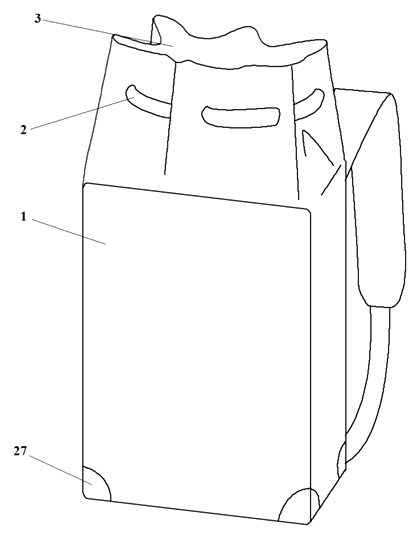
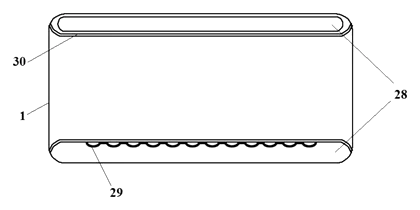
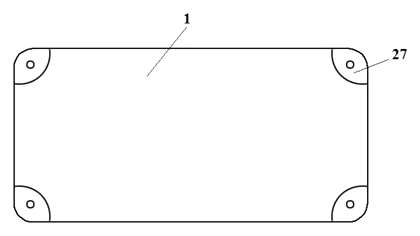
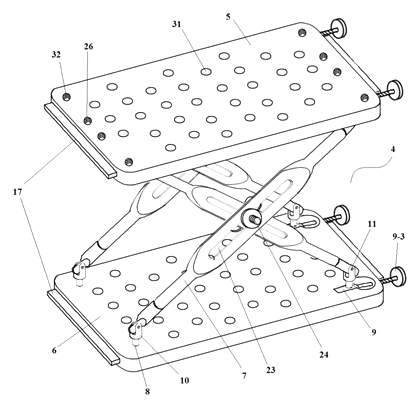
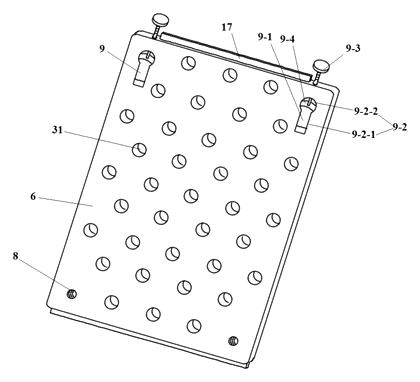
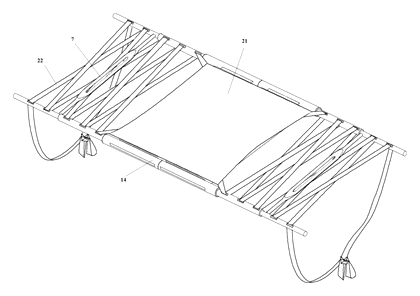
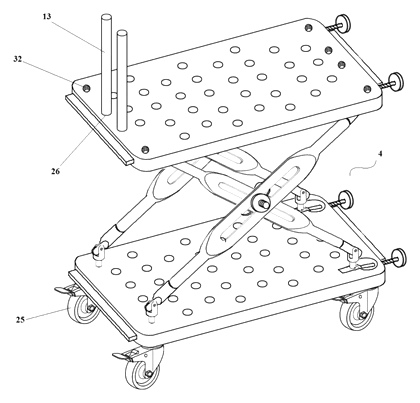
Drawings reproduced from the public patent document for reference.