
Patent CN107115645B
Updated November 1, 2026Golf Bag Club Protection Cover with Integrated Injection-Molded Hoop
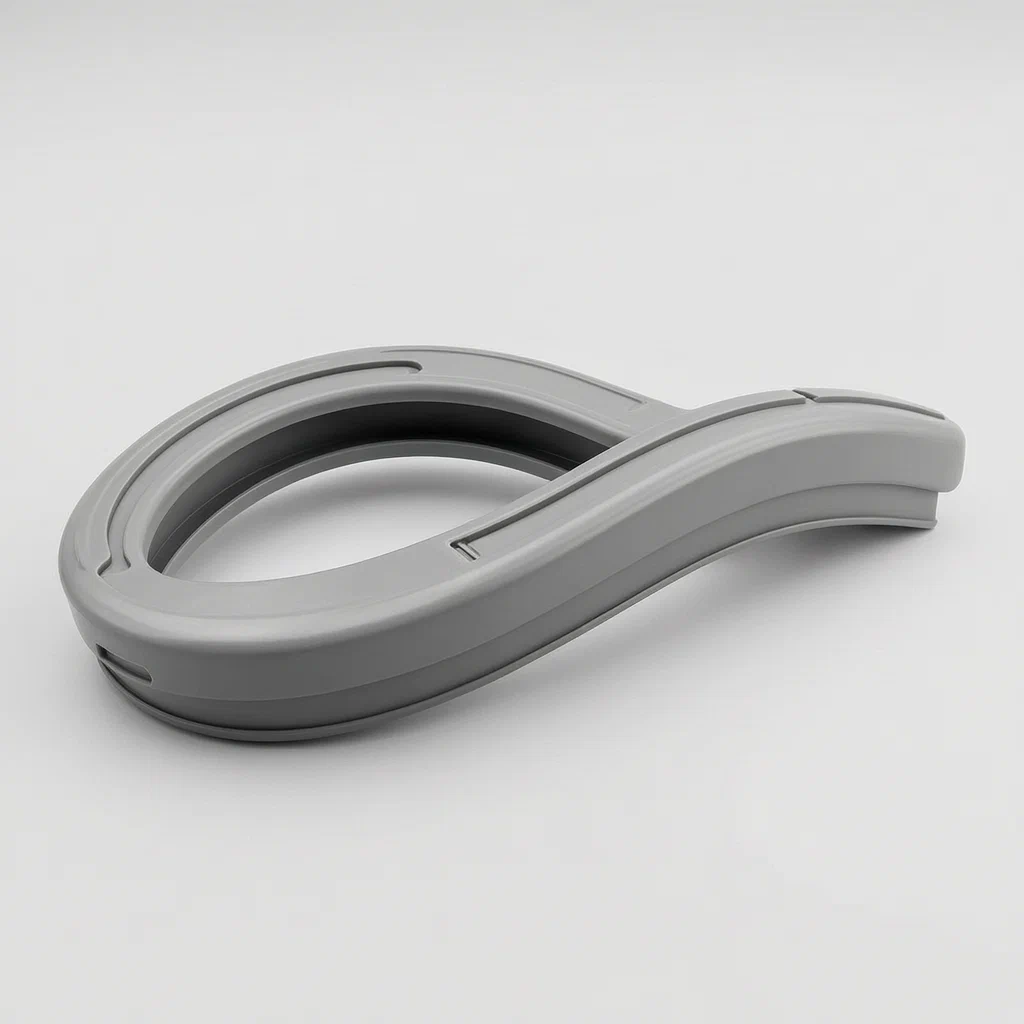
Traditional golf club covers often rely on complex sewing or multiple plastic parts to attach the zipper and secure the tube, leading to slow assembly and inconsistent quality. This patent describes a cover hoop integrally formed from hard material, typically via injection molding. The hoop features an outer ring with a deep positioning groove where the top of the fabric cover cylinder inserts. Inside, concentric rings create a channel that locks the zipper's lower tape in place. This single component replaces multiple fasteners, allowing the manufacturer to snap the fabric tube and zipper together quickly. It strengthens the upper end of the cover and provides a smooth, customizable surface for branding or color variation, significantly boosting mass-production speed.
- China invention patent - in force
- No filings outside China
- Golf accessories & hardware
- Injection-molded hoop, fabric tube, zipper integration
Splat! What let you down?
🏌️
Integrated Hoop Design
One injection-molded part connects the cover tube, liner, and zipper securely.
⚡
Fast Assembly
The positioning groove and chain receiving slot allow rapid snapping together of components.
🎨
Design Flexibility
Molding process enables diverse colors, textures, and logo integration on the hoop surface.
💰
Cost Efficient
Replaces complex multi-part assemblies with a single structural element for mass production.
Bring this product to market
- ✓ Patent vetted China-only family and legal status checked
- 2 Product brief · now How it works, uses and options written up
- 3 Prototype First samples for buyers to review
- 4 Pilot run Small first batch for launch customers
- 5 Volume production Repeat orders at scale
Buyer interest
– of 100 buyers needed to start prototyping
One click, no sign-up. Each vote is one real visitor, and products with the most interest go to prototyping first.
Build team: no members yet. Need a partner, co-funding or skills to build this? Join and we introduce the team once it forms.
The problem
Manufacturing golf club protective covers traditionally involves sewing multiple layers of fabric, inserting stiffeners, and attaching zippers with separate sliders or tapes. This process is labor-intensive and slow. Furthermore, connecting the fabric tube to the rigid opening requires precise stitching or gluing, which can fail over time due to weather exposure and repeated use. Inconsistent assembly leads to wobbly openings and poor aesthetics, making it difficult for brands to maintain consistent standards across large batches.
The solution
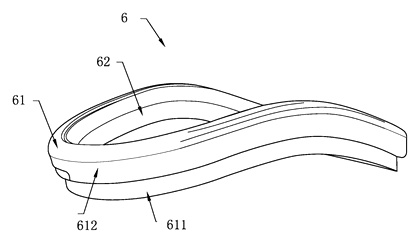
- A cover hoop (6) is integrally formed from hard material, preferably via one-time injection molding.
- The hoop comprises an outer hoop (61) and an inner collar (62) arranged concentrically.
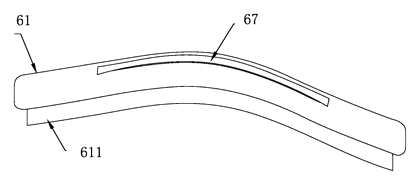
- The inner side wall of the outer hoop extends downward as a positioning ring (611), creating a positioning groove (63) between itself and the outer side wall (612).
- The cover cylinder (5) of the protective cover inserts its top edge into this positioning groove from bottom to top.
- The inner collar (62) is shorter than the positioning ring, leaving a chain receiving groove (64) between them.
- The zipper (71) lower tape fits into this chain receiving groove, locking the top cover assembly in place without additional fasteners.
Who it is for
- Golf accessory brands seeking to reduce assembly time and improve consistency in their headcover lines.
- OEM manufacturers looking for a standardized component that simplifies the final assembly step of club covers.
- Retailers who benefit from durable, aesthetically versatile products that withstand frequent handling.
- Product designers aiming to integrate branding directly into the structural hoop rather than relying solely on fabric printing.
How it works
The main parts
| No. | Part | What it does |
|---|---|---|
| 1 | Golf bag | Contextual item holding the covered clubs. |
| 4 | Protective cover | The assembled club guard unit. |
| 5 | Cover cylinder | The flexible fabric tube protecting the club shaft/head. |
| 6 | Cover hoop | The rigid injection-molded connector at the top. |
| 61 | Outer hoop | Forms the visible rim and mounting interface. |
| 611 | Positioning ring | Inner wall extension that grips the fabric tube. |
| 63 | Positioning groove | Channel where the tube’s top edge inserts. |
| 62 | Inner collar | Central ring supporting the zipper mechanism. |
| 64 | Chain receiving groove | Slot securing the zipper’s lower tape. |
| 7 | Top cover | The cap section including the zipper. |
| 71 | Zipper | Opens/closes the cover; tape locks into hoop. |
Opening and closing
- Insert the tube: The top edge of the fabric cover cylinder (5) snaps into the positioning groove (63) of the hoop (6).
- Secure the zipper: The lower tape of the zipper (71) slides into the chain receiving groove (64) between the inner collar (62) and positioning ring (611).
- Lock the liner: The inner liner (8) passes through the inner collar and is fixed to the tube wall, completing the assembly.
- Use the cover: The user lifts or presses the hoop to manage the cover’s position on the club, with the rigid structure maintaining shape.
Applications
Golf Headcovers
Drivers and fairway woods require sturdy tops to prevent deformation. The molded hoop provides rigidity while allowing colorful, branded designs that appeal to amateur and professional players alike.
Utility Iron Covers
Small irons need lightweight but durable covers. The simplified assembly reduces weight compared to traditional stitched structures, making these covers easier to store in the bag.
Retail Display Units
Brands can showcase their logo directly on the glossy or textured surface of the injection-molded hoop, turning a functional part into a marketing tool on shelves.
Custom Team Gear
Schools and clubs can order custom-colored hoops to match team uniforms. The molding process supports diverse color options without extra painting steps.
Where it is less suitable
- Heavy-duty industrial tools - not designed for weights beyond standard golf clubs.
- Soft-shell pouches - this design specifically addresses rigid-top club covers, not loose fabric bags.
- Ultra-low-cost disposable items - injection molds have higher upfront costs than simple sewn alternatives.
Frequently asked questions
Why use an injection-molded hoop instead of sewn rings?
The molded hoop provides consistent rigidity and shape retention, which sewn fabric rings lack. It also speeds up assembly because the fabric tube and zipper simply snap into pre-formed grooves, reducing labor costs and production time.
Can the hoop carry my brand logo?
Yes. The patent describes various surface options, including textured areas or flat surfaces suitable for pad printing, laser engraving, or direct molding of raised logos.
Does this design fit all golf clubs?
The hoop size can be customized in the mold design to fit drivers, fairway woods, hybrids, or irons. Each club type may require a different diameter and height profile.
Is the zipper securely attached?
Yes. The zipper’s lower tape locks into a dedicated chain receiving groove between the inner collar and the positioning ring, preventing it from pulling out during use.
What materials are used for the hoop?
Typically engineering plastics like ABS or PP, chosen for durability and ease of injection molding. Specific grades can be selected based on environmental resistance needs.
Can I change the color easily?
Yes. Since the hoop is molded, color is integral to the material. You can choose any standard or custom color without post-production painting, ensuring long-lasting vibrancy.
Can this design be made and sold in the US?
The patent is filed only in China and is in force there. There are no US patents claiming this specific structure. However, other companies like Acushnet hold related patents in the field. We recommend a freedom-to-operate check before volume sales in the US.
Are you affiliated with the patent owner?
No. IP2M is an independent design and manufacturing service working from the public patent document.
Request a quote
Click Request a Quote below to see our email address - copy it, or open your email app with a ready-made message. Please mention patent CN107115645B in the subject.
Helpful details to include:
- Your company and channel (golf brand, accessory retailer, OEM buyer)
- Club types (driver, iron, etc.) and required hoop dimensions
- Material preference (ABS, PP, etc.) and color requirements
- Logo or texture specifications
- Estimated quantity and target price
- Timeline - when you would like prototypes and first production run
You can also reach us at (332) 203-9997.
Explore this product
Interested in building this?
Tell us your target market, quantity and timeline. We reply with options for prototyping, small-batch runs or volume production.
Send your inquiry to
Please put CN107115645B in the subject line and tell us your company, country, estimated quantity and timeline.
Prefer to talk? Call (332) 203-9997.
More product-ready patents
All Sports & Recreation patents →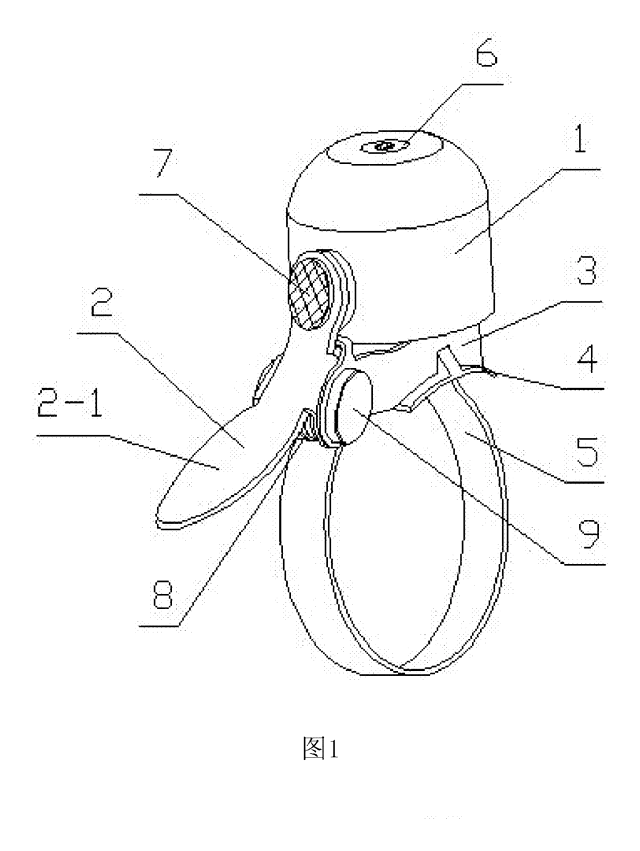
Sports & Recreation
Compact Torsion-Spring Bike Bell
Mini bike bell with a standard torsion spring and a rubber-floated dome - small size, clear tone, quick strap mount.
Patent CN205819384U
Sports & Recreation
Padded Toe-Box Shield for Sneakers
Ventilated, silicone-lined toe-box insert that supports the front of a sneaker and cushions the toes.
Patent CN209473731U
Sports & Recreation
Reversible Fishing Seat-Box Lid with Backrest
Fishing seat-box lid that flips on removable hinge pins: cushion, backrest and storage on one face.
Patent CN208624426U
Sports & Recreation
Swivel-Pin Skateboard Truck with Rubber Sleeve
Skateboard truck with a turning center pin, a tilting axle clamp and a rubber sleeve that centers it.
Patent CN216777880U
Sports & Recreation
Full-Face Bike Helmet with Magnetic Detachable Chin Bar
Full-face cycling helmet whose chin bar clips on and off with magnetic, latching side connectors.
Patent CN206630067U
Sports & Recreation
Bike Phone Holder with Built-In Flashlight Clamp
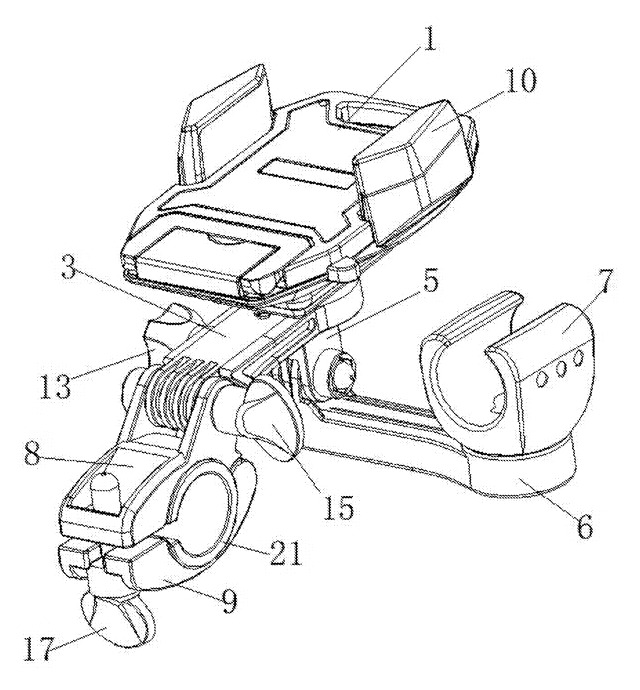
Handlebar mount with a phone cradle on top and a flashlight clamp below, on one arm.
Patent CN206077485U
Browse by category
- Apparel & Accessories (25)
- Baby & Kids (19)
- Bags & Luggage (12)
- Bath & Personal Care (19)
- Car Accessories (14)
- Furniture, Bedding & Storage (14)
- Garden & Outdoor (21)
- Health & Wellness (9)
- Home, Kitchen & Cleaning (31)
- Lighting (14)
- Packaging & Containers (7)
- Pet Products (7)
- Phone & Camera Accessories (5)
- Retail Display (15)
- School, Office & Art (21)
- Sports & Recreation (28)
- Tools & Workshop (33)
- Toys & Games (15)
This page is based on the public patent document CN107115645B, assigned to Dongguan Hongxiang Sports Products Co ltd. IP2M is an independent manufacturing service and is not affiliated with, endorsed by or licensed by the patent owner. Images marked as concept renderings are illustrations, not photos of an existing product. Patent status information is provided for reference only and is not legal advice; confirm freedom to operate for your market before production. Full disclaimer.