
Patent CN107139623B
Updated November 3, 2026Automatic Pen Feeding Pencil Sharpener with Motorized Rotation
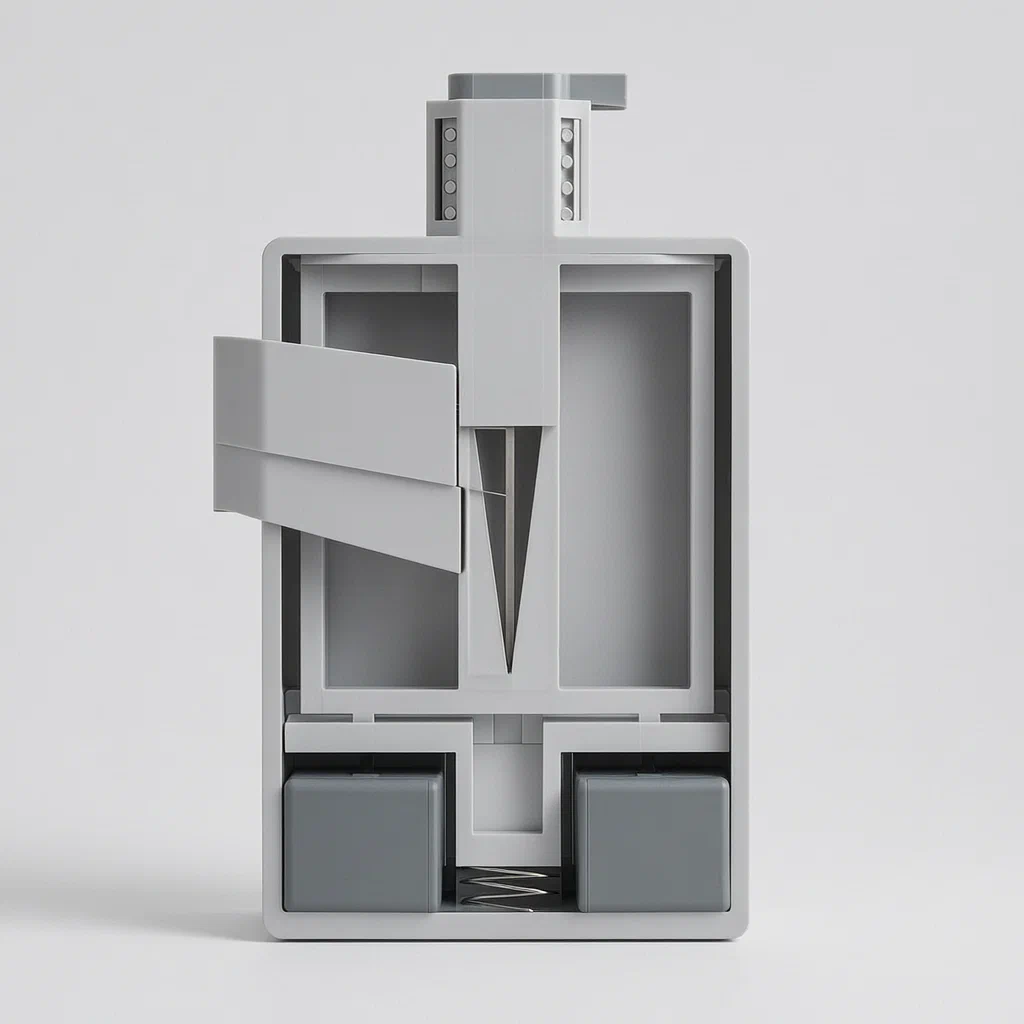
Manual sharpeners require steady hand pressure, leading to uneven points or broken leads. This design automates the feed. Inside a cylindrical shell, a motor drives a rotating slot containing the blade. Above it, a sliding panel holds the pencil. A spring-loaded clamping head pushes the panel downward against the rotation. As the blade cuts, the spring maintains constant pressure, feeding the pencil automatically until the point is formed. The structure separates the power source, the drive, and the feed mechanism into distinct vertical zones within one compact tube.
- China invention patent - active
- No filings outside China
- Office & School Supplies
- Battery-powered, motor-driven, spring feed
Splat! What let you down?
🔄
Motorized Cutting
A DC motor drives the rotation slot and blade assembly directly from the battery.
⬇️
Spring Auto-Feed
Clamping heads use spring tension to push the pencil down as the blade cuts.
🔋
Compact Power
Battery cavity sits below the cover board, connecting via static contacts to the moving panel.
🛡️
Safety Stops
Guide rails and sliding slots prevent rotation of the feed panel, keeping motion linear.
Bring this product to market
- ✓ Patent vetted China-only family and legal status checked
- 2 Product brief · now How it works, uses and options written up
- 3 Prototype First samples for buyers to review
- 4 Pilot run Small first batch for launch customers
- 5 Volume production Repeat orders at scale
Buyer interest
– of 100 buyers needed to start prototyping
One click, no sign-up. Each vote is one real visitor, and products with the most interest go to prototyping first.
Build team: no members yet. Need a partner, co-funding or skills to build this? Join and we introduce the team once it forms.
The problem
Traditional manual pencil sharpeners rely on the user’s hand strength to hold the pencil against the blade. If the pressure varies, the lead breaks or the wood shaves unevenly. Electric models often have complex gears or separate motors for feeding and cutting, increasing cost and failure rates. Users also struggle with knowing when the pencil is sharp enough, as there is no automatic stop based on depth. This patent addresses these issues by combining a simple motor drive with a mechanical spring feed, eliminating the need for precise hand control while keeping the internal structure straightforward.
The solution
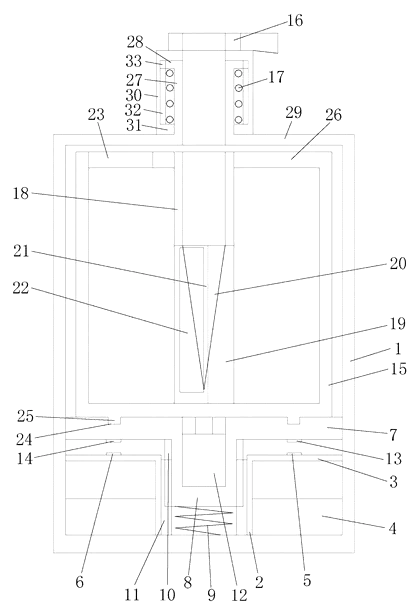
- Cylindrical Shell Structure: The device consists of a main cylindrical shell. At the lower end inside, a cylindrical coaming plate is fixed. An annular cover board sits between the upper end of this plate and the shell wall.
- Power Distribution: Below the cover board is a battery cavity holding the power source. Above the cover board are static anode and cathode contacts. These connect electrically to the moving parts above.
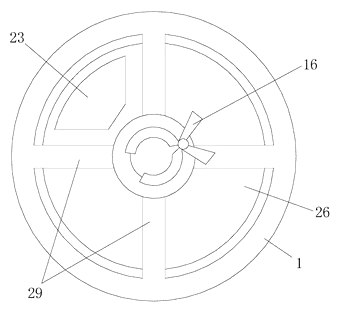
- Sliding Feed Panel: A circular sliding panel is positioned inside the shell. Its lower end features a downward-projecting cylindrical guide post. This post fits inside the coaming plate. Vertical sliding slots on the post engage with draw runners on the plate’s inner wall, ensuring the panel moves up and down without rotating.
- Spring Clamping Mechanism: Between the bottom of the guide post and the shell floor, a first dynamic clamping head and quiet clamping head (springs) are installed. These provide the upward or downward force needed to press the pencil.
- Motor Drive Unit: Inside the guide post, an accommodating chamber houses a DC motor. The motor’s output shaft extends upwards. Dynamic anode and cathode contacts on the sliding panel align with the static contacts on the cover board to complete the circuit.
- Rotation Slot and Blade: Above the sliding panel is a cylindrical rotation slot. Its bottom end is fixed to the motor’s output shaft. Inside the slot’s bottom surface lies the cutting apparatus (blade). A solid pen device guides the pencil into the second opening located at the top surface.
- Outer Propulsive Mechanism: On the exterior, a propulsive mechanism includes an inner sleeve and an outer tube. The inner sleeve is fixed to the shell. The outer tube slides over it. Between their edges, a second dynamic clamping head and quiet clamping head operate. The outer tube top has a clamping device to hold the pencil.
Who it is for
- Educational Toy Manufacturers producing battery-operated desk accessories for primary school students who need easy-to-use tools.
- Office Supply Brands looking to offer affordable, entry-level electric sharpeners that do not require complex gearboxes.
- Promotional Product Suppliers needing a small, cylindrical device that can be customized with logos on the outer tube and shell.
- Amazon Sellers targeting the “back to school” niche with a product that solves the common complaint of breaking leads during manual sharpening.
How it works
The main parts
| No. | Part | What it does |
|---|---|---|
| 1 | Shell | Main cylindrical housing. |
| 2 | Coaming Plate | Inner cylinder guiding the vertical movement. |
| 3 | Cover Board | Separates battery area from the motor area; holds static contacts. |
| 4 | Battery | Powers the motor. |
| 7 | Sliding Panel | Moves vertically; carries the motor and rotation slot. |
| 8 | Guide Post | Houses the motor; slides within the coaming plate. |
| 9, 17 | Clamping Heads | Springs that apply pressure to feed the pencil. |
| 12 | Motor | Rotates the blade assembly. |
| 15 | Rotation Slot | Holds the blade; connected to motor shaft. |
| 18 | Solid Pen Device | Guides the pencil into the cutter. |
| 22 | Blade | Cuts the wood and lead. |
| 30 | Outer Tube | External sliding component for grip/feeding. |
Operating Steps
- Insert Pencil: The user places the pencil into the top opening. The outer tube and inner sleeve clamp the pencil body.
- Activate Switch: Pressing the switch connects the battery to the motor via the static and dynamic contacts.
- Start Rotation: The motor spins the output shaft, which rotates the rotation slot and the attached blade.
- Auto-Feed Action: As the blade cuts into the wood, resistance builds. The spring-loaded clamping heads allow the sliding panel and guide post to move downward slightly. This motion pushes the pencil deeper into the cutting zone automatically.
- Completion: Once the pencil reaches the desired length or the cut finishes, the user removes the pencil. The springs return the panel to its resting position.
Applications
Elementary School Classrooms
Young students often lack the fine motor skills to hold a pencil steadily against a manual sharpener. This auto-feed model allows them to insert the pencil and press a button, reducing lead breakage and frustration during art or writing sessions.
Home Office Desks
For adults who write occasionally but dislike the mess and effort of manual sharpening, this compact unit fits easily on a desk. The cylindrical shape saves space compared to boxy electric models, and the automatic feed ensures a quick, uniform point without waiting.
Promotional Giveaways
The large surface area of the outer tube and shell provides ample space for branding. Companies can distribute these low-cost, functional items at trade shows or schools, offering a practical tool that keeps the brand visible during daily use.
Library and Public Computer Stations
Public spaces need durable, simple devices that resist tampering. With fewer external gears than complex electric sharpeners, this design minimizes exposed moving parts. Users can sharpen pencils quickly without needing instruction on how to apply pressure.
Where it is less suitable
- Professional Draftsmen: Precision architects may prefer high-end electric sharpeners with adjustable angle settings, which this basic fixed-blade design lacks.
- Heavy Industrial Use: The plastic components and standard battery power are not rated for continuous, heavy-duty manufacturing environments.
- Lead-Free Pencils: While it sharpens standard graphite, specialized colored pencils with different hardness levels may require adjusted spring tension not provided in the base patent.
Frequently asked questions
How does the “automatic feeding” actually work?
It uses a spring-loaded mechanism rather than a second motor. When you press the pencil into the holder, the internal sliding panel moves down. The motor spins the blade, and as the blade cuts through the wood, the resistance naturally pushes the pencil further down into the cut. The springs assist this downward movement, ensuring the pencil doesn’t get stuck halfway.
Does it break pencil leads easily?
The design aims to reduce breakage caused by uneven hand pressure. Because the feed is controlled by the spring and the blade’s rotation, the pressure is more consistent than manual sharpening. However, very soft leads (like 6B) may still require gentle insertion, as the patent does not specify adjustable pressure settings.
What batteries does it use?
The patent mentions a “battery cavity” and “knob battery” (likely referring to standard cylindrical cells like AA or AAA, or potentially coin cells depending on the specific motor chosen). The exact battery size is determined during the design phase based on the selected DC motor’s voltage and current requirements.
Is it safe for young children?
The device contains a rotating blade and electrical contacts. While the outer tube covers much of the mechanism, ASTM F963 standards for toys apply if sold to children. Parents should supervise use. The design avoids exposed gears, but the blade opening remains a hazard point typical of all sharpeners.
Can I customize the color and logo?
Yes. The shell and outer tube are ideal for injection molding in custom colors. Branding can be added via pad printing or laser engraving on the cylindrical surfaces. We can match specific Pantone codes for school programs or corporate gifts.
How long does the motor last?
The patent does not specify a motor lifespan. Durability depends on the quality of the DC motor sourced during production. For B2B orders, we recommend selecting motors rated for at least 500-1000 hours of operation, verified through prototype testing.
Can this design be made and sold in the US?
The patent is filed only in China and is active there. It does not restrict sales in the US. However, you must conduct a freedom-to-operate check to ensure no existing US patents on electric sharpeners are infringed. Manufacturing in China would require licensing from the patent owner, Xu Xuejiao.
Are you affiliated with the patent owner?
No. IP2M is an independent design and manufacturing service working from the public patent document.
Request a quote
Click Request a Quote below to see our email address - copy it, or open your email app with a ready-made message. Please mention patent CN107139623B in the subject.
Helpful details to include:
- Your company and channel (educational supplier, office goods distributor, promo item buyer)
- Target retail price and estimated volume
- Battery preference (AA, AAA, or rechargeable USB option?)
- Customization needs (colors, logo placement, packaging style)
- Certification requirements (do you need ASTM F963 or CPSIA testing?)
- Timeline - when you need samples and bulk delivery
You can also reach us at (332) 203-9997.
Explore this product
Interested in building this?
Tell us your target market, quantity and timeline. We reply with options for prototyping, small-batch runs or volume production.
Send your inquiry to
Please put CN107139623B in the subject line and tell us your company, country, estimated quantity and timeline.
Prefer to talk? Call (332) 203-9997.
More product-ready patents
All School, Office & Art patents →
School, Office & Art
Long-Point Sketch Pencil Sharpener
Crank sharpener that cuts only the wood of sketch pencils, leaving a long, round lead about 30 mm long.
Patent CN207241257U
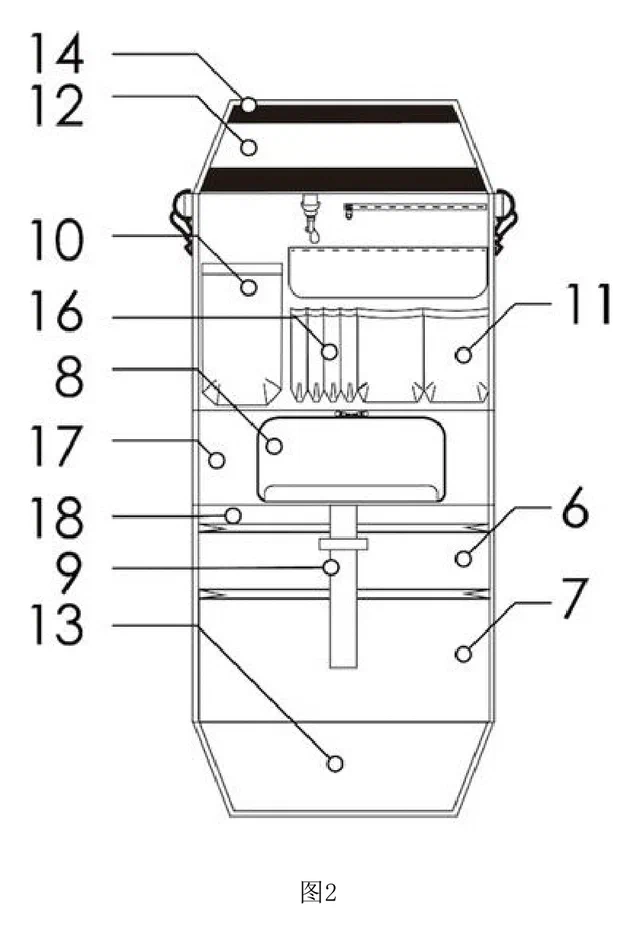
School, Office & Art
Fold-Out Desk Organizer Insert for School Backpacks
Backpack insert that unfolds into a hanging desk organizer for workbooks, stationery and a water bottle.
Patent CN209436546U
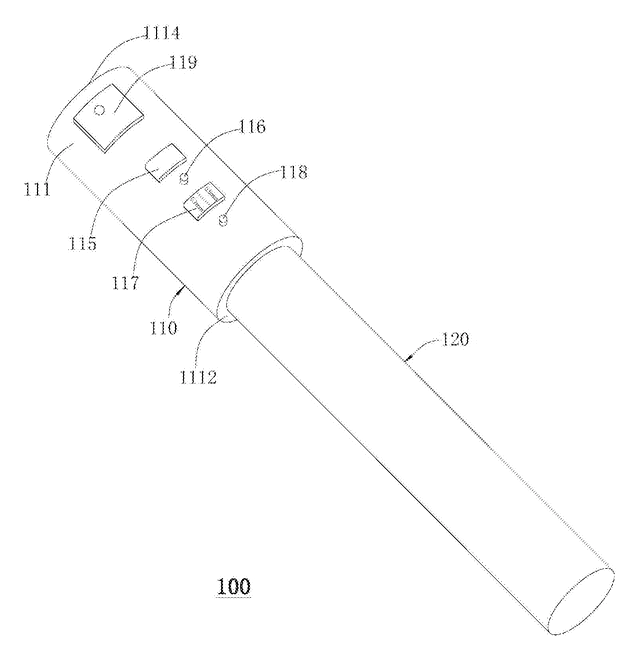
School, Office & Art
Smart Pencil Cap That Checks the Point with a Camera
Electronic pencil cap that photographs the point, measures it and reminds you to sharpen.
Patent CN106427302B
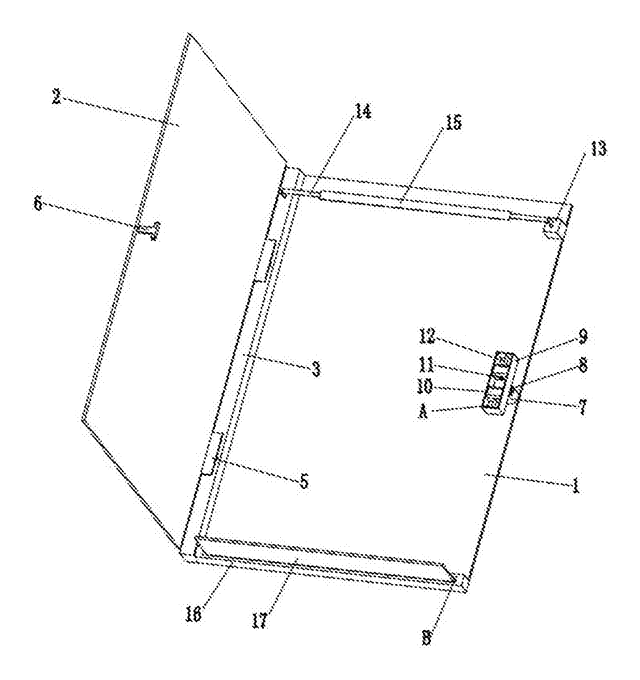
School, Office & Art
Expanding Clipboard Folder with Spring-Mounted Hinge and Catch
Hard folder whose spring-mounted hinge and catch let the cover clamp any thickness of paper.
Patent CN105667120B
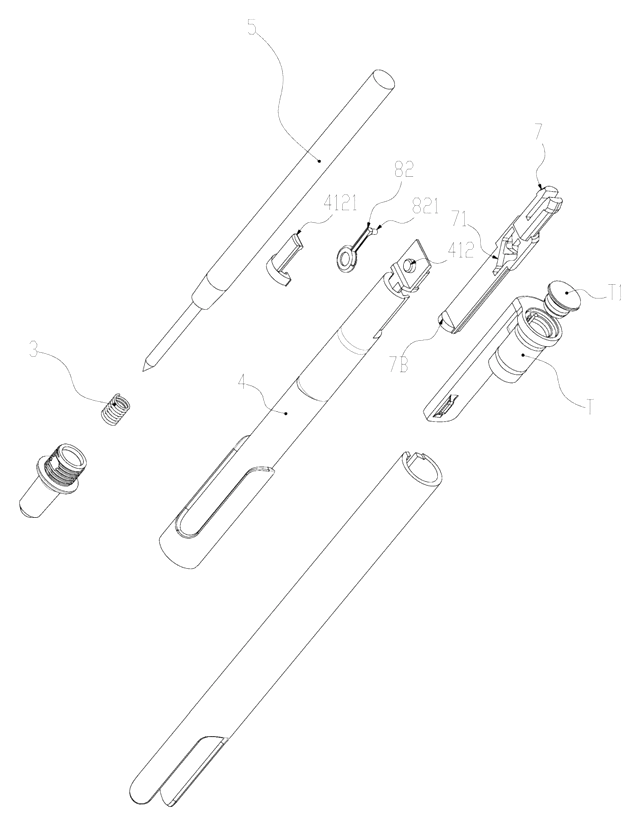
School, Office & Art
Slide-Action Retractable Pen with a Friction-Loaded Cam That Ignores Gravity
Slide-action retractable pen whose spring-pressed cam latch stays put whichever way the pen is held.
Patent CN217671900U
School, Office & Art
Carousel Business Card Holder with Rolling Card Trays on Twin Ring Tracks
Desk card holder: angled card trays roll on wheels around two concentric ring tracks and lift out.
Patent CN105774300B
Browse by category
- Apparel & Accessories (31)
- Baby & Kids (23)
- Bags & Luggage (14)
- Bath & Personal Care (23)
- Car Accessories (19)
- Furniture, Bedding & Storage (17)
- Garden & Outdoor (25)
- Health & Wellness (11)
- Home, Kitchen & Cleaning (36)
- Lighting (18)
- Packaging & Containers (9)
- Pet Products (8)
- Phone & Camera Accessories (7)
- Retail Display (19)
- School, Office & Art (27)
- Sports & Recreation (33)
- Tools & Workshop (41)
- Toys & Games (18)
This page is based on the public patent document CN107139623B, assigned to Xu Xuejiao. IP2M is an independent manufacturing service and is not affiliated with, endorsed by or licensed by the patent owner. Images marked as concept renderings are illustrations, not photos of an existing product. Patent status information is provided for reference only and is not legal advice; confirm freedom to operate for your market before production. Full disclaimer.