At a glance
| Patent number | CN107139623B (application CN201710262862) |
| Type | China invention patent (发明专利) - protects product structure and method |
| Original title | Automatic pen feeding pencil sharpener (自动送笔削笔器) |
| Patent owner | Xu Xuejiao |
| Inventors | Fan Zihui |
| Filing date | 2017-04-20 |
| Grant date | 2018-12-28 |
| Status (China) | In force - valid until at most 2037-04-20, contingent on payment of annual fees |
| Patent family | Chinese filings only - no US, European, Japanese, PCT or other filings listed |
| Cited by | 0 later documents |
| Source | Google Patents (search for CN107139623B) |
What the claims cover, in plain language
Claim 1 defines an automatic pencil sharpener comprising a cylindrical shell. Inside, a coaming plate is fixed at the lower end, with an annular cover board above it. A battery cavity sits below the cover board. The core mechanism involves a sliding panel with a downward guide post that moves vertically within the coaming plate using sliding slots and draw runners to prevent rotation. A motor is housed in the guide post. Electrical connection is made via static contacts on the cover board and dynamic contacts on the sliding panel. The motor drives a rotation slot containing the cutting apparatus (blade). A solid pen device guides the pencil. Externally, a propulsive mechanism consisting of an inner sleeve and outer tube interacts with clamping heads (springs) to feed the pencil.
Claim 2 specifies that the upper surface of the sliding panel has an annular rotation slideway, and the bottom of the rotation slot has a matching rotation sliding rail, allowing smooth rotational alignment.
Claim 3 details the cutting apparatus, including a shell with a cutting chamber and a specific arrangement of the blade relative to the opening.
This is a simplified reading for orientation only. The legal scope is defined by the exact claim wording in the official Chinese document.
What this means for US production
This patent was filed only in China and is currently in force in that jurisdiction. It has no US or other foreign counterpart. Therefore, the patent itself does not restrict making or selling this specific design in the United States. However, because it is still active in China, manufacturing the product in China requires permission from the patent owner, Xu Xuejiao.
Two points to settle early:
- Other patents may exist. Electric pencil sharpeners are a crowded field. Major US brands like Staedtler, Faber-Castell, and X-ACTO hold numerous patents on gear trains, safety switches, and blade assemblies. A freedom-to-operate (FTO) review is essential to ensure your specific implementation does not infringe on existing US utility patents.
- Component Sourcing. The design relies on specific contact arrangements (static/dynamic) and spring-loaded feeds. Ensure suppliers provide consistent spring rates and contact materials to maintain the “auto-feed” functionality described.
Customization and manufacturing
What can be customized
| Area | Options |
|---|---|
| Color & Finish | Injection molded ABS/PP shells in various Pantone colors; matte or glossy finishes. |
| Branding | Pad printing or laser engraving on the outer tube and shell surfaces. |
| Blade Type | Standard carbon steel blades or stainless steel variants for durability. |
| Battery Compartment | Size adjustment for AA, AAA, or coin cell configurations depending on motor choice. |
| Grip Texture | Ribbed or rubberized coatings on the outer tube for better handling. |
| Switch Location | Placement of the activation button on the side or top for ergonomic preference. |
Things to plan for (US market)
- ASTM F963 - Consumer Safety Specification for Toy Safety. If marketed to children under 14, strict requirements apply to small parts, batteries, and sharp edges.
- CPSC Battery Compliance - Rules regarding button cell batteries (if used) to prevent ingestion hazards.
- UL/ETL Certification - While battery-operated devices often fall outside mandatory UL listing for general electronics, retailers may require safety testing for electrical components.
- California Prop 65 - Plastics and metal components must be screened for lead, cadmium, and phthalates.
How a project runs
- Inquiry - Define target age group, battery type, and color scheme.
- Design - Finalize mold layouts for shell, sliding panel, and guide post; select motor specs.
- Prototype - 3D print housings and assemble with off-the-shelf motors/blades to test feed mechanism.
- Pilot Run - Tooling for injection molds; assembly line setup; safety testing (drop tests, battery leakage).
- Production - Mass molding, silk screening, final assembly, and packaging.
Quantities & timeline
Injection molds for the cylindrical shell and internal sliding components are required. The complexity lies in the alignment of the static and dynamic contacts. Lead times depend on mold fabrication (typically 4-6 weeks) and certification testing. Send us your target retail price, quantity, and color preferences and we will reply with options.
Patent drawings
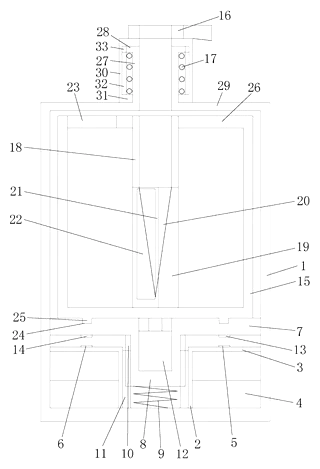
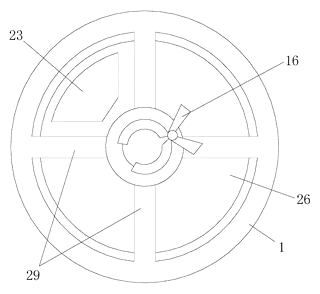
Drawings reproduced from the public patent document for reference.