
Patent CN107175956B
Updated October 27, 2026Automatic Retractable Writing Pen with Magnetic Return and Grip-Activated Pressing Body
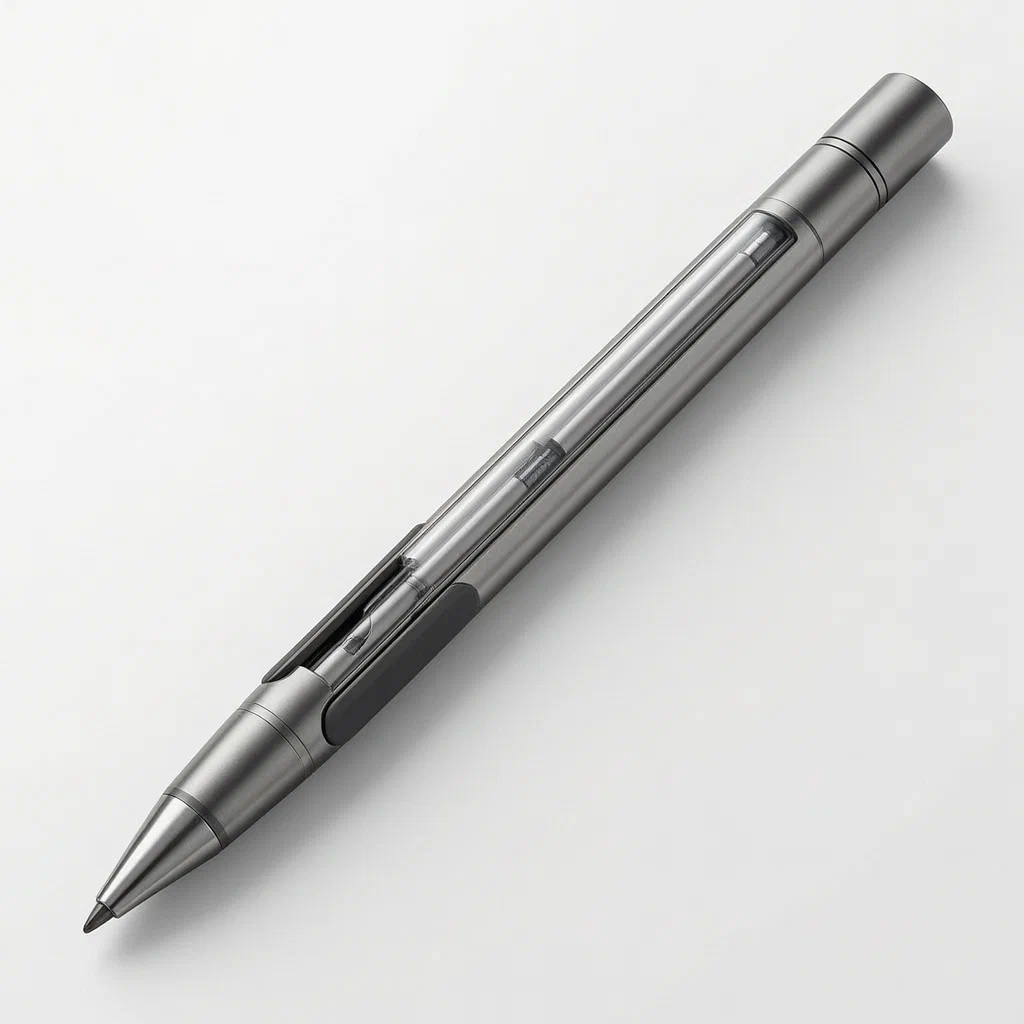
Most retractable pens rely on a spring-loaded clicker or twist mechanism at the top of the barrel. This design removes that hardware entirely. Instead, squeezing the grip area pushes the refill out, and releasing your hand lets two small magnets pull it back in. Inside the grip section, three elastic pressing bodies sit in mounting holes around the barrel. Each pressing body has a hemispherical protrusion at its front end that rests against a conical sleeve fixed on the refill. When you squeeze the barrel, the pressing bodies flex inward, their protrusions slide down the taper of the sleeve, and drive the refill forward until the tip extends through the cap opening. At the rear of the pen holder and the rear of the refill, a first magnet and a second magnet are fixed with opposite polarities facing each other. As long as you hold the grip, the mechanical push overcomes the magnetic attraction. Let go, and the magnets draw the refill smoothly back into the barrel. An isolation ring near the first magnet prevents the two magnets from snapping together and sticking, while annular limit rings keep the refill centered during travel. The result is a pen with fewer moving parts than a standard click pen, designed for everyday writing tasks.
- China invention patent - in force
- No filings outside China
- Writing instruments
- Elastic pressing bodies, magnets, conical sleeve
Splat! What let you down?
🧲
Magnetic return
Opposite-polarity magnets at the tails of the holder and refill pull the tip back when grip pressure is released.
✊
Grip-activated extension
Squeezing the barrel flexes elastic pressing bodies that push a conical sleeve to advance the refill.
⚙️
No clicker mechanism
Eliminates springs, ratchets and twist parts, reducing the component count for assembly.
🔄
Replaceable refill
Accepts standard ballpoint or gel-ink refills so the pen holder structure can be reused.
Bring this product to market
- ✓ Patent vetted China-only family and legal status checked
- 2 Product brief · now How it works, uses and options written up
- 3 Prototype First samples for buyers to review
- 4 Pilot run Small first batch for launch customers
- 5 Volume production Repeat orders at scale
Buyer interest
– of 100 buyers needed to start prototyping
One click, no sign-up. Each vote is one real visitor, and products with the most interest go to prototyping first.
Build team: no members yet. Need a partner, co-funding or skills to build this? Join and we introduce the team once it forms.
The problem
Standard retractable pens use a clicker, cam or twist mechanism at the top of the barrel to extend and lock the refill. These mechanisms add multiple small plastic or metal parts—a plunger, a spring, a rotating cam—that must be assembled precisely. When any of those parts wears out or breaks, the entire pen is usually discarded. For buyers sourcing large volumes of promotional or everyday office pens, the complexity of the internal mechanism drives up unit cost and increases the chance of assembly defects. Additionally, users who prefer a smooth barrel without a protruding click button have few options outside of capped pens, which risk losing the cap or drying out the tip if left uncapped.
The solution
This pen replaces the clicker and locking mechanism with a grip-squeeze action and a magnetic return system.
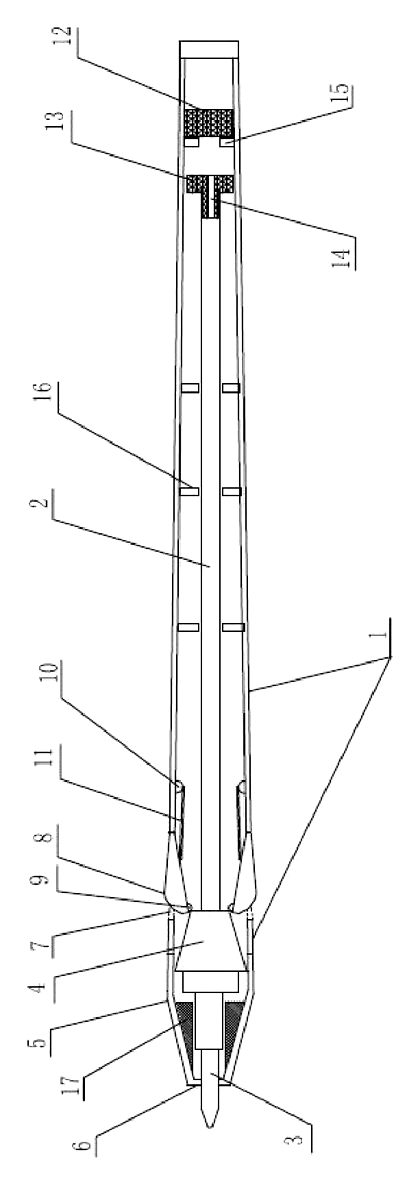
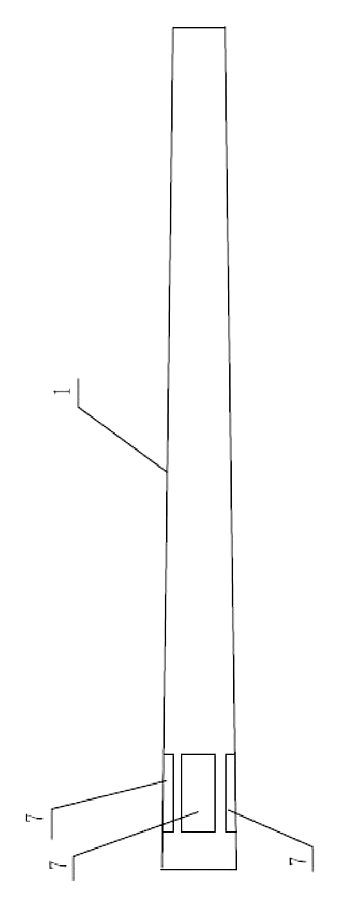
- The pen holder (1) contains a refill (2) that slides freely through annular limit rings (16) spaced along the inner wall.
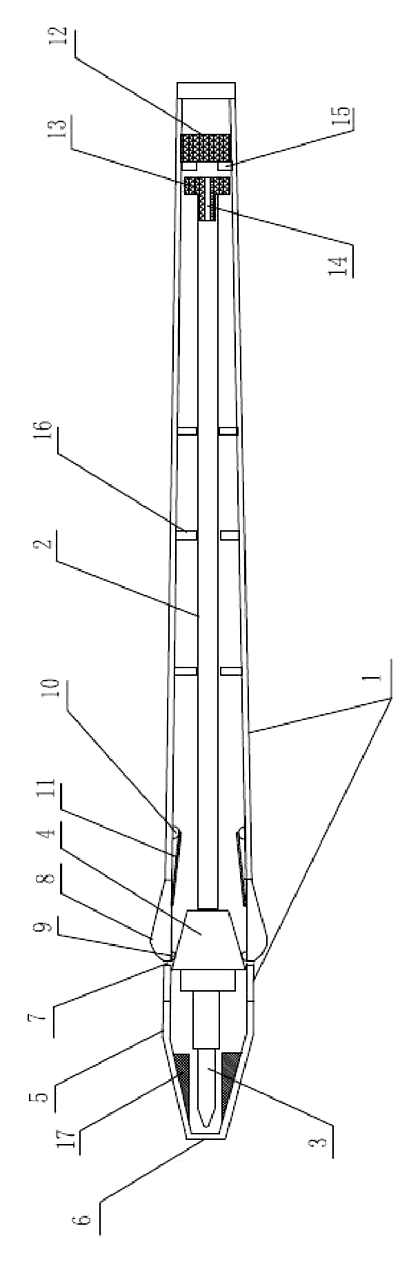
- At the grip section, three mounting holes (7) are spaced equally around the circumference. Each hole holds a pressing body (8) made of elastic material, connected to the barrel at its tail end.
- The front end of each pressing body carries a hemispherical protrusion (9) (or a roller or ball) that rests against a conical sleeve (4) fixed on the refill.
- Squeezing the grip flexes the pressing bodies inward. Their protrusions ride down the tapered surface of the conical sleeve, pushing the refill forward so the nib (3) extends through the opening (6) of the pen cap (5).
- A first magnet (12) is fixed at the tail of the pen holder, and a second magnet (13) is fixed at the tail of the refill. They are oriented with opposite polarities facing each other.
- When the user releases the grip, the elastic pressing bodies return outward, and the magnetic attraction between the two magnets pulls the refill back into the barrel automatically.
- An isolation ring (15) near the first magnet prevents the two magnets from touching directly, ensuring they separate easily on the next squeeze.
Who it is for
- Promotional product distributors looking for a pen with a distinct squeeze-to-write action that stands out from standard click pens at trade shows.
- Office and school supply brands seeking to simplify barrel assembly by removing clicker springs and cams from their product lines.
- Wholesalers of stationery who want a reusable pen holder design where only the standard refill needs replacing once the ink runs out.
- Industrial design firms prototyping ergonomic writing tools that rely on natural hand-grip pressure rather than thumb-operated buttons.
How it works
The main parts
| No. | Part | What it does |
|---|---|---|
| 1 | Pen container (holder) | Main barrel housing the refill and magnets. |
| 2 | Pen core (refill) | Holds the ink; slides forward and back. |
| 3 | Nib | Writing tip at the front of the refill. |
| 4 | Taper sheath (conical sleeve) | Fixed on the refill; receives push from the pressing bodies. |
| 5 | Pen cap | Conical front cover threaded onto the pen container. |
| 6 | Opening | Hole in the pen cap for the nib to pass through. |
| 7 | Mounting hole | Holes in the grip section holding the pressing bodies. |
| 8 | Pressing body | Elastic elements that flex inward when squeezed. |
| 9 | Hemisphere jut | Protrusion on the pressing body contacting the taper sheath. |
| 10 | Elastic piece fixed station | Mounting point on the inner wall for the elastic piece. |
| 11 | Elastic piece | Metal strip contacting the inner side of the pressing body. |
| 12 | First magnet | Fixed at the tail of the pen container. |
| 13 | Second magnet | Nail-shaped magnet fixed at the tail of the pen core. |
| 14 | Venthole | Through-hole in the second magnet for air flow. |
| 15 | Isolation circle (ring) | Prevents direct contact between the first and second magnets. |
| 16 | Spacing collar (limit ring) | Annular rings guiding the pen core inside the barrel. |
| 17 | Nib limit body | Stopper inside the pen cap matching the nib shape. |
Operating steps
- Rest state - The magnetic attraction between the first magnet (12) and second magnet (13) holds the refill retracted inside the pen cap (5). The pressing bodies (8) flare outward naturally.
- Extend - The user squeezes the grip section. The pressing bodies (8) flex inward, and the hemispherical protrusions (9) slide down the conical sleeve (4), pushing the refill (2) forward against the magnetic pull.
- Write - The nib (3) passes through the opening (6). The nib limit body (17) inside the cap prevents shaking during writing.
- Retract - The user relaxes their grip. The pressing bodies spring back, and the opposite-polarity magnets attract, pulling the refill smoothly back into the barrel. The isolation ring (15) stops the magnets from snapping together permanently.
Applications
Office desk use
Workers who write intermittently throughout the day can extend the tip simply by tightening their grip and release it by relaxing their hand. This avoids the repetitive clicking noise common in open-plan offices. The simple mechanism reduces the chance of a broken clicker rendering the pen useless.
Promotional giveaways
Brands distributing pens at events benefit from a unique squeeze-action that draws attention compared to standard barrels. Because the pen holder accepts standard ballpoint or gel refills, recipients can continue using the branded barrel long after the initial ink supply is exhausted.
School and classroom supplies
Students frequently lose pen caps or break click mechanisms by fidgeting. A grip-activated pen with automatic magnetic return eliminates loose caps and complex internal parts. The replaceable refill design also supports reuse across school terms.
Ergonomic writing tools
Users who experience thumb fatigue from operating stiff clickers can rely on the broader muscle groups of the hand grip to extend the tip. The elastic pressing bodies require only moderate squeeze pressure to advance the conical sleeve.
Where it is less suitable
- Precision drafting - Technical drawing often requires a rigid, locked tip without any potential play; this design relies on grip pressure to maintain extension.
- Heavy-duty marking - Industrial markers used on rough surfaces need robust locking mechanisms to withstand high downward writing force.
- Very thin barrel profiles - The mounting holes, pressing bodies and conical sleeve require a minimum barrel diameter, making ultra-slim pen formats difficult to achieve.
Frequently asked questions
How does the pen extend without a clicker?
Three elastic pressing bodies sit in holes around the grip section. When you squeeze the barrel, their hemispherical protrusions press against a conical sleeve on the refill, sliding it forward until the nib comes out of the cap. There is no spring-loaded plunger or ratchet.
How does the refill retract?
A first magnet is fixed at the tail of the pen holder and a second magnet at the tail of the refill, oriented with opposite polarities. When you relax your grip, the magnetic attraction pulls the refill back inside the barrel. An isolation ring prevents the magnets from snapping together and sticking.
Can I use standard refills?
The patent describes the pen core as compatible with general ballpoint or gel-ink refills. The exact refill diameter and length are set in design and confirmed on prototypes to match the conical sleeve and limit rings.
Does the second magnet block ink flow?
No. The patent specifies that the second magnet is a nail-shaped structure with a dome and has a through venthole at its center. This allows air to enter the refill, ensuring ink flows smoothly, particularly for gel-ink types.
Why are there three pressing bodies?
The patent describes three pressing bodies arranged equidistantly along the circumference of the pen holder. This provides balanced force around the conical sleeve so the refill advances straight without binding.
Is the pen cap removable?
Yes. The patent states the conical pen cap is threadedly connected to the pen holder, allowing it to be unscrewed for refill replacement.
Are small magnets safe in a pen?
Magnet safety depends on how securely they are retained inside the barrel and refill tail. If the pen is intended for children, strict regulations apply to prevent ingestion hazards. Retention methods are confirmed on prototypes and tested per the destination market’s rules.
Can this design be made and sold in the US?
The patent was filed only in China and is currently in force there, but it has no US counterpart. Therefore, this specific Chinese patent does not restrict making or selling the design in the US. However, other companies hold patents in the writing instrument field—including later US patents citing this document—so a freedom-to-operate check is recommended before volume production.
Are you affiliated with the patent owner?
No. IP2M is an independent design and manufacturing service working from the public patent document.
Request a quote
Click Request a Quote below to see our email address - copy it, or open your email app with a ready-made message. Please mention patent CN107175956B in the subject.
Helpful details to include:
- Your company and sales channel (promotional distributor, office brand, wholesaler)
- Refill type (ballpoint or gel-ink) and preferred dimensions
- Barrel material and color requirements
- Target audience (adults, students, general office) for compliance planning
- Estimated quantity and delivery timeline
- Branding method (pad print, laser, heat transfer)
You can also reach us at (332) 203-9997.
Explore this product
Interested in building this?
Tell us your target market, quantity and timeline. We reply with options for prototyping, small-batch runs or volume production.
Send your inquiry to
Please put CN107175956B in the subject line and tell us your company, country, estimated quantity and timeline.
Prefer to talk? Call (332) 203-9997.
More product-ready patents
All School, Office & Art patents →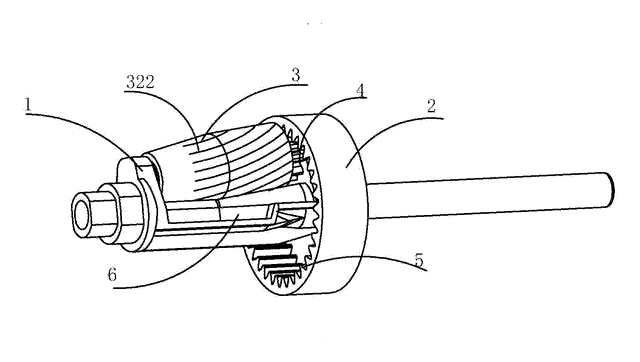
School, Office & Art
Long-Point Sketch Pencil Sharpener
Crank sharpener that cuts only the wood of sketch pencils, leaving a long, round lead about 30 mm long.
Patent CN207241257U
School, Office & Art
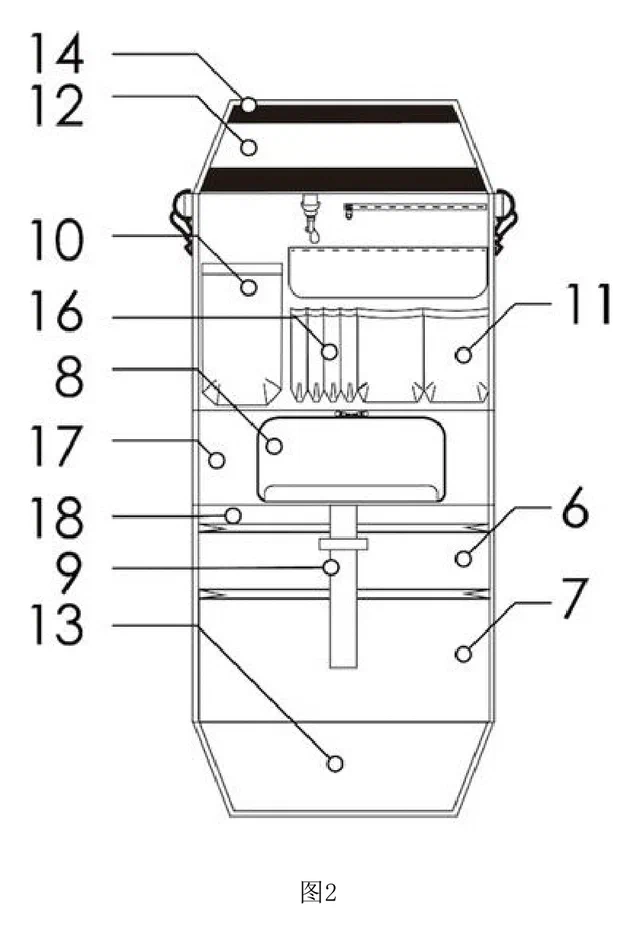
Fold-Out Desk Organizer Insert for School Backpacks
Backpack insert that unfolds into a hanging desk organizer for workbooks, stationery and a water bottle.
Patent CN209436546U
School, Office & Art
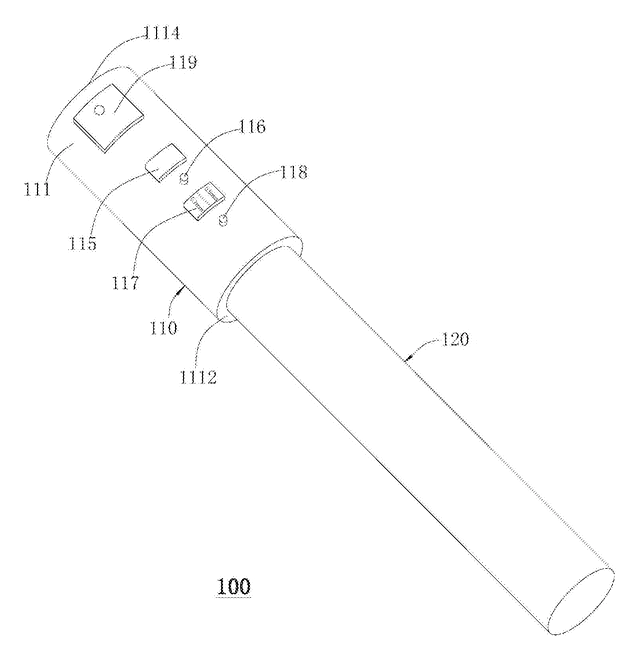
Smart Pencil Cap That Checks the Point with a Camera
Electronic pencil cap that photographs the point, measures it and reminds you to sharpen.
Patent CN106427302B
School, Office & Art
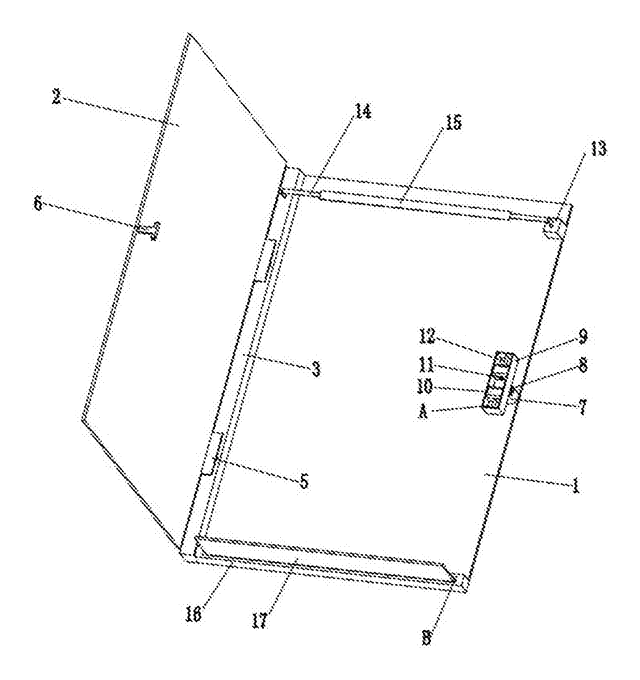
Expanding Clipboard Folder with Spring-Mounted Hinge and Catch
Hard folder whose spring-mounted hinge and catch let the cover clamp any thickness of paper.
Patent CN105667120B
School, Office & Art
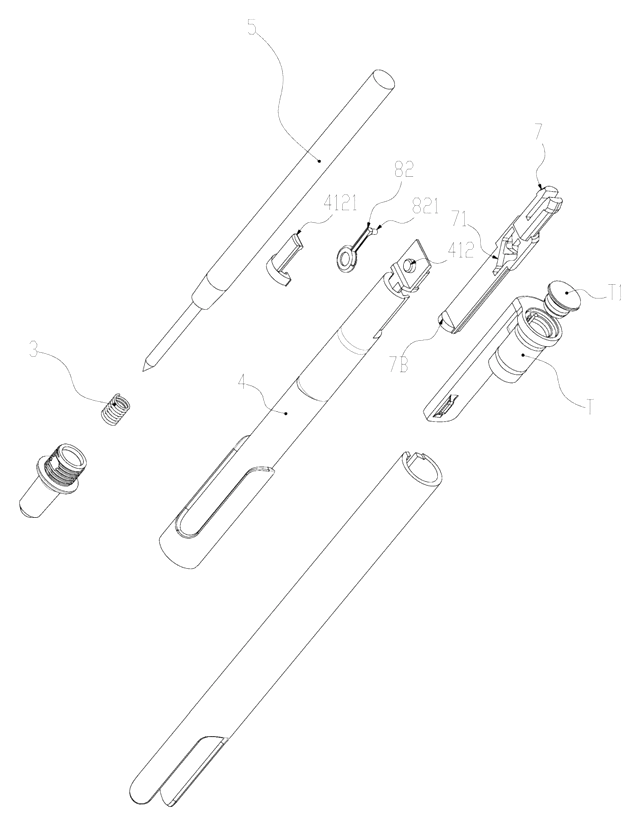
Slide-Action Retractable Pen with a Friction-Loaded Cam That Ignores Gravity
Slide-action retractable pen whose spring-pressed cam latch stays put whichever way the pen is held.
Patent CN217671900U
School, Office & Art
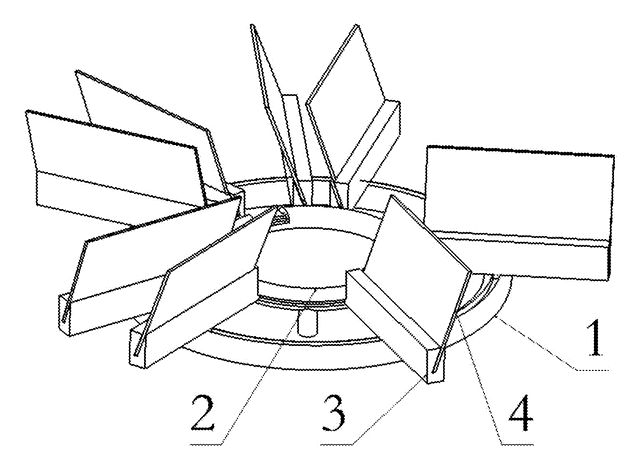
Carousel Business Card Holder with Rolling Card Trays on Twin Ring Tracks
Desk card holder: angled card trays roll on wheels around two concentric ring tracks and lift out.
Patent CN105774300B
Browse by category
- Apparel & Accessories (22)
- Baby & Kids (16)
- Bags & Luggage (9)
- Bath & Personal Care (16)
- Car Accessories (10)
- Furniture, Bedding & Storage (12)
- Garden & Outdoor (18)
- Health & Wellness (8)
- Home, Kitchen & Cleaning (24)
- Lighting (12)
- Packaging & Containers (6)
- Pet Products (6)
- Phone & Camera Accessories (4)
- Retail Display (13)
- School, Office & Art (19)
- Sports & Recreation (25)
- Tools & Workshop (27)
- Toys & Games (12)
This page is based on the public patent document CN107175956B, assigned to Tianjin Artificial Intelligence General Application System Tianjin Co ltd. IP2M is an independent manufacturing service and is not affiliated with, endorsed by or licensed by the patent owner. Images marked as concept renderings are illustrations, not photos of an existing product. Patent status information is provided for reference only and is not legal advice; confirm freedom to operate for your market before production. Full disclaimer.