At a glance
| Patent number | CN107175956B (application CN201710477246) |
| Type | China invention patent (发明专利) - protects product shape, structure and method |
| Original title | A writing pen with a refill that can be retracted automatically (一种笔芯可自动回缩的书写笔) |
| Patent owner | Tianjin Artificial Intelligence General Application System Tianjin Co ltd |
| Inventors | Wu Yanju |
| Filing date | 2017-06-21 |
| Grant date | 2019-05-31 |
| Status (China) | In force in China until at most 2037-06-21 (if annual fees are paid) |
| Patent family | Chinese filings only - no US, European, Japanese, PCT or other filings listed |
| Cited by | 1 later document |
| Source | Google Patents (search for CN107175956B) |
What the claims cover, in plain language
Claim 1 - A writing pen with a pen holder and a refill inside it. The refill has a nib at the front. At the position corresponding to the grip portion of the pen holder, the refill carries a conical cylindrical taper sheath whose tail end has a circular end surface. The grip portion of the pen holder has mounting holes containing pressing bodies made of elastic material. The tail end of each pressing body connects to the pen holder, and its front end has a roller, ball or spherical protrusion that contacts the taper sheath. When squeezed, the pressing body pushes the taper sheath to slide the refill toward the nib. A first magnet and a second magnet with opposite polarities are fixed at the tail ends of the pen holder and the refill respectively. The front of the pen holder has a conical pen cap with an opening.
Claim 2 - An elastic piece fixing table on the inner wall of the pen holder’s front part, holding an elastic piece whose front end contacts the inner side of the pressing body. Claim 3 - The second magnet is a nail-shaped structure with a dome, having a through venthole at its center, inserted into the tail end of the refill. Claim 4 - Three pressing bodies arranged equidistantly along the circumference of the pen holder. Claim 5 - Annular limit rings on the inner wall of the pen holder, with the refill installed inside them and a gap between the rings and the refill. Claim 6 - The pen cap is threadedly connected to the pen holder. Claim 7 - A nib limit body on the inner wall of the pen cap adapted to the nib. Claim 8 - An isolation ring on the inner wall of the pen holder near the first magnet to prevent direct contact between the first and second magnets.
This is a simplified reading for orientation only. The legal scope is defined by the exact claim wording in the official Chinese document.
What this means for US production
This patent was filed only in China and is currently in force. It has no US or other foreign counterpart. However, because it remains active in China, making or selling this specific pen design in China needs the owner’s permission.
Two points to settle early:
- Other patents may exist. Writing instrument mechanisms are widely patented globally. BIC Violex Single Member S.A. holds a later US patent (US12083818B2) that cites this Chinese document, indicating activity in this technical field by major manufacturers. A freedom-to-operate (FTO) review covering magnetic-return pens and grip-actuated writing instruments is recommended before tooling.
- Magnet safety. Small magnets pose a swallowing hazard. The size, strength and retention method of the first and second magnets must be engineered to meet applicable safety standards, especially if the pen could be accessible to children.
Customization and manufacturing
What can be customized
| Area | Options |
|---|---|
| Barrel material | ABS, PP, AS or elastomer-coated plastics for the pen holder |
| Pressing body | Elastoplastic formulation, durometer and thickness to tune squeeze force |
| Protrusion type | Hemispherical protrusion, roller or ball per Claim 1 |
| Magnets | Grade, diameter and pull force of the first and second magnets |
| Refill type | Standard ballpoint or gel-ink refill dimensions |
| Cap connection | Threaded connection or press-fit variants |
| Colors and finish | Barrel color, pad printing, heat transfer or laser engraving |
Things to plan for (US market)
- CPSC 16 CFR 1262 (magnets) - If the pen is marketed to or likely to be used by children under 14, the magnets must not detach and become hazardous; strong loose magnets are heavily regulated.
- ASTM F963 - If classified as a toy or novelty item for children, the pen must pass mechanical, physical and heavy-element tests.
- California Prop 65 - Plastics, inks and metal components (including magnets and nibs) must be screened for listed substances.
- Labeling - Country of origin and appropriate cautionary labeling for small parts or magnets if sold in retail packaging.
How a project runs
- Inquiry - target market, refill type, barrel material, quantity and branding requirements.
- Design - CAD modeling of the barrel, sizing of the taper sheath, selection of magnet grades and pressing body geometry.
- Prototype - 3D-printed or soft-tooled samples to verify squeeze force, extension travel and magnetic return reliability.
- Pilot run - Injection molds opened; sample batch tested for drop resistance, magnet retention, writing performance and cycle life.
- Production - Mass injection molding, magnet insertion, refill loading, assembly and quality inspection.
Quantities & timeline
The pen holder and cap require precision injection molds. The pressing bodies may be molded as part of the barrel or as separate inserts depending on the chosen elastoplastic material. Magnet insertion tooling and the isolation ring placement must be integrated into the assembly line. Certification tests for magnet retention and chemical compliance take additional time once pilot samples are ready. Send us your target market, refill type, barrel material, estimated quantity and timeline and we will reply with options.
Patent drawings
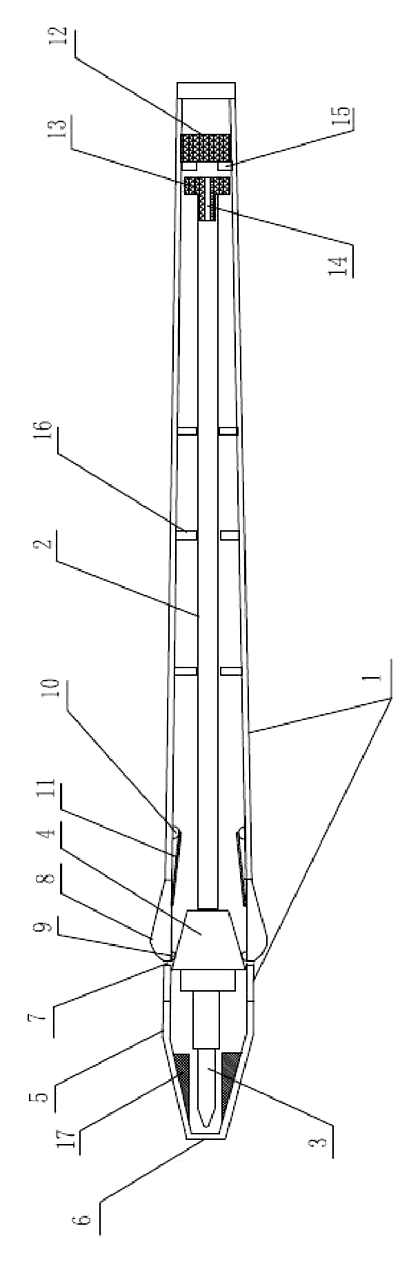
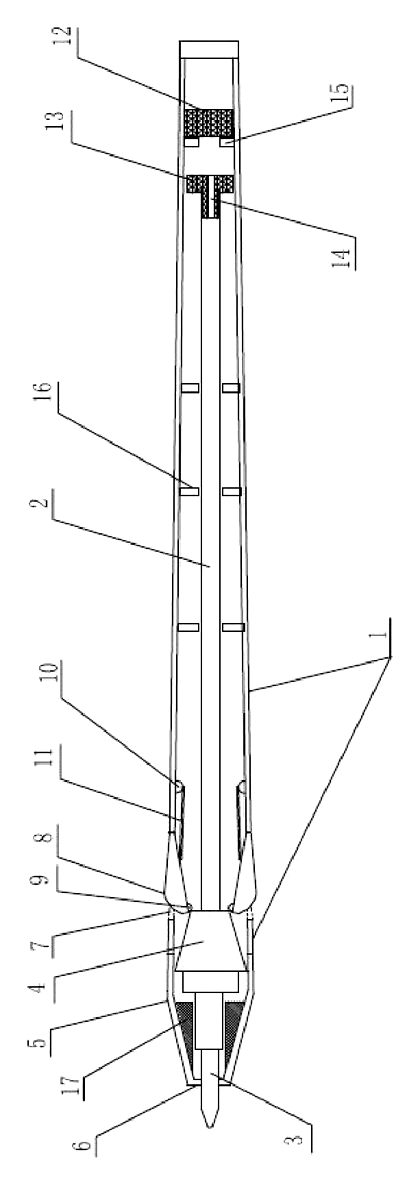
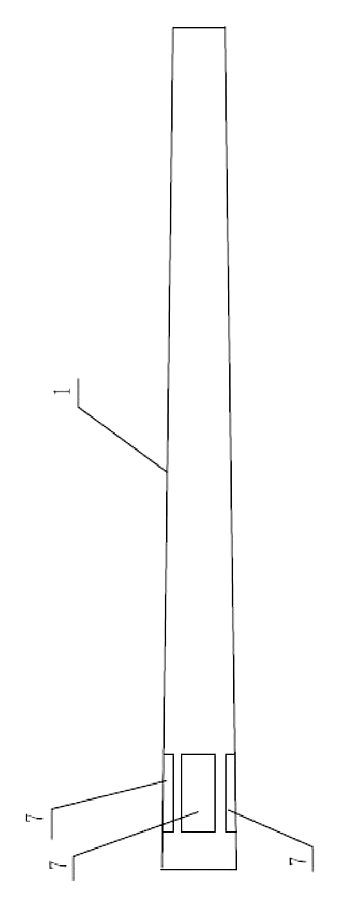
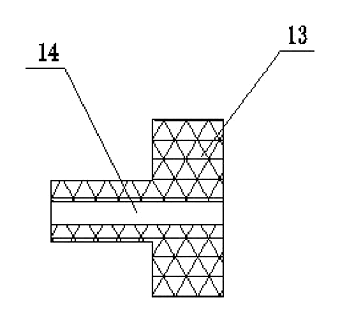
Drawings reproduced from the public patent document for reference.