
Patent CN107242737B
Updated November 4, 2026Multi-Purpose Intelligent Plant Stand with Hanging and Sitting Mode Switch
Standard plant stands are fixed: you either hang a pot or place it on a table. This design bridges the gap with a convertible steel wire frame. A set of three motorized units mounted on the upper ring drives reels that manage the suspension ropes. By tightening the ropes, the hooks retract into the frame’s body, allowing support struts with Mecanum wheels to extend downward for stable floor standing. The transition also triggers a cleaning mechanism where cams press against water pockets to wipe the frame. Inside, a hinged basin plate uses a cylinder actuator and levelness sensor to keep the plant pot perfectly horizontal regardless of the stand's orientation.
- China invention patent - lapsed
- No filings outside China
- Steel wire frame, electric motors, sensors
- Hanging-to-sitting conversion mechanism
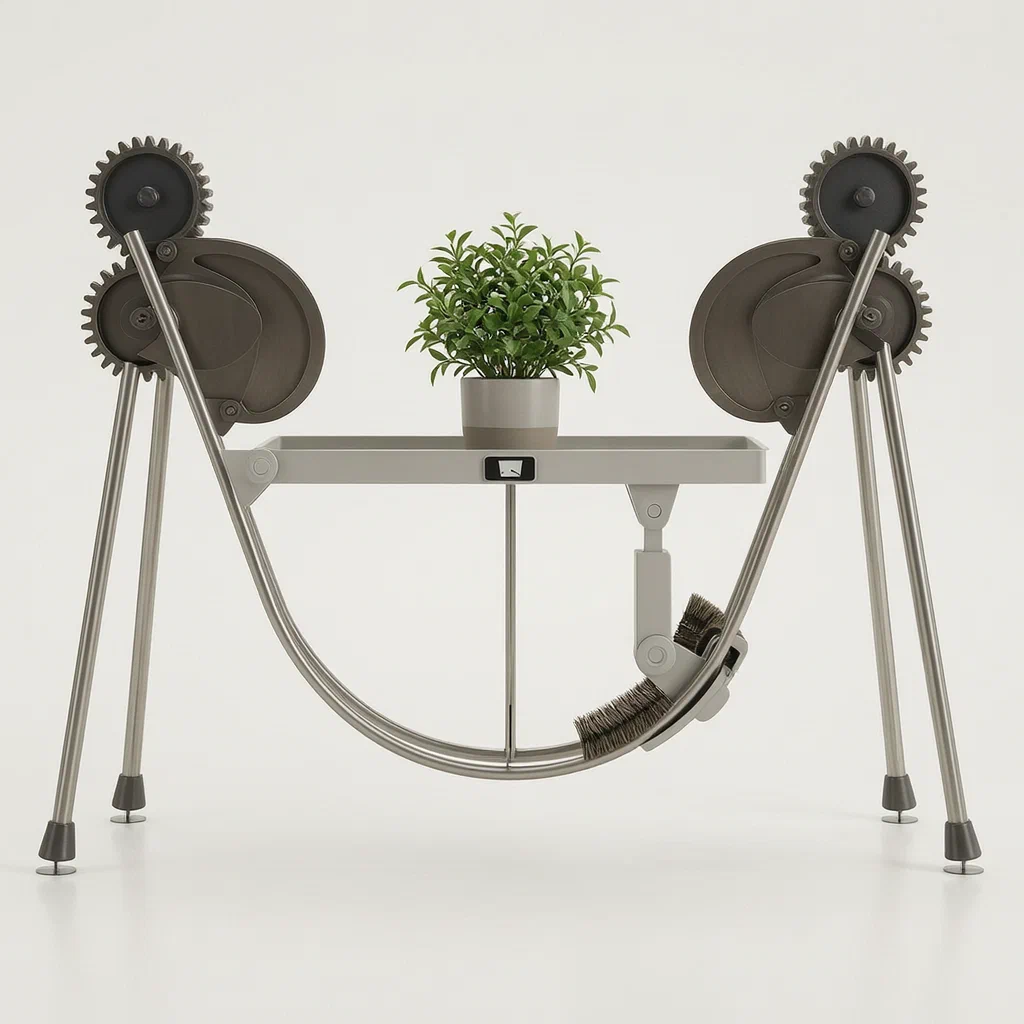
Splat! What let you down?
🔄
Mode Conversion
Switches between hanging and floor-standing modes using motorized reels and retractable legs.
⚖️
Auto-Leveling Pot
A hinged basin plate adjusts tilt based on sensor feedback to keep the plant upright.
🧼
Integrated Cleaning
Cams and water pockets clean the frame structure during the mode-switching rotation.
🛞
Mecanum Wheel Base
Support struts end in Mecanum wheels for stability when the unit sits on the floor.
Bring this product to market
- ✓ Patent review Patent family and legal status reviewed in the relevant jurisdictions.
- 2 Product brief · now How it works, uses and options written up
- 3 Prototype First samples for buyers to review
- 4 Pilot run Small first batch for launch customers
- 5 Volume production Repeat orders at scale
Buyer interest
– of 100 buyers needed to start prototyping
One click, no sign-up. Each vote is one real visitor, and products with the most interest go to prototyping first.
Build team: no members yet. Need a partner, co-funding or skills to build this? Join and we introduce the team once it forms.
Patent Rights & Team Participation
Before joining a development team, participants should ensure they have the necessary rights or authorization to participate in the project.
Participation is generally appropriate where:
- You own the relevant patent rights or have obtained permission or a license from the rights holder.
- The relevant patent rights have expired or have been legally invalidated in the jurisdictions where the planned activities will take place.
- The planned development, manufacturing, and commercialization activities have been independently assessed and do not infringe applicable patent rights in the relevant jurisdictions.
Important: Being located outside a country where a patent is protected does not automatically exempt you from patent infringement risks. Patent rights may apply based on where development, manufacturing, use, sale, or import activities take place.
IP2M does not grant any patent license or authorization through team participation. Joining a project does not provide permission to use, manufacture, or commercialize patented technology.
The problem
Most plant stands serve a single purpose: they are either wall-mounted hooks for hanging pots or static tables for potted plants. Users who want flexibility often need two separate pieces of furniture, which takes up space and limits interior design options. Additionally, maintaining the correct angle of a plant pot can be difficult if the stand surface is uneven or if the pot shifts. There is also no standard mechanism for keeping the structural elements of a complex hanging/sitting hybrid clean, as dust and debris accumulate in the moving parts and crevices of traditional designs.
The solution
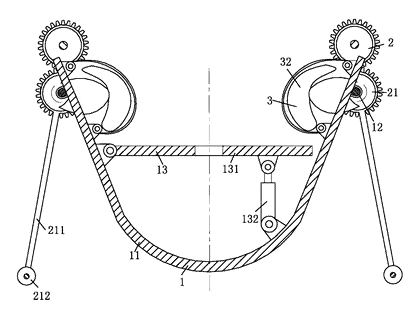
This patent describes a multi-purpose intelligent plant stand that integrates a frame body, a conversion equipment, and a cleaning device.
- The Frame Body (1) is constructed from steel wire with an arc-shaped bottom. It holds the plant pot and can be suspended by traction ropes.
- The Conversion Equipment (2) consists of three units mounted on a support ring. Each unit contains a main rotating disk, a reel, and a coiling electric motor.
- The Cleaning Device (3) uses cams and water pockets attached to the rotating disks to wipe the frame during operation.
- A Flowerpot Regulating Mechanism (13) inside the frame uses a support basin plate and a levelness sensor to automatically adjust the pot’s tilt.
Who it is for
- Smart Home Brands: Companies looking to add automated gardening accessories to their ecosystem.
- Interior Designers: Professionals needing flexible furniture solutions for small apartments where space is limited.
- Plant Nurseries: Retailers selling high-value ornamental plants that require specific lighting angles and easy maintenance.
- DIY Enthusiasts: Makers interested in integrating simple automation (motors and sensors) into household items.
How it works
The main parts
| No. | Part | What it does |
|---|---|---|
| 1 | Frame Body | Steel wire structure holding the pot; arc-shaped bottom. |
| 11 | Body Frame | Main supporting structure made of circular steel wire. |
| 12 | Support Ring | Horizontal ring at the top where conversion units mount. |
| 13 | Regulating Mechanism | Adjusts pot angle; includes basin plate and cylinder. |
| 131 | Support Basin Plate | Hinged plate that holds the pot; has a hole for the hook. |
| 132 | Support Basin Cylinder | Actuator that tilts the basin plate for leveling. |
| 2 | Conversion Equipment | Motorized units for switching hanging/sitting modes. |
| 21 | Main Rotating Disk | Drives the cleaning cam and connects to support struts. |
| 23 | Reel | Winds/unwinds the traction rope to lift/lower the frame. |
| 25 | Coiling Electric Motor | Powers the reel and secondary rotating disk. |
| 211 | Sitting Posture Strut | Extends downward when the frame is lowered to sit. |
| 212 | Mecanum Wheel | Attached to strut ends for floor contact. |
| 3 | Cleaning Device | Cams and water pockets that clean the frame. |
| 31 | Cam | Presses against water pocket during rotation. |
| 32 | Water Pocket | Contains water; seepage holes allow cleaning fluid out. |
Operating Steps
- Hanging Mode: The frame is suspended by traction ropes connected to hooks. The Sitting Posture Struts (211) are retracted or positioned above the ground.
- Switching to Sitting: The Coiling Electric Motors (25) activate. The Reels (23) tighten the traction ropes, pulling the hooks upward into the Support Basin Plate (131) hole.
- Leg Extension: As the ropes tighten, the Secondary Rotating Disks (24) mesh with the Main Rotating Disks (21), causing them to rotate. This rotation extends the Sitting Posture Struts (211) downward until the Mecanum Wheels (212) touch the floor.
- Leveling: The Levelness Sensor on the basin plate detects tilt. If not horizontal, the Support Basin Cylinder (132) adjusts the plate angle.
- Cleaning: During the rotation of the disks, the Cams (31) squeeze the Water Pockets (32), forcing water through seepage holes to wash the frame wires.
Applications
Small Apartment Balconies
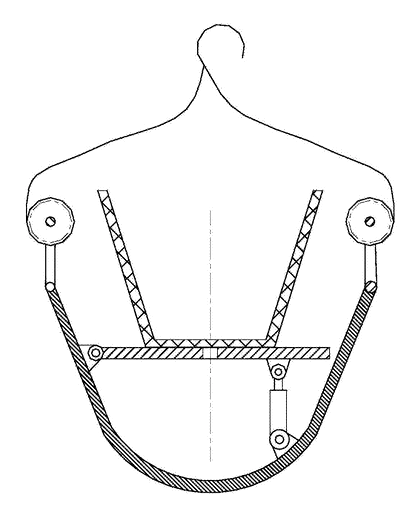
In tight living spaces, users can hang the plant from a ceiling hook during the day for sunlight and lower it to the floor at night to save vertical space or move it indoors without unhooking the pot manually.
Greenhouse Management
Automated leveling ensures that nutrient solutions or water do not spill due to uneven surfaces. The integrated cleaning helps maintain hygiene in humid environments where mold might grow on the frame wires.
Retail Display Units
Nurseries can display plants at eye level (hanging) or table height (sitting) depending on customer traffic flow. The self-cleaning feature reduces maintenance labor for staff managing multiple displays.
Elderly Care Facilities
The ability to bring a plant down to a comfortable working height without manual lifting reduces strain. The automatic leveling prevents spills if the user accidentally bumps the stand.
Where it is less suitable
- Heavy Industrial Pots: The steel wire frame and small motors are designed for lightweight decorative pots, not large ceramic or stone containers.
- Outdoor Extreme Weather: The electronic components (sensors, motors) and water pockets may require significant weatherproofing upgrades for permanent outdoor exposure.
- Simple Static Decor: For users who never change the plant’s position, a standard wooden or metal stand is more cost-effective and requires no power source.
Patent & Production
At a glance
| Patent number | CN107242737B (application CN201710589494) |
| Type | China invention patent (发明专利) - protects product structure and method |
| Original title | Multi-purpose intelligent jardiniere (一种多用途智能花盆架) |
| Patent owner | Individual |
| Inventors | Liu Haotian |
| Filing date | 2017-07-19 |
| Grant date | 2018-06-19 |
| Status (China) | Lapsed - terminated for non-payment of annual fees (recorded 2021-07-06) |
| Patent family | Public record shows Chinese filings only - no US, European, Japanese, PCT or other filings listed |
| Cited by | 0 later documents |
| Source | Google Patents (search for CN107242737B) |
What the claims cover, in plain language
Claim 1 - a multi-purpose intelligent plant stand comprising a frame body, conversion equipment, and a cleaning device. The frame body is a steel wire mold with an arc-shaped bottom, hung by traction ropes. The conversion equipment allows switching between hanging and sitting postures and rotates the frame integrally. The cleaning device cleans the frame during this conversion.
Claim 2 - details the flowerpot regulating mechanism, including a support basin plate hinged to the body frame and a support basin cylinder. A levelness sensor on the plate detects horizontal state, and the cylinder adjusts the plate to keep the pot level.
Claim 3 - specifies the conversion equipment structure: three units uniformly mounted on a support ring. Each unit has a main rotating disk, roll, reel, secondary rotating disk, and coiling electric motor. The motor drives the reel and secondary disk; the secondary disk meshes with the main disk to synchronize rotation.
Claim 4 - adds sitting posture struts welded to the main rotating disks, ending in Mecanum wheels. The reels tighten the traction ropes to pull the hooks into the frame, positioning the struts below the frame for floor standing.
Claim 5 - defines the cleaning device: cams welded to the main rotating disks and water pockets surrounding the cams. Water seeps through holes in the pocket walls as the cam squeezes the pocket during rotation, cleaning the frame.
This is a simplified reading for orientation only. The legal scope is defined by the exact claim wording in the official Chinese document.
What this means for US production
This patent was filed in China and has lapsed due to non-payment of annual fees. The public record shows no US or other foreign counterpart.
Two points to settle early:
- Other patents may exist. Smart home devices and automated plant care systems are active fields with many US patents covering motor controls, IoT connectivity, and mechanical leveling. A freedom-to-operate (FTO) review is recommended before tooling, specifically checking for existing US patents on similar conversion mechanisms or sensor-integrated plant holders.
- Electronic Safety. Since the design involves electric motors and sensors powered by mains or batteries, strict adherence to electrical safety standards is required for US market entry.
Customization and manufacturing
What can be customized
| Area | Options |
|---|---|
| Power Source | AC adapter, USB rechargeable battery pack, or solar panel integration |
| Frame Material | Stainless steel wire, powder-coated carbon steel, or aluminum alloy |
| Pot Capacity | Diameter and depth of the support basin plate (e.g., 6-inch, 8-inch, 10-inch pots) |
| Control System | Manual button, remote control, Wi-Fi app integration, or voice assistant compatibility |
| Cleaning Fluid | Plain water, diluted fertilizer, or anti-mold solution reservoirs |
| Wheel Type | Standard rubber feet instead of Mecanum wheels for simpler assembly |
Things to plan for (US market)
- UL 62368-1 - Audio/video, information and communication technology equipment safety. If the device connects to the internet or uses external power supplies, this applies.
- FCC Part 15 - Radio frequency interference. Required if the device uses Wi-Fi, Bluetooth, or any wireless module.
- FDA 21 CFR - Not directly applicable unless marketed for food-contact plants (herbs/vegetables), but material safety for plastics near soil/water should be reviewed.
- California Prop 65 - Screening for chemicals in coatings, plastics, and electronics.
How a project runs
- Inquiry - Define pot size, power source, and connectivity needs.
- Design - Mechanical layout of reels and struts; PCB design for motor control and sensors.
- Prototype - 3D printed mechanics and off-the-shelf motors for fit testing.
- Pilot Run - Assembly of injection molded parts and SMT boards; functional testing.
- Production - Injection molding, stamping/bending for wire frames, motor assembly, final packaging.
Quantities & timeline
Tooling for the plastic housing of the conversion units and the basin plate will require injection molds. The steel wire frame requires bending fixtures. Electronic components (PCBs, motors) have longer lead times than mechanical parts. Send us your target pot size, power preference, and quantity and we will reply with options.
Production notes
Tooling and process
Injection molding is likely used for the main rotating disks, reels, and housing covers to ensure precise gear meshing. The steel wire frame typically requires wire forming or stamping fixtures. Motor assembly involves press-fitting shafts and securing gears.
Cost drivers
Part count is high due to the three independent conversion units and associated gears. Material grade selection (ABS vs. Nylon for gears) typically affects durability and cost. Packaging volume usually increases because the assembled stand is bulky.
Prototyping path
Prototyping typically starts with a 3D model to check interference between the cams and water pockets. Print the body and struts to verify the hanging-to-sitting transition. Use simple fixtures or hand tools for stressed parts like the reel axles. Test the levelness sensor logic on a functional sample before committing to T1 samples.
What we would change before tooling
We would likely simplify the cleaning mechanism if water leakage becomes a failure point. Ensure the Mecanum wheel mounting allows for easy replacement. Verify that the traction rope routing avoids pinch points during the full range of motion.
Common failure points
Thin walls on the plastic housings may warp or sink under heat from the motors. Shaft and bearing alignment issues can cause noise or jamming in the reels. Wire routing and strain relief must be robust to prevent breakage during repeated extension/retraction cycles. Trapped water in crevices could lead to corrosion or mold growth.
Patent drawings
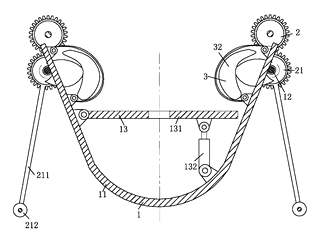
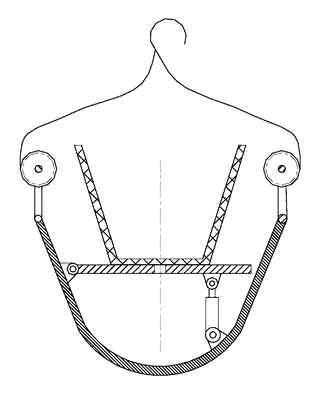
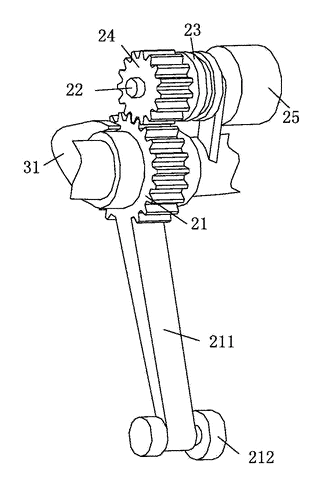
Drawings reproduced from the public patent document for reference.
Frequently asked questions
How does the hanging-to-sitting switch work?
Three motorized units drive reels that tighten the suspension ropes. As the ropes shorten, the hooks retract into the frame body. Simultaneously, the gear system rotates the main disks, which extend the support struts downward until the wheels touch the floor, converting the stand from hanging to sitting mode.
Does it really level the plant pot?
Yes. According to the patent, a levelness sensor monitors the angle of the support basin plate. If the pot is tilted, a cylinder actuator adjusts the plate’s position until the sensor confirms it is horizontal. This helps keep the plant growing straight and prevents water from spilling.
How does the cleaning function operate?
During the rotation of the conversion disks, cams attached to the disks squeeze water pockets. These pockets have seepage holes that release water onto the steel wire frame, washing away dust and debris. This happens automatically whenever the stand switches modes.
What powers the device?
The patent describes coiling electric motors. In a commercial product, these would likely be powered by a rechargeable battery pack or an AC adapter. The specific voltage and capacity are set in design and confirmed on prototypes.
Can I use it for heavy trees?
No. The structure relies on a steel wire frame and small motors. It is designed for lightweight decorative pots. Heavy loads would stress the reels and potentially bend the frame, affecting the leveling mechanism.
Is the app control included?
The patent focuses on the mechanical structure and basic sensor logic. App control, Wi-Fi, or Bluetooth modules are not described in the patent text but can be added in custom development. You would need to specify these features in your request.
Can this design be made and sold in the US?
The patent was filed in China and has lapsed, and the public record shows no US counterpart, so it does not restrict the design in the US. However, smart home devices and mechanical converters may be covered by other US patents. We recommend a freedom-to-operate check before volume production.
Are you affiliated with the patent owner?
No. IP2M is an independent design and manufacturing service working from the public patent document.
Request a quote
Click Request a Quote below to see our email address - copy it, or open your email app with a ready-made message. Please mention patent CN107242737B in the subject.
Helpful details to include:
- Your company and channel (smart home brand, nursery retailer, furniture maker)
- Target pot size (diameter and weight)
- Power preference (battery, USB, AC)
- Connectivity (Wi-Fi, Bluetooth, or standalone)
- Estimated quantity and target price
- Timeline - when you would like samples and the first shipment
You can also reach us at (332) 203-9997.
Page editor: Emily Zhang, Product Editor · IP2M
Last updated November 4, 2026. If something on this page looks wrong, email [email protected] and we will check it against the patent.
Interested in building this?
Tell us your target market, quantity and timeline. We reply with options for prototyping, small-batch runs or volume production.
Send your inquiry to
Please put CN107242737B in the subject line and tell us your company, country, estimated quantity and timeline.
Prefer to talk? Call (332) 203-9997.
More product-ready patents
All Home, Kitchen & Cleaning patents →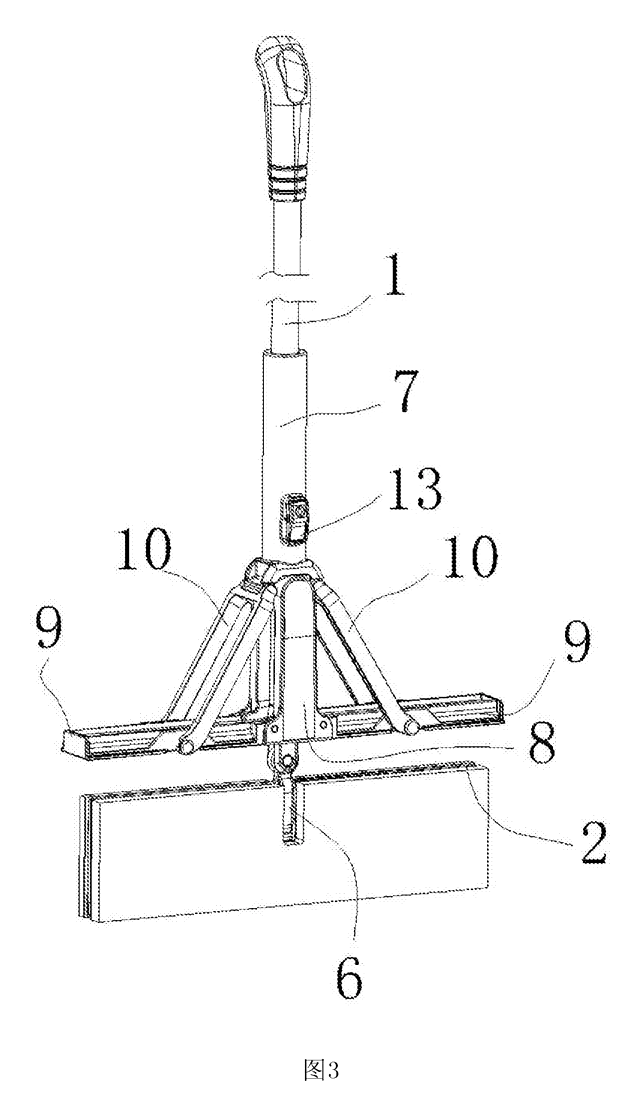
Home, Kitchen & Cleaning
Self-Wringing Flat Mop with Fold-Away Wringer
Flat mop with a built-in wringer that opens only when you wring and folds flat against the pole when you mop.
Patent CN207734114U
Home, Kitchen & Cleaning
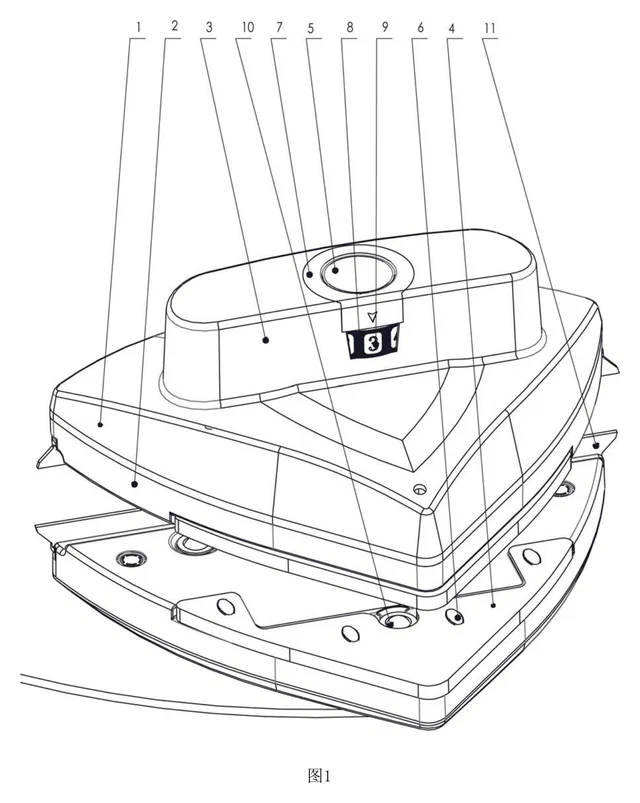
Magnetic Double-Sided Window Cleaner with Dial-Set Magnet Strength
Magnetic window cleaner with a sealed, sliding magnet, dial-set strength for different glass thicknesses and a spring-held idle position.
Patent CN209360543U
Home, Kitchen & Cleaning
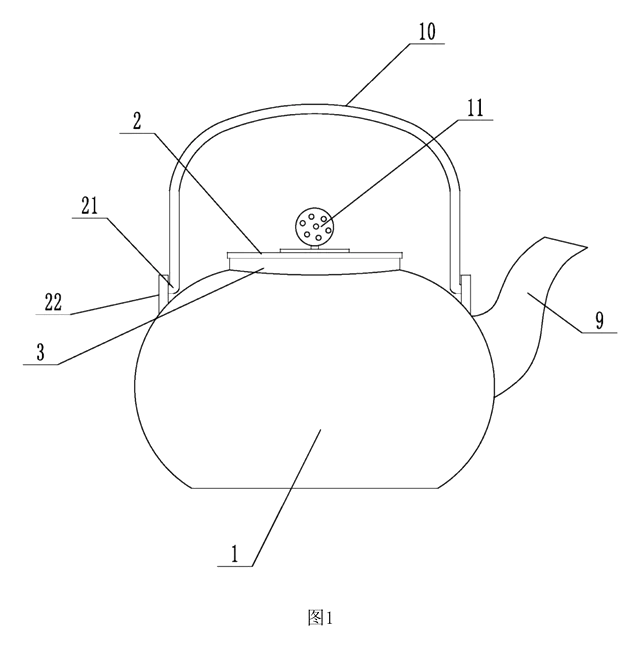
Metal Kettle with Magnetic Lid That Stays On When Pouring
Metal teapot/kettle with a magnet-held lid that does not fall off when pouring, and an insulated, vented lid knob.
Patent CN210540477U
Home, Kitchen & Cleaning
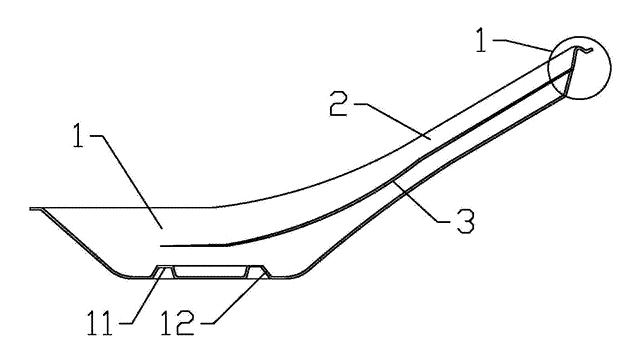
Reinforced Disposable Soup Spoon
Disposable soup spoon with a handle-to-bowl rib, stiffened edges and a ring foot to resist breaking.
Patent CN206964482U
Home, Kitchen & Cleaning
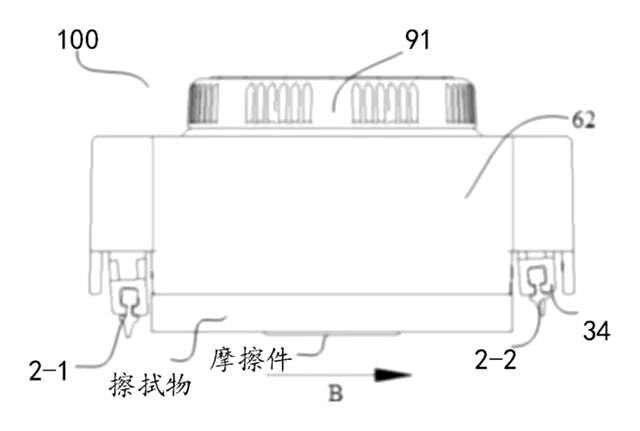
Self-Switching Double-Squeegee Window Cleaner
Cleaning head with two squeegee blades that switch automatically with the direction of movement.
Patent CN212630655U
Home, Kitchen & Cleaning
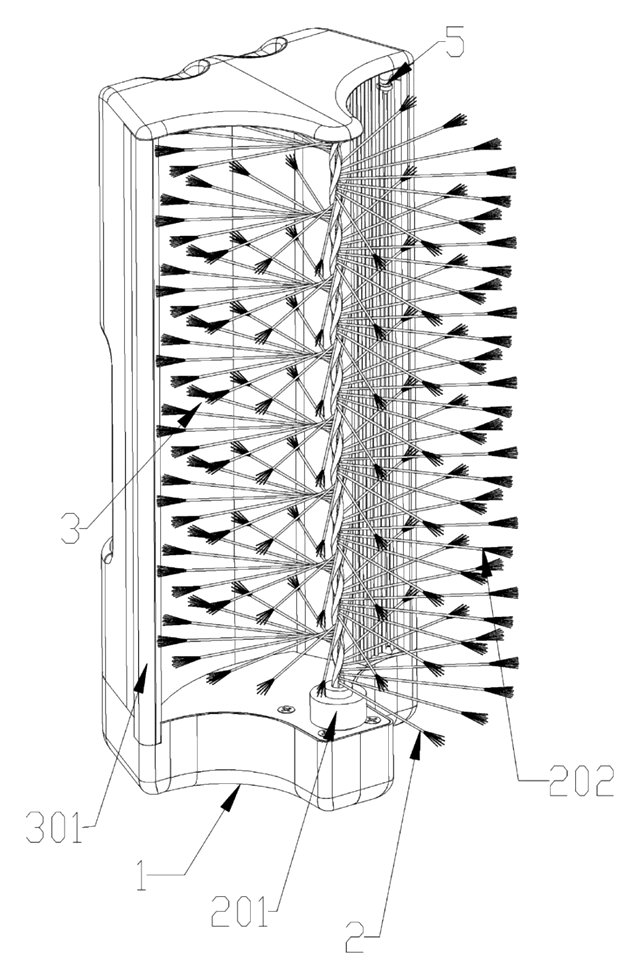
Self-Rinsing Roller Scrub Brush with Dirty-Water Tank
Powered roller brush that rinses and spins its bristles clean inside the body and stores the dirty water.
Patent CN210076909U
Browse by category
- Apparel & Accessories (38)
- Baby & Kids (26)
- Bags & Luggage (15)
- Bath & Personal Care (26)
- Car Accessories (21)
- Furniture, Bedding & Storage (20)
- Garden & Outdoor (28)
- Health & Wellness (12)
- Home, Kitchen & Cleaning (43)
- Lighting (20)
- Packaging & Containers (10)
- Pet Products (9)
- Phone & Camera Accessories (8)
- Retail Display (21)
- School, Office & Art (30)
- Sports & Recreation (37)
- Tools & Workshop (46)
- Toys & Games (19)
This page is based on the public patent document CN107242737B, assigned to Individual. IP2M is an independent manufacturing service and is not affiliated with, endorsed by or licensed by the patent owner. Images marked as concept renderings are illustrations, not photos of an existing product. Patent status information is provided for reference only and is not legal advice; confirm freedom to operate for your market before production. Full disclaimer.