At a glance
| Patent number | CN107456014B (application CN201710930744) |
| Type | China invention patent (发明专利) - protects technical solutions including methods and structures |
| Original title | A kind of ornamental jardiniere of multifunctional domestic (一种家用多功能观赏花盆架) |
| Patent owner | Linshu Jicai Human Resources Service Co ltd |
| Inventors | Wang Ailv |
| Filing date | 2017-10-09 |
| Grant date | 2019-03-26 |
| Status (China) | Lapsed - terminated for non-payment of annual fees (recorded 2024-10-08) |
| Patent family | Chinese filings only - no US, European, Japanese, PCT or other filings listed |
| Cited by | 0 later documents |
| Source | Google Patents (search for CN107456014B) |
What the claims cover, in plain language
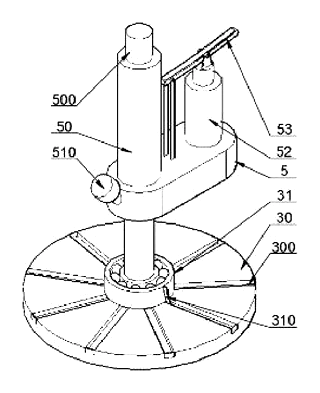
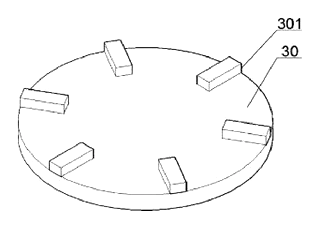
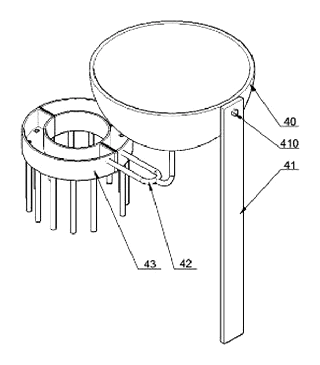
Claim 1 defines a multifunctional ornamental jardiniere comprising a frame body with main and secondary flowerpot racks. Key features include a walking mechanism at the bottom with four linking arms and traveling wheels; a rotating mechanism centered under the frame consisting of a turntable, bearing, and shaft; and a lifting mechanism connected to the rotating mechanism’s top. A watering assembly is installed on the top rack, featuring a water storage bowl connected by hoses to half-arc boxes containing sinks with through-holes and insertion tubes. The claim details the specific configuration of the wheels, the turntable’s limiting slots and rubber gaskets, and the hinged connection of the watering boxes.
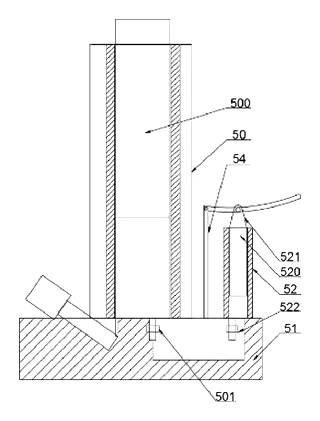
Claim 2 specifies the lifting mechanism includes a fuel tank (oil reservoir), large and small oil tanks fixed on its surface, a transversely provided handle on the small tank, and a vertically equipped lever shaft connecting the handle to the large tank.
Claim 3 describes the internal hydraulics: a big piston in the large tank, a small piston in the small tank, first and second check valves connecting the tanks and the reservoir, and an oil return valve rod on the side of the fuel tank.
This is a simplified reading for orientation only. The legal scope is defined by the exact claim wording in the official Chinese document.
What this means for US production
This patent was filed only in China and has lapsed, so it no longer restricts anyone in China either. It has no US or other foreign counterpart.
Two points to settle early:
- Other patents may exist. While this specific combination is not protected internationally, basic concepts like rotating plant stands, hydraulic lifts, and tiered planters have prior art. A freedom-to-operate (FTO) review is recommended to ensure your specific implementation of the hydraulic pump and rotating locking mechanism does not infringe on existing US utility patents in the gardening hardware sector.
- Mechanical Reliability. The integration of a hydraulic pump within a lightweight frame requires precise engineering to prevent leaks and ensure smooth operation. Prototype testing should focus on the durability of the seal components and the load-bearing capacity of the turntable bearings.
Customization and manufacturing
What can be customized
| Area | Options |
|---|---|
| Material | Steel, aluminum, or powder-coated iron for the frame; brass or stainless steel for hydraulic parts. |
| Capacity | Number of main and secondary racks; diameter of the turntable. |
| Hydraulics | Manual pump size, cylinder stroke length, and maximum lifting weight. |
| Mobility | Wheel material (rubber vs. hard plastic), presence of brakes on wheels. |
| Watering | Capacity of the storage bowl; number of distribution tubes per tier. |
| Finish | Rust-resistant coatings, color options, decorative covers for the mechanical base. |
Things to plan for (US market)
- ANSI/BHMA Standards: If marketed as indoor furniture, stability tests similar to those for bookcases or shelving units may apply.
- CPSC Regulations: Ensure no sharp edges on the metal frame or hydraulic components, especially if sold for general household use.
- California Prop 65: Required warnings if any materials used in the paint, plastics, or metals contain listed chemicals above safe harbor levels.
- UL Listing: Not typically required for manual hydraulic devices unless electric motors are added for automated lifting.
How a project runs
- Inquiry - Define target load capacity, dimensions, and material preferences.
- Design - CAD modeling of the frame, hydraulic integration, and turning mechanism.
- Prototype - Fabrication of samples to test lifting force, rotation smoothness, and watering efficiency.
- Pilot Run - Small batch production for durability testing (cycle life of hydraulics, wheel wear).
- Production - Mass manufacturing of stamped frames, machined hydraulic parts, and injection-molded watering components.
Quantities & timeline
The frame requires stamping dies and welding jigs. The hydraulic system needs precision machining for cylinders and pistons. Injection molds are needed for the watering bowls and plastic limiting components. Assembly involves integrating the mechanical and hydraulic sub-assemblies. Send us your specifications for load capacity, dimensions, and estimated quantity and we will reply with options.
Patent drawings
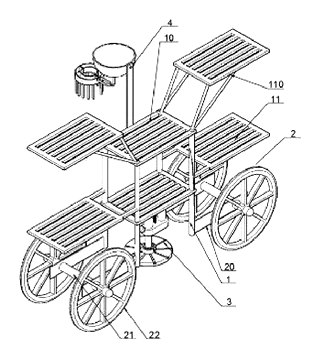
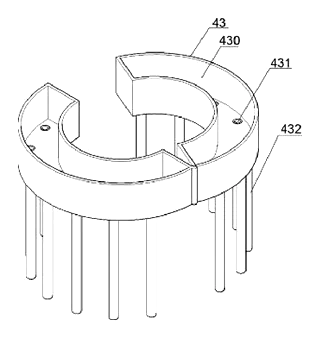
Drawings reproduced from the public patent document for reference.