
Patent CN107789825B
Updated October 31, 2026Ice Skate Rack with Buffer Structure and Torsion Control
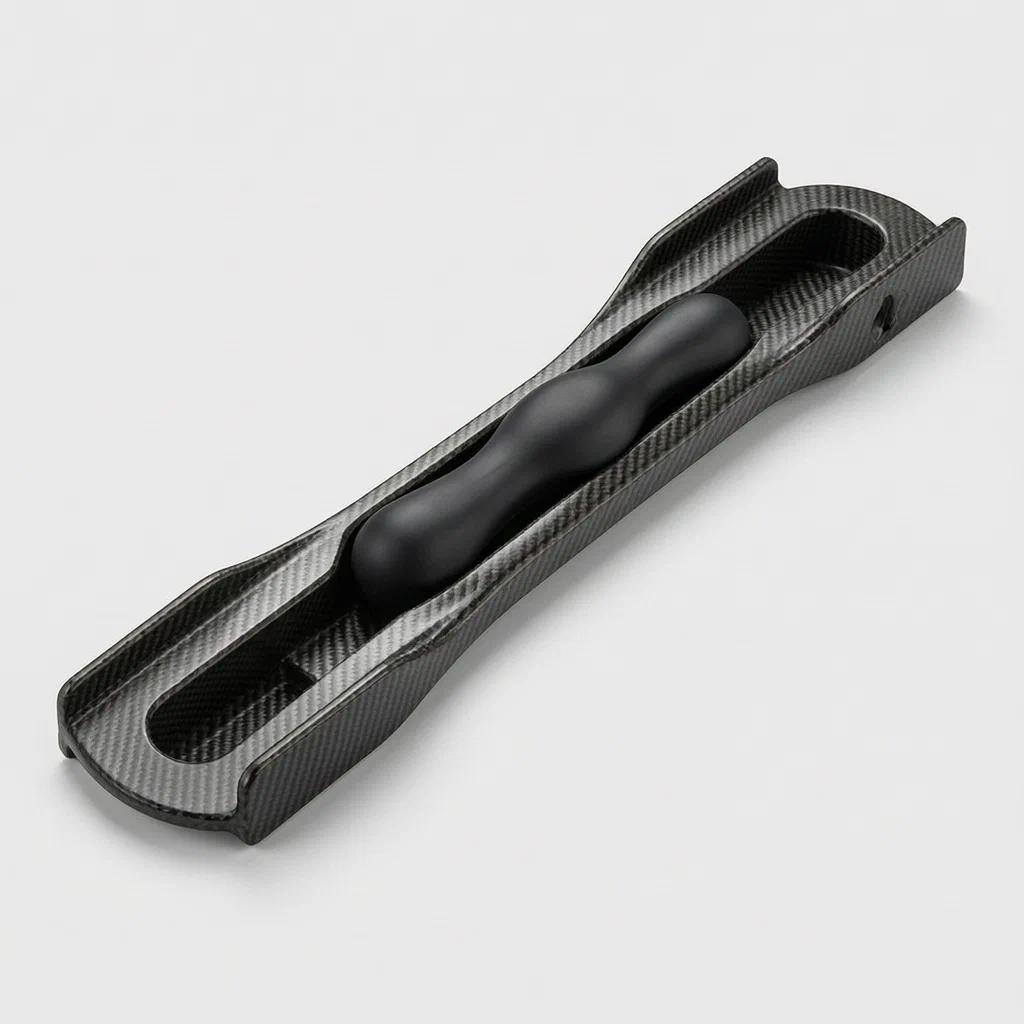
Standard ice skate racks often lack sufficient flexibility, causing discomfort during turns and jumps due to rigid structures that do not absorb impact well. This design introduces elastic bodies within the shoe supporting seats of a carbon fiber rack. These buffers allow controlled transverse torsion and longitudinal cushioning, adapting to the skater's movements while maintaining structural strength through the carbon fiber frame.
- China invention patent - active
- No filings outside China
- Ice skating equipment
- Carbon fiber rack, elastic buffer spheres/U-shapes
Splat! What let you down?
🛡️
Carbon Fiber Frame
The rack body is made of carbon fiber to ensure high strength despite cutouts for buffers.
🔄
Transverse Torsion
Elastic spheres in arc-shaped grooves rotate to increase lateral twisting capability.
🧸
Longitudinal Buffering
Elastic bodies absorb shock along the length of the rack for smoother landings.
🔩
Modular Seat Design
Support seats feature slots and positioning protrusions to securely hold various elastic shapes.
Bring this product to market
- ✓ Patent vetted China-only family and legal status checked
- 2 Product brief · now How it works, uses and options written up
- 3 Prototype First samples for buyers to review
- 4 Pilot run Small first batch for launch customers
- 5 Volume production Repeat orders at scale
Buyer interest
– of 100 buyers needed to start prototyping
One click, no sign-up. Each vote is one real visitor, and products with the most interest go to prototyping first.
Build team: no members yet. Need a partner, co-funding or skills to build this? Join and we introduce the team once it forms.
The problem
Traditional ice skate racks often suffer from rigidity issues. When a skater performs turns, jumps, or lands on the ice, the lack of flexible elements in the rack can transmit excessive shock directly to the boot and foot. Additionally, standard designs may not provide enough transverse torsion, making it difficult for the skater to control the angle of the blade relative to the ice surface during complex maneuvers. This results in reduced comfort and potentially less precise movement control.
The solution
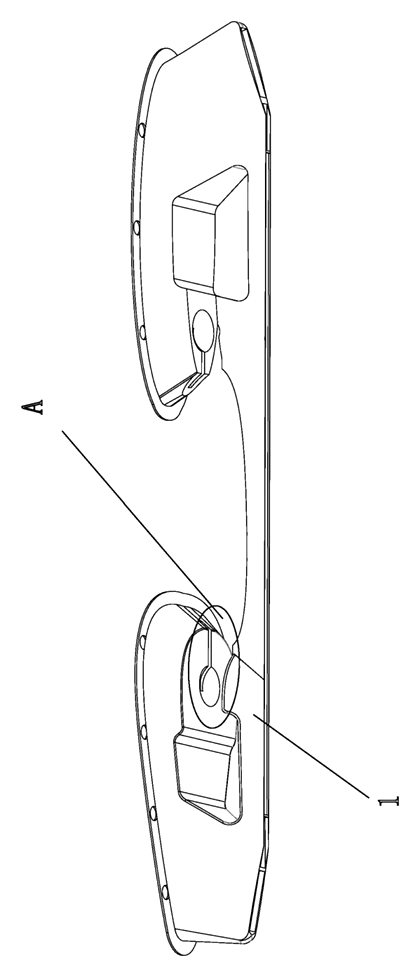
The patent describes an ice skate rack that addresses these issues by integrating elastic buffer structures into the shoe supporting seats. The rack body is constructed from carbon fiber, providing a lightweight yet strong foundation. At each end of the rack, there is a shoe supporting seat. These seats contain a hollow-out part and a specific slot where an elastic body is placed.
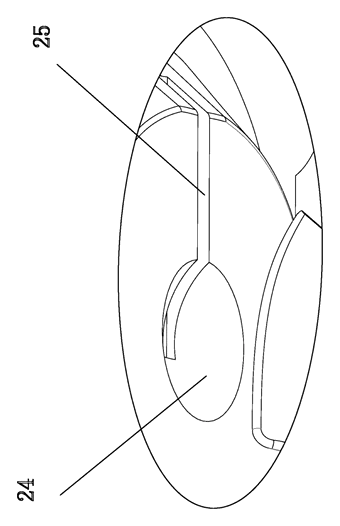
The core innovation lies in the interaction between the elastic body and the seat structure. For instance, if an elastic sphere is used, it sits in arc-shaped grooves at the upper and lower ends of the slot. This allows the sphere to rotate transversely, enhancing the torsional flexibility of the rack. Simultaneously, the elasticity of the material provides longitudinal buffering, absorbing impacts when the skater lands or changes direction. The use of carbon fiber ensures that even with these mechanical compromises for flexibility, the overall structural integrity remains high.
Who it is for
- Ice Skate Manufacturers: Brands looking to differentiate their products with enhanced comfort and control features for competitive or recreational skaters.
- Sports Equipment Retailers: Stores specializing in winter sports gear that want practical display and storage items for skaters.
- Custom Boot Makers: Artisans who create custom ice skates and require advanced rack components that offer better fit and feel adjustments.
- OEM Suppliers: Companies producing parts for major sporting goods brands seeking patented solutions for shock absorption in footwear frames.
How it works
The main parts
| No. | Part | What it does |
|---|---|---|
| 1 | Rack Body | Carbon fiber frame connecting the two ends; provides primary structural strength. |
| 2 | Shoe Supporting Seat | Located at each end of the rack; holds the skate boot and contains the buffer mechanism. |
| 21 | Supporting Seat Body | The physical housing of the seat, featuring a hollow-out part (22). |
| 22 | Hollow-out Part | Reduces weight and allows space for the slot and elastic body. |
| 23 | Slot/Notch | A separation area in the seat body that houses the elastic body, allowing partial separation from the rack body. |
| 3 | Elastic Body | Sphere, ellipse, or U-shape inserted into the slot; provides torsion and buffering. |
| 24 | Arc-shaped Groove | Upper and lower tracks in the slot that guide the rotation of an elastic sphere. |
| 25 | Positioning Groove | Holds the elastic body in place to prevent dislodging during use. |
| 31 | Positioning Protrusion | Features on the elastic body (e.g., sphere) that clamp into the positioning groove. |
Operating Steps
- Installation: The elastic body (3) is placed into the slot (23) of the supporting seat (2). If using a sphere, it fits into the arc-shaped grooves (24).
- Securing: Positioning protrusions (31) on the elastic body engage with the positioning grooves (25) to keep the buffer centered and secure.
- Usage - Transverse Motion: When the skater twists or turns, the elastic sphere rotates within the arc-shaped grooves, allowing the rack to twist laterally without breaking.
- Usage - Longitudinal Impact: During jumps or hard stops, the elastic body compresses or flexes, absorbing shock along the length of the rack before it reaches the skater’s foot.
Applications
Competitive Figure Skating
Figure skaters perform rapid spins and intricate footwork. The increased transverse torsion provided by the rotating elastic sphere allows for more natural blade angles during spins, reducing strain on the ankle and improving balance.
Ice Hockey Training
Hockey players experience frequent stops, starts, and collisions. The longitudinal buffering helps absorb the impact of sudden stops and falls, protecting the player’s feet and ankles from shock transmitted through the rigid rack structure.
Recreational Skating
Casual skaters often struggle with fatigue from prolonged standing on ice. The softer ride offered by the elastic buffers reduces vibration and impact, making longer sessions on the rink more comfortable for beginners and leisure skaters.
Junior Skates
Children learning to skate benefit from forgiving equipment. The added flexibility and shock absorption help them maintain stability while they develop proper technique, reducing the risk of injury from awkward falls or stiff boot interactions.
Where it is less suitable
- Extreme Heavy-Duty Industrial Use: While carbon fiber is strong, this design prioritizes flexibility and comfort over maximum load-bearing capacity for non-skating industrial applications.
- Static Display Racks: If the rack is never subjected to motion or impact, the complex buffer mechanism adds unnecessary cost and maintenance compared to simple fixed supports.
Frequently asked questions
How does the buffer improve skating?
The elastic body inside the support seat allows the rack to twist sideways (transverse torsion) and absorb shocks up and down (longitudinal buffering). This makes turns smoother and reduces impact on the foot during jumps or hard stops.
Why use carbon fiber for the rack?
The patent specifies a carbon fiber rack body. This material provides high strength and stiffness, which is necessary to maintain structural integrity even though the support seats have slots and hollow parts that reduce local mass. It also keeps the skate lightweight.
Can I choose different elastic shapes?
Yes. The patent covers several options: an elastic sphere that rotates in arc-shaped grooves, an elliptical elastic body, or a U-shaped elastic body. The choice depends on the desired level of flexibility and shock absorption.
Is the installation complicated?
The elastic body fits into a slot in the support seat. For the spherical version, it sits in arc-shaped grooves and is secured by positioning protrusions clamping into grooves. Assembly is designed to be straightforward once the parts are manufactured.
Does this work for all types of ice skates?
The design is applicable to various ice skate racks, including those for figure skating and hockey. The specific configuration of the slots and elastic bodies can be adjusted to suit the performance needs of different skate categories.
What are the durability considerations?
Since the rack relies on elastic deformation for function, the material of the elastic body must resist fatigue over repeated cycles of compression and rotation. Carbon fiber itself is durable but requires careful handling during manufacturing to avoid delamination.
Can this design be made and sold in the US?
The patent is filed only in China and is in force there. There are no US patents in this family, so this specific patent does not restrict production or sales in the US. However, you should verify freedom-to-operate against other existing US patents in the ice skate equipment sector.
Are you affiliated with the patent owner?
No. IP2M is an independent design and manufacturing service working from the public patent document.
Request a quote
Click Request a Quote below to see our email address - copy it, or open your email app with a ready-made message. Please mention patent CN107789825B in the subject.
Helpful details to include:
- Your company and channel (skate manufacturer, sports retailer, custom boot maker)
- Target skate type (figure, hockey, recreational)
- Preferred elastic body shape (sphere, ellipse, U-shape)
- Estimated quantity and target price
- Timeline - when you would like samples and the first shipment
You can also reach us at (332) 203-9997.
Explore this product
Interested in building this?
Tell us your target market, quantity and timeline. We reply with options for prototyping, small-batch runs or volume production.
Send your inquiry to
Please put CN107789825B in the subject line and tell us your company, country, estimated quantity and timeline.
Prefer to talk? Call (332) 203-9997.
More product-ready patents
All Sports & Recreation patents →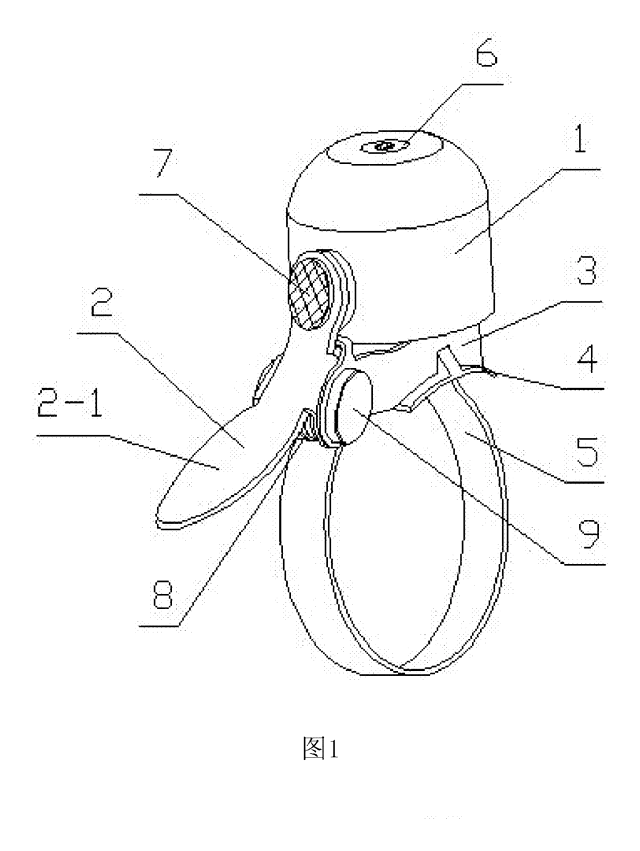
Sports & Recreation
Compact Torsion-Spring Bike Bell
Mini bike bell with a standard torsion spring and a rubber-floated dome - small size, clear tone, quick strap mount.
Patent CN205819384U
Sports & Recreation
Padded Toe-Box Shield for Sneakers
Ventilated, silicone-lined toe-box insert that supports the front of a sneaker and cushions the toes.
Patent CN209473731U
Sports & Recreation
Reversible Fishing Seat-Box Lid with Backrest
Fishing seat-box lid that flips on removable hinge pins: cushion, backrest and storage on one face.
Patent CN208624426U
Sports & Recreation
Swivel-Pin Skateboard Truck with Rubber Sleeve
Skateboard truck with a turning center pin, a tilting axle clamp and a rubber sleeve that centers it.
Patent CN216777880U
Sports & Recreation
Full-Face Bike Helmet with Magnetic Detachable Chin Bar
Full-face cycling helmet whose chin bar clips on and off with magnetic, latching side connectors.
Patent CN206630067U
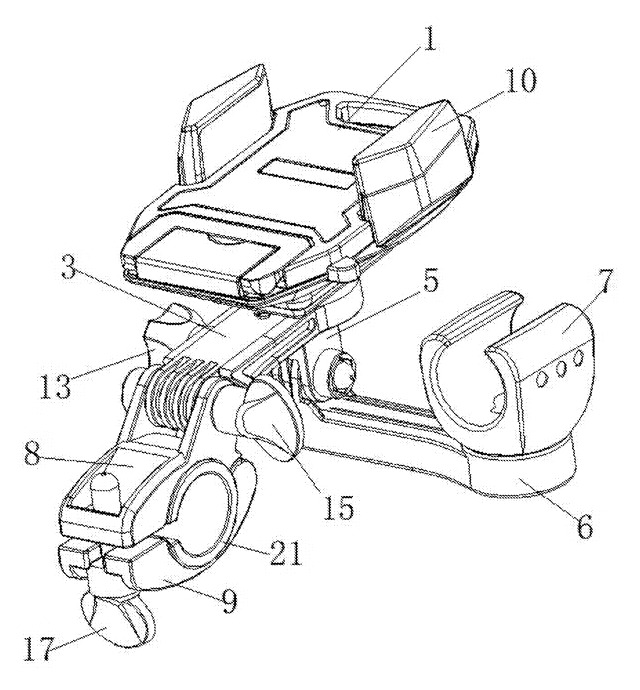
Sports & Recreation
Bike Phone Holder with Built-In Flashlight Clamp
Handlebar mount with a phone cradle on top and a flashlight clamp below, on one arm.
Patent CN206077485U
Browse by category
- Apparel & Accessories (25)
- Baby & Kids (18)
- Bags & Luggage (12)
- Bath & Personal Care (18)
- Car Accessories (14)
- Furniture, Bedding & Storage (13)
- Garden & Outdoor (21)
- Health & Wellness (9)
- Home, Kitchen & Cleaning (28)
- Lighting (14)
- Packaging & Containers (7)
- Pet Products (6)
- Phone & Camera Accessories (5)
- Retail Display (15)
- School, Office & Art (21)
- Sports & Recreation (27)
- Tools & Workshop (32)
- Toys & Games (14)
This page is based on the public patent document CN107789825B, assigned to Guangzhou Yongyuan Sporting Goods Technology Co ltd. IP2M is an independent manufacturing service and is not affiliated with, endorsed by or licensed by the patent owner. Images marked as concept renderings are illustrations, not photos of an existing product. Patent status information is provided for reference only and is not legal advice; confirm freedom to operate for your market before production. Full disclaimer.