At a glance
| Patent number | CN107789825B (application CN201711173907) |
| Type | China invention patent (发明专利) - protects product shape, structure, and method |
| Original title | Skates shoe rack with buffer structure (一种带缓冲结构的冰刀鞋架) |
| Patent owner | Guangzhou Yongyuan Sporting Goods Technology Co ltd |
| Inventors | Yu Quanhong, Yu Tinghong |
| Filing date | 2017-11-22 |
| Grant date | 2019-12-06 |
| Status (China) | In force - valid until at most 2037-11-22, provided annual fees are paid |
| Patent family | Chinese filings only - no US, European, Japanese, PCT or other filings listed |
| Cited by | 0 later documents |
| Source | Google Patents (search for CN107789825B) |
What the claims cover, in plain language
Claim 1 defines an ice skate rack comprising a rack body (1) with shoe supporting seats (2) at both ends. The key feature is an elastic body (3) arranged in at least one seat to increase transverse torsion and buffering. The seat includes a supporting seat body (21) with a hollow-out part (22) and a slot (23) that partially separates the seat body from the rack body. The elastic body is placed within this slot.
Claim 2 specifies that the elastic body (3) can be an elastic sphere, with arc-shaped grooves (24) at the upper and lower ends of the slot to accommodate its rotation. Claim 3 adds positioning grooves (25) in the arc-shaped grooves and corresponding positioning protrusions (31) on the sphere to clamp it in place. Claims 4 and 5 describe alternative elastic body shapes: elliptical or U-shaped. Claim 6 states the rack body (1) is made of carbon fiber material. Claims 7 and 8 detail the placement of the slots (23), either on the same side or opposite sides of the supporting seat bodies.
This is a simplified reading for orientation only. The legal scope is defined by the exact claim wording in the official Chinese document.
What this means for US production
This patent was filed only in China and is currently in force. Therefore, making or selling this specific design in China requires the owner’s permission. However, since there are no US patents in this family, the design itself is not restricted by this patent in the United States.
Two points to settle early:
- Other patents may exist. Ice skate equipment is a specialized field with existing intellectual property protections. It is crucial to conduct a freedom-to-operate (FTO) review to ensure that the carbon fiber construction and the specific buffer mechanisms do not infringe on any other active US patents held by major sporting goods manufacturers.
- Material Sourcing. The claim specifies carbon fiber for the rack body. Ensuring consistent quality and supply chain reliability for carbon fiber components is essential for meeting performance standards.
Customization and manufacturing
What can be customized
| Area | Options |
|---|---|
| Elastic Body Shape | Sphere (with arc grooves), Ellipse, or U-shape depending on desired flexibility profile. |
| Seat Configuration | Slots on single seat, both seats, same side, or opposite sides. |
| Material Grade | Different grades of carbon fiber weave and resin systems for varying stiffness and weight. |
| Finish | Clear coat, colored lacquer, or textured grip surfaces on the rack body. |
| Attachment Mechanism | Methods for securing the rack to the skate boot sole (screws, adhesives, clips). |
Things to plan for (US market)
- ASTM F2423 - Standard specification for ice skates, covering general safety and performance requirements.
- Consumer Product Safety Improvement Act (CPSIA) - Applies if the skates are marketed primarily for children under 12, requiring third-party testing for lead and phthalates in plastics and coatings.
- Proposition 65 (California) - Screening for chemicals known to cause cancer or reproductive harm in materials like resins and adhesives.
How a project runs
- Inquiry - Define target skate type (figure, hockey, recreational) and quantity.
- Design - Finalize elastic body geometry, slot dimensions, and carbon fiber layup.
- Prototype - Create samples to test torsion limits, shock absorption, and durability.
- Pilot Run - Small batch production to validate assembly processes and quality control.
- Production - Full-scale manufacturing of carbon fiber racks and injection molding of elastic bodies.
Quantities & timeline
Carbon fiber racks require mold tooling for the pre-preg layup process, which has a longer lead time than metal stamping. Elastic bodies require precision injection molds. Testing for fatigue resistance and impact absorption will dictate the final design iteration. Send us your target skate category, quantity, and performance specs and we will reply with options.
Patent drawings
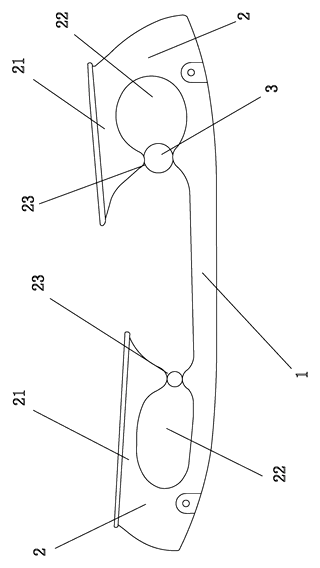
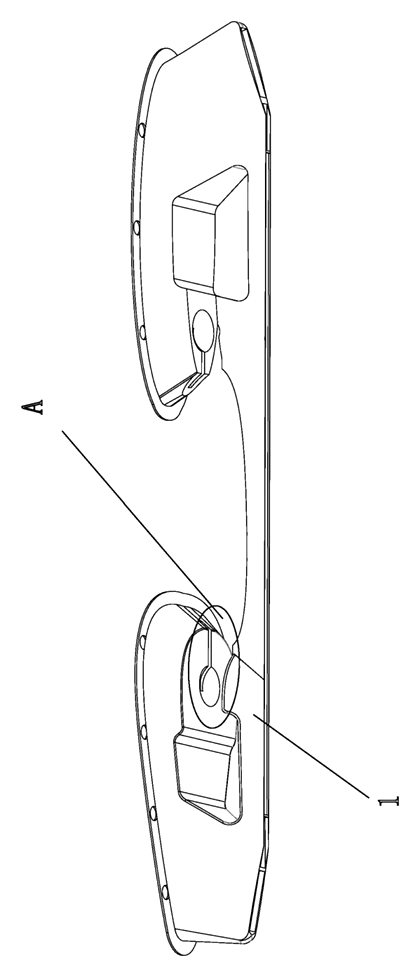
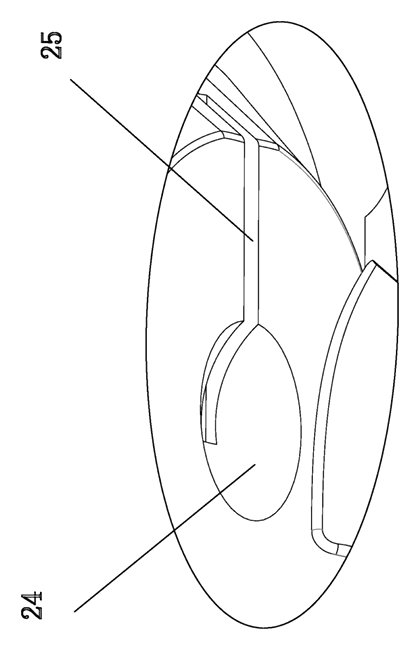
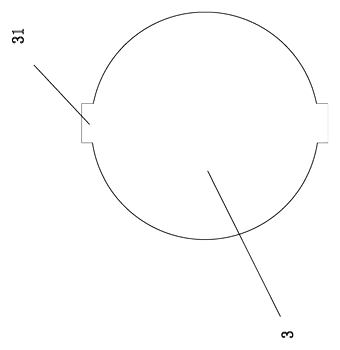
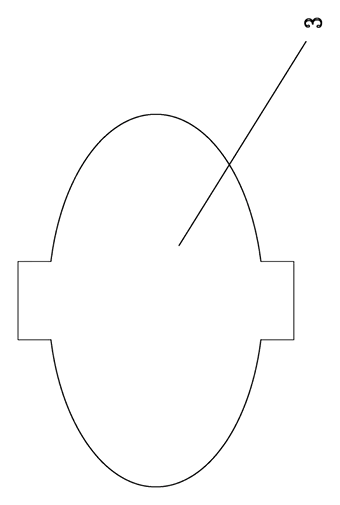
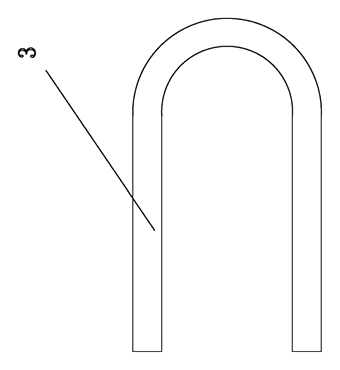
Drawings reproduced from the public patent document for reference.