
Patent CN107836425B
Updated October 28, 2026Conical Indoor Mosquito Trap with Light and Liquid Lure
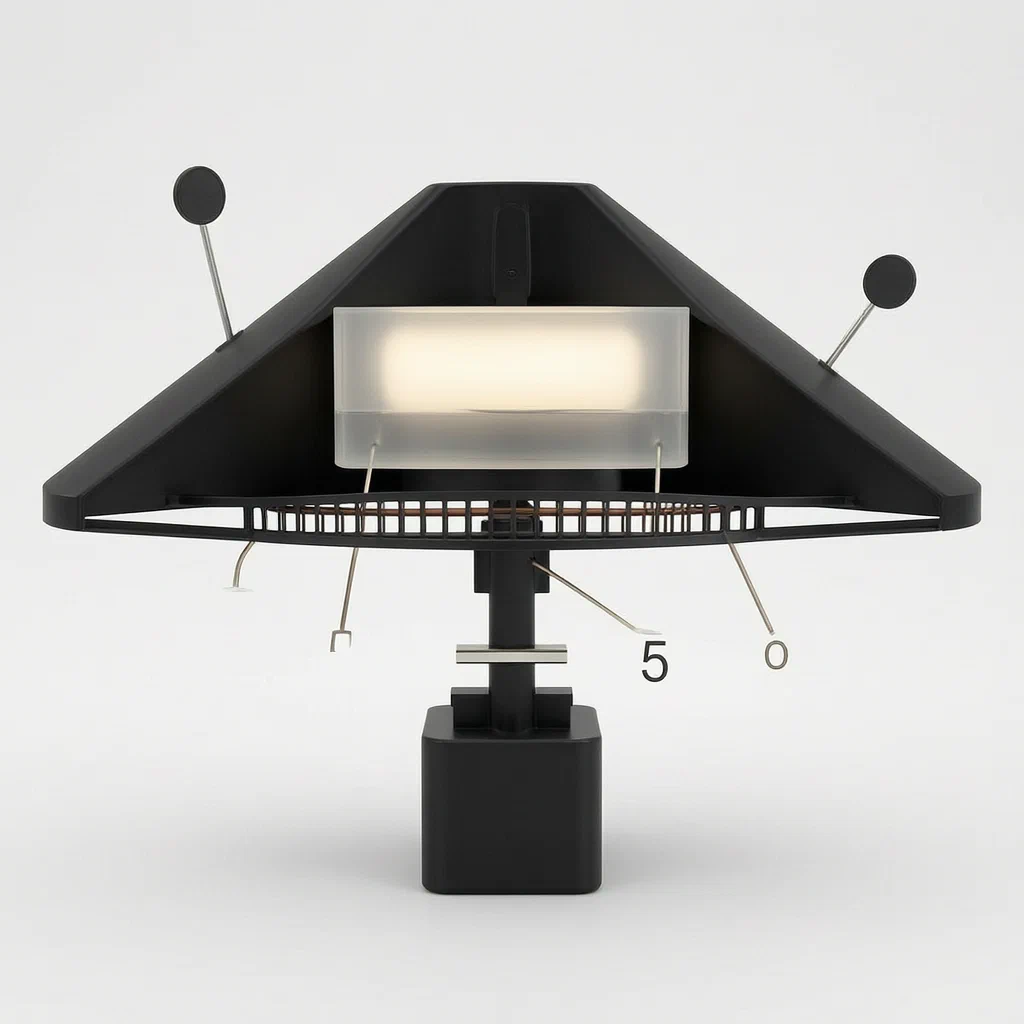
Standard indoor bug zappers often rely on high-voltage grids or bright lights that consume significant power and create noise when insects are caught. This design takes a different approach for enclosed spaces. It uses a conical box body with a single top opening so that once mosquitoes enter, they do not easily find their way out. Below the opening, a light-emitting device draws them in, and directly beneath it sits a trapping device consisting of an open-top containing box filled with a trapping liquid, such as a viscous sweet liquid. To increase the catch rate, the outside of the cone can be wrapped in a black attractant material stored in a curling device, which appeals to the visual preferences of mosquitoes. An internal electrical setup allows the light brightness to be adjusted by shifting the contact point of conductive rods along a resistance strip, keeping power consumption low while maintaining attraction.
- China invention patent - lapsed
- No filings outside China
- Pest control hardware
- Plastic housing, LED module, liquid container
Splat! What let you down?
🔦
Adjustable light output
Conductive rods slide along a resistance strip to change the brightness of the light-emitting device without external switches.
💧
Liquid lure container
An open-top containing box holds a trapping liquid, such as a viscous sweet solution, to draw mosquitoes downward.
🌑
Black outer attractant
A curling device holds a black material that wraps the exterior, appealing to the visual behavior of indoor mosquitoes.
🔽
Conical escape-proof shape
The cone directs insects toward the center and limits their ability to fly back out through the single top inlet.
Bring this product to market
- ✓ Patent vetted China-only family and legal status checked
- 2 Product brief · now How it works, uses and options written up
- 3 Prototype First samples for buyers to review
- 4 Pilot run Small first batch for launch customers
- 5 Volume production Repeat orders at scale
Buyer interest
– of 100 buyers needed to start prototyping
One click, no sign-up. Each vote is one real visitor, and products with the most interest go to prototyping first.
Build team: no members yet. Need a partner, co-funding or skills to build this? Join and we introduce the team once it forms.
The problem
Indoor pest control devices often use high-wattage ultraviolet tubes or exposed electrified grids. These approaches consume substantial electricity, generate audible snapping noises when insects are caught, and introduce exposed electrical components into living spaces. Furthermore, many traps are designed for large open areas rather than the specific flight patterns and resting behaviors of mosquitoes inside homes or offices. When a trap relies solely on light, mosquitoes may circle the device without being captured, reducing the overall success rate in enclosed rooms.
The solution
This device addresses these points through a combination of physical shape, targeted lighting, and liquid bait.
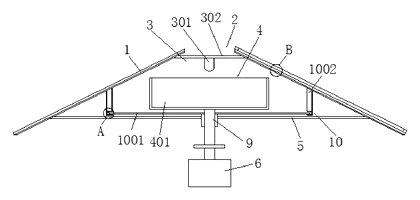
- A conical box body (1) narrows downward, creating a confined space where mosquitoes that enter through the top have difficulty finding the exit.
- A mosquito inlet (2) at the top opening is fitted with a detachable separation net (mesh diameter about 4-10 mm) to keep larger objects out while allowing target insects to pass.
- Directly below the inlet, a light-emitting device (3) provides attraction. The patent describes using an LED white light or a light-emitting element radiating purple light at a wavelength of about 365 nm.
- Beneath the light sits a trapping device (4), which consists of a containing box (401) with an open upper end. This box is filled with a trapping liquid, such as a viscous sweet liquid, to attract and catch mosquitoes.
- A bottom cover (5) seals the lower section and connects to a base (6) that routes power from a supply to the light-emitting device.
- On the exterior, a curling device (7) stores a black attractant (8) made of paper, plastic, or cloth, which unrolls to cover the outer surface of the box body.
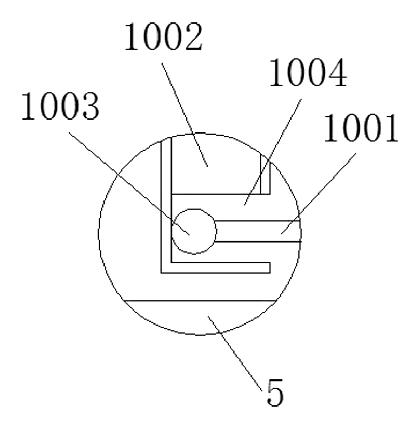
- Internally, an electrical installation uses conductive rods connected to a connecting shaft (9) that press against a resistance strip. Changing the contact point alters the circuit resistance, adjusting the brightness of the light.
Who it is for
- Home appliance brands looking to add a low-power, grid-free insect trap to their indoor product lines.
- Amazon private-label sellers sourcing quiet, visually distinct pest control devices for home and bedroom categories.
- Hospitality wholesalers supplying hotels or guest houses where a silent, spray-free trap with a sweet-bait option suits guest rooms.
- Hardware distributors expanding their seasonal pest management catalogs with electrically simple traps.
How it works
The main parts
| No. | Part | What it does |
|---|---|---|
| 1 | Box body | Conical housing that directs mosquitoes inward and limits escape. |
| 2 | Mosquito inlet | Top opening where insects enter; fitted with a separation net. |
| 3 | Light-emitting device | LED or 365 nm purple light element (301) on a connecting seat with a through hole. |
| 4 | Trapping device | Open-top containing box (401) holding the trapping liquid. |
| 5 | Bottom cover | Seals the base of the cone and attaches to the box body. |
| 6 | Base | Connects the bottom cover to the power supply. |
| 7 | Curling device | Holds the black attractant material on the outer wall. |
| 8 | Attractant | Black paper, plastic, or cloth that covers the exterior. |
| 9 | Connecting shaft | Extends from the base into the box body, linking the conductive rods and containing box. |
Operating steps
- Preparation - Detach the box body from the bottom cover, remove the containing box, pour the trapping liquid (e.g., a viscous sweet liquid) into it, and reassemble. Unroll the black attractant from the curling device to cover the exterior.
- Power on - Connect the base to the power supply. The light-emitting device illuminates through the through hole in its connecting seat.
- Attraction - The light and the black exterior draw mosquitoes toward the top inlet. They pass through the separation net into the conical interior.
- Capture - Drawn by the light and the scent of the trapping liquid, mosquitoes move downward into the containing box where they are caught by the viscous liquid.
- Brightness adjustment - If needed, rotating the box body on its bottom cover shifts the conductive rods along the resistance strip, changing the light intensity to suit the room size or power limits.
Applications
Bedrooms and sleeping areas
Users need quiet pest control overnight without the snapping sounds of electrified grids. The adjustable light keeps illumination low enough for sleep while the liquid lure operates silently.
Hotel and guest rooms
Hospitality buyers want a trap that runs silently and has no exposed electrified grid near guests. The enclosed conical shape and lack of exposed high-voltage parts make it suitable for bedside tables or room corners.
Offices and workspaces
Employees are distracted by flying insects near desks. A compact trap placed on a shelf draws mosquitoes away from workers using the light and dark exterior contrast without disrupting the environment.
Restaurants and cafes
Food service operators often prefer not to spray near dining tables. With a sweet, non-pesticide bait, the trap relies on light and the liquid lure, keeping the capture mechanism contained within the box body away from food preparation zones.
Where it is less suitable
- Large outdoor patios or gardens - the device is described for indoor and closed environments; open-air spaces require higher-output or wind-assisted traps.
- Areas requiring immediate knockdown - liquid lures take time to catch insects compared to high-voltage grids or fan-suction traps.
- Environments where liquid spills are unacceptable - the containing box holds a liquid, making it less ideal for locations subject to heavy vibration or frequent tipping.
Frequently asked questions
How does the light brightness change?
The patent describes an internal electrical installation where conductive rods connected to a rotating shaft press against a resistance strip. As the contact point moves along the strip, the electrical resistance changes, which adjusts the luminous shade degree of the light-emitting device.
What goes inside the containing box?
The containing box is filled with a trapping liquid. The patent mentions a sweet liquid with certain viscosity, a fragrant viscous solution, or a mosquito-killing liquid. The exact formulation is set in design and confirmed on prototypes.
Why is the outside covered in black material?
The patent states that mosquitoes are attracted to dark colors indoors. A curling device on the exterior holds a black attractant—such as paper, plastic, or cloth—that unrolls to cover the box body, encouraging mosquitoes to approach the trap.
Does it plug into a wall outlet?
The base connects the light-emitting device to a power supply, but the patent does not specify the voltage or plug type. The power interface is set in design based on the target market, such as USB or standard AC.
How do you clean the trap?
The bottom cover detaches from the box body, and the containing box can be removed from the connecting shaft. Users empty the used trapping liquid, wash the containing box, refill it, and reassemble the unit.
Is the separation net permanent?
No. The patent specifies that the separation net above the mosquito inlet is detachably connected to the box body. The mesh diameter is about 4-10 mm, allowing mosquitoes to enter while blocking larger debris.
Can this design be made and sold in the US?
The patent was filed only in China and is lapsed due to non-payment of annual fees, so it does not restrict the design in the US or in China. Insect traps may be covered by other US patents - see Patent & Production - so we recommend a freedom-to-operate check before volume production.
Are you affiliated with the patent owner?
No. IP2M is an independent design and manufacturing service working from the public patent document.
Request a quote
Click Request a Quote below to see our email address - copy it, or open your email app with a ready-made message. Please mention patent CN107836425B in the subject.
Helpful details to include:
- Your company and channel (appliance brand, Amazon seller, hospitality wholesaler, hardware distributor)
- Target dimensions for the conical housing
- Power source (USB, battery, or AC)
- Light type (white LED or about 365 nm UV)
- Attractant material preference (paper, plastic, or cloth)
- Estimated quantity and target price
- Timeline - when you would like samples and the first shipment
You can also reach us at (332) 203-9997.
Explore this product
Interested in building this?
Tell us your target market, quantity and timeline. We reply with options for prototyping, small-batch runs or volume production.
Send your inquiry to
Please put CN107836425B in the subject line and tell us your company, country, estimated quantity and timeline.
Prefer to talk? Call (332) 203-9997.
More product-ready patents
All Garden & Outdoor patents →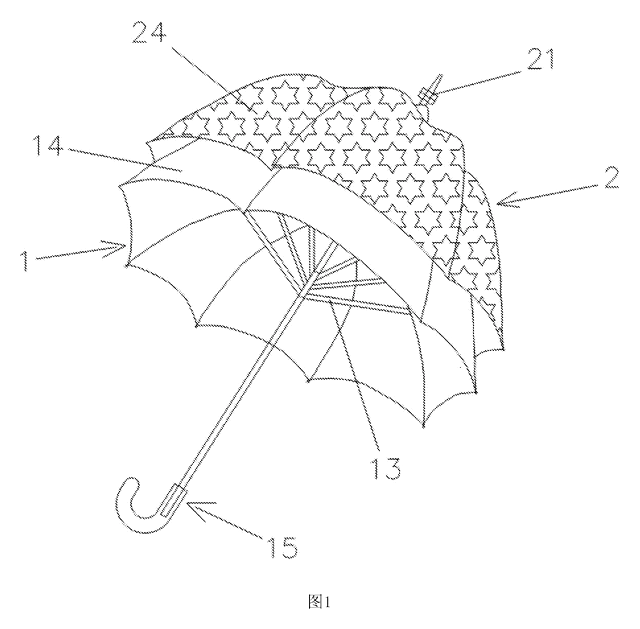
Garden & Outdoor
2-in-1 Parent & Child Umbrella
Full-size umbrella with a nested smaller umbrella on top - a rotating decorative layer that detaches into a kid-size umbrella.
Patent CN205611962U
Garden & Outdoor
Wire-Mesh Tree Root & Trunk Guard Against Rodents
Three-part wire-mesh guard that protects the roots and lower trunk of young trees from burrowing and gnawing animals.
Patent CN206808261U
Garden & Outdoor
Adjustable-Angle Tree Support Prop
Tree prop with a pinned base, angle-locking hinge, twist-adjust tube and a locking trunk ring.
Patent CN208370491U
Garden & Outdoor
Self-Renewing Glue-Roller Mosquito Trap
UV insect trap with a glue roller that re-coats itself and scrapes the catch into a tray - no glue boards.
Patent CN217038569U
Garden & Outdoor
Cam-Lock Telescopic Pole for Garden Power Tools
Telescopic pole for garden power tools with cam-lever locks and a spring-button, tear-drop head socket.
Patent CN205812889U
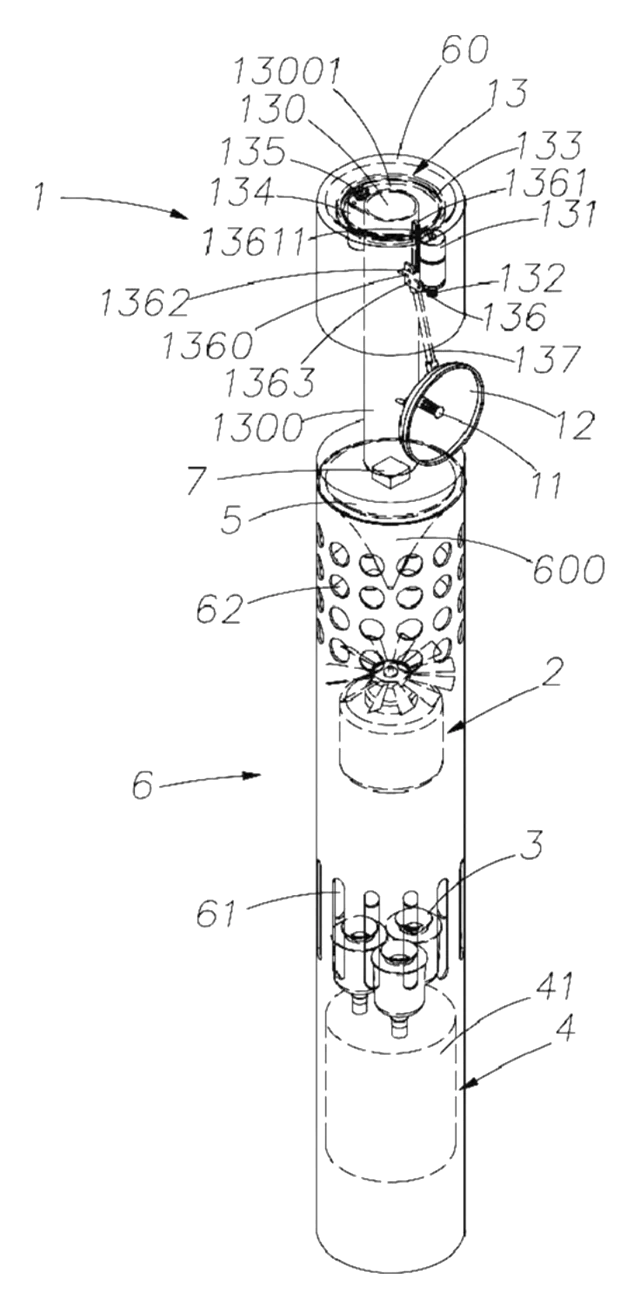
Garden & Outdoor
Mosquito Fan That Listens for Mosquitoes Before It Sprays
Fan with a scanning microphone dish that mists repellent only when it hears mosquitoes.
Patent CN208708542U
Browse by category
- Apparel & Accessories (22)
- Baby & Kids (16)
- Bags & Luggage (9)
- Bath & Personal Care (16)
- Car Accessories (10)
- Furniture, Bedding & Storage (12)
- Garden & Outdoor (18)
- Health & Wellness (8)
- Home, Kitchen & Cleaning (24)
- Lighting (12)
- Packaging & Containers (6)
- Pet Products (6)
- Phone & Camera Accessories (4)
- Retail Display (13)
- School, Office & Art (19)
- Sports & Recreation (25)
- Tools & Workshop (27)
- Toys & Games (12)
This page is based on the public patent document CN107836425B, assigned to Individual. IP2M is an independent manufacturing service and is not affiliated with, endorsed by or licensed by the patent owner. Images marked as concept renderings are illustrations, not photos of an existing product. Patent status information is provided for reference only and is not legal advice; confirm freedom to operate for your market before production. Full disclaimer.