At a glance
| Patent number | CN107836425B (application CN201710990926) |
| Type | China invention patent (发明专利) - protects product shape, structure and method |
| Original title | Dual-purpose device of killing of mosquito (一种蚊虫两用的捕杀装置) |
| Patent owner | Individual |
| Inventors | Song Jinxu |
| Filing date | 2017-10-23 |
| Grant date | 2021-04-06 |
| Status (China) | Lapsed - terminated for non-payment of annual fees (recorded 2022-10-11) |
| Patent family | Chinese filings only - no US, European, Japanese, PCT or other filings listed |
| Cited by | 1 later document |
| Source | Google Patents (search for CN107836425B) |
What the claims cover, in plain language
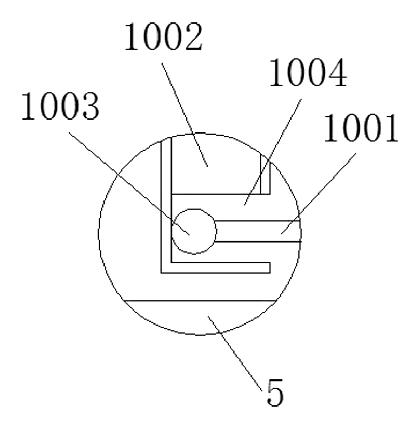
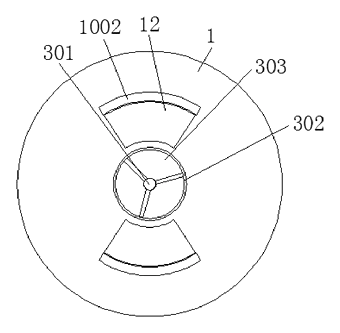
Claim 1 - a dual-purpose mosquito catching and killing device with a conical box body. The top opens to form a mosquito inlet. Below the inlet, a light-emitting device and a trapping device are fixed in sequence, with the trapping device under the light. A bottom cover connects to the box body, and its middle links to a base that powers the light. Between the trapping device and the bottom cover is an electrical installation comprising conductive rods that contact a resistance strip. The rods connect to a connecting shaft, which also links to the bottom cover. Moving the contact point along the resistance strip changes the brightness of the light-emitting device.
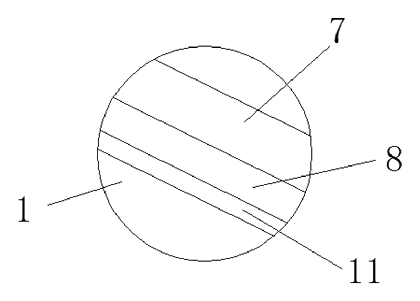
Claim 2 - the outer surface has a curling device holding a black attractant that covers the box body. Claim 3 - the base extends into the box via the connecting shaft; the trapping device is a containing box with an open top, filled with a trapping liquid. Claim 4 - the light-emitting device has a light-emitting element on a connecting seat with a through hole for insects. Claim 5 - the connecting shaft holds at least two conductive rods with profile flange contact ends fitting into grooves on the resistance strip. Claim 6 - the outer wall has an electrically insulating layer under the attractant, and the inner wall has a conductive region energized when powered. Claim 7 - a detachable separation net with about 4-10 mm mesh diameter sits above the mosquito inlet. Claim 8 - a method of use involving detaching the box body and bottom cover, removing the containing box, preparing and pouring the trapping liquid, and assembling the device.
This is a simplified reading for orientation only. The legal scope is defined by the exact claim wording in the official Chinese document.
What this means for US production
This patent was filed only in China and is lapsed due to non-payment of annual fees, so it no longer restricts anyone in China either. It has no US or other foreign counterpart.
Two points to settle early:
- Other patents may exist. Jieping Luo holds a later European patent (EP4176716A1) citing this document in the pest control field, indicating ongoing patent activity around insect traps. A freedom-to-operate (FTO) review covering UV light traps, conical housings, and liquid lure mechanisms is recommended before tooling.
- Electrical safety. The internal resistance strip and conductive rod assembly forms a variable resistor circuit. Component ratings, insulation layers, and creepage distances must be engineered to meet US household voltage standards.
Customization and manufacturing
What can be customized
| Area | Options |
|---|---|
| Housing dimensions | Cone height and inlet diameter to be confirmed in design |
| Light source | White LED or about 365 nm UV LED, brightness range set by resistance strip |
| Attractant material | Black paper, plastic film, or cloth; color and texture to be confirmed in design |
| Separation net | Mesh diameter about 4-10 mm, detachable frame style |
| Containing box | Volume and shape to match the cone interior, removable for cleaning |
| Power input | USB, battery, or AC adapter depending on target market |
Things to plan for (US market)
- UL 153 (portable electric luminaires) - the plug-in light and its resistance-strip dimming circuit are typically evaluated under this standard; a listed external power adapter simplifies the work.
- FCC Part 15 - any electronic circuit emitting radio frequency energy, including LED drivers, must comply if sold in the US.
- EPA FIFRA - a mechanical light-and-bait trap is a pesticide device: it does not need product registration, but it must be made in an EPA-registered establishment, carry the establishment number on the label, and avoid false or misleading efficacy claims (40 CFR 152.500). If the liquid contains an insecticide, the liquid itself needs EPA registration.
- California Prop 65 - plastics, solder, and LED components must be screened for listed chemicals.
How a project runs
- Inquiry - define the target environment, power source, and whether the trapping liquid will be supplied separately or pre-filled.
- Design - model the conical box body, size the containing box, select the LED and resistance strip parameters, and design the curling mechanism.
- Prototype - produce samples to test mosquito entry rates, light adjustment smoothness, and liquid containment stability.
- Pilot run - run electrical safety tests, verify FCC emissions, and check the durability of the black attractant material.
- Production - injection molding for the cone and base, PCB assembly for the light circuit, printing or cutting the attractant sheets, and final assembly.
Quantities & timeline
The conical housing requires an injection mold sized to the chosen dimensions, and the containing box needs a separate mold. The resistance strip and conductive rod assembly involves precise stamping or printed electronics. Certification testing for UL and FCC adds to the schedule. Send us your target dimensions, power source, attractant material preference, estimated quantity and target price and we will reply with options.
Patent drawings
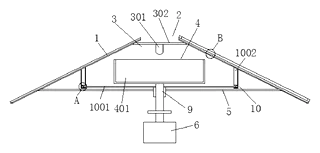
Drawings reproduced from the public patent document for reference.