
Patent CN107997320B
Updated November 5, 2026Multifunctional Backpack Umbrella with Telescopic Shade and Lift Mechanism
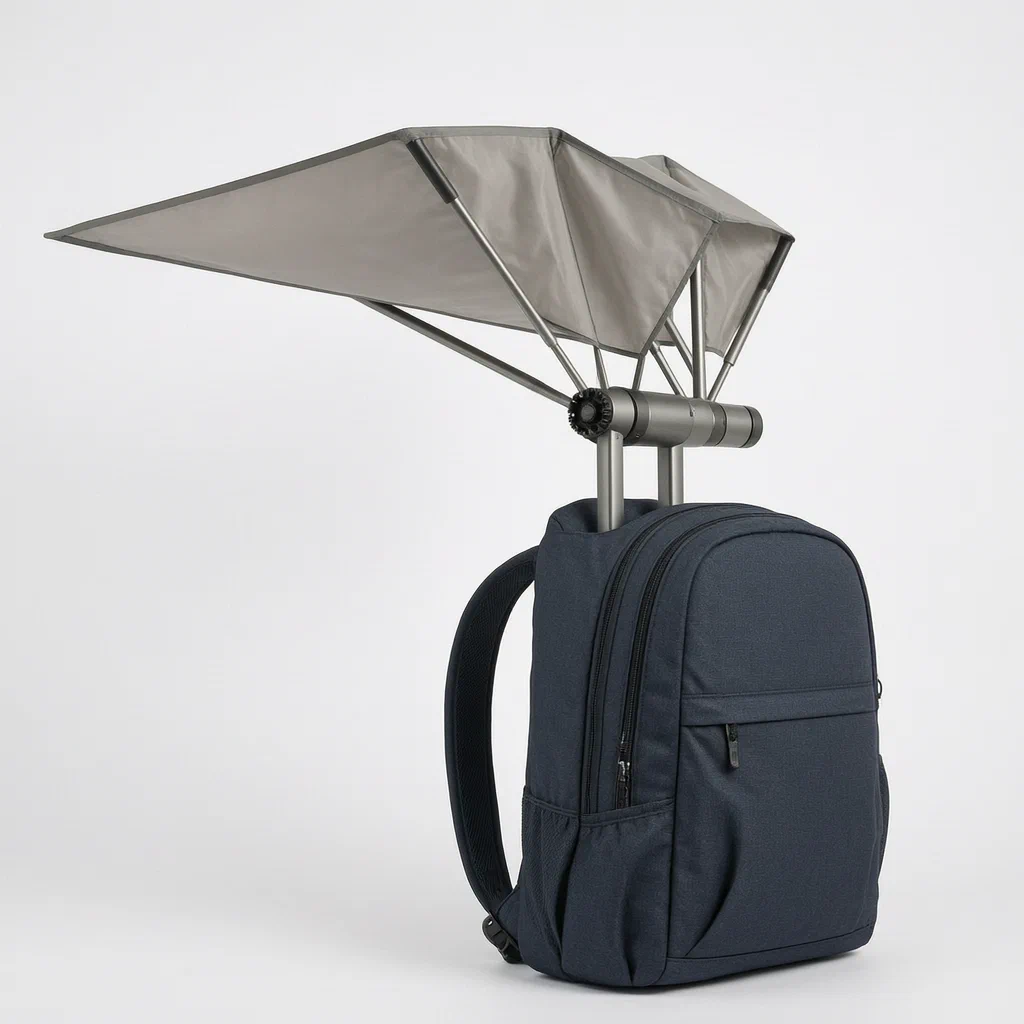
Standard backpacks offer no protection from overhead sun, while handheld umbrellas occupy hands and are unstable in wind. This design integrates a rigid yet foldable canopy directly onto the pack. Three nested bracket sets expand outward via synchronized rotating seats, creating a broad shading area that sits above the user’s head. A telescopic lift allows height adjustment for different users or terrain. When not needed, the brackets collapse and the fabric folds neatly into the backpack’s dedicated compartment. The structure supports add-ons like solar panels for charging devices or fans for cooling, turning the backpack into a mobile station for outdoor work or travel.
- China invention patent - lapsed
- No filings outside China
- Outdoor gear & accessories
- Telescopic rods, linked brackets, flexible shades
Splat! What let you down?
🎒
Integrated Design
The shade mounts directly to the backpack frame, freeing hands and ensuring stability.
⚙️
Synchronized Opening
Linkage mechanisms ensure left and right brackets extend evenly without manual adjustment.
📏
Height Adjustable
Telescopic rods allow the shade position to be raised or lowered to suit the user.
☀️
Solar Ready
Flexible solar panels can be attached to the shade surface to charge connected devices.
Bring this product to market
- ✓ Patent review Patent family and legal status reviewed in the relevant jurisdictions.
- 2 Product brief · now How it works, uses and options written up
- 3 Prototype First samples for buyers to review
- 4 Pilot run Small first batch for launch customers
- 5 Volume production Repeat orders at scale
Buyer interest
– of 100 buyers needed to start prototyping
One click, no sign-up. Each vote is one real visitor, and products with the most interest go to prototyping first.
Build team: no members yet. Need a partner, co-funding or skills to build this? Join and we introduce the team once it forms.
Patent Rights & Team Participation
Before joining a development team, participants should ensure they have the necessary rights or authorization to participate in the project.
Participation is generally appropriate where:
- You own the relevant patent rights or have obtained permission or a license from the rights holder.
- The relevant patent rights have expired or have been legally invalidated in the jurisdictions where the planned activities will take place.
- The planned development, manufacturing, and commercialization activities have been independently assessed and do not infringe applicable patent rights in the relevant jurisdictions.
Important: Being located outside a country where a patent is protected does not automatically exempt you from patent infringement risks. Patent rights may apply based on where development, manufacturing, use, sale, or import activities take place.
IP2M does not grant any patent license or authorization through team participation. Joining a project does not provide permission to use, manufacture, or commercialize patented technology.
The problem
Outdoor workers, hikers, and travelers often face strong overhead sunlight but cannot use traditional umbrellas because they require holding and are prone to tipping in wind. Backpacks provide storage but no personal shade. Existing solutions either lack stability or fail to integrate seamlessly with carrying loads, forcing users to choose between convenience and protection.
The solution
- Back Frame (1) serves as the structural base, connecting to the backpack body (5).
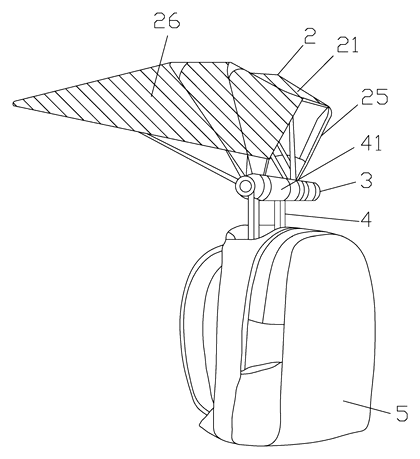
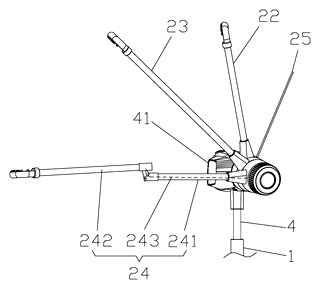
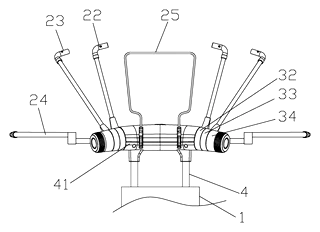
- Sun-Shading Device (2) consists of three pairs of symmetrical brackets: inner (22), middle (23), and outer (24). Flexible shades (21) cover these brackets.
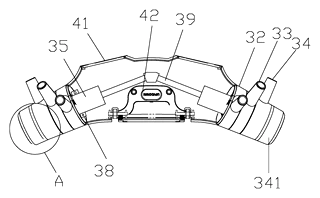
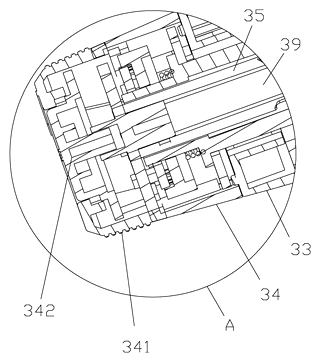
- Awning Opening Device (3) includes left and right rotating devices. Each has inner, middle, and outer rotating seats (32, 33, 34) on a common axis. These axes cross each other at an acute angle to the horizontal, enabling the brackets to spread outward.
- Linkage Mechanism connects the left and right rotating devices, ensuring they open and close in synchronization.
- Lifting Device (4) comprises a component shell (41) housing the awning mechanism and telescopic rods supporting it. A lifting button (42) controls the extension of the rods, adjusting the shade’s height.
- Small Support (25) is hinged to the component shell and connected to the tail end of the flexible shade. It moves only under the pulling force of the shade, aided by a return spring.
- Outer Bracket Structure: The outer bracket (24) uses two rods (241, 242). A pull rope (243) runs through the first rod to a reel on the rotating device. Tightening the rope straightens the second rod; a reset coil spring folds it when released.
Who it is for
- Outdoor Gear Brands looking to differentiate their hiking packs with integrated sun protection features.
- Event Staffing Companies needing hands-free shade solutions for vendors and workers at outdoor festivals or markets.
- Photography Equipment Suppliers who can bundle this backpack with camera rigs for landscape photographers working in bright conditions.
- Utility Workers requiring durable, adjustable shade during long hours of outdoor maintenance or construction supervision.
How it works
The main parts
| No. | Part | What it does |
|---|---|---|
| 1 | Back Frame | Mounts to the backpack; holds the lifting device. |
| 2, 21 | Shade & Brackets | Three-tier bracket system covered by flexible fabric. |
| 3 | Rotating Devices | Left/right units with seats that drive bracket expansion. |
| 4, 41 | Lifting Assembly | Telescopic rods and shell adjust vertical position. |
| 25 | Small Support | Hinged tail support that follows the shade’s tension. |
| 241/242 | Outer Rods | Linked by a pull rope and spring for folding/extending. |
Operating Steps
- Deploy: Press the lifting button to raise the telescopic rods to the desired height. Activate the opening mechanism (manual or motorized if equipped with the smart system).
- Expand: The rotating seats turn, pushing the inner, middle, and outer brackets outward. The linkage ensures both sides move equally.
- Tension: As the outer brackets extend, the reel tightens the pull rope, straightening the second rod against the reset spring. The small support hinges back to keep the fabric taut.
- Retract: Release the locking or reverse the motor. Springs and gravity assist the brackets to fold inward. The telescopic rods lower.
- Store: The entire assembly collapses into the backpack body’s designated space, protected by the main pack flap.
Applications
Hiking and Trekking
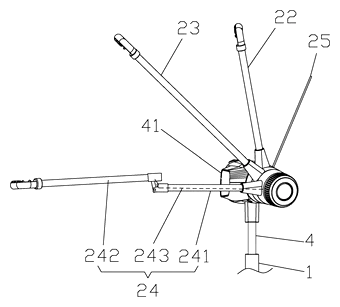
Hikers can stop for breaks without setting up tents or poles. The shade provides immediate relief from UV exposure while keeping hands free for trekking poles or navigation tools. The solar panel option helps recharge GPS devices or phones during long routes.
Outdoor Work Sites
Construction supervisors or utility technicians can wear the pack during inspections. The adjustable height allows the shade to clear hard hats or safety gear. The stable, mounted design prevents the umbrella from blowing away in gusty conditions common on rooftops or open fields.
Photography and Filming
Photographers working in bright sunlight need to see screens clearly. This backpack-mounted shade acts as a portable hood for cameras or monitors. The compact fold means it adds minimal bulk to the kit bag when not in use.
Street Vending and Markets
Vendors at farmers’ markets or craft fairs can stand behind booths all day. The integrated shade protects them from heat stroke without requiring separate parasol stands that clutter the limited booth space.
Where it is less suitable
- Extreme Storms: While stable, the large surface area may still catch high winds compared to low-profile shelters.
- Very Heavy Loads: The back frame must be robust enough to handle both the pack weight and the cantilevered shade forces; lightweight ultralight packs may not support the mounting points.
Patent & Production
At a glance
| Patent number | CN107997320B (application CN201711271636) |
| Type | China invention patent (发明专利) - protects product method and structure |
| Original title | A multifunctional backpack umbrella (一种多功能背包伞) |
| Patent owner | Foshan Fun Intelligent Technology Co Ltd |
| Inventors | Chen Guofan, Zhu Wuhua |
| Filing date | 2017-12-05 |
| Grant date | 2020-02-18 |
| Status (China) | Lapsed - terminated for non-payment of annual fees (recorded 2022-11-11) |
| Patent family | Public record shows Chinese filings only - no US, European, Japanese, PCT or other filings listed |
| Cited by | 0 later documents |
| Source | Google Patents (search for CN107997320B) |
What the claims cover, in plain language
Claim 1 defines a backpack umbrella with a back frame, a sun-shading device made of three pairs of brackets (inner, middle, outer) and flexible shades, an awning opening device with symmetrical left/right rotating seats on crossed axes, and a lifting device using telescopic rods. Key mechanical details include a linkage mechanism synchronizing the left and right rotators, a small support hinged to the shell and pulled by the shade, and an outer bracket formed by two rods connected by a pull rope running through a tube to a reel, with a reset spring for folding.
Claim 2 specifies that the flexible shade covers the tops and side edges of the brackets and includes air holes on the sides. Claim 3 adds a solar panel connected to the flexible shade. Claim 4 mentions a shaping device at the corners where the shade meets the brackets. Claim 5 integrates the whole assembly into a backpack body with a specific storage space. Claim 6 describes an intelligent control system with a battery, interface for external devices, and wireless remote control capability.
This is a simplified reading for orientation only. The legal scope is defined by the exact claim wording in the official Chinese document.
What this means for US production
This patent was filed in China and is currently lapsed due to non-payment of fees. The public record shows no US or other foreign counterpart.
Two points to settle early:
- Other patents may exist. Backpacks with integrated sun shades are a competitive niche. While this specific mechanism is now free to use in China and the US, prior art searches should verify that no active US patents cover similar telescopic or bracket-linkage designs in apparel accessories. A freedom-to-operate (FTO) review is recommended before mass production.
- Component Sourcing. The design relies on precise molding for the rotating seats and telescopic rods. Ensuring consistent tolerances for the linkage mechanisms is critical for smooth operation.
Customization and manufacturing
What can be customized
| Area | Options |
|---|---|
| Fabric | Ripstop nylon, polyester, or coated canvas for water resistance |
| Frame Material | Aluminum alloy or carbon fiber tubes for weight reduction |
| Mechanism | Manual crank vs. motorized electric lift/open-close |
| Electronics | Solar panel wattage, battery capacity, USB output ports |
| Storage | Dedicated pocket size and shape within the backpack |
| Colors | Camouflage, high-vis orange, or brand-specific dyes |
Things to plan for (US market)
- CPSC Guidelines: Ensure no sharp edges on the metal brackets or exposed wires.
- Battery Safety: If including lithium-ion batteries, UN 38.3 transport certification is required. UL standards for battery management systems are advisable.
- Textile Standards: Flammability testing (16 CFR 1610) for clothing/accessories sold in the US.
- Labeling: Care labels and country-of-origin marking are mandatory.
How a project runs
- Concept Validation: CAD modeling of the bracket kinematics to check range of motion.
- Prototype Fabrication: 3D printing of joint housings and sewing of initial shade samples.
- Mechanical Testing: Cycle testing the opening/closing mechanism and telescopic lift.
- Integration: Attaching electronics (if any) and testing solar charging efficiency.
- Tooling & Production: Mold making for plastic parts, cutting dies for fabric, final assembly line setup.
Quantities & timeline
Molds for the complex rotating seats and telescopic joints will take several weeks to produce. Fabric cutting and sewing lines can run in parallel once patterns are approved. Electronic components require lead time for sourcing. Send us your target price, quantity, and feature set (manual/electric/solar) and we will reply with options.
Production notes
Tooling and process
Injection molding is likely used for the rotating seats and hinge housings, requiring steel molds. Telescopic rods typically involve aluminum extrusion and cut-to-length finishing. Fabric components rely on cutting and sewing processes.
Cost drivers
Complexity of the multi-axis linkage mechanism typically drives tooling costs. High-grade fabrics and custom-sized backpack bodies increase material spend. Electronic modules, if included, add significant unit cost.
Prototyping path
We would typically start with 3D-printed or cast components for the joint assemblies to verify fit. Sewn first samples of the shade allow testing of tension and airflow. Fit grading ensures the pack balances correctly on various body types.
What we would change before tooling
We might simplify the pull-rope routing inside the outer bracket to reduce assembly steps. Adjusting the hinge boss design could improve durability against repeated stress.
Common failure points
Seam slippage on the flexible shade under high wind load is a risk. Wire routing and strain relief issues may occur if the electronic version is chosen. Spring fatigue in the return coils could affect folding consistency over time.
Patent drawings
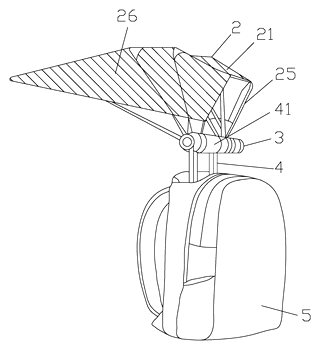
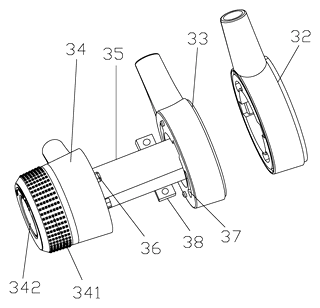
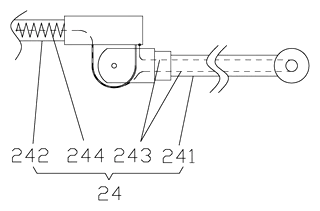
Drawings reproduced from the public patent document for reference.
Frequently asked questions
How does the shade stay stable?
The design uses a rigid back frame and a triangulated bracket system. The three pairs of brackets lock into place when extended, distributing the wind load across the backpack’s structure rather than relying on a single pole.
Can I use it with a standard backpack?
No. The patent describes a specific integration where the lifting device mounts to a dedicated back frame (1) that connects to a backpack body (5) with a pre-designed storage space for the folded shade. It requires a custom-built pack.
Is the opening mechanism automatic?
The base patent describes a manual system using rotating seats and linkages. However, Claim 6 introduces an intelligent control system that can automate the lifting and opening functions using motors and remote control, allowing for semi-automatic or fully automatic operation.
Does the solar panel work in cloudy weather?
According to the patent, the solar panel (26) is connected to the flexible shade. Efficiency depends on the panel specifications chosen during production. Cloudy weather reduces output, so the system likely requires a battery buffer for continuous use.
How heavy is the assembly?
The patent does not specify total weight. Weight depends on materials selected for the frame (aluminum vs. carbon fiber), fabric density, and whether electronic components are added. Lightweight prototypes are expected to be comparable to a medium-duty hiking pack.
Can the shade be removed for washing?
Yes. The flexible shade (21) is connected to the brackets. The patent mentions detachable connection modes such as Velcro (magic subsides), buckles, or clips, which allow the fabric to be separated from the rigid frame for cleaning.
Can this design be made and sold in the US?
The patent was filed in China and is currently lapsed due to non-payment of annual fees. The public record shows no US counterpart. Therefore, this specific patent does not restrict manufacturing or selling in the US. However, independent freedom-to-operate checks are always recommended to ensure no other active US patents cover similar technologies.
Are you affiliated with the patent owner?
No. IP2M is an independent design and manufacturing service working from the public patent document.
Request a quote
Click Request a Quote below to see our email address - copy it, or open your email app with a ready-made message. Please mention patent CN107997320B in the subject.
Helpful details to include:
- Your company and channel (outdoor brand, event supplier, tech accessory maker)
- Target weight and dimensions for the folded pack
- Feature requirements (manual vs. electric, solar panel size, battery capacity)
- Material preferences (fabric type, frame alloy)
- Estimated quantity and target price
- Timeline - when you would like samples and the first shipment
You can also reach us at (332) 203-9997.
Page editor: Daniel Chen, Product Research Editor · IP2M
Last updated November 5, 2026. If something on this page looks wrong, email [email protected] and we will check it against the patent.
Interested in building this?
Tell us your target market, quantity and timeline. We reply with options for prototyping, small-batch runs or volume production.
Send your inquiry to
Please put CN107997320B in the subject line and tell us your company, country, estimated quantity and timeline.
Prefer to talk? Call (332) 203-9997.
More product-ready patents
All Apparel & Accessories patents →
Apparel & Accessories
Stacked Zipper with Teeth That Mesh Top-to-Bottom
Zipper whose two identical tooth rows mesh on top of each other, closed by a simplified slider.
Patent CN205795062U
Apparel & Accessories
Impact-Resistant Glove with a 3D-Printed Lattice Layer
Work glove with a 3D-printed lattice impact layer, TPU knuckle guards and a light mounting area.
Patent CN213785583U
Apparel & Accessories
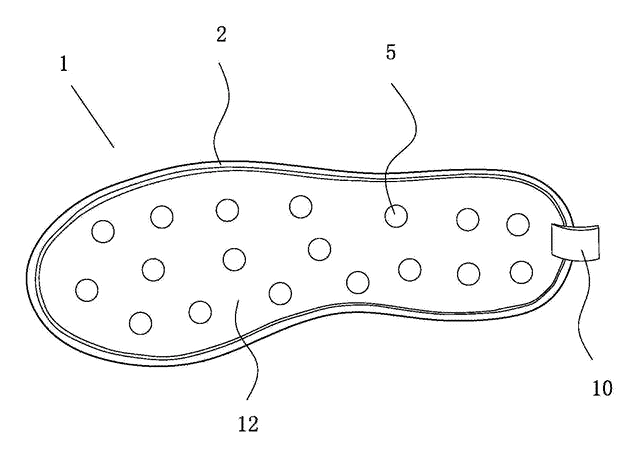
Massage Insole with Spring-Back Silicone Nubs and a Removable Top Layer
Layered insole: silicone nubs rise through a removable perforated top sheet and sink under each step.
Patent CN208286505U
Apparel & Accessories
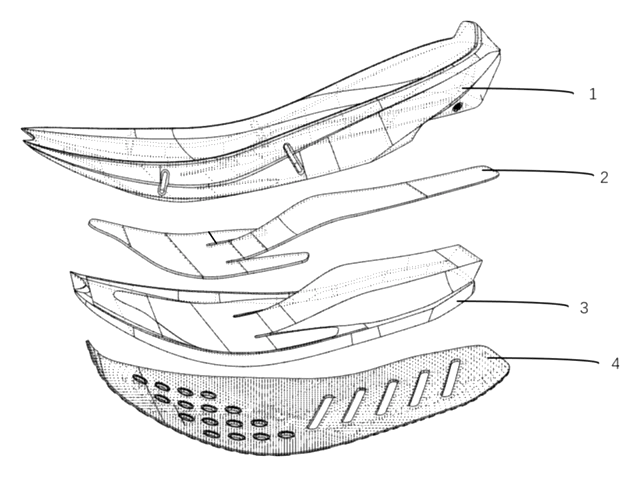
Heel-Less Carbon Plate Running Shoe Sole for Forefoot Strikers
Running sole for forefoot strikers: no ground-touching heel, winged carbon plate between two midsoles.
Patent CN216723354U
Apparel & Accessories
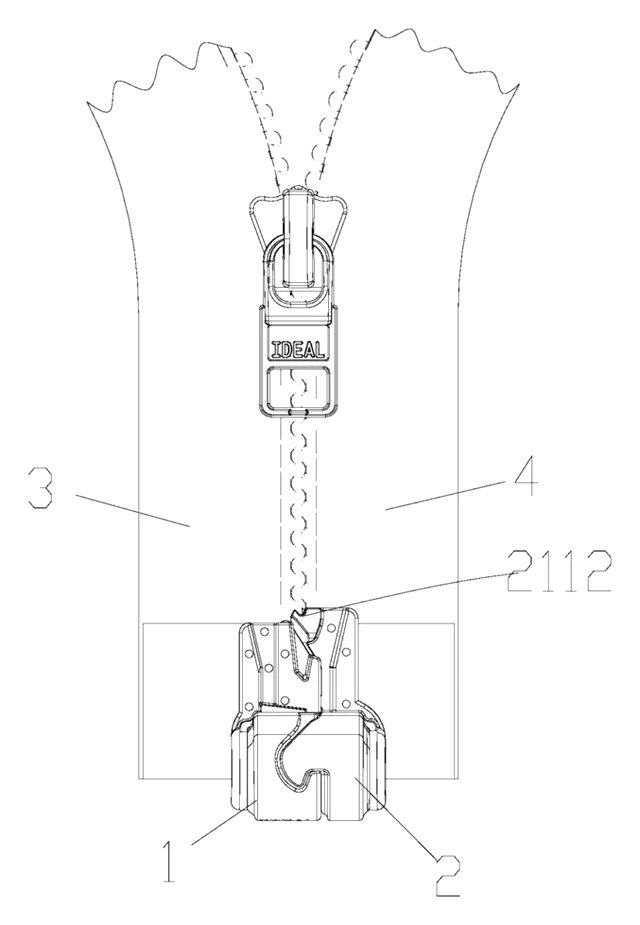
Waterproof Magnetic Zipper Stop That Snaps the Two Halves Together
Separating-zipper stop with sealed magnets: pin and box snap together one-handed, safe in rain and wash.
Patent CN215075936U
Apparel & Accessories
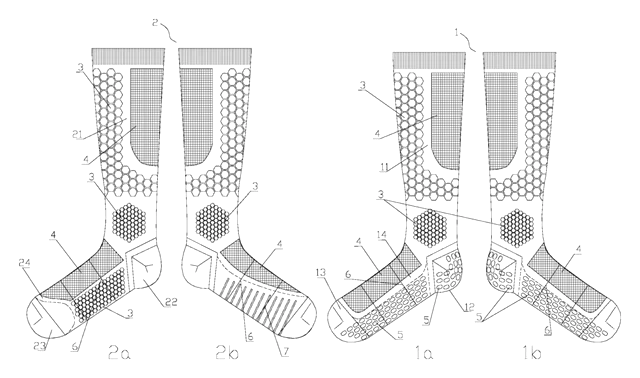
Left-Right Specific Soccer Socks: Grip for the Plant Foot, Touch Pads for the Kicking Foot
Soccer socks knitted as a left-right pair: grip zones for the plant foot, pads for the kicking foot.
Patent CN212728807U
Browse by category
- Apparel & Accessories (41)
- Baby & Kids (26)
- Bags & Luggage (15)
- Bath & Personal Care (27)
- Car Accessories (22)
- Furniture, Bedding & Storage (21)
- Garden & Outdoor (29)
- Health & Wellness (12)
- Home, Kitchen & Cleaning (44)
- Lighting (21)
- Packaging & Containers (11)
- Pet Products (10)
- Phone & Camera Accessories (8)
- Retail Display (22)
- School, Office & Art (31)
- Sports & Recreation (40)
- Tools & Workshop (49)
- Toys & Games (20)
This page is based on the public patent document CN107997320B, assigned to Foshan Fun Intelligent Technology Co Ltd. IP2M is an independent manufacturing service and is not affiliated with, endorsed by or licensed by the patent owner. Images marked as concept renderings are illustrations, not photos of an existing product. Patent status information is provided for reference only and is not legal advice; confirm freedom to operate for your market before production. Full disclaimer.