
Patent CN108095292B
Updated November 1, 2026Pot Brush with Adjustable Bristle Length and Gear-Driven Rotation
Standard pot brushes have fixed bristle lengths that struggle with deep pots or require awkward wrist movements to reach corners. This design introduces a mechanical adjustment system. By turning a poke rod on the handle, users drive an internal gear assembly that rotates the brush head and simultaneously adjusts the vertical position of the mounting plate via a threaded screw. This allows the bristles to extend deeper into tall containers or retract for shallow pans, all while maintaining a steady rotational force that reduces hand fatigue during vigorous scrubbing.
- China invention patent - lapsed
- No filings outside China
- Kitchen cleaning tools
- Mechanical adjustment via screw and gears
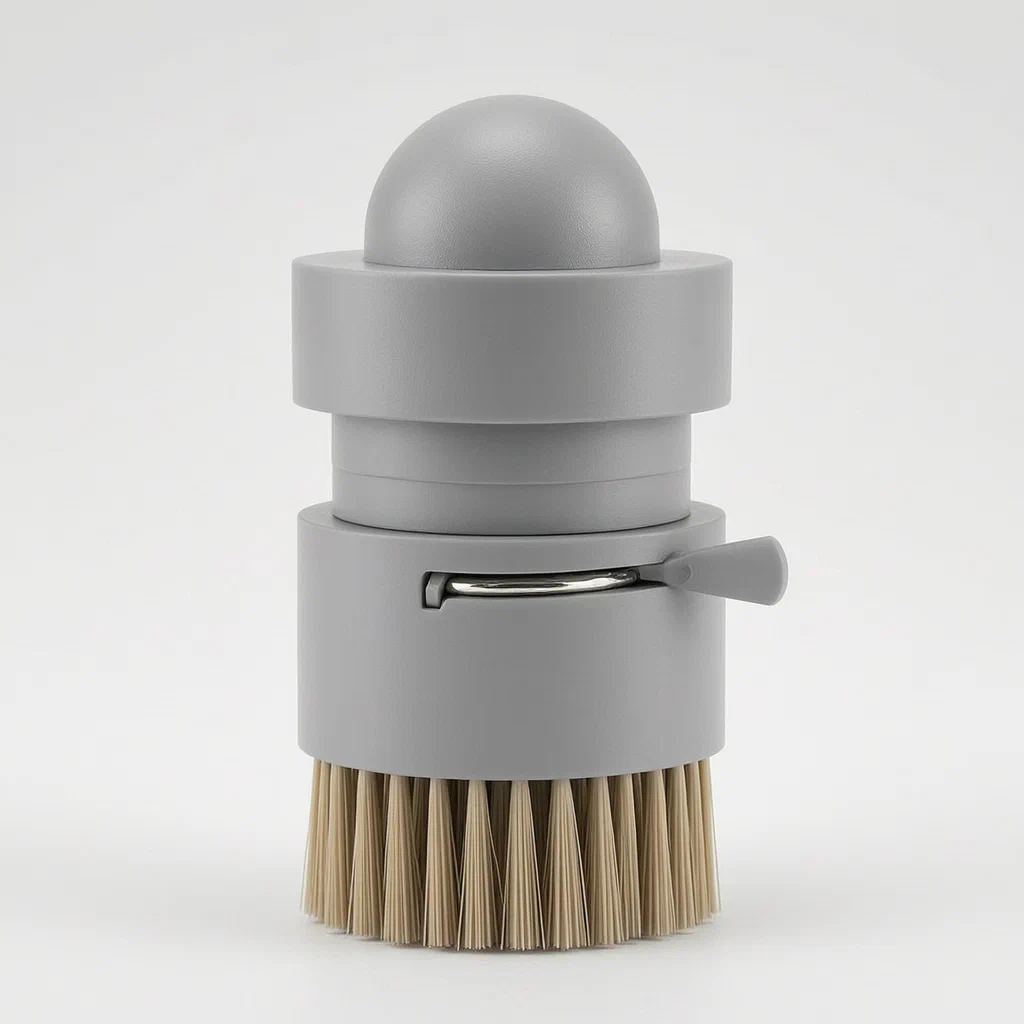
Splat! What let you down?
🔄
One-Handed Rotation
A poke rod on the handle drives internal gears, rotating the brush head without twisting your wrist.
📏
Adjustable Bristles
The brush head moves up and down along a central screw, extending bristles for deep pots or retracting them.
⚙️
Gear Amplification
A larger second gear meshes with a smaller first gear, amplifying small hand movements into multiple rotations.
🛡️
Spring Return
An extension spring pulls the mechanism back to its starting position after each push, creating a rhythmic scrubbing motion.
Bring this product to market
- ✓ Patent vetted China-only family and legal status checked
- 2 Product brief · now How it works, uses and options written up
- 3 Prototype First samples for buyers to review
- 4 Pilot run Small first batch for launch customers
- 5 Volume production Repeat orders at scale
Buyer interest
– of 100 buyers needed to start prototyping
One click, no sign-up. Each vote is one real visitor, and products with the most interest go to prototyping first.
Build team: no members yet. Need a partner, co-funding or skills to build this? Join and we introduce the team once it forms.
The problem
Cleaning deep stockpots or narrow-necked containers often requires awkward wrist angles or separate tools. Fixed-length brushes cannot reach the bottom of tall vessels without submerging the entire handle, which can be unsanitary or uncomfortable. Additionally, vigorous scrubbing typically demands repetitive wrist rotation, leading to user fatigue. Standard brushes also wear out quickly because the same section of bristles always contacts the surface, causing uneven deformation and loss of cleaning power over time.
The solution
This pot brush integrates a mechanical adjustment and rotation system within the handle and head assembly.
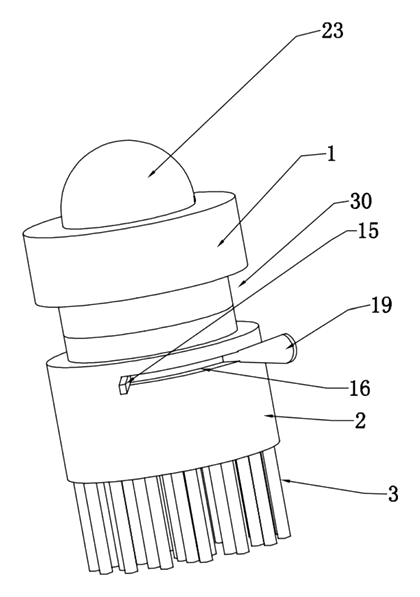
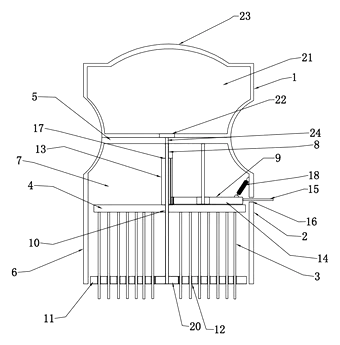
- The handheld part (1) houses the control interface, specifically a poke rod (15) accessible from the outside.
- Inside the mounting seat (2), a lifting assembly uses a central screw rod (8) fixed to the top plate (5).
- A mounting plate (4) holds the brushes (3) and threads onto the screw rod. As the plate rotates, it moves vertically up or down along the screw.
- A driving assembly (9) connects the external poke rod to the internal mechanism using two meshed gears: a first gear (13) attached to the mounting plate and a second gear (14) connected to the poke rod.
- When the user pushes the poke rod, it rotates the second gear. Because the second gear is larger (at least twice the diameter of the first), this motion turns the first gear and the mounting plate multiple times.
- Simultaneously, the rotation of the mounting plate causes it to travel along the threads of the screw rod, adjusting the length of the exposed bristles through the bottom plate (11).
Who it is for
- Household consumers who cook frequently with various pot sizes and want a single tool that adapts to deep and shallow cookware.
- Restaurant suppliers looking for durable, ergonomic cleaning tools for commercial kitchens where staff wash large stockpots daily.
- Outdoor gear brands targeting campers who need versatile cleaning tools for different sized mess kits and cooking vessels.
- Ergonomic product designers seeking mechanisms that reduce wrist strain in manual cleaning tasks.
How it works
The main parts
| No. | Part | What it does |
|---|---|---|
| 1 | Handheld part | Grip and housing for the control rod. |
| 2 | Mounting seat | Holds the internal gears and screw mechanism. |
| 3 | Brushes | The cleaning filaments mounted on the plate. |
| 4 | Mounting plate | Rotates and moves vertically; carries the brushes. |
| 8 | Screw rod | Central threaded shaft that converts rotation to vertical movement. |
| 11 | Bottom plate | Guides the brushes as they extend or retract. |
| 13 | First gear | Smaller gear attached to the mounting plate. |
| 14 | Second gear | Larger gear driven by the poke rod. |
| 15 | Poke rod | External lever pushed by the finger to drive the gears. |
| 16 | Sliding groove | Track that limits the range of motion for the poke rod. |
| 18 | Extension spring | Pulls the poke rod and second gear back to the start position. |
Operating steps
- Grip the handle normally with one hand holding the pot.
- Push the poke rod forward with your thumb or index finger.
- The rod rotates the second gear, which meshes with the first gear.
- The mounting plate spins, driving the brushes to rotate against the pot surface.
- Because the plate is threaded onto the screw rod, spinning it causes it to move up or down, changing how much of the bristles stick out.
- Release the rod; the extension spring pulls it back, resetting the mechanism for the next push.
Applications
Deep stockpot cleaning
In tall pots, standard brushes leave the handle submerged or fail to reach the bottom. This brush extends the bristles further down while keeping the handle dry and comfortable, allowing effective scrubbing of the deepest sections without awkward bending.
Shallow pan maintenance
For frying pans or skillets, retracting the bristles prevents the brush head from hitting the sides too hard or trapping food under the rim. The shorter bristle exposure provides better control for gentle cleaning of flat surfaces.
Corner and edge access
When cleaning the inside edges of jars or bottles, the adjustable length allows the user to position the brush tip precisely at the corner. The rotational action helps dislodge stuck residue from tight curves that static brushes miss.
Ergonomic relief for arthritis sufferers
Users with limited wrist mobility benefit from the linear pushing motion of the poke rod instead of circular wrist twisting. The gear ratio amplifies small finger movements into strong brush rotations, reducing the effort required for heavy scrubbing.
Where it is less suitable
- Non-stick coatings requiring extreme gentleness: While the rotation is controlled, the mechanical nature might still be too aggressive if not used carefully compared to soft sponges.
- Very small diameters: The internal gear and screw mechanism require a certain minimum head size, making it unsuitable for tiny test tubes or very narrow necks unless miniaturized significantly.
Frequently asked questions
How does the bristle adjustment work?
The brush head contains a threaded screw rod. When you push the external poke rod, it rotates a gear system that spins the mounting plate. Because the plate is threaded onto the screw, spinning it forces it to move up or down, extending or retracting the bristles through the bottom guide plate.
Is the mechanism durable?
The patent describes metal or high-strength plastic gears and a screw rod. Durability depends on the materials chosen for production. Regular washing with dish soap should not affect the mechanism if sealed properly, but grit entering the sliding groove could jam it. Design considerations include easy disassembly for cleaning.
Can I use it for non-stick pans?
Yes, provided the bristles are made of soft materials like nylon or silicone. The rotational action is generally gentler than aggressive scraping, but users should select appropriate bristle hardness for their cookware.
Does it come with a soap dispenser?
The patent includes an optional feature (Claim 3) where the handle holds sanitizer with a squeeze valve. This can be included or excluded in custom manufacturing based on cost and complexity preferences.
Why is the second gear larger than the first?
The patent states the second gear is at least twice the diameter of the first. This creates a mechanical advantage: a short push of the poke rod results in multiple rotations of the brush head, providing thorough cleaning with minimal hand movement.
What happens when I release the poke rod?
An extension spring attached to the second gear pulls it back to its starting position. This resets the mechanism, allowing you to push again for continuous scrubbing motion.
Can this design be made and sold in the US?
The patent CN108095292B was filed only in China and has lapsed due to non-payment of fees. It does not restrict production or sales in the US. However, other active patents may cover similar adjustable brush technologies. We recommend a freedom-to-operate check before launching.
Are you affiliated with the patent owner?
No. IP2M is an independent design and manufacturing service working from the public patent document.
Request a quote
Click Request a Quote below to see our email address - copy it, or open your email app with a ready-made message. Please mention patent CN108095292B in the subject.
Helpful details to include:
- Your company and channel (kitchenware brand, outdoor supplier, retail chain)
- Features (with or without soap dispenser, specific bristle types)
- Materials (handle plastic type, bristle fiber, gear material)
- Estimated quantity and target price
- Timeline - when you would like prototypes and mass production
You can also reach us at (332) 203-9997.
Explore this product
Interested in building this?
Tell us your target market, quantity and timeline. We reply with options for prototyping, small-batch runs or volume production.
Send your inquiry to
Please put CN108095292B in the subject line and tell us your company, country, estimated quantity and timeline.
Prefer to talk? Call (332) 203-9997.
More product-ready patents
All Home, Kitchen & Cleaning patents →
Home, Kitchen & Cleaning
Self-Wringing Flat Mop with Fold-Away Wringer
Flat mop with a built-in wringer that opens only when you wring and folds flat against the pole when you mop.
Patent CN207734114U
Home, Kitchen & Cleaning
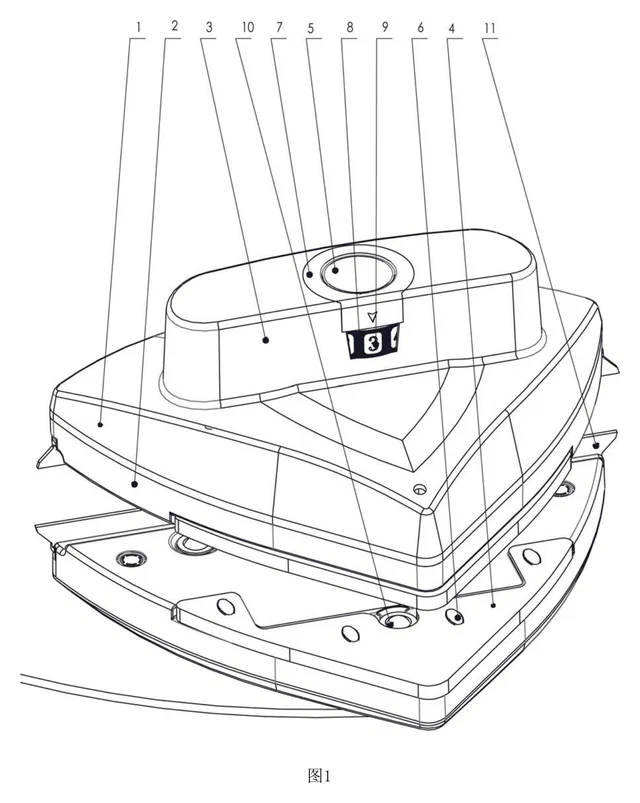
Magnetic Double-Sided Window Cleaner with Dial-Set Magnet Strength
Magnetic window cleaner with a sealed, sliding magnet, dial-set strength for different glass thicknesses and a spring-held idle position.
Patent CN209360543U
Home, Kitchen & Cleaning
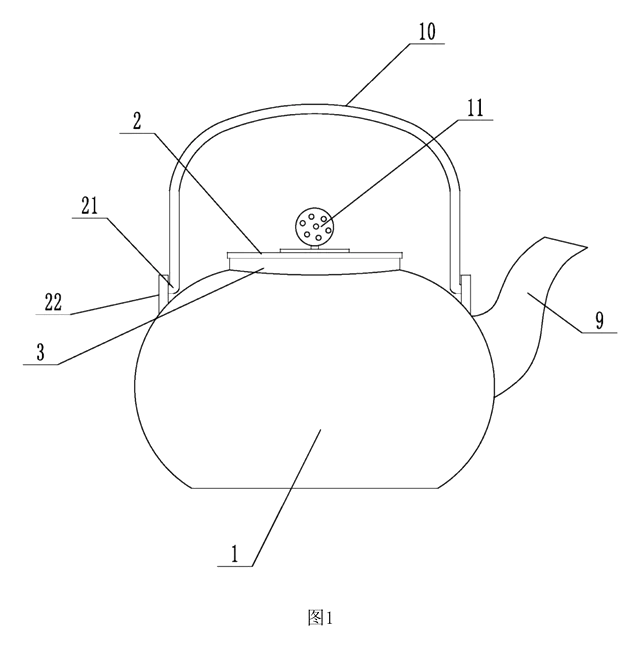
Metal Kettle with Magnetic Lid That Stays On When Pouring
Metal teapot/kettle with a magnet-held lid that does not fall off when pouring, and an insulated, vented lid knob.
Patent CN210540477U
Home, Kitchen & Cleaning
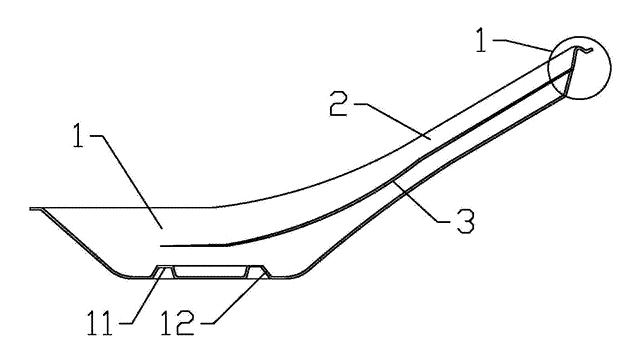
Reinforced Disposable Soup Spoon
Disposable soup spoon with a handle-to-bowl rib, stiffened edges and a ring foot to resist breaking.
Patent CN206964482U
Home, Kitchen & Cleaning
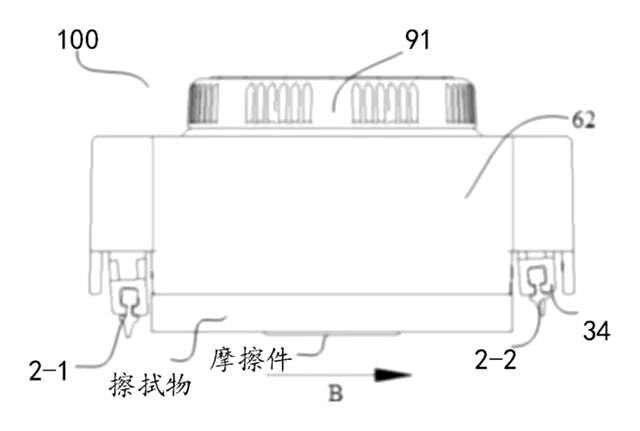
Self-Switching Double-Squeegee Window Cleaner
Cleaning head with two squeegee blades that switch automatically with the direction of movement.
Patent CN212630655U
Home, Kitchen & Cleaning
Self-Rinsing Roller Scrub Brush with Dirty-Water Tank
Powered roller brush that rinses and spins its bristles clean inside the body and stores the dirty water.
Patent CN210076909U
Browse by category
- Apparel & Accessories (25)
- Baby & Kids (19)
- Bags & Luggage (12)
- Bath & Personal Care (19)
- Car Accessories (14)
- Furniture, Bedding & Storage (14)
- Garden & Outdoor (21)
- Health & Wellness (9)
- Home, Kitchen & Cleaning (31)
- Lighting (14)
- Packaging & Containers (7)
- Pet Products (7)
- Phone & Camera Accessories (5)
- Retail Display (15)
- School, Office & Art (21)
- Sports & Recreation (28)
- Tools & Workshop (33)
- Toys & Games (15)
This page is based on the public patent document CN108095292B, assigned to Individual. IP2M is an independent manufacturing service and is not affiliated with, endorsed by or licensed by the patent owner. Images marked as concept renderings are illustrations, not photos of an existing product. Patent status information is provided for reference only and is not legal advice; confirm freedom to operate for your market before production. Full disclaimer.