
Patent CN108098701B
Updated October 30, 2026Wrench and Screwdriver Combined Two-Purpose Tool
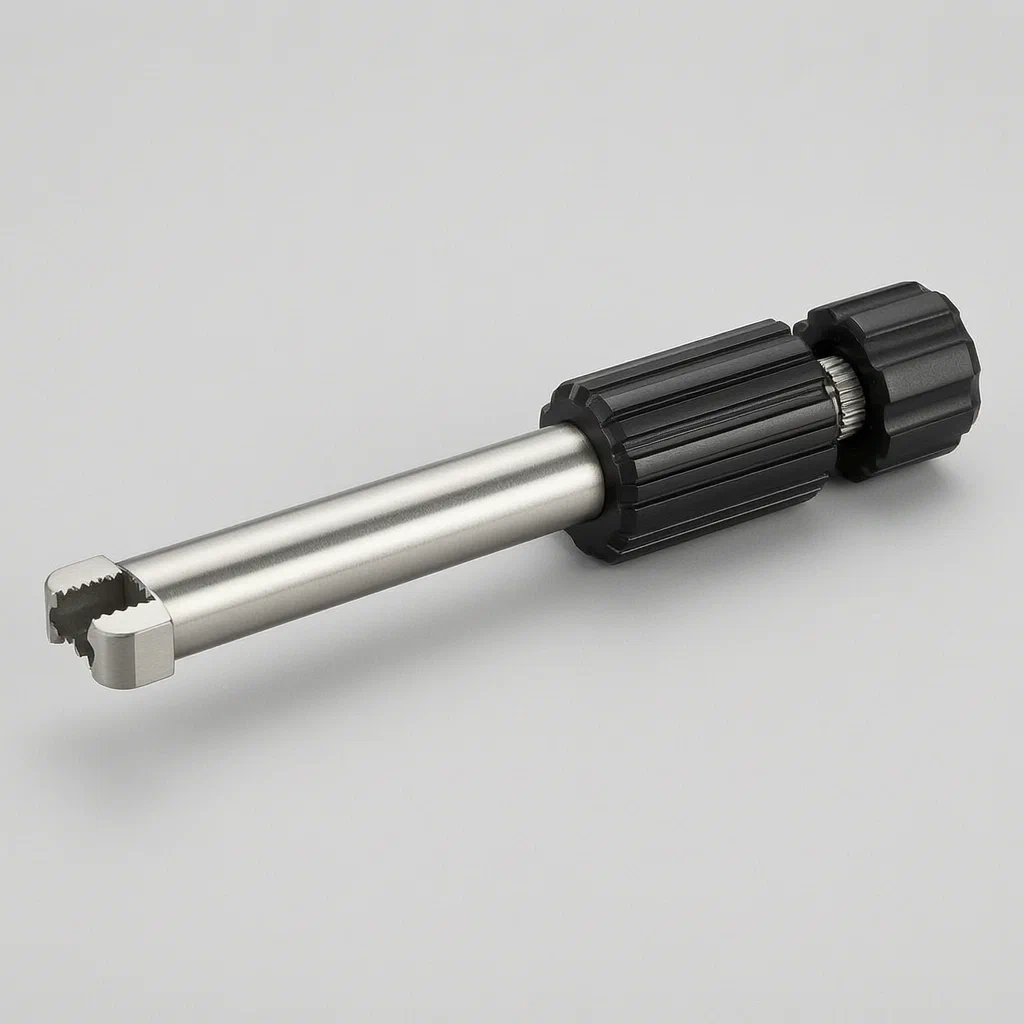
Carrying separate tools for every fastener slows down repair work. This design puts a wrench and a screwdriver in one handle. The core is a rotary gear shaft inside a sleeve. Two serrated plates attached to the clamping jaws mesh with this gear. Turning the shaft moves the jaws in or out. Spread them wide to clamp a nut or bolt head like a wrench. Close them tight so their ends meet to form a screwdriver tip. A locking collar sets the jaw width for specific bolt sizes, keeping the tool steady during use.
- China invention patent - in force
- No filings outside China
- Hand tools & multi-tools
- Gear-driven clamping and screwdriving mechanism
Splat! What let you down?
🔧
Two-in-one function
Switches between a clamping wrench and a screwdriver using the same handle and drive shaft.
⚙️
Gear-driven jaws
Serrated plates mesh with a central gear to open or close the clamping space precisely.
🔒
Lockable setting
A gear-limiting part locks the sleeve to fix the wrench opening size during use.
🧲
Magnetic option
Optional magnets on the sleeve parts help keep the tool closed when stored.
Bring this product to market
- ✓ Patent vetted China-only family and legal status checked
- 2 Product brief · now How it works, uses and options written up
- 3 Prototype First samples for buyers to review
- 4 Pilot run Small first batch for launch customers
- 5 Volume production Repeat orders at scale
Buyer interest
– of 100 buyers needed to start prototyping
One click, no sign-up. Each vote is one real visitor, and products with the most interest go to prototyping first.
Build team: no members yet. Need a partner, co-funding or skills to build this? Join and we introduce the team once it forms.
The problem
Repair tasks often require switching between different tools for nuts, bolts, and screws. Carrying a full set of wrenches and screwdrivers takes up space in a toolbox and adds weight. Standard adjustable wrenches cannot drive screws, and standard screwdrivers cannot grip hexagonal heads. Users lose time changing tools and may forget which size was needed for a specific job.
The solution
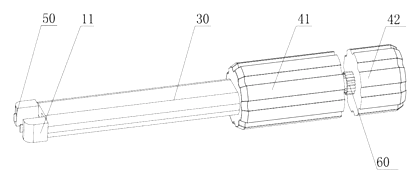
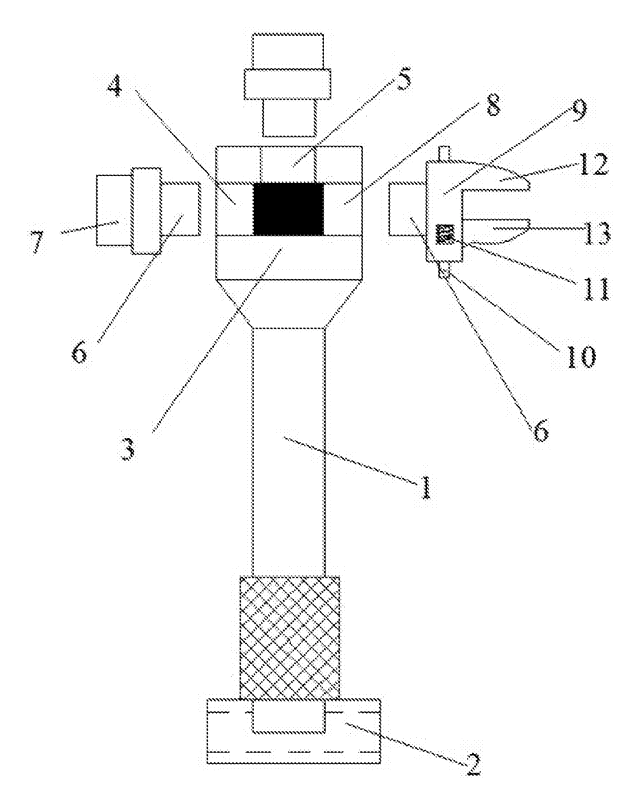
- A rotary gear shaft (20) runs through the center of the tool, connecting a gear portion (21) to a handle end.
- Two clamping units (11) sit on either side of the shaft. Each has a serration plate (112) that meshes directly with the gear portion.
- Turning the shaft rotates the gear, which drives the serrated plates. This moves the clamping main bodies (111) closer together or further apart.
- When opened, the jaws create a clamping space sized to fit a bolt head or nut.
- When closed, the inner surfaces of the jaws align to form a single screw groove insertion part (splicing portions 50), acting as a flathead or Phillips screwdriver tip.
- A gear limiting part (60) and groove (70) on the sleeve sections lock the relative rotation, fixing the jaw width once set.
Who it is for
- General contractors who need a compact tool for mixed fastener jobs without carrying multiple drivers.
- DIY homeowners looking for a simple, all-in-one tool for basic repairs and furniture assembly.
- Automotive kit manufacturers producing emergency roadside kits where space is limited.
- Industrial maintenance teams needing quick access to both wrenching and screwdriving functions in tight panels.
How it works
The main parts
| No. | Part | What it does |
|---|---|---|
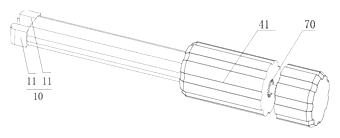
| 10 | Clamping Assembly | Holds the two movable jaws. |
| 11, 111 | Clamping Units / Main Bodies | The outer arms that grip or form the driver tip. |
| 112 | Serration Plate | Teeth that mesh with the central gear to move the jaws. |
| 20, 21 | Rotary Gear Shaft / Gear Portion | Drives the movement of the serrations when turned. |
| 30 | First Shaft Sleeve | Houses the gear shaft and guides the sliding motion. |
| 40, 41, 42 | Second Shaft Sleeve / Parts | Split sleeves that allow length adjustment and locking. |
| 50 | Splicing Portions | The tips that join to form the screwdriver slot. |
| 60, 70 | Gear Limiting Part / Groove | Locks the sleeve rotation to fix the jaw opening. |
Operating steps
- Set as Wrench: Turn the gear shaft to open the clamping units. The serrations drive the jaws apart until they fit around a bolt head. Engage the locking collar (limiting part into groove) to hold the size.
- Set as Screwdriver: Turn the shaft to bring the clamping units together. The splicing portions align to create a continuous slot (straight or cross shape).
- Drive Fasteners: Apply torque through the handle. The gear and sleeve structure transfer force to the jaws or the driver tip.
Applications
Home Repair Kits
Ideal for wall-mounted tool organizers where space is scarce. One tool replaces three common drivers, simplifying storage for families.
Automotive Emergency Tools
Useful in glovebox kits for tightening battery terminals or adjusting mirror mounts. The ability to switch from a nut to a screw quickly saves time during roadside checks.
Furniture Assembly
Perfect for assembling flat-pack furniture that uses both cam locks (requiring a wrench-like action) and standard screws. Reduces the need to swap tools repeatedly.
Industrial Maintenance Panels
Technicians working in electrical cabinets often face mixed fasteners. This tool allows quick adaptation to hex-head terminal screws without reaching for a separate driver.
Where it is less suitable
- High-torque industrial applications: The mechanical complexity and moving parts may wear faster than solid forged wrenches under heavy continuous load.
- Precision electronics: The clamping mechanism is designed for general hardware, not microscopic or fragile components requiring calibrated torque.
- Extreme environments: Moving gears and serrations may jam if exposed to heavy dust, mud, or corrosive chemicals without sealing.
Frequently asked questions
How does the tool switch between a wrench and a screwdriver?
It uses a central gear shaft. Turning the shaft moves two serrated plates attached to the jaws. Open the jaws to clamp a bolt head. Close the jaws completely so their tips meet to form a screwdriver slot.
Is the screwdriver tip durable?
The tip is formed by the joining of two metal parts. Durability depends on the steel grade and heat treatment chosen during manufacturing. It is designed for standard household and light commercial screws.
Can I change the size of the wrench opening?
Yes. The gear mechanism allows continuous adjustment of the jaw spacing. A locking collar fixes the selected size so it doesn’t slip during use.
Does it work with Phillips screws?
The patent describes splicing portions that can form a straight or cross-shaped groove. Custom molds can produce a cross-slot configuration compatible with Phillips screws.
Why are there magnets mentioned in the patent?
Claim 4 mentions optional magnetic pieces on the sleeve parts. These help keep the two halves of the tool aligned and closed when not in use, preventing accidental opening.
What is the minimum tooth count for the lock?
Claim 1 specifies that the gear limiting part must have at least 180 teeth. This ensures fine enough increments for secure locking of the jaw width.
Can this design be made and sold in the US?
The patent is valid only in China and does not restrict sales in the US. However, multi-tool designs are heavily patented globally. We recommend a freedom-to-operate check against existing US patents before mass production.
Are you affiliated with the patent owner?
No. IP2M is an independent design and manufacturing service working from the public patent document.
Request a quote
Click Request a Quote below to see our email address - copy it, or open your email app with a ready-made message. Please mention patent CN108098701B in the subject.
Helpful details to include:
- Your company and channel (tool brand, automotive supplier, DIY retailer)
- Jaw capacity range (max bolt/nut size)
- Tip type (Flathead, Phillips, or both)
- Handle material and color
- Estimated quantity and target price
- Timeline - when you would like samples and the first shipment
You can also reach us at (332) 203-9997.
Explore this product
Interested in building this?
Tell us your target market, quantity and timeline. We reply with options for prototyping, small-batch runs or volume production.
Send your inquiry to
Please put CN108098701B in the subject line and tell us your company, country, estimated quantity and timeline.
Prefer to talk? Call (332) 203-9997.
More product-ready patents
All Tools & Workshop patents →
Tools & Workshop
Rolling Tool Box with Telescoping Step Ladder
Telescoping A-frame ladder with an attached rolling tool box that slides to your working height.
Patent CN206290197U
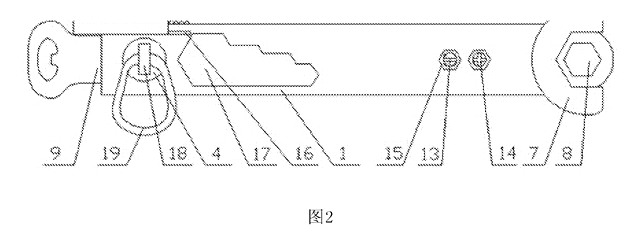
Tools & Workshop
Folding 3-Handle Wrench Multi-Tool
Folding three-handle wrench multi-tool with magnetic screwdriver bits, saw, file and bottle opener.
Patent CN205290875U
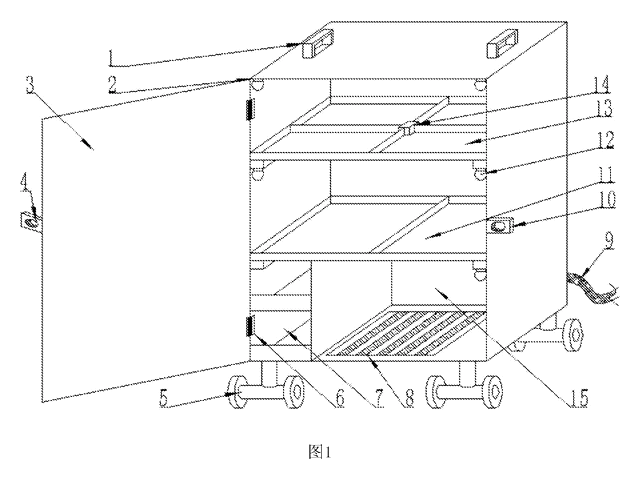
Tools & Workshop
Rolling Auto-Repair Tool Cabinet with Built-In Lights
Lockable rolling tool cabinet for car repair with interior lights, a lubricant tray, parts drawers and a tool bay.
Patent CN205989314U
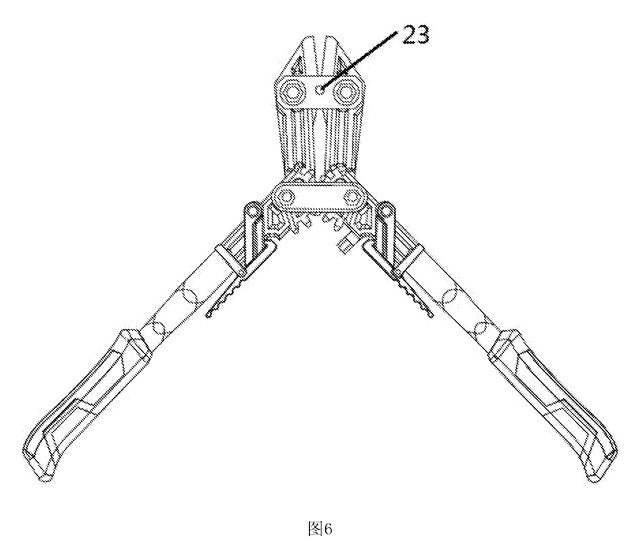
Tools & Workshop
Wide-Opening Folding Bolt Cutter
Bolt cutter with linked, gear-meshing handles that open up to 190° and fold in half for storage.
Patent CN207206226U
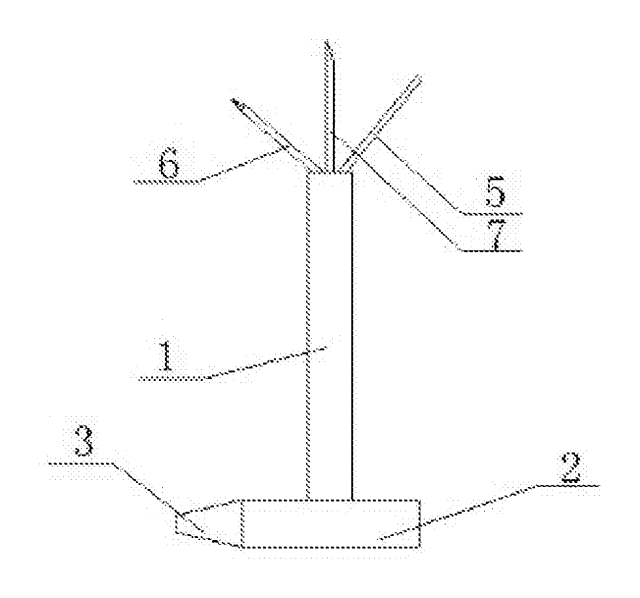
Tools & Workshop
Nail-Holding Hammer with Fold-Out Drivers
Hammer with a nail-holding T-slot in the head and fold-out drivers stored in the handle.
Patent CN205254927U
Tools & Workshop
Modular Wrench with Screw-On Heads
Wrench handle with a three-way threaded hub for screw-on adjustable and hex heads, plus a pipe sleeve.
Patent CN206216564U
Browse by category
- Apparel & Accessories (22)
- Baby & Kids (17)
- Bags & Luggage (9)
- Bath & Personal Care (17)
- Car Accessories (10)
- Furniture, Bedding & Storage (13)
- Garden & Outdoor (19)
- Health & Wellness (8)
- Home, Kitchen & Cleaning (26)
- Lighting (12)
- Packaging & Containers (6)
- Pet Products (6)
- Phone & Camera Accessories (4)
- Retail Display (13)
- School, Office & Art (19)
- Sports & Recreation (26)
- Tools & Workshop (29)
- Toys & Games (13)
This page is based on the public patent document CN108098701B, assigned to Sanming University. IP2M is an independent manufacturing service and is not affiliated with, endorsed by or licensed by the patent owner. Images marked as concept renderings are illustrations, not photos of an existing product. Patent status information is provided for reference only and is not legal advice; confirm freedom to operate for your market before production. Full disclaimer.