
Patent CN108125324B
Updated November 8, 2026Torsion Spring Waistband Chuck with Retractable Bell-Shaped Clamps
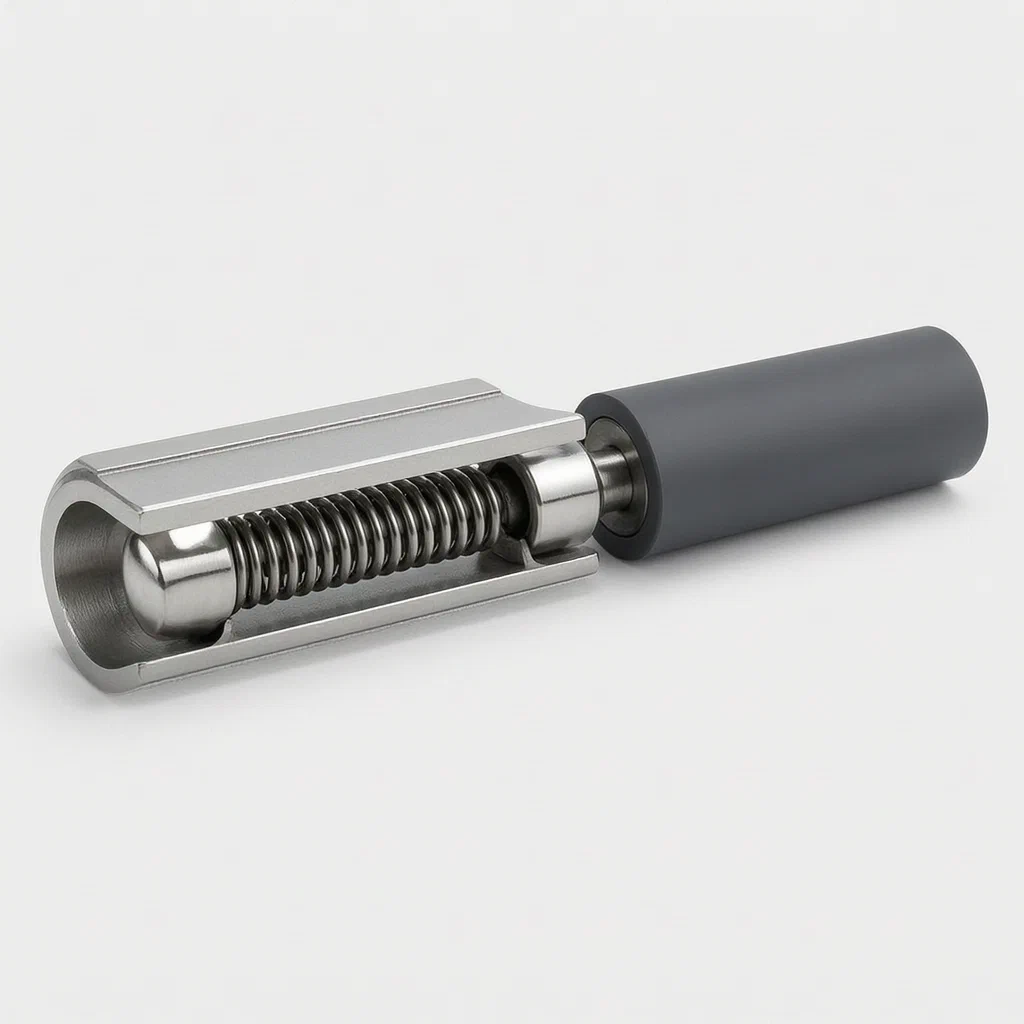
Standard belt tips often slip out of trouser loops or require significant force to thread through tight buckles, leading to wear and frustration. This design solves that by using a torsion spring mechanism where bell-shaped clamps are held in an open, gripping position by default. When the belt is pulled through a loop or buckle, the external pressure forces the clamps to retract inward against the spring tension, creating a streamlined profile that slides easily. Once past the obstruction, the spring snaps the clamps back to their original open state, locking the belt tip in place to prevent accidental loosening.
- China invention patent - lapsed
- No filings outside China
- Belt hardware and accessories
- Metal plate, torsion spring, pin assembly
Splat! What let you down?
🔄
Retractable Clamps
Bell-shaped clamps fold inward under pressure to slide smoothly through loops.
⚡
Spring Locking
A torsion spring automatically resets the clamps to a gripping position after passage.
🛡️
Secure Grip
The patent describes preventing belt tips from loosening or slipping out unexpectedly.
🔩
Compact Assembly
Housed within a U-shaped plate, attaching directly to the belt end via a pin.
Bring this product to market
- ✓ Patent review Patent family and legal status reviewed in the relevant jurisdictions.
- 2 Product brief · now How it works, uses and options written up
- 3 Prototype First samples for buyers to review
- 4 Pilot run Small first batch for launch customers
- 5 Volume production Repeat orders at scale
Buyer interest
– of 100 buyers needed to start prototyping
One click, no sign-up. Each vote is one real visitor, and products with the most interest go to prototyping first.
Build team: no members yet. Need a partner, co-funding or skills to build this? Join and we introduce the team once it forms.
Patent Rights & Team Participation
Before joining a development team, participants should ensure they have the necessary rights or authorization to participate in the project.
Participation is generally appropriate where:
- You own the relevant patent rights or have obtained permission or a license from the rights holder.
- The relevant patent rights have expired or have been legally invalidated in the jurisdictions where the planned activities will take place.
- The planned development, manufacturing, and commercialization activities have been independently assessed and do not infringe applicable patent rights in the relevant jurisdictions.
Important: Being located outside a country where a patent is protected does not automatically exempt you from patent infringement risks. Patent rights may apply based on where development, manufacturing, use, sale, or import activities take place.
IP2M does not grant any patent license or authorization through team participation. Joining a project does not provide permission to use, manufacture, or commercialize patented technology.
The problem
In many traditional belt designs, the metal tip or “chuck” attached to the end of the strap relies on friction or simple mechanical hooks to stay secured in the trouser loop or buckle. These standard mechanisms often present two conflicting issues: they either bind tightly, making it difficult and abrasive to thread the belt through narrow openings, or they sit loosely, causing the belt tip to wobble, slip out, or detach during movement. Users frequently experience snagging when trying to fasten a belt quickly, and over time, the repeated force required to push a rigid tip through a loop can damage both the belt hardware and the fabric of the trousers. There is a need for a connection that offers secure retention when stationary but allows effortless, low-friction passage when being manipulated.
The solution
The patent introduces a waistband chuck composed of a U-shaped plate housing a pair of bell-shaped clamps mounted on a central shaft. A torsion spring is positioned between these clamps, biasing them outward into an open, gripping configuration. The key innovation lies in the dynamic response of this mechanism to external force. When the user pushes the belt tip through a trouser loop or buckle, the contact pressure against the angled outer edges of the clamps overcomes the spring’s resistance, causing the clamps to pivot inward and retract flush with the main plate. This creates a temporary streamlined profile that reduces friction significantly. Once the tip clears the loop, the stored energy in the torsion spring immediately returns the clamps to their expanded position, re-engaging with the fabric or buckle structure to lock the belt in place.
Who it is for
- Leather goods manufacturers looking to differentiate their belt lines with functional hardware that improves user experience.
- Uniform suppliers who need durable, easy-to-use fastening systems for military, police, or corporate workwear belts.
- Outdoor gear brands designing utility belts where quick release and secure re-locking are critical for safety and convenience.
- Fashion accessory designers seeking metal components that add value through practical engineering rather than just aesthetics.
How it works
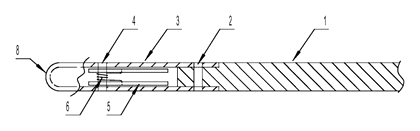
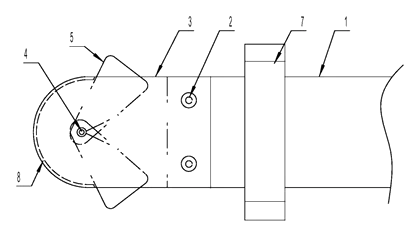
The main parts
| No. | Part | What it does |
|---|---|---|
| 1 | Waistband | The belt strap itself, attached to the chuck. |
| 2 | Pin | Connects the chuck assembly to the belt end. |
| 3 | Chuck Plate | The U-shaped housing that contains the mechanism. |
| 4 | Clamping Shaft | Central axis around which the clamps rotate. |
| 5 | Clamping Piece | Two bell-shaped elements that grip the loop/buckle. |
| 6 | Torsion Spring | Provides the force to keep clamps open and return them after retraction. |
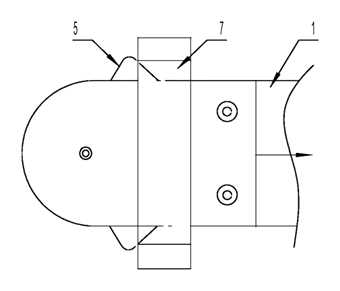
| 7 | Trouser Nose/Loop | The fabric loop or buckle the belt passes through. |
| 8 | Baffle | Internal stop limiting the opening angle of the clamps. |
Operating steps
- Insertion: The user pushes the belt tip toward the trouser loop or buckle.
- Retraction: The external surface of the bell-shaped clamps contacts the loop. As force is applied, the clamps pivot inward against the torsion spring, folding into the space of the U-shaped plate.
- Passage: With the clamps retracted, the profile becomes narrower, allowing the tip to slide through the loop with minimal resistance.
- Locking: Once the tip emerges on the other side, the torsion spring releases its stored energy, snapping the clamps back to their original open position. The clamps now press against the inner surface of the loop or buckle, securing the belt tip in place.
Applications
Daily Business Wear
For professionals wearing dress belts daily, the smooth threading action prevents snagging on delicate suit trousers, maintaining the appearance of both the belt and the pants while ensuring the tip stays firmly tucked away.
Industrial Uniforms
Workers in factories or construction sites often adjust belts frequently throughout the day. This mechanism allows for rapid adjustment and secure locking without requiring excessive hand strength, reducing fatigue during repetitive tasks.
Outdoor Utility Belts
Hikers and outdoor enthusiasts use heavy-duty belts for carrying gear. The secure lock ensures the belt doesn’t slip loose under load, while the retractable feature makes it easy to thread through rugged canvas loops even when wearing gloves.
Military and Tactical Gear
Tactical belts require reliable retention under movement. The positive locking action described in the patent helps prevent accidental detachment during physical activity, while still allowing quick donning and doffing when necessary.
Where it is less suitable
- Extremely Tight Loops: If the trouser loop is significantly smaller than the retracted profile, the spring force may not be sufficient to allow passage.
- Heavy Load Bearing: While it locks well, the primary function is retention of the tip, not supporting massive weights independently; structural integrity depends on the material grade chosen.
- Non-Standard Hardware: Designs relying on fixed, non-moving tips cannot utilize this specific spring-loaded geometry.
Patent & Production
At a glance
| Patent number | CN108125324B (application CN201711379141) |
| Type | China invention patent (发明专利) - protects product structure and method |
| Original title | Torsion spring type waistband chuck (扭簧式腰带卡头) |
| Patent owner | Linyi Future Technology City Development And Construction Group Co ltd |
| Inventors | Pei Xuehua |
| Filing date | 2017-12-20 |
| Grant date | 2021-12-28 |
| Status (China) | Lapsed - terminated for non-payment of annual fees (recorded 2023-12-29) |
| Patent family | Public record shows Chinese filings only - no US, European, Japanese, PCT or other filings listed |
| Cited by | 0 later documents |
| Source | Google Patents (search for CN108125324B) |
What the claims cover, in plain language
Claim 1 - A torsion spring type waistband chuck comprising a chuck plate and a pin. The chuck plate has a U-shaped longitudinal section with a right-side opening and a gap between upper and lower pieces. A baffle connects the left end of the gap. A clamping shaft is fixed between the upper and lower sheets at the geometric center. Two bell-shaped clamping pieces are symmetrically mounted on the shaft. A torsion spring is sleeved on the middle section of the shaft between the clamping pieces, with its claws engaging the right side edge of the clamping pieces. The spring’s elastic force and the baffle jointly hold the clamping pieces in a splayed shape. The outer ends of the clamping pieces extend beyond the chuck plate.
This is a simplified reading for orientation only. The legal scope is defined by the exact claim wording in the official Chinese document.
What this means for US production
This patent was filed in China and has lapsed, so it no longer restricts anyone in China either. The public record shows no US or other foreign counterpart.
Two points to settle early:
- Other patents may exist. Belt hardware and fastening mechanisms are a competitive field with numerous active patents globally. It is recommended to conduct a freedom-to-operate (FTO) review focusing on spring-loaded retention devices and belt tip structures before tooling.
- Material Safety. Since this component attaches to clothing worn next to the skin or as part of uniform kits, material selection must account for durability and potential regulatory requirements for metals used in consumer apparel accessories.
Customization and manufacturing
What can be customized
| Area | Options |
|---|---|
| Plate Material | Stainless steel, brass, aluminum alloy, or zinc die-cast |
| Spring Type | Standard carbon steel torsion spring or stainless for corrosion resistance |
| Finish | Polished, brushed, matte black, gunmetal, or plated (nickel/gold/silver) |
| Dimensions | Width and length of the chuck plate to match belt thickness |
| Attachment | Pin diameter and head style for integration with leather or webbing |
Things to plan for (US market)
- CPSC Lead and Cadmium Limits: For children’s products or general consumer goods, ensure metal components comply with federal limits for lead and cadmium.
- Proposition 65 (California): Screen finishes and plating materials for substances known to cause cancer or reproductive harm.
- ASTM F963 (if applicable): If marketed primarily for children, toy safety standards regarding small parts and sharp edges may apply, though adult belts typically fall under general consumer product safety.
How a project runs
- Inquiry - Define belt compatibility, material preferences, and volume.
- Design - Finalize plate geometry, spring rate, and clamp dimensions.
- Prototype - Create machined or cast samples for fit and function testing.
- Pilot Run - Assemble units and perform cycle testing for spring fatigue.
- Production - Stamping/casting plates, winding springs, assembly, and finishing.
Quantities & timeline
Tooling costs depend heavily on whether the plate is stamped from sheet metal or die-cast. Springs are typically sourced from stock catalogs unless custom wire diameters are needed. Send us your target belt width, material preference, finish, quantity and target price and we will reply with options.
Production notes
Tooling and process
A polymer version would likely use TPU injection molding for the U-shaped plate and the bell-shaped clamps. Cutting and sewing applies to the fabric belt-tip sleeve that the clip is paired with. Metal variants would typically use cut and formed sheet, with the torsion spring sourced as a standard part.
Cost drivers
Hardware corrosion resistance likely dictates material grade; stainless steel typically costs more than plated zinc. Spring fatigue and rate consistency require careful sourcing, which affects cost. The number of belt-width sizes affects tooling complexity.
Prototyping path
Start with 3D-printed or cast components to verify the retraction angle and spring interaction. A sewn first sample integrated onto an actual belt strap would typically follow, to test real-world usage forces.
What we would change before tooling
We would likely adjust wall thickness and joint design to keep the clamps from jamming during retraction. Spring anchor points would typically be verified to prevent slippage under repeated stress.
Common failure points
Seam slippage is not relevant here, but hardware corrosion and spring fatigue are critical risks. Size deviation in the gap between the plate and clamps could hinder smooth operation.
Patent drawings
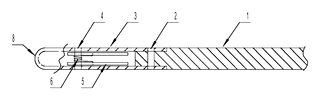
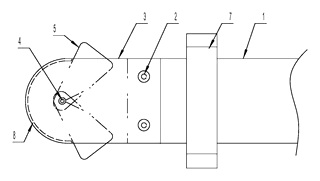
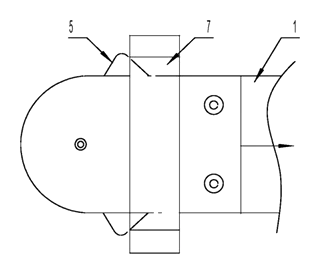
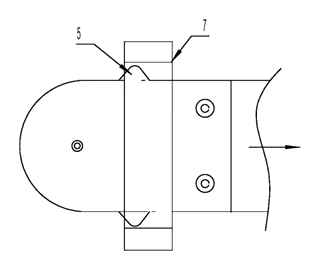
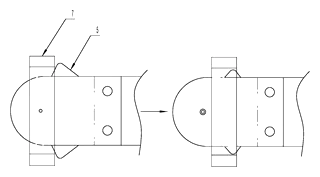
Drawings reproduced from the public patent document for reference.
Frequently asked questions
How does the belt tip pass through the loop?
The patent describes bell-shaped clamps that are held open by a torsion spring. When you push the tip through a loop, the pressure forces the clamps to fold inward into the plate, creating a slim profile that slides easily. Once clear, the spring snaps them back open to lock the belt.
Will the spring weaken over time?
The patent mentions the spring’s role in returning the clamps. In practice, spring fatigue is a factor in any mechanical device. We recommend selecting spring steel or stainless wire and confirming the spring rate consistency during prototyping to ensure long-term reliability.
Can it handle heavy-duty belts?
The design focuses on the retention mechanism. The load capacity depends on the material grade of the chuck plate and the pin attachment. For heavy tactical or industrial belts, thicker gauge metal and reinforced attachment points should be specified in the design phase.
Is it difficult to install on my existing belts?
It requires a pin connection to the belt end. Manufacturers can customize the pin hole spacing and diameter to match existing leather or webbing strap specifications, ensuring a seamless integration into current production lines.
What materials are available for the plate?
The patent does not specify materials, but typical options include stainless steel for corrosion resistance, brass for aesthetic appeal, or zinc alloys for cost-effective mass production. The choice depends on the target market and environmental exposure.
Does it work with all types of trouser loops?
It is designed to accommodate standard loops and buckles. However, extremely tight or irregularly shaped loops might resist the retraction force. Testing with your specific fabric weight and loop dimensions is advised during the prototype stage.
Can this design be made and sold in the US?
The patent was filed in China and has lapsed, and the public record shows no US counterpart, so it does not restrict the design in the US or in China. Belt hardware may be covered by other US patents - see Patent & Production - so we recommend a freedom-to-operate check before volume production.
Are you affiliated with the patent owner?
No. IP2M is an independent design and manufacturing service working from the public patent document.
Request a quote
Click Request a Quote below to see our email address - copy it, or open your email app with a ready-made message. Please mention patent CN108125324B in the subject.
Helpful details to include:
- Your company and channel (leather goods brand, uniform supplier, outdoor gear maker)
- Target belt width and thickness
- Material preference (stainless, brass, zinc, etc.)
- Finish requirement (polished, matte, plated)
- Estimated quantity and target price
- Timeline - when you would like samples and the first shipment
You can also reach us at (332) 203-9997.
Page editor: Daniel Chen, Product Research Editor · IP2M
Last updated November 8, 2026. If something on this page looks wrong, email [email protected] and we will check it against the patent.
Interested in building this?
Tell us your target market, quantity and timeline. We reply with options for prototyping, small-batch runs or volume production.
Send your inquiry to
Please put CN108125324B in the subject line and tell us your company, country, estimated quantity and timeline.
Prefer to talk? Call (332) 203-9997.
More product-ready patents
All Apparel & Accessories patents →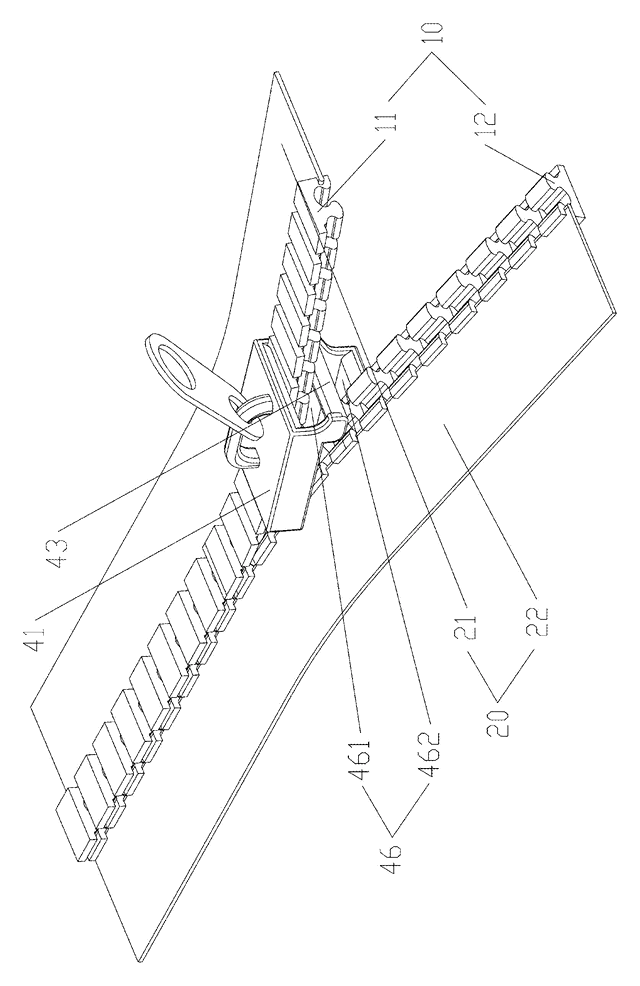
Apparel & Accessories
Stacked Zipper with Teeth That Mesh Top-to-Bottom
Zipper whose two identical tooth rows mesh on top of each other, closed by a simplified slider.
Patent CN205795062U
Apparel & Accessories
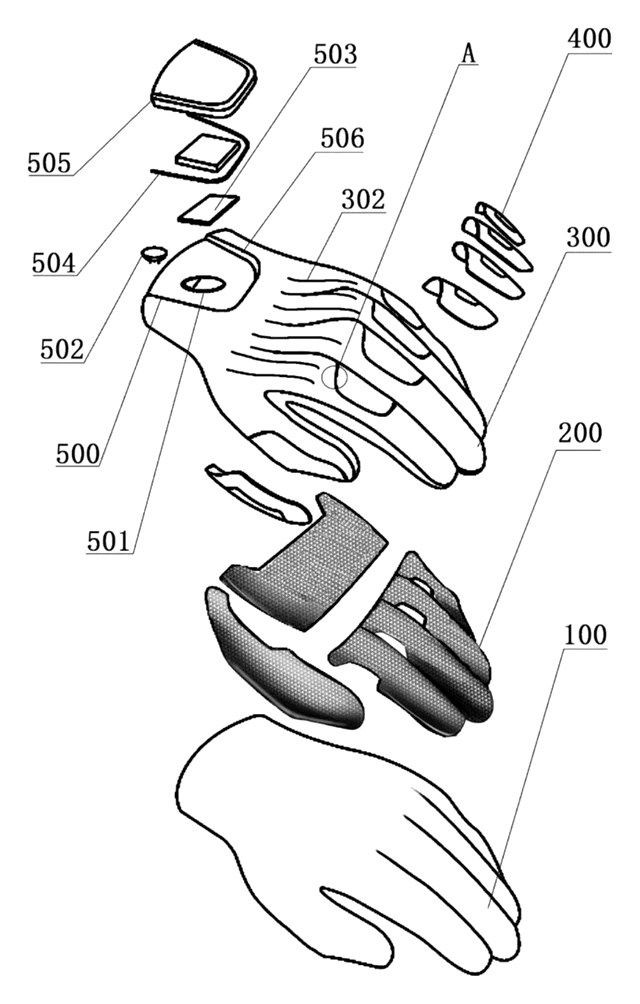
Impact-Resistant Glove with a 3D-Printed Lattice Layer
Work glove with a 3D-printed lattice impact layer, TPU knuckle guards and a light mounting area.
Patent CN213785583U
Apparel & Accessories
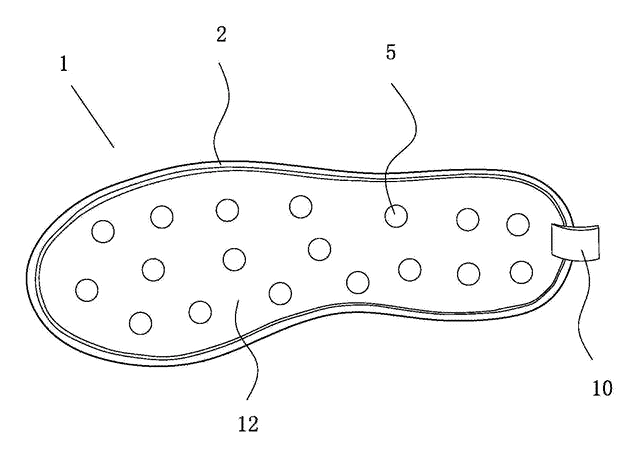
Massage Insole with Spring-Back Silicone Nubs and a Removable Top Layer
Layered insole: silicone nubs rise through a removable perforated top sheet and sink under each step.
Patent CN208286505U
Apparel & Accessories
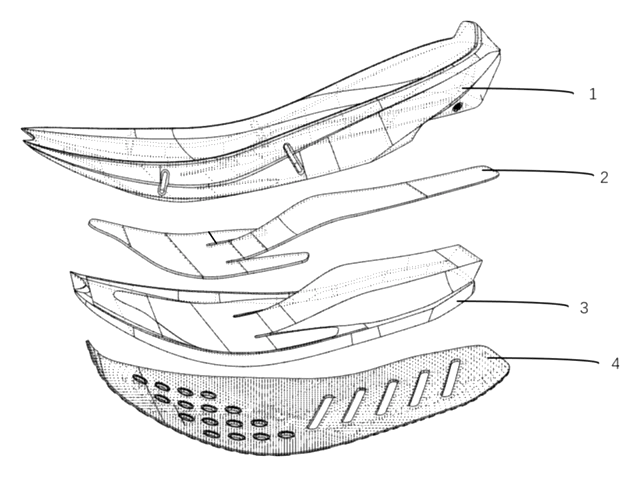
Heel-Less Carbon Plate Running Shoe Sole for Forefoot Strikers
Running sole for forefoot strikers: no ground-touching heel, winged carbon plate between two midsoles.
Patent CN216723354U
Apparel & Accessories
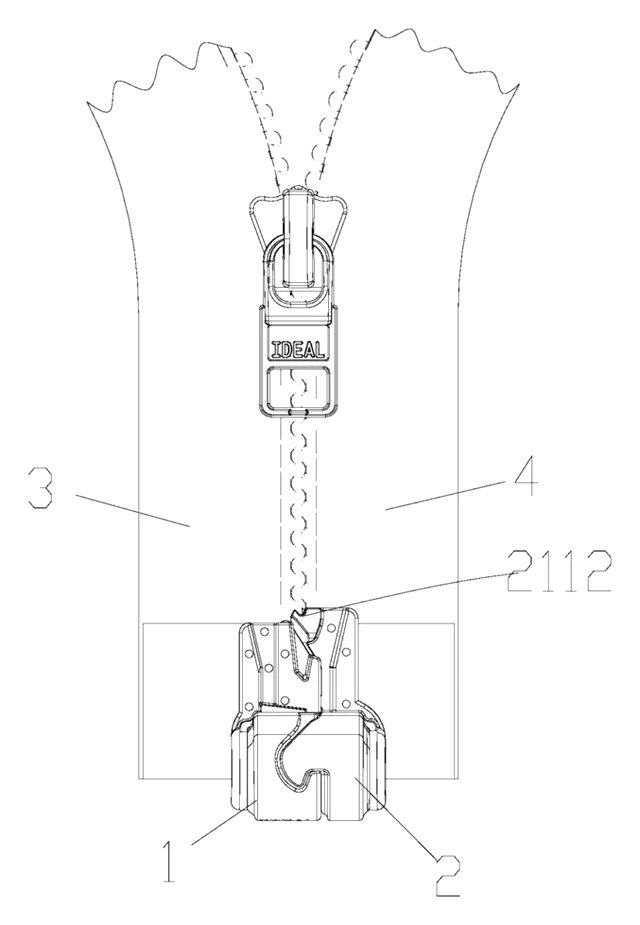
Waterproof Magnetic Zipper Stop That Snaps the Two Halves Together
Separating-zipper stop with sealed magnets: pin and box snap together one-handed, safe in rain and wash.
Patent CN215075936U
Apparel & Accessories
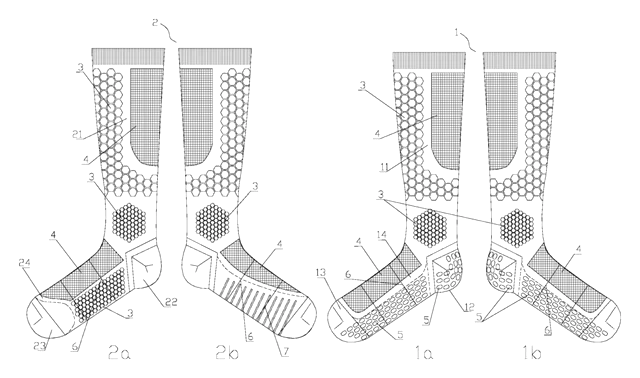
Left-Right Specific Soccer Socks: Grip for the Plant Foot, Touch Pads for the Kicking Foot
Soccer socks knitted as a left-right pair: grip zones for the plant foot, pads for the kicking foot.
Patent CN212728807U
Browse by category
- Apparel & Accessories (50)
- Baby & Kids (29)
- Bags & Luggage (17)
- Bath & Personal Care (33)
- Car Accessories (26)
- Furniture, Bedding & Storage (25)
- Garden & Outdoor (34)
- Health & Wellness (14)
- Home, Kitchen & Cleaning (52)
- Lighting (24)
- Packaging & Containers (13)
- Pet Products (12)
- Phone & Camera Accessories (9)
- Retail Display (26)
- School, Office & Art (38)
- Sports & Recreation (48)
- Tools & Workshop (56)
- Toys & Games (23)
This page is based on the public patent document CN108125324B, assigned to Linyi Future Technology City Development And Construction Group Co ltd. IP2M is an independent manufacturing service and is not affiliated with, endorsed by or licensed by the patent owner. Images marked as concept renderings are illustrations, not photos of an existing product. Patent status information is provided for reference only and is not legal advice; confirm freedom to operate for your market before production. Full disclaimer.