
Patent CN108158103B
Updated October 25, 2026Anti-Fog Helmet with Active Ventilation and Heated Face Guard
Riders in cold or humid weather fight a constant battle against a fogged-up visor. Pinlock inserts help, but they do not remove the warm, moist breath that causes the condensation in the first place. This helmet design takes a different approach: instead of just treating the lens, it actively moves the air. A small exhaust fan sits inside a box-like upper shell positioned right in front of the rider's face. Thin branch pipes capture the exhaled breath before it reaches the visor, while angled silicone deflectors guide incoming cold wind upward into intake holes rather than letting it blast the neck. The captured air is pushed down into a wider lower shell and vented out the sides. On top of that, a multi-layer face pad includes an electric heating wire powered by a rechargeable battery, keeping the nose and mouth warm.
- China invention patent - in force
- No filings outside China
- Motorcycle & powersports headwear
- Rechargeable battery, exhaust fan, silicone deflectors, layered pad
Splat! What let you down?
💨
Active breath extraction
An exhaust fan pulls exhaled air through thin branch pipes before it can reach and fog the visor.
🔥
Heated face guard
A four-layer pad includes an electric heating wire powered by a top-mounted rechargeable battery.
🛡️
Angled wind deflectors
Silicone fins tilt upward at about 60 degrees to guide cold air into intakes instead of the neck.
🔧
Snap-on installation
The entire ventilation module attaches to the helmet interior via snap fasteners for easy removal.
Bring this product to market
- ✓ Patent vetted China-only family and legal status checked
- 2 Product brief · now How it works, uses and options written up
- 3 Prototype First samples for buyers to review
- 4 Pilot run Small first batch for launch customers
- 5 Volume production Repeat orders at scale
Buyer interest
– of 100 buyers needed to start prototyping
One click, no sign-up. Each vote is one real visitor, and products with the most interest go to prototyping first.
Build team: no members yet. Need a partner, co-funding or skills to build this? Join and we introduce the team once it forms.
The problem
When riding a motorcycle or scooter in cool, damp conditions, the temperature difference between a rider’s warm breath and the cold inner surface of the visor causes rapid condensation. According to the patent, this fogging blurs the rider’s line of sight and creates a safety hazard. Traditional passive vents often fail to move enough air, and cold drafts slipping under the visor strike the chin and neck, causing discomfort. Passive anti-fog films address the symptom on the lens but do not manage the moisture source or the cold airflow inside the helmet cavity.
The solution
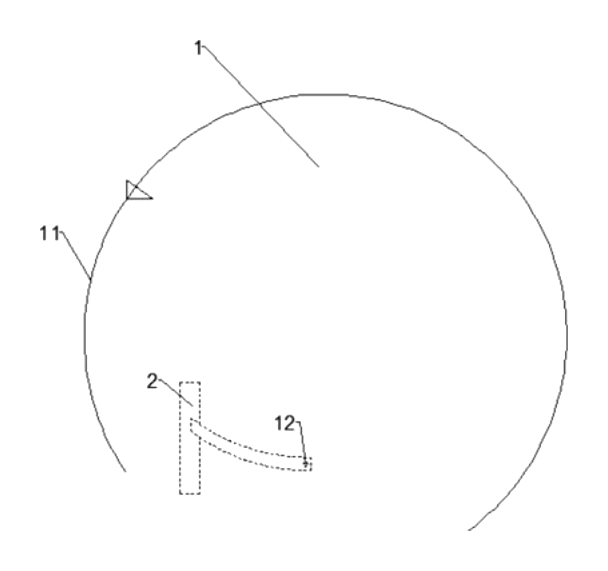
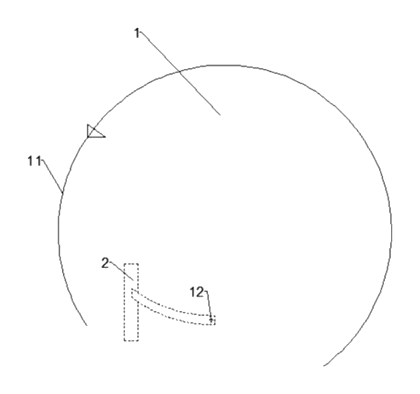
The patent describes a helmet body (1) fitted with a transparent windshield (11) and a removable ventilation mechanism (2) positioned directly in front of the rider’s nose and mouth. The mechanism uses an upper shell (22) containing an exhaust fan (241). Cold air entering beneath the windshield is caught by angled wind deflectors (221) and routed up through air inlet holes (222). At the same time, second branch pipes (242) pass through a layered nose-and-mouth protection assembly (23) to draw exhaled breath directly into the fan. The fan pushes all collected air down into a wider lower shell (251) and out through side branch pipes (253), keeping the visor clear and preventing cold drafts from hitting the neck.
Who it is for
- Powersports helmet brands looking to offer a premium winter or all-season model with active anti-fog technology beyond standard Pinlock inserts.
- Delivery fleet operators whose riders spend hours in rain and cold, where visor fogging slows them down and increases accident risk.
- Ski and snowmobile gear companies adapting the internal fan and heated guard concept for cold-weather sports helmets.
- OEM factories producing helmets that want to integrate a patented active ventilation module as a value-added feature for their clients.
How it works
The main parts
| No. | Part | What it does |
|---|---|---|
| 1 | Helmet body | Main protective shell holding the visor and mechanism. |
| 11 | Windshield | Transparent visor shielding wind, sand and rain. |
| 12 | Female snap buttons | Mounted symmetrically inside the helmet near ear pads to hold the mechanism. |
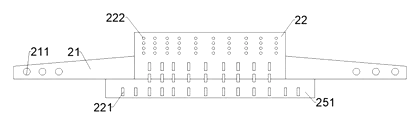
| 21 | Fixing straps | Rigid bands with male sub-buckles (211) that snap into the female buttons; wrapped in sponge for comfort. |
| 22 | Upper shell | Cuboid housing (about 5 cm tall) containing the fan, battery and intake structure. |
| 221 | Wind deflectors | Silicone fins tilting upward at roughly 60 degrees, about 1.5 cm long, guiding air to the intakes. |
| 222 | Air inlet holes | Openings above the deflectors where guided wind enters the upper shell. |
| 23 | Nose/mouth protection assembly | Layered pad facing the rider: cotton cloth layer (231), sponge layer (232), waterproof layer (233) and heating layer (234). |
| 241 | Exhaust fan | Draws air from the intake holes and branch pipes into the main pipe. |
| 242 | Second air inlet branch pipes | Inner diameter 1–1.5 mm; pass through the pad layers to capture exhaled breath. |
| 243 | First air inlet branch pipes | Connect the inlet holes to the fan’s intake manifold. |
| 251 | Lower shell | Wider than the upper shell (about 3 cm tall); houses the exhaust routing. |
| 252 | Air outlet main pipe | Carries fan output into the lower shell. |
| 253 | Air outlet branch pipes | Penetrate the left and right sides of the upper shell to vent air outward. |
Operating steps
- Snap the mechanism in place using the sub-buckles (211) on the fixing straps (21) into the female buttons (12) inside the helmet body (1).
- Turn on the exhaust fan (241) and the heating wire inside the heating layer (234), both powered by the rechargeable battery housed on top of the upper shell (22).
- Ride forward. Wind passing under the windshield (11) hits the silicone wind deflectors (221), which angle it upward into the air inlet holes (222) instead of letting it blow down onto the neck.
- Exhale normally. Breath passes through the cotton (231) and sponge (232) layers, is blocked from reaching the heating wire by the waterproof layer (233), and is drawn into the second branch pipes (242) before it can touch the visor.
- Air exits sideways. The fan pushes all captured air down into the lower shell (251) and out through the side branch pipes (253), maintaining circulation.
Applications
Winter motorcycle commuting
Daily commuters riding in temperatures near freezing constantly wipe their visors at red lights. The active fan removes the moist breath immediately, while the heated pad keeps the face comfortable.
Food delivery fleets in rainy climates
Delivery riders cannot afford to stop and clear fogged lenses during heavy shifts. A helmet that mechanically extracts humidity helps maintain visibility continuously, reducing the chance of accidents caused by sudden blind spots in traffic.
Snowmobiling and winter off-road riding
Snowmobile riders generate heavy condensation due to high exertion in sub-zero air. The combination of directed intake holes and side-exhaust routing prevents the hot, wet air from pooling inside the helmet cavity during aggressive riding.
Scooter use in tropical monsoons
High humidity alone causes visor fog even when temperatures are warm. The exhaust fan moves the saturated air out through the lower shell’s side pipes faster than it can condense on the windshield interior.
Where it is less suitable
- Summer track-day racing where maximum passive airflow and minimum weight are prioritized over anti-fog features.
- Open-face or half helmets because the design relies on the enclosed space between the windshield and the rider’s face to create the necessary pressure differential.
- Ultra-budget commuter helmets where adding a battery, fan and wiring harness would push the retail price beyond the target market’s limit.
Frequently asked questions
How does the fan actually prevent the visor from fogging?
The exhaust fan pulls two streams of air into the upper shell. First, it draws cold wind that slips under the visor upward through the silicone deflectors and inlet holes. Second, it extracts the rider’s warm, moist breath through tiny branch pipes that pass through the face pad. By moving both air masses into the internal ducting and exhausting them out the sides of the lower shell, the system prevents the warm breath from lingering against the cold inner surface of the visor where condensation forms.
Is the face pad removable for washing?
According to the patent, the entire ventilation mechanism attaches to the helmet interior using snap fasteners. The male sub-buckles on the rigid fixing straps click into female buttons mounted inside the helmet near the ear pads. This allows the rider to unclip the whole assembly. However, because the pad contains a heating wire and the branch pipes pass through its layers, washing instructions would need to be defined during product development—likely restricting cleaning to the outer cotton layer or requiring a fully sealed electronic core.
What powers the fan and the heater?
A rechargeable battery housed in a box on the top surface of the upper shell provides power. Both the exhaust fan and the electric heating wire embedded in the heating layer connect to this battery. The exact capacity and runtime are not specified in the patent and would be set in design based on the chosen fan motor and heating element resistance.
Will the fan be loud inside the helmet?
The patent does not list decibel ratings. Fan noise is a critical factor for rider comfort, so blower selection during the engineering phase focuses on balancing airflow volume against acoustic output. Duct sizing (the patent specifies 1 to 1.5 mm inner diameters for the branch pipes) and shell geometry also influence turbulence noise. These parameters are confirmed on prototypes.
Does the heated pad get too hot?
The heating layer contains an electric heating wire designed to raise the temperature of the nose and mouth protection assembly during cold seasons, warming the exposed face. Temperature regulation—such as a thermostat, thermistor feedback loop or simple multi-level switch—is not detailed in the patent document and must be engineered to meet safety standards for wearable heated garments.
Can this fit into any existing helmet?
The mechanism is designed to sit in the space formed by the windshield and the helmet body, directly in front of the nose and mouth. It requires the helmet shell to have corresponding female snap buttons installed near the ear protectors. Retrofitting an arbitrary helmet would require drilling or adhering these mounting points and verifying that the internal clearance accommodates the upper shell, which the patent describes as about 5 cm tall.
Can this design be made and sold in the US?
The patent was filed only in China and is currently in force there, so it does not restrict the design in the US. However, active helmet ventilation and heated face shields may be covered by other US patents held by major helmet manufacturers - see Patent & Production - so we recommend a freedom-to-operate check before volume production.
Are you affiliated with the patent owner?
No. IP2M is an independent design and manufacturing service working from the public patent document.
Request a quote
Click Request a Quote below to see our email address - copy it, or open your email app with a ready-made message. Please mention patent CN108158103B in the subject.
Helpful details to include:
- Your company and channel (helmet brand, fleet operator, winter sports gear distributor)
- Target helmet type (motorcycle, snowmobile, e-bike) and sizes
- Required certifications (DOT, ECE, CPSC, FCC, UL)
- Desired battery runtime and charging method
- Estimated quantity and target price
- Timeline - when you would like functional prototypes and the first shipment
You can also reach us at (332) 203-9997.
Explore this product
Interested in building this?
Tell us your target market, quantity and timeline. We reply with options for prototyping, small-batch runs or volume production.
Send your inquiry to
Please put CN108158103B in the subject line and tell us your company, country, estimated quantity and timeline.
Prefer to talk? Call (332) 203-9997.
More product-ready patents
All Apparel & Accessories patents →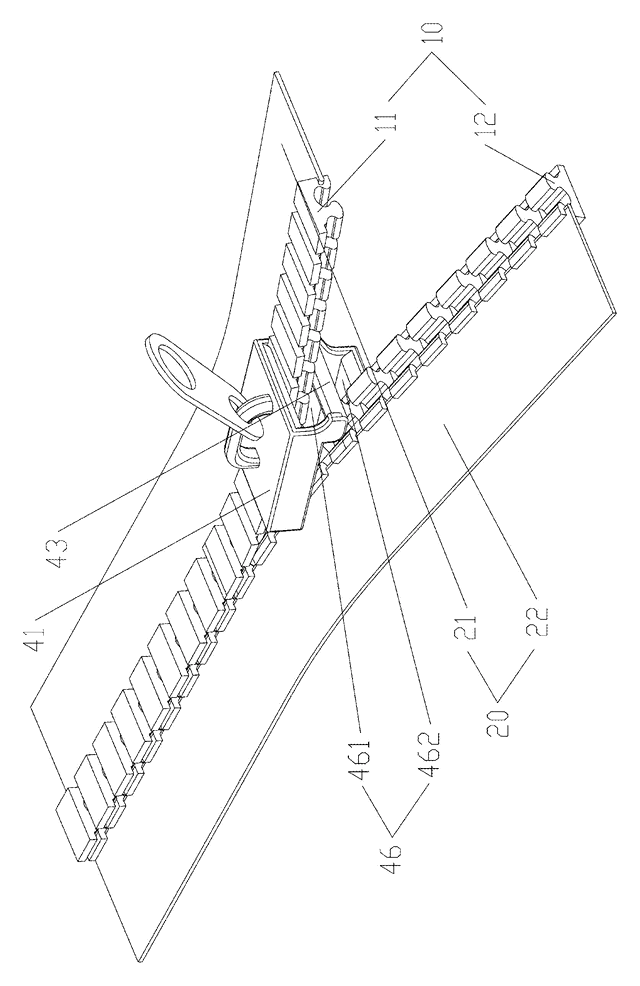
Apparel & Accessories
Stacked Zipper with Teeth That Mesh Top-to-Bottom
Zipper whose two identical tooth rows mesh on top of each other, closed by a simplified slider.
Patent CN205795062U
Apparel & Accessories
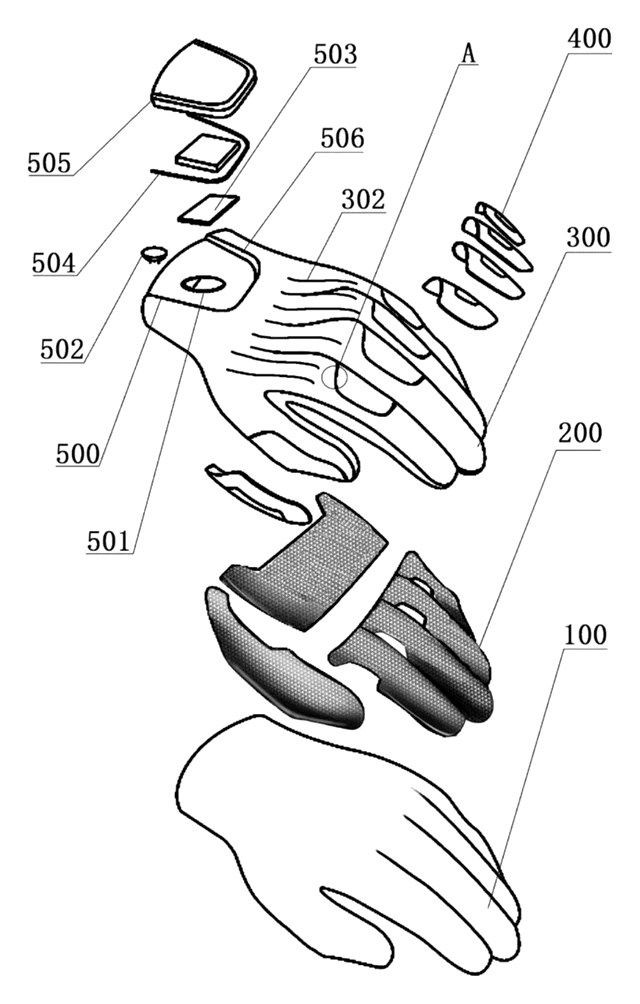
Impact-Resistant Glove with a 3D-Printed Lattice Layer
Work glove with a 3D-printed lattice impact layer, TPU knuckle guards and a light mounting area.
Patent CN213785583U
Apparel & Accessories
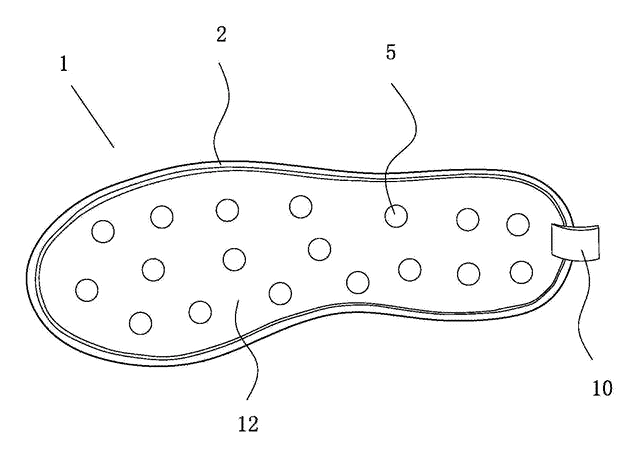
Massage Insole with Spring-Back Silicone Nubs and a Removable Top Layer
Layered insole: silicone nubs rise through a removable perforated top sheet and sink under each step.
Patent CN208286505U
Apparel & Accessories
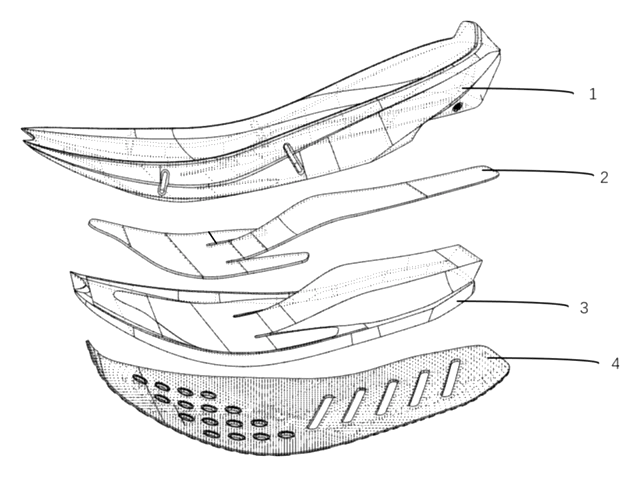
Heel-Less Carbon Plate Running Shoe Sole for Forefoot Strikers
Running sole for forefoot strikers: no ground-touching heel, winged carbon plate between two midsoles.
Patent CN216723354U
Apparel & Accessories
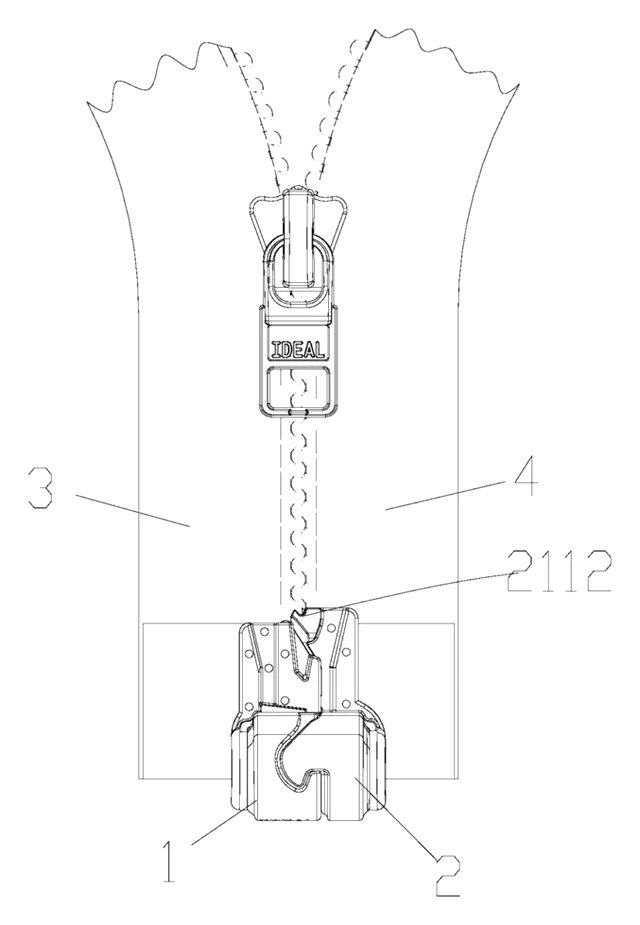
Waterproof Magnetic Zipper Stop That Snaps the Two Halves Together
Separating-zipper stop with sealed magnets: pin and box snap together one-handed, safe in rain and wash.
Patent CN215075936U
Apparel & Accessories
Left-Right Specific Soccer Socks: Grip for the Plant Foot, Touch Pads for the Kicking Foot
Soccer socks knitted as a left-right pair: grip zones for the plant foot, pads for the kicking foot.
Patent CN212728807U
Browse by category
- Apparel & Accessories (22)
- Baby & Kids (16)
- Bags & Luggage (9)
- Bath & Personal Care (16)
- Car Accessories (10)
- Furniture, Bedding & Storage (12)
- Garden & Outdoor (18)
- Health & Wellness (8)
- Home, Kitchen & Cleaning (24)
- Lighting (12)
- Packaging & Containers (6)
- Pet Products (6)
- Phone & Camera Accessories (4)
- Retail Display (13)
- School, Office & Art (19)
- Sports & Recreation (25)
- Tools & Workshop (27)
- Toys & Games (12)
This page is based on the public patent document CN108158103B, assigned to Dongguan Weimar Sports Equipment Co ltd. IP2M is an independent manufacturing service and is not affiliated with, endorsed by or licensed by the patent owner. Images marked as concept renderings are illustrations, not photos of an existing product. Patent status information is provided for reference only and is not legal advice; confirm freedom to operate for your market before production. Full disclaimer.