At a glance
| Patent number | CN108158103B (application CN201711465170) |
| Type | China invention patent (发明专利) - protects product shape, structure and method |
| Original title | Anti-fog helmet (防雾头盔) |
| Patent owner | Dongguan Weimar Sports Equipment Co ltd |
| Inventors | Lu Zhiwen |
| Filing date | 2017-12-28 |
| Grant date | 2020-06-09 |
| Status (China) | In force in China until at most 2037-12-28 (if annual fees are paid) |
| Patent family | Chinese filings only - no US, European, Japanese, PCT or other filings listed |
| Cited by | 1 later document |
| Source | Google Patents (search for CN108158103B) |
What the claims cover, in plain language
Claim 1 covers an anti-fog helmet comprising a helmet body (1) with a transparent windshield (11) and female snap buttons (12) inside near the ear protectors. A ventilation mechanism (2) sits in the space between the windshield and the helmet body. It attaches via fixing straps (21) with male sub-buckles (211) that mate with the female buttons. The mechanism includes a cuboid upper shell (22) open toward the rider’s face. The side facing the windshield has multiple wind deflectors (221) spaced apart at the bottom, and air inlet holes (222) spaced above them. A rechargeable battery is housed on the top surface. Inside the upper shell is a nose and mouth protection assembly (23) made of a cotton cloth layer (231), sponge layer (232), waterproof layer (233) and heating layer (234) stacked inward. An electric heating wire in the heating layer connects to the battery. An exhaust fan (241) is also inside the upper shell, connected to the battery. Its intake communicates with an air inlet main pipe, which splits into first branch pipes (243) extending out of the inlet holes and second branch pipes (242) passing sequentially through the heating, waterproof, sponge and cotton layers. An air outlet assembly includes a lower shell (251) fixed below the upper shell, an outlet main pipe (252) inside it communicating with the fan’s exhaust end, and outlet branch pipes (253) penetrating the left and right sides. The lower shell is wider left-to-right than the upper shell. The downward projection of the inlet holes falls outside the wind deflectors. The inner diameters of the first and second branch pipes are 1 to 1.5 mm.
Claim 2 adds wind deflectors on the side of the lower shell facing the windshield. Claim 3 specifies the fixing straps are rigid material wrapped in sponge outside the sub-buckles. Claim 4 places multiple sub-buckles at intervals along each strap for adjustment. Claim 5 sets the upper shell height at about 5 cm and the lower shell at about 3 cm. Claim 6 defines the wind deflectors as silica gel (silicone) inclined upward at a 60-degree angle, 1.5 cm long from base to tip.
This is a simplified reading for orientation only. The legal scope is defined by the exact claim wording in the official Chinese document.
What this means for US production
This patent was filed only in China. It is currently in force in China until at most 2037-12-28 (if annual fees are paid), meaning manufacturing or selling this specific design within China requires the patent owner’s permission. It has no US or other foreign counterpart.
Two points to settle early:
- Freedom to operate (FTO). While this specific Chinese patent does not restrict US production, active helmet ventilation, integrated fans and heated face shields are heavily patented areas globally. Brands like Shoei, HJC and various automotive suppliers hold US patents covering powered helmet airflow systems. A thorough FTO search focusing on the fan placement, ducting layout and heated pad integration must be completed before committing to tooling.
- Other patents may exist. Motorcycle helmet safety structures and electronic integrations are subject to dense patent thickets in the US. Do not assume that the absence of a US family member for this specific CN patent guarantees freedom to manufacture the exact geometry described.
Customization and manufacturing
What can be customized
| Area | Options |
|---|---|
| Shell dimensions | Upper and lower shell heights (patent mentions about 5 cm and 3 cm as examples) adjusted for different helmet sizes. |
| Fan specifications | Blower capacity, noise level (dB), voltage and current draw matched to battery size. |
| Battery type | Lithium-polymer cell capacity, charging port type (USB-C or proprietary) and placement. |
| Pad materials | Cotton and sponge densities, waterproof membrane type (TPU or PE), heating wire resistance. |
| Deflector geometry | Angle (patent notes 60 degrees), length and durometer of the silicone fins. |
| Duct sizing | Branch pipe inner diameters (patent notes 1–1.5 mm) scaled for airflow requirements. |
| Attachment method | Snap fastener spacing, strap rigidity and padding thickness. |
Things to plan for (US market)
- DOT FMVSS 218 - mandatory motorcycle helmet safety standard in the US. Adding internal electronics, hard shells and batteries must not compromise impact attenuation or penetration resistance tested under this rule.
- CPSC 16 CFR 1203 - applies if the helmet is marketed for bicycle use rather than motorized vehicles.
- FCC Part 15 - the exhaust fan motor and any switching circuitry for the heating element constitute unintentional radiators and must comply with FCC limits for electromagnetic interference.
- UL 2054 / IEC 62133 - lithium battery safety standards. A rechargeable battery worn on the head requires rigorous short-circuit, crush and thermal testing to satisfy US retailers and liability insurers.
- California Prop 65 - screening required for the silicone deflectors, sponge layers, plastics and battery components.
How a project runs
- Inquiry - define helmet type (motorcycle, snowmobile, e-bike), target certifications, volume and required battery life.
- Design - engineer the upper and lower shells to fit the specific helmet EPS liner profile; select fan and battery; route ducts.
- Prototype - 3D print or CNC machine the shells; assemble the pad layers and wiring; test airflow and heating performance on a mannequin head.
- Pilot run - produce injection-molded samples; conduct DOT or CPSC impact testing with the module installed; run battery cycle and thermal tests.
- Production - tool steel molds for shells; die-cut pad layers; assemble wiring harnesses; final QA for fan noise, heating uniformity and snap-fit retention.
Quantities & timeline
Manufacturing this module requires injection molds for the upper and lower plastic shells, compression or die-cutting tooling for the multi-layer pad, silicone molding for the wind deflectors, and custom wiring harness assembly. Battery certification testing (UL/IEC) and helmet impact re-testing (DOT/CPSC) with the internal hardware installed represent the longest lead-time phases. Send us your helmet model specifications, target market, desired battery runtime, estimated quantity and certification requirements and we will reply with options.
Patent drawings
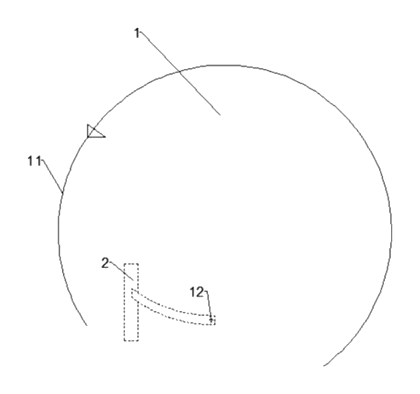
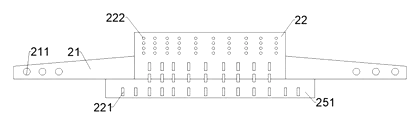
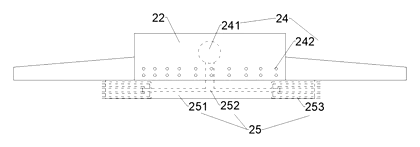
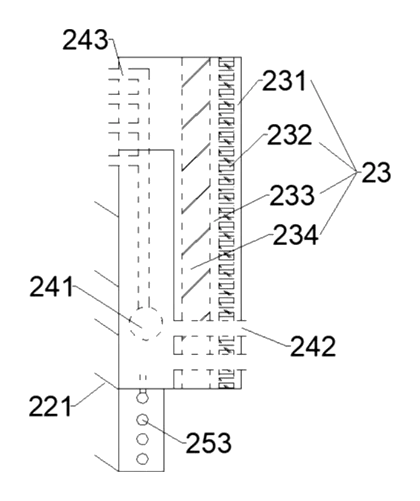
Drawings reproduced from the public patent document for reference.