At a glance
| Patent number | CN108392818B (application CN201810453664) |
| Type | China invention patent (发明专利) - protects product shape, structure and method |
| Original title | Skating shoes (一种溜冰鞋) |
| Patent owner | Individual |
| Inventors | Qin Jinping |
| Filing date | 2018-05-11 |
| Grant date | 2024-01-12 |
| Status (China) | In force in China until at most 2038-05-11 (if annual fees are paid) |
| Patent family | Chinese filings only - no US, European, Japanese, PCT or other filings listed |
| Cited by | 0 later documents |
| Source | Google Patents (search for CN108392818B) |
What the claims cover, in plain language
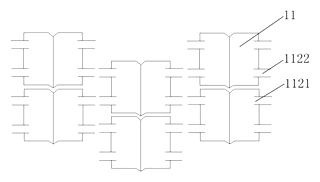
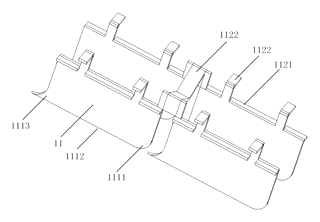
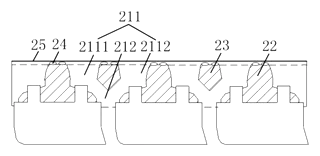
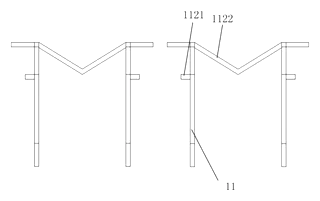
Claim 1 - a skate comprising a sole and multiple blade groups inserted into the sole, distributed along the left-right direction. Each blade group contains multiple ice blades arranged along the front-back direction, extending in that direction so they are uniformly distributed in an array. Each blade has a shoulder at its top end with a planar structure and a connection structure fixed to the blade and inserted into the sole to increase contact area. The sole contains channels communicating the shoe cavity with the outside for ventilation. The channels extend left-right and penetrate up-down. First and second bulges alternate front-to-back in the sole; adjacent ones form a group with a first air passage between them. The lower end of the second bulge has a second air passage along the left-right direction. The first air passage has first and second upper branches penetrating the sole up-down, communicating with the inside of the shoe.
Claim 2 - each ice blade comprises a blade with a front end angle, middle part, and rear end angle in sequence from front to back. Claim 3 - the thickness of the ice blade is 0.5-1.0 mm. Claim 4 - the sole comprises metal particles uniformly arranged on the first and second protrusions. Claim 5 - the sole comprises a waterproof breathable layer arranged on the metal particles. Claim 6 - the sole comprises a protective layer arranged on the waterproof breathable layer, which is a three-dimensional grid. Claim 7 - the sole comprises multi-layer gauze to reduce the hole size of the protective layer grid, increase supporting area, and ensure ventilation. Claim 8 - the sole comprises a barb fitting structure on the side wall of the shoe to fixedly connect the gauze, protective layer, and waterproof breathable layer from top to bottom.
This is a simplified reading for orientation only. The legal scope is defined by the exact claim wording in the official Chinese document.
What this means for US production
This patent was filed only in China and is currently in force. It has no US or other foreign counterpart. However, because it remains active in China, making or selling this specific multi-blade array skate in China needs the owner’s permission.
Two points to settle early:
- Other patents may exist. Ice skate designs, including blade configurations and boot ventilation systems, are covered by various historical and current patents globally. While no foreign patents cite this specific Chinese document, a freedom-to-operate (FTO) review focusing on multi-blade arrangements and sole ventilation channels is recommended before launching in the US market.
- Blade material and hardness. The patent specifies a blade thickness of 0.5-1.0 mm but does not detail the steel grade or heat treatment required for ice wear resistance, which must be determined during prototyping.
Customization and manufacturing
What can be customized
| Area | Options |
|---|---|
| Blade count and layout | Number of blade groups (e.g., 4 or 6) and blades per group to be confirmed in design |
| Sole material | Rubber compounds varying in hardness and elasticity |
| Upper shoe style | Various shoe patterns for different age groups, as described in the patent |
| Blade profile | Front and rear end angles, middle section shape |
| Ventilation layers | Selection of gauze density, protective grid dimensions, and breathable membranes |
| Sizing | Standard US shoe sizes to be confirmed on prototypes |
Things to plan for (US market)
- ASTM F2268 - standard specification for ice hockey skates, which outlines structural and performance testing if marketed toward hockey-style recreational use.
- CPSC guidelines - general consumer product safety rules apply to recreational sporting goods, particularly regarding sharp edges and structural integrity.
- California Prop 65 - rubber compounds, metal particles, and adhesives used in the sole assembly must be screened for regulated substances.
How a project runs
- Inquiry - target audience, sizing range, blade layout preferences, and volume expectations.
- Design - engineering the rubber sole mold, blade stamping dies, and layering sequence for the ventilation stack.
- Prototype - assembling sample skates to test balance, glide mechanics, and airflow through the sole channels.
- Pilot run - producing a small batch for durability testing on ice, checking blade retention in the rubber, and verifying waterproof breathable layer performance.
- Production - injection molding the soles, stamping the blades, assembling the internal layers, attaching the upper shoe, and final quality inspection.
Quantities & timeline
Manufacturing requires precision molds for the rubber sole to accommodate the internal bulges and channels, alongside progressive stamping dies for the thin ice blades. Assembling the multi-layer ventilation stack (metal particles, breathable layer, grid, gauze) adds manual or automated assembly steps compared to standard skates. Certification tests for recreational sports equipment will dictate part of the schedule. Send us your target sizes, blade layout preferences, upper shoe styles, estimated quantities and target price and we will reply with options.
Patent drawings
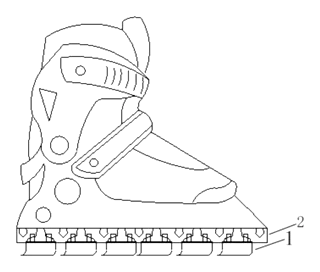
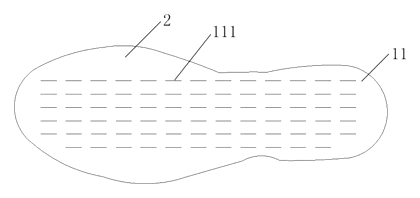
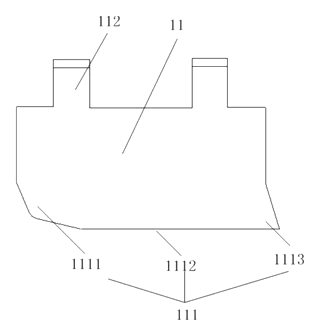
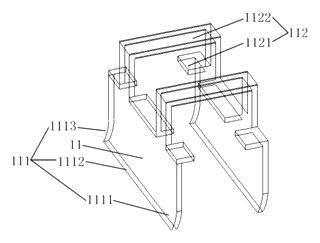
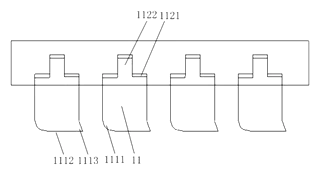
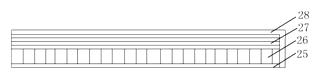
Drawings reproduced from the public patent document for reference.