At a glance
| Patent number | CN108514507B (application CN201810402461) |
| Type | China invention patent (发明专利) - protects product shape, structure and method |
| Original title | Wall-mounted massager (一种壁挂式按摩器) |
| Patent owner | Xiamen Comfort Science and Technology Group Co Ltd |
| Inventors | Zou Jianhan, Zhang Guangzhang, Zhang Yunlong, Feng Shi, Chen Mingqu, Hong Zhongjin |
| Filing date | 2018-04-28 |
| Grant date | 2020-04-21 |
| Status (China) | In force in China until at most 2038-04-28 (if annual fees are paid) |
| Patent family | Chinese filings only - no US, European, Japanese, PCT or other filings listed |
| Cited by | 1 later document |
| Source | Google Patents (search for CN108514507B) |
What the claims cover, in plain language
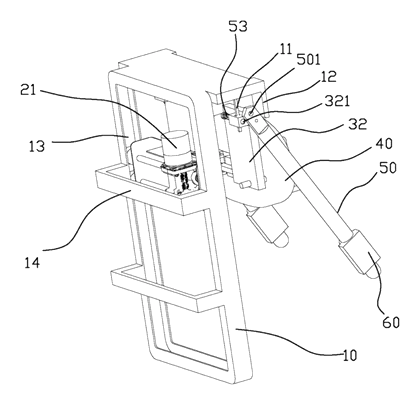
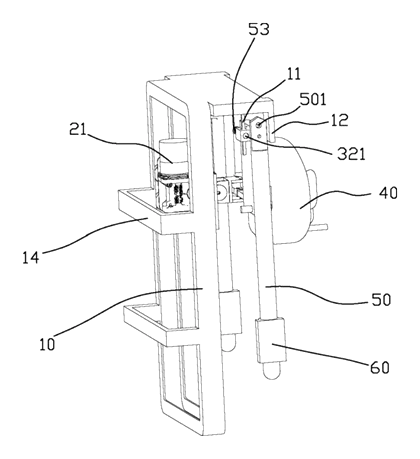
Claim 1 covers a wall-mounted massager having a wall-hanging bracket, a lifting drive mechanism, a connecting frame, and a massage mechanism arranged on the bracket. An armrest is held unfolded by a first resetting piece and locked in that state by a second resetting piece. The top of the bracket has a driving part and an abutting part. When the lifting mechanism raises the frame to a certain height, the driving part forces the fixing piece to overcome the second resetting piece and disengage from the armrest. Further upward movement causes the abutting part to push the armrest closed against the first resetting piece.
Claim 2 specifies the first resetting piece is a torsion spring sleeved on the pivot shaft between the connecting frame and the armrest. Claim 3 defines the fixing piece as a bolt/plug piece engaging a first jack on the frame and a second jack on the armrest. Claim 4 states the second resetting piece is a reset spring connecting the frame to the plug piece. Claim 5 details that the plug piece has a wedge-shaped surface interacting with the driving part to convert relative movement into withdrawal of the plug. Claim 6 describes the lifting drive mechanism as a driving motor, gear transmission assembly, and pulleys sliding in a vertical chute on the bracket. Claims 7-8 add a control module and a position detection module on the connecting frame, and split the frame into a first frame driven by the lift and a second frame pivoted to it for angle adjustment.
This is a simplified reading for orientation only. The legal scope is defined by the exact claim wording in the official Chinese document.
What this means for US production
This patent was filed only in China and is currently in force there. It has no US or other foreign counterpart. Because it is active in China, making or selling this specific wall-mounted massager design in China needs the owner’s permission. Manufacturing in other countries is not restricted by this particular document.
Two points to settle early:
- Other patents may exist. The motorized massage chair and wall-mounted wellness equipment fields contain many active patents globally covering lifting columns, roller tracks, and folding mechanisms. A freedom-to-operate (FTO) review covering the vertical lift, the wedge-release lock, and the massage carriage is required before committing to tooling for any market.
- Structural anchoring. The wall bracket must support dynamic loads from the moving frame and the user’s weight leaning on the armrests. Fastener patterns, steel gauge, and wall-type instructions must be engineered for the target market’s building codes.
Customization and manufacturing
What can be customized
| Area | Options |
|---|---|
| Frame dimensions | Height of the chute, width of the connecting frames to suit different user sizes |
| Massage mechanism | Roller type, node count, heating elements (to be confirmed in design) |
| Upholstery | PU leather, fabric, or mesh covers for the back pad and armrests |
| Motors | Voltage and torque ratings for the lifting motor and the pivot motor |
| Control interface | Wired remote, wireless handset, or integrated touch panel |
| Bracket finish | Powder-coated steel colors to match interior decor |
| Detection module | Laser ranging or alternative height sensors as specified by the buyer |
Things to plan for (US market)
- UL 1647 - Standard for Safety for Massage and Exercise Equipment, covering electrical safety, motor thermal protection, and mechanical hazards.
- FCC Part 15 - Required if the control module uses wireless communication or contains digital circuits that emit radio frequency energy.
- California Proposition 65 - Plastics, foams, and metal finishes must be screened for listed chemicals, with appropriate warnings if necessary.
- FDA regulations - If marketed with claims beyond general relaxation and muscle soothing, the device could fall under FDA oversight; general wellness positioning avoids this classification.
How a project runs
- Inquiry - Define target user size, preferred massage style, electrical specifications, and order volume.
- Engineering - Design the bracket, chute profile, gear ratios, and the wedge/plug geometry to ensure reliable release at the correct height.
- Prototyping - Build functional samples to test the lifting smoothness, the auto-fold timing, and the structural rigidity of the wall mount.
- Testing and certification - Submit units to a recognized laboratory for UL 1647 and FCC testing; conduct internal cycle tests on the springs and motors.
- Production - Fabricate the steel bracket and frames, mold plastic covers, assemble the drive trains, wire the control modules, and package with mounting hardware.
Quantities & timeline
The wall bracket and connecting frames require sheet metal stamping dies and welding jigs. The gears, pulleys, and plastic housing shells need injection molds. Certification testing for electrical safety takes several weeks once prototypes are finalized. Spring tension for the torsion and reset springs must be tuned during prototyping to balance holding strength with easy folding. Send us your target dimensions, motor specifications, upholstery preferences, estimated quantity, and certification requirements and we will reply with options.
Patent drawings
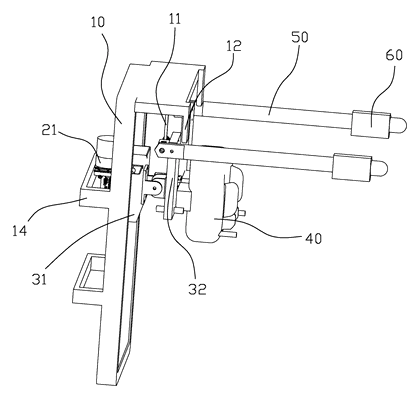
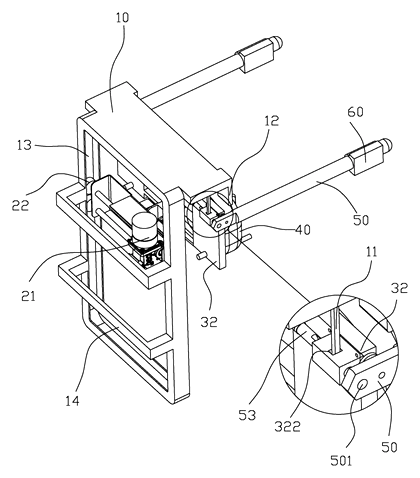
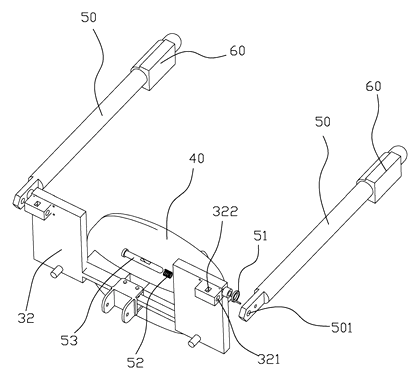
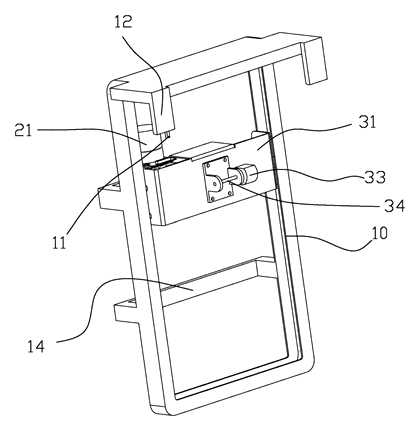
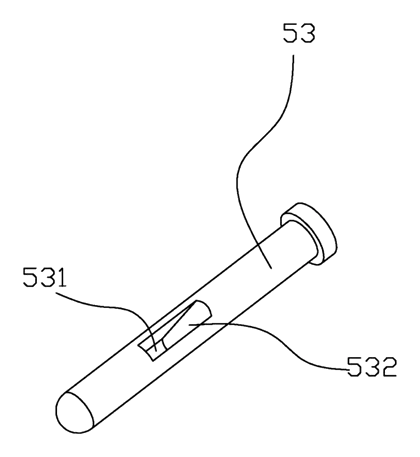
Drawings reproduced from the public patent document for reference.