
Patent CN108851451B
Updated November 7, 2026Student Pencil Case with Integrated Automatic Electric Sharpener
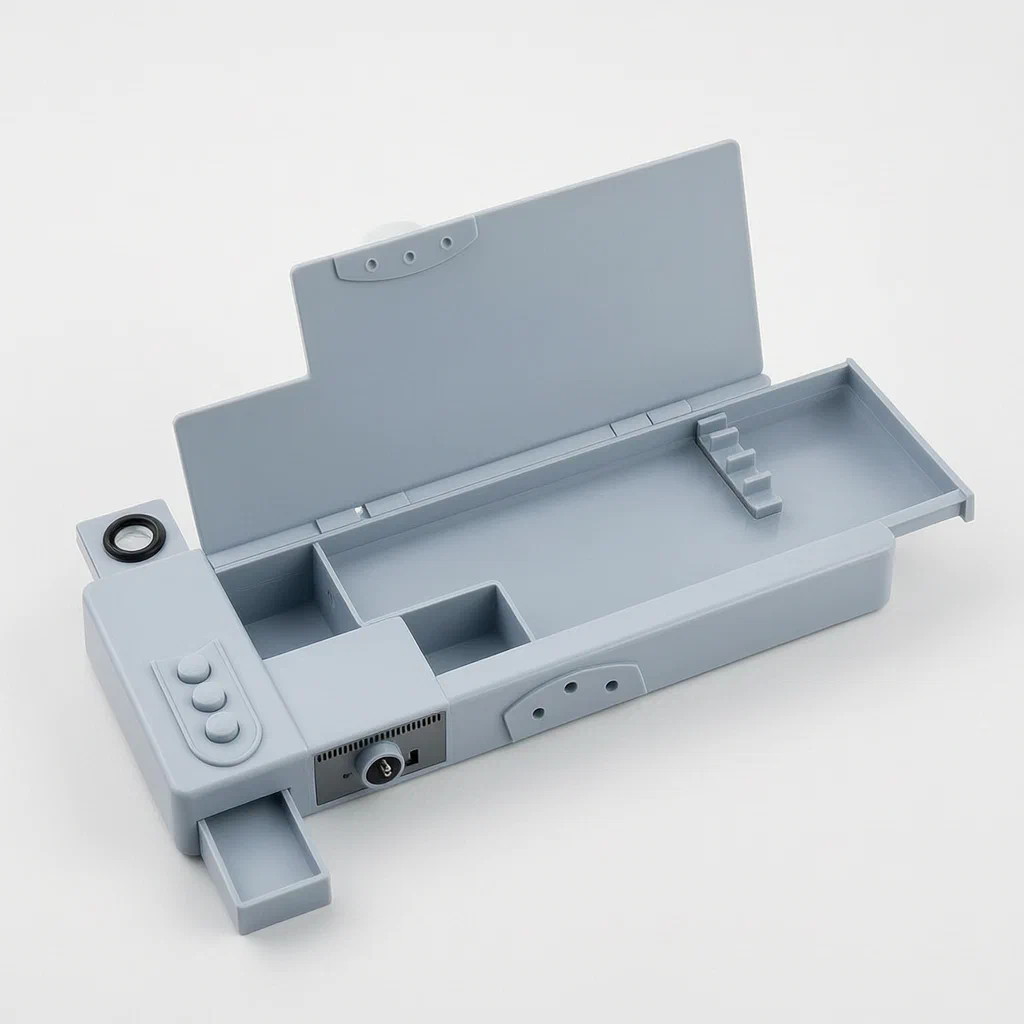
Standard pencil cases require separate sharpeners, leading to lost parts and messy shavings. This integrated design embeds an automatic electric sharpener directly into the writing case body. A stabilizing mechanism secures the pencil while a motorized gear system sharpens it, activated by a touch sensor. The unit includes noise reduction components and magnetic closure for a compact, all-in-one student supply.
- China invention patent - active
- No filings outside China
- School supplies & stationery
- Integrated electric sharpener mechanism
Splat! What let you down?
⚡
Automatic Sharpening
Embedded electric sharpener uses gears and belts to rotate blades automatically.
🔒
Stabilizing Mechanism
Spring-loaded columns and limit rods secure the pencil during operation.
👆
Touch Activation
A touch sensing mechanism triggers the motor when a pencil is inserted.
🔇
Noise Reduction
Damping springs and buffering cotton minimize vibration and sound.
Bring this product to market
- ✓ Patent review Patent family and legal status reviewed in the relevant jurisdictions.
- 2 Product brief · now How it works, uses and options written up
- 3 Prototype First samples for buyers to review
- 4 Pilot run Small first batch for launch customers
- 5 Volume production Repeat orders at scale
Buyer interest
– of 100 buyers needed to start prototyping
One click, no sign-up. Each vote is one real visitor, and products with the most interest go to prototyping first.
Build team: no members yet. Need a partner, co-funding or skills to build this? Join and we introduce the team once it forms.
Patent Rights & Team Participation
Before joining a development team, participants should ensure they have the necessary rights or authorization to participate in the project.
Participation is generally appropriate where:
- You own the relevant patent rights or have obtained permission or a license from the rights holder.
- The relevant patent rights have expired or have been legally invalidated in the jurisdictions where the planned activities will take place.
- The planned development, manufacturing, and commercialization activities have been independently assessed and do not infringe applicable patent rights in the relevant jurisdictions.
Important: Being located outside a country where a patent is protected does not automatically exempt you from patent infringement risks. Patent rights may apply based on where development, manufacturing, use, sale, or import activities take place.
IP2M does not grant any patent license or authorization through team participation. Joining a project does not provide permission to use, manufacture, or commercialize patented technology.
The problem
Students often carry separate pencil sharpeners, which are easily lost or left behind. Manual sharpening can be uneven, requires significant effort, and creates debris that falls on desks or floors. Existing multi-function pencil cases rarely integrate powered sharpening because of space constraints, safety concerns regarding moving parts, and the difficulty of securing a pencil firmly enough to sharpen without damaging the lead or the case structure. Furthermore, motorized units in small devices often suffer from excessive noise and vibration, making them disruptive in classroom environments.
The solution
The patent describes a student writing case with an integrated automatic pencil sharpener device. The core solution involves embedding the sharpener mechanism within the front surface of the case body.
- A flip cover with a magnetic absorption plate closes the main storage compartment.
- An automatic pencil sharpener device is embedded in the case front. This device contains a protective housing, an insulating pencil vase, and a motor-driven blade assembly.
- A stabilizing mechanism surrounds the pencil insertion point. It uses fixed and moving columns with springs and limit rods to grip the pencil securely.
- A touch sensing mechanism activates the power motor when a pencil is inserted and touches the sensor.
- A vibration and noise reduction device using buffering cotton and damping springs isolates the motor assembly from the case shell.
Who it is for
- School Supply Brands: Brands building tech-forward stationery ranges for K-12 students.
- Educational Retailers: Stores seeking unique, functional gifts or back-to-school items that combine storage and tool utility.
- Toy and Novelty Manufacturers: Businesses interested in producing interactive desk accessories that appeal to children’s desire for automated gadgets.
- Office Furniture Suppliers: Providers of child-friendly study desks who may bundle this specific case as part of a learning kit.
How it works
The main parts
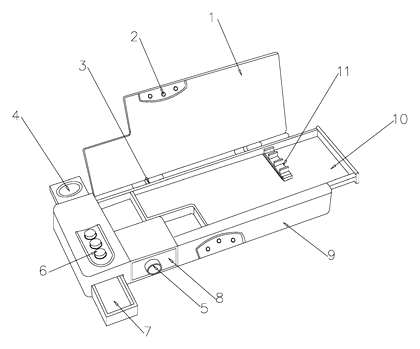
| No. | Part | What it does |
|---|---|---|
| 1 | Flip Cover | Protects the interior; opens via hinge. |
| 2 | Magnetic Absorption Plate | Keeps the cover closed securely. |
| 8 | Automatic Sharpener Device | Main module containing motor and blades. |
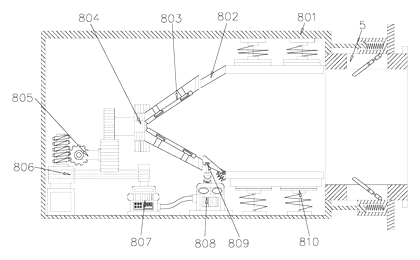
| 801 | Protective Housing | Encloses the electrical and mechanical parts. |
| 803 | Sharpening Device | Blade assembly that cuts the wood and lead. |
| 807 | Power Motor | Drives the rotation of the blades. |
| 809 | Touch Sensing Mechanism | Detects pencil presence to start the motor. |
| 5 | Stabilizing Mechanism | Holds the pencil steady during sharpening. |
| 501, 504 | Fixed/Moving Columns | Grip the pencil via spring pressure. |
| 810 | Vibration/Noise Reduction | Damps sound and shake from the motor. |
Operating Steps
- Insert Pencil: The user inserts a pencil into the hole of the stabilizing mechanism.
- Secure Grip: The moving column slides against the fixed column, compressing the spring to clamp the pencil firmly.
- Activate Sensor: The pencil contacts the touch sensing mechanism inside the housing.
- Motor Start: The controller receives the signal and powers the servo motor.
- Sharpening: The motor drives the transmission belt and gear mechanisms, rotating the electric head and blades around the stationary pencil.
- Stop: When sharpening is complete or the pencil is removed, the motor stops.
Applications
Classroom Study Kits
This design serves as a central hub for elementary students. By combining the pencil case and sharpener, it reduces the number of items children need to manage, keeping desks cleaner and minimizing the time spent searching for lost sharpeners during lessons.
Home Homework Stations
For parents setting up dedicated study areas, this integrated unit offers a tidy solution. The noise-reduction features described in the patent make it suitable for home use where quiet concentration is desired, preventing the loud grinding sounds typical of cheap manual or unisolated electric sharpeners.
Gift Sets for Students
Retailers can bundle this case with premium pens or notebooks as a high-value gift set. The novelty of a self-contained electric sharpener appeals to children, making it a popular choice for birthday presents or holiday promotions targeting the back-to-school season.
Travel and Commute
Students who travel to school by bus or train benefit from the compact, enclosed design. The magnetic cover ensures contents stay inside, while the embedded sharpener prevents the need to unpack multiple tools in tight spaces, offering convenience during transit.
Where it is less suitable
- Professional Drafting: Artists and engineers requiring precise lead diameter control typically prefer standalone, high-grade mechanical sharpeners rather than integrated consumer units.
- Heavy Industrial Use: The plastic and lightweight metal construction described is not designed for rugged industrial environments or extreme temperatures.
- Large-Scale Manufacturing Plants: Factories do not need personal desk accessories; this product is strictly for individual consumer use in educational or office settings.
Patent & Production
At a glance
| Patent number | CN108851451B (application CN201810703915) |
| Type | China invention patent - protects product structure and method |
| Original title | Student Stationery Box with Pencil Sharpener (一种带有转笔刀的学生用文具盒) |
| Patent owner | Wuhu Hui Yu Commerce Co Ltd |
| Inventors | Shan Xiaohui |
| Filing date | 2018-06-30 |
| Grant date | 2020-03-24 |
| Status (China) | In force - valid until at most 2038-06-30 if annual fees are paid |
| Patent family | Public record shows Chinese filings only - no US, European, Japanese, PCT or other filings listed |
| Cited by | 0 later documents |
| Source | Google Patents (search for CN108851451B) |
What the claims cover, in plain language
Claim 1 defines a student writing case comprising a flip cover, magnetic plate, stabilizing mechanism, rubber box, automatic pencil sharpener device, drawing plate, and fixed penholder. The sharpener device includes a protective housing, insulating pencil vase, sharpening device, electric rotating head, transmission gears and belts, power motor, starting device, touch sensing mechanism, and vibration/noise reduction device. The stabilizing mechanism uses fixed and moving columns with springs and limit rods to secure the pencil.
Claims 2-9 detail specific sub-components: the blade fixing rod and buckle (Claim 2); the gear meshing of the rotating head (Claim 3); the planetary wheel and bolt connections in the transmission gear mechanism (Claim 4); the worm and belt drive structure (Claim 5); the servo motor and control panel setup (Claim 6); the wiring and starter configuration (Claim 7); the movable plate and reset spring in the touch sensor (Claim 8); and the buffering cotton and damping spring assembly for noise reduction (Claim 9).
This is a simplified reading for orientation only. The legal scope is defined by the exact claim wording in the official Chinese document.
What this means for US production
This patent was filed in China and is currently in force. Making or selling this specific design in China would require the owner’s permission. However, the public record shows no US counterpart. Therefore, manufacturing or selling this design in the United States does not infringe this specific Chinese patent, as it has no effect outside its granted jurisdiction.
Two practical issues to review first:
- Other patents may exist. While this specific patent has no foreign citations listed, the field of integrated stationery and electric sharpeners is crowded. A freedom-to-operate (FTO) search should confirm that no US claims cover a motorized sharpener built into a pencil case or its pencil-stabilizing mechanism.
- Electrical Safety Standards. Since this product involves a motor and battery/power source, US market entry will require strict adherence to electrical safety certifications, which are independent of patent law but critical for retail acceptance.
Customization and manufacturing
What can be customized
| Area | Options |
|---|---|
| Shell Material | ABS plastic, PC, or EVA foam lining for durability and weight |
| Color & Finish | Matte, glossy, or textured surfaces; custom branding colors |
| Sharpener Type | Adaptation for standard vs. oversized pencils |
| Activation | Touch sensitivity adjustment or physical button alternative |
| Storage Layout | Number of internal pockets, elastic loops, and compartment size |
| Power Source | Battery type (AA/AAA) or rechargeable USB-C integration |
Things to plan for (US market)
- CPSC 16 CFR 1203: If marketed primarily to children under certain ages, check toy safety standards regarding small parts and batteries.
- UL 62368-1: Safety standard for audio/video, information and communication technology equipment, relevant for the electronic circuitry and motor.
- FCC Part 15: If the device uses any wireless connectivity (not specified in patent, but common in modern variants), FCC certification is required. For basic motors, electromagnetic interference (EMI) shielding may still be needed.
- California Prop 65: Warning labels may be required for plastics and electronics sold in California.
How a project runs
- Inquiry - Define target age group, power preference, and volume.
- Design - Finalize mold layouts for the housing, stabilizer, and internal frame.
- Prototype - Create functional samples using 3D printing and machined hardware.
- Testing - Verify motor torque, noise levels, and stability of the pencil grip.
- Production - Injection molding, motor assembly, sewing of fabric linings, and final packaging.
Quantities & timeline
Tooling for the injection-molded housing and stabilizer components takes several weeks. Motor and electronic component sourcing depends on global supply chains. Assembly lines must handle both plastic molding and electrical integration. Send us your quantity targets, feature list, and timeline and we will reply with options.
Production notes
Tooling and process
Hardware is molded from engineering plastic for the primary structural shells, including the protective housing and stabilizer columns. Sewing processes create internal fabric linings and pocket dividers. Motor assembly involves integrating the servo motor with the transmission belt and gear systems. Aluminum frames may support internal rigidity if specified in design variations.
Cost drivers
Hardware costs dominate due to the precision gears and motor components. Shell material grade affects durability and finish quality. The number of panels increases assembly complexity. Packaging requirements for fragile electronic components add cost. Fabric and zipper grades influence the aesthetic and tactile feel of the outer case. Actual costs typically depend on final materials, order volume, and supplier quotes.
Prototyping path
Start with sewn first samples for external fit. Use 3D-printed or machined hardware for internal mechanisms to test tolerance. Conduct sharpener load and noise tests on the assembled unit. Build a functional sample to verify motor performance and noise reduction. Develop production patterns for mass manufacturing. The exact sequence depends on the final design and supplier feedback.
What we would change before tooling
Adjust wall thickness and joint design to prevent stress cracking around screw holes. Refine the hinge boss and pivot wear resistance for long-term cover reliability. Optimize the spring rate consistency in the stabilizer to ensure uniform pencil gripping force across different diameters. Final changes will typically depend on prototype results.
Common failure points
Shaft and bearing alignment issues can cause motor jamming. Motor mount cracking occurs if vibration damping is insufficient. Seam failure in fabric linings leads to loose internal parts. Zipper pull breakage happens if the gauge is too low for daily use. Magnet grade and retention may weaken over time, affecting cover closure.
Patent drawings
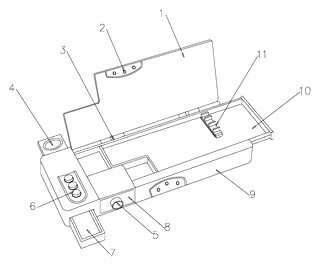
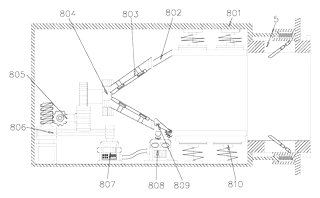
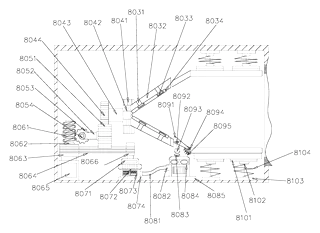
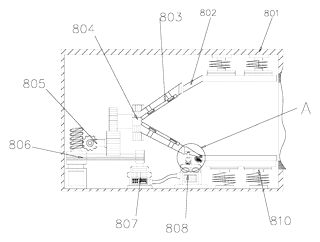
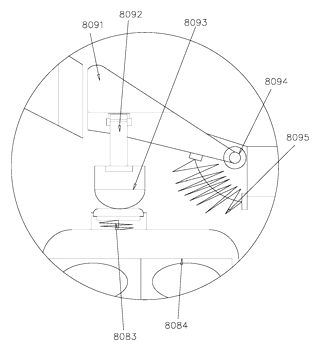
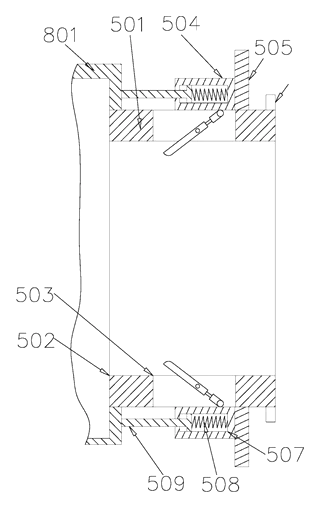
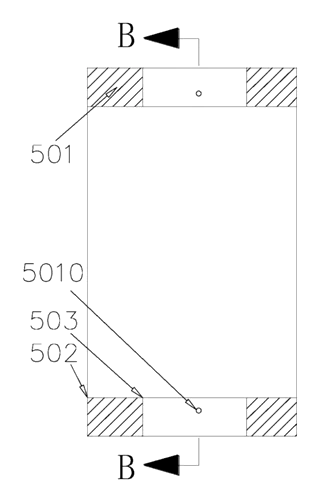
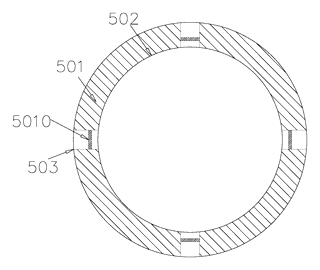
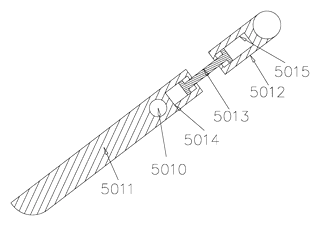
Drawings reproduced from the public patent document for reference.
Frequently asked questions
How does the automatic sharpener work?
The device uses a touch sensor to detect when a pencil is inserted. Once triggered, a servo motor drives a belt and gear system that rotates the cutting blades around the stationary pencil. The stabilizing mechanism holds the pencil firmly so it doesn’t move during the sharpening process.
Is it safe for young children?
The design includes a protective housing for the blades and a stabilizing mechanism that grips the pencil. However, because it involves moving parts and electricity, adult supervision is recommended for younger users. Specific age grading should be determined based on local safety regulations like ASTM F963.
Does it make a lot of noise?
The patent describes a vibration and noise reduction device using buffering cotton and damping springs. In practice, noise levels depend on the final motor selection and casing insulation. We recommend testing prototypes to tune the sound profile for classroom use.
Can I customize the exterior design?
Yes. The outer shell can be injection-molded in various colors and finishes. Internal fabric linings can be sewn with different materials. You can also choose between battery-powered or USB-rechargeable configurations depending on your target market preferences.
What happens if the pencil gets stuck?
The stabilizing mechanism uses springs to allow slight movement, reducing the risk of jamming. If a jam occurs, the motor typically stalls or draws high current. Modern designs often include thermal protection in the motor driver to prevent overheating, though this specific implementation details should be confirmed in the engineering phase.
Are there replacement blades?
The patent describes a blade assembly secured by a buckle and fixing rod. This suggests the blades can be accessed and replaced. The availability of spare parts depends on the manufacturing strategy you choose—whether to sell the unit as disposable or serviceable.
Can this design be made and sold in the US?
The patent is in force in China, but the public record shows no US counterpart. Therefore, this specific Chinese patent does not restrict manufacturing or sales in the US. However, other US patents may exist in the field of electric stationery, so a freedom-to-operate review is advised before large-scale production.
Are you affiliated with the patent owner?
No. IP2M is an independent design and manufacturing service working from the public patent document.
Request a quote
Click Request a Quote below to see our email address - copy it, or open your email app with a ready-made message. Please mention patent CN108851451B in the subject.
Helpful details to include:
- Your company and channel (school supply brand, retailer, gift wholesaler)
- Target age group and safety requirements
- Power source preference (battery or rechargeable)
- Customization needs (colors, logos, internal layout)
- Estimated quantity and target price
- Timeline - when you would like samples and the first shipment
You can also reach us at (332) 203-9997.
Page editor: Daniel Chen, Product Research Editor · IP2M
Last updated November 7, 2026. If something on this page looks wrong, email [email protected] and we will check it against the patent.
Interested in building this?
Tell us your target market, quantity and timeline. We reply with options for prototyping, small-batch runs or volume production.
Send your inquiry to
Please put CN108851451B in the subject line and tell us your company, country, estimated quantity and timeline.
Prefer to talk? Call (332) 203-9997.
More product-ready patents
All Bags & Luggage patents →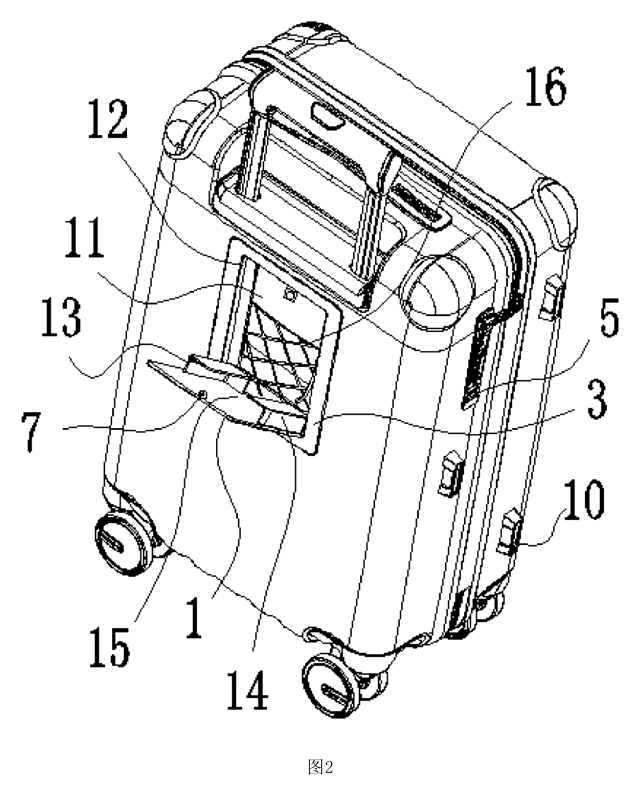
Bags & Luggage
Quick-Access Luggage with Fold-Down Back Compartment
Hard-shell suitcase with a fold-down compartment in the back panel for phone, passport and power bank - no need to open the case.
Patent CN210076793U
Bags & Luggage
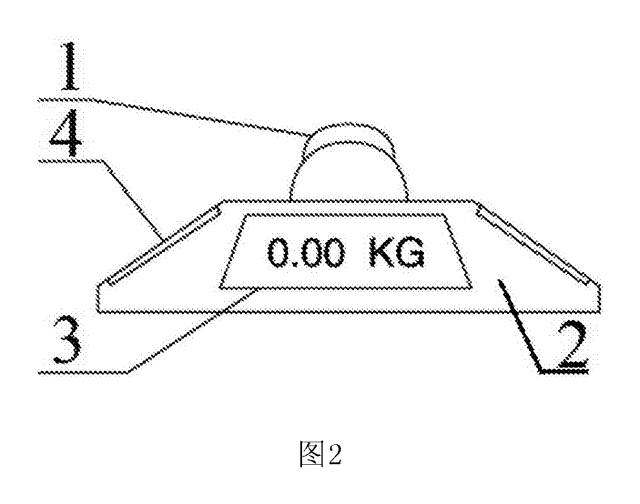
Luggage Handle with Built-In Scale
Suitcase carry handle with a built-in weighing sensor and display - lift the bag and read its weight.
Patent CN206670777U
Bags & Luggage
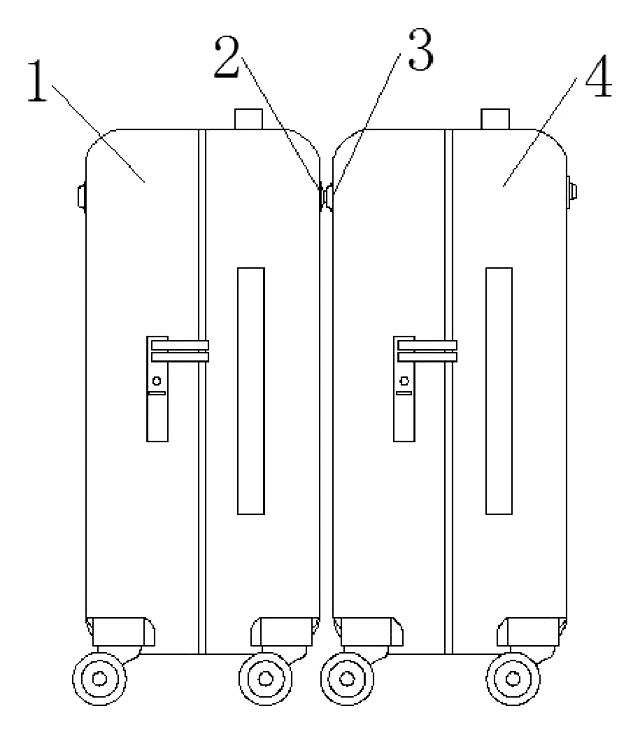
Snap-Together Luggage Connector
Stud-and-socket snap built into suitcases so two cases lock together and roll with one hand.
Patent CN209862619U
Bags & Luggage
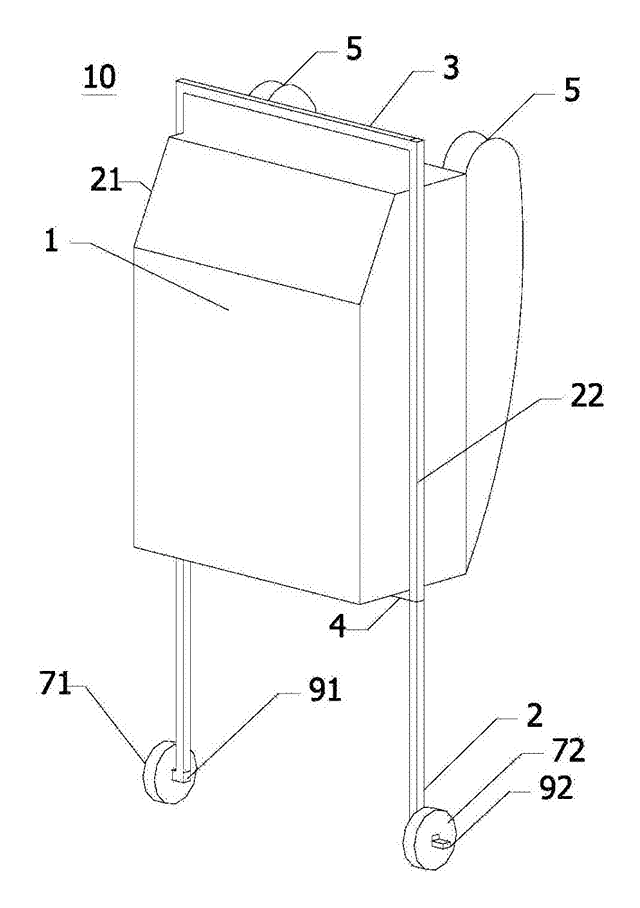
Side-Rail Rolling Backpack with Raised Wheels
Rolling backpack with pull rails on the sides, not the back, and rails that lower the wheels.
Patent CN207733803U
Bags & Luggage
Backpack with Removable Body-Shaped Inner Frame
Backpack with a lift-out inner frame shaped to the back that spreads the load to the back and hips.
Patent CN216534262U
Bags & Luggage
Hard-Shell Luggage Case with a Built-In Lift Table
Hard-shell luggage with a telescopic rod and desktop that rises from the lid.
Patent CN107485137B
Browse by category
- Apparel & Accessories (46)
- Baby & Kids (28)
- Bags & Luggage (17)
- Bath & Personal Care (30)
- Car Accessories (25)
- Furniture, Bedding & Storage (23)
- Garden & Outdoor (32)
- Health & Wellness (14)
- Home, Kitchen & Cleaning (48)
- Lighting (23)
- Packaging & Containers (12)
- Pet Products (11)
- Phone & Camera Accessories (9)
- Retail Display (25)
- School, Office & Art (35)
- Sports & Recreation (45)
- Tools & Workshop (54)
- Toys & Games (22)
This page is based on the public patent document CN108851451B, assigned to Wuhu Hui Yu Commerce Co Ltd. IP2M is an independent manufacturing service and is not affiliated with, endorsed by or licensed by the patent owner. Images marked as concept renderings are illustrations, not photos of an existing product. Patent status information is provided for reference only and is not legal advice; confirm freedom to operate for your market before production. Full disclaimer.