
Patent CN108851769B
Updated October 27, 2026Motorized Height-Adjustable Children's Cabinet with Arc-Shaped Panels
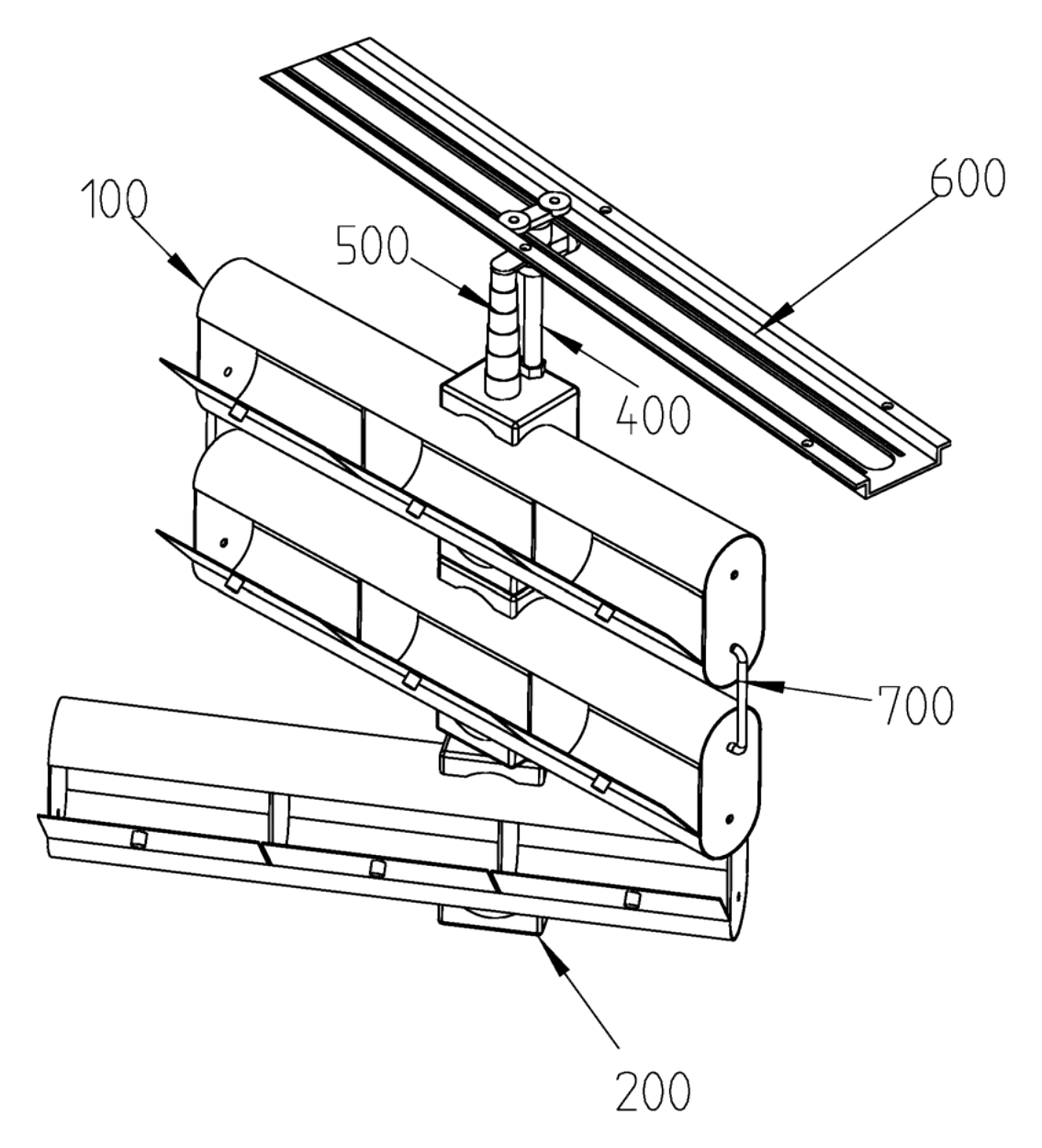
Standard low cabinets sit on the floor where small children can climb inside or bump their heads on sharp corners. This design uses a motorized lifting frame to move the entire cabinet assembly up and down along a wall-mounted fixed plate. The cabinets are linked by hanging blocks that clamp around arc-shaped top and back panels, letting the units be arranged at different angles. When raised, the compartments sit out of a child's reach, addressing climbing hazards while keeping stored items accessible to adults.
- China invention patent - in force
- No filings outside China
- Baby & kids furniture
- Motorized lifting frame, arc-shaped panels
Splat! What let you down?
⬆️
Motorized lifting
A screw rod driven by a motor raises or lowers the entire group of cabinets along a fixed plate.
🔗
Modular hanging blocks
Sliding grooves clamp around the cabinet shells, linking units together with connectors and telescopic sleeves.
🛡️
Arc-shaped panels
The top plate and back plate are curved structures, reducing hard edges in children's spaces.
📐
Flexible arrangement
Cabinets can be set at different angles to fit room layouts and interior styles.
Bring this product to market
- ✓ Patent vetted China-only family and legal status checked
- 2 Product brief · now How it works, uses and options written up
- 3 Prototype First samples for buyers to review
- 4 Pilot run Small first batch for launch customers
- 5 Volume production Repeat orders at scale
Buyer interest
– of 100 buyers needed to start prototyping
One click, no sign-up. Each vote is one real visitor, and products with the most interest go to prototyping first.
Build team: no members yet. Need a partner, co-funding or skills to build this? Join and we introduce the team once it forms.
The problem
Low storage cabinets in children’s rooms present two recurring issues. First, toddlers and young children frequently attempt to climb into open compartments or hide inside wardrobes, creating a risk of entrapment or tipping. Second, standard rectangular cabinets have rigid corners and edges at heights where a walking or running child might strike their head or body. Fixed-height shelving also limits how a room can be reconfigured as a child grows or as furniture is rearranged, forcing buyers to replace entire units when space requirements change.
The solution
This children’s cabinet addresses these points through three structural features:
- Multiple sliding cabinets (100) are used instead of a single large box. Each cabinet includes a shell (101), a door (102) at one end, and at least one group of partition plates (103) inside.
- Arc-shaped panels form the cabinet shell top plate and the cabinet shell back plate, removing sharp upper corners. Side plates include connecting holes (104) for connecting rods (700).
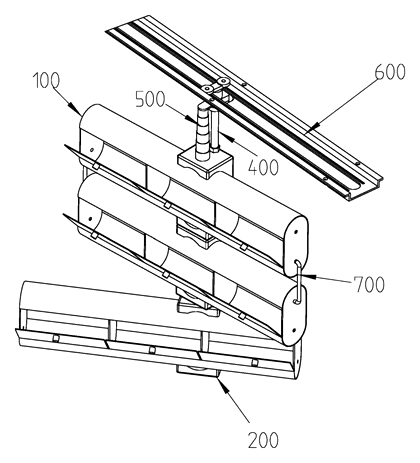
- A motorized lifting frame (400) connects to the cabinets via hanging blocks (200) and moves them vertically along a fixed plate (600). Raising the cabinets places the openings above a child’s reach.
Who it is for
- Preschool and daycare operators who need secure storage for supplies and personal items that must remain out of children’s reach during active hours but accessible to staff.
- Children’s furniture brands looking for a motorized, modular storage unit to differentiate their product lines from static wooden cabinets.
- Interior designers for pediatric clinics or play centers who require flexible furniture that adapts to different room shapes and safety protocols.
- E-commerce sellers specializing in baby products seeking a functional storage solution that directly addresses climbing and impact hazards described in the patent.
How it works
The main parts
| No. | Part | What it does |
|---|---|---|
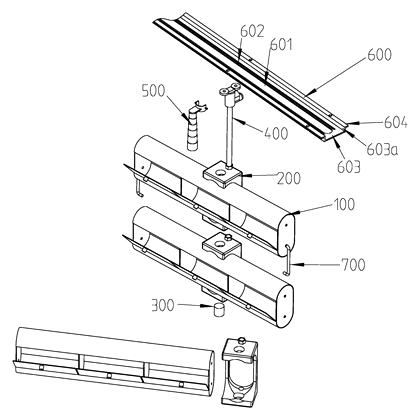
| 100 | Sliding cabinet | Storage unit with shell (101), door (102) and partitions (103). |
| 101 | Cabinet shell | Formed by arc-shaped top and back plates plus side plates with connecting holes (104). |
| 200 | Hanging block | Connects to the cabinet shell; includes first chuck (200a), second chuck (200b) and third chuck (200c). |
| 201 | Sliding chute | Groove inside the hanging block chucks that sleeves over the shell’s outer walls. |
| 202 | Hanging hole | Hole in the first and second chucks for mounting the telescopic sleeve (500). |
| 203 | Placing hole | Hole in the chucks holding an embedded nut (204) threaded onto the screw rod. |
| 300 | Connector | Links the hanging hole of one block’s first chuck to another block’s second chuck. |
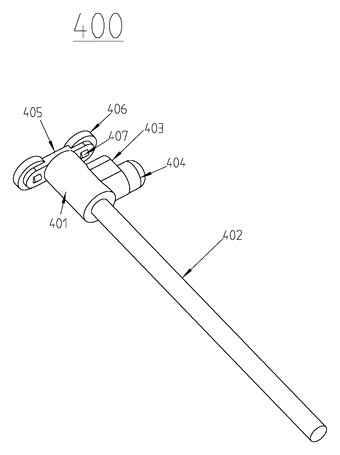
| 400 | Lifting frame | Raises and lowers the cabinets; includes guide block (401) and screw rod (402). |
| 403, 404 | Gear box and motor | Mounted on the guide block; the gear box meshes with the screw rod to drive rotation. |
| 405, 406, 407 | Connecting plate, side guide wheel, bottom roller | Guide the lifting frame along the fixed plate (600). |
| 500 | Telescopic sleeve | Includes sleeve (501), end plate (502), hoop (503) and locking screw (504); prevents rotation of the blocks. |
| 600 | Fixed plate | Wall or frame-mounted plate along which the lifting frame travels. |
| 700 | Connecting rod | Installed through the connecting holes (104) in the side plates. |
Operating steps
- Assembly - The hanging blocks (200) are installed onto the sliding cabinets (100) by sliding the chute (201) over the outer walls of the arc-shaped top, bottom and back plates.
- Linking - Connectors (300) join the hanging holes (202) of adjacent blocks. Telescopic sleeves (500) are inserted into the hanging holes and locked to the guide block (401) using the hoop (503) and locking screw (504).
- Threading - The screw rod (402) passes through the nuts (204) embedded in the placing holes (203) of the hanging blocks.
- Lifting - The motor (404) turns the gear box (403), which rotates the screw rod (402). Because the nuts are threaded onto the rod, the rotation translates into vertical movement, lifting all connected cabinets together.
- Guiding - Side guide wheels (406) and bottom rollers (407) on the connecting plate (405) roll against the fixed plate (600), keeping the travel straight. The telescopic sleeves prevent the hanging blocks from spinning as the rod turns.
Applications
Daycare storage rooms
Staff store craft materials and cleaning supplies in the sliding cabinets. During play hours, the motor raises the units so toddlers cannot access the contents or climb inside.
Pediatric waiting areas
Clinics use the cabinets to hold toys and medical forms. The arc-shaped panels reduce the chance of injury if a child runs into the furniture, and the angle of the cabinets can be adjusted to fit corner spaces.
Children’s bedrooms at home
Parents install the system against a wall. As the child grows, the resting height of the cabinets can be changed without replacing the furniture, adapting to the room’s evolving layout.
Indoor play centers
Facilities arrange multiple groups of cabinets in curved or angled rows using the connecting rods and adjustable hanging blocks. The motorized lift allows staff to clear floor space quickly for activities.
Montessori classrooms
Teachers use the lower positions to let older children access specific learning materials independently, then raise the cabinets to restrict access when those materials are not in use.
Where it is less suitable
- Standard adult residential closets - the motorized lifting mechanism and modular blocks are designed for child-safety contexts, not heavy-duty adult wardrobe loads.
- Outdoor environments - the motor, gear box and exposed screw rod are intended for indoor installation.
- Budget-tier flat-pack retail - the inclusion of motors, guide wheels and custom arc-shaped panels places this in a specialized category rather than basic ready-to-assemble shelving.
Frequently asked questions
How does the lifting mechanism work?
A motor drives a gear box that rotates a vertical screw rod. Nuts embedded in the hanging blocks are threaded onto this rod. When the motor turns the rod, the nuts travel along it, raising or lowering all connected sliding cabinets simultaneously. Side guide wheels and bottom rollers keep the frame aligned against the fixed plate.
Why are the top and back panels arc-shaped?
The patent describes the cabinet shell top plate and back plate as arc structures. This shape removes sharp upper corners from the cabinet, which is a practical consideration for furniture placed in areas where children walk or run.
Can I change the number of cabinets or their angles?
Yes. The design uses multiple independent sliding cabinets linked by hanging blocks. The connectors and telescopic sleeves allow the blocks to be joined together, and the patent states the number and angle of the sliding cabinets can be adjusted to fit interior spaces.
What stops the cabinets from spinning when they go up?
A telescopic sleeve is mounted between the hanging block and the guide block. It consists of a sleeve, an end plate, a hoop and a locking screw. Once locked in place, the sleeve and connector prevent the hanging blocks from rotating around the screw rod as it turns.
What materials are the cabinets made of?
The patent text does not specify the exact materials for the cabinet shells, hanging blocks or panels. Material selection, including thicknesses and finishes, is set in design and confirmed on prototypes based on the required load and target market.
Is there a weight limit for the lifting frame?
Specific load capacities are not provided in the patent document. The maximum weight the motor and screw rod can lift depends on the motor torque, screw pitch and guide wheel rating, which are set in design and confirmed on prototypes during testing.
How do the hanging blocks attach to the cabinets?
Each hanging block has three chucks that form an internal sliding chute. This chute sleeves directly over the outer walls of the cabinet shell’s top plate, bottom plate and back plate, clamping the block to the cabinet without requiring permanent fasteners through the panels.
Can this design be made and sold in the US?
The patent was filed only in China and is currently in force there until at most 2038-07-28 (if annual fees are paid). It has no US counterpart, so the Chinese filing itself does not restrict making or selling the design in the US. However, motorized lifting furniture may be covered by other US patents - see Patent & Production - so we recommend a freedom-to-operate check before volume production.
Are you affiliated with the patent owner?
No. IP2M is an independent design and manufacturing service working from the public patent document.
Request a quote
Click Request a Quote below to see our email address - copy it, or open your email app with a ready-made message. Please mention patent CN108851769B in the subject.
Helpful details to include:
- Your company and channel (children’s furniture brand, daycare supplier, e-commerce seller, interior design firm)
- Target dimensions for the sliding cabinets and overall unit height
- Number of cabinet modules per lifting frame
- Material preferences for the shells and arc-shaped panels
- Motor voltage and control type (switch, remote, etc.)
- Estimated quantity and destination country
- Timeline - when you would like samples and the first shipment
You can also reach us at (332) 203-9997.
Explore this product
Interested in building this?
Tell us your target market, quantity and timeline. We reply with options for prototyping, small-batch runs or volume production.
Send your inquiry to
Please put CN108851769B in the subject line and tell us your company, country, estimated quantity and timeline.
Prefer to talk? Call (332) 203-9997.
More product-ready patents
All Baby & Kids patents →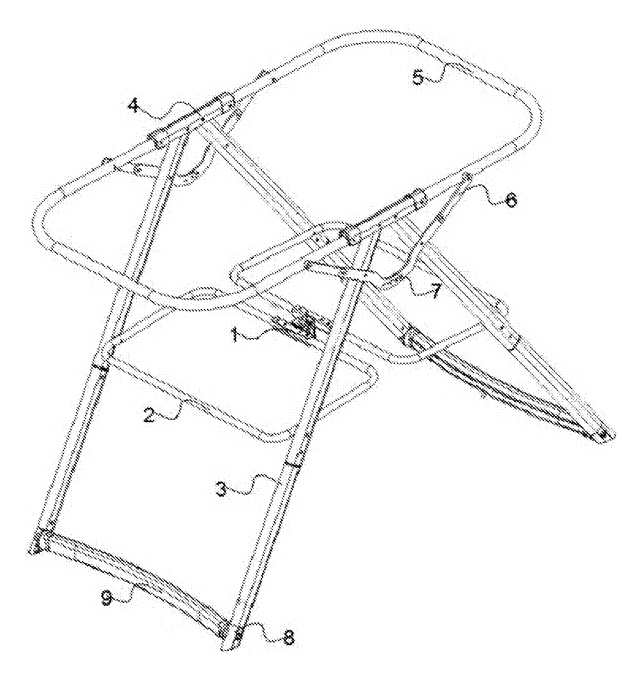
Baby & Kids
Portable Folding Rocking Bassinet Frame
Rocking bassinet frame that folds flat: telescopic hub, folding rails, two-part legs, curved rockers.
Patent CN206910143U
Baby & Kids
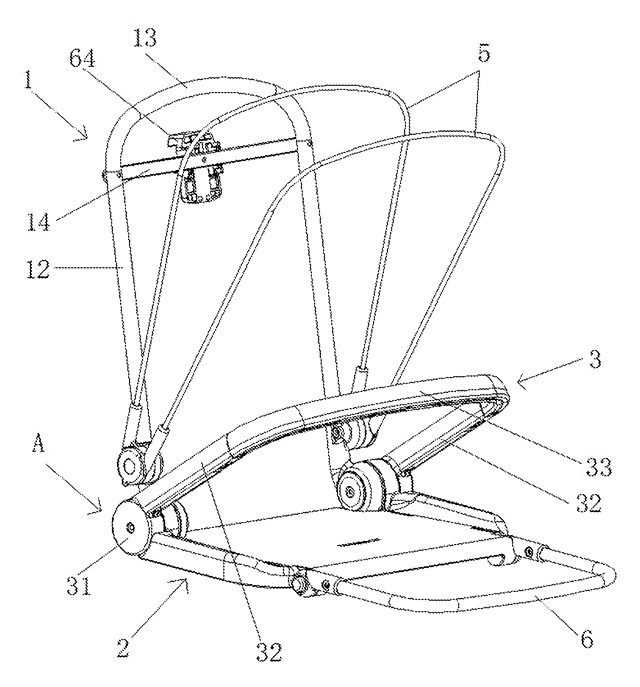
Stroller Seat with Linked Fold-Away Armrest
Stroller seat whose armrest unlocks and folds automatically when the backrest is folded forward.
Patent CN206856772U
Baby & Kids
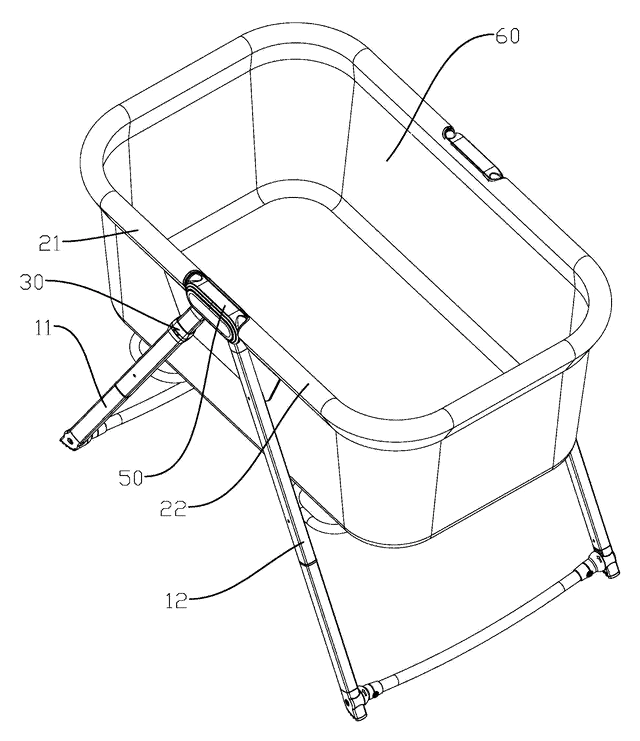
One-Motion Folding Baby Crib with Linked Frame
Portable baby crib whose top rails fold down automatically as the A-frame legs are closed.
Patent CN207202585U
Baby & Kids
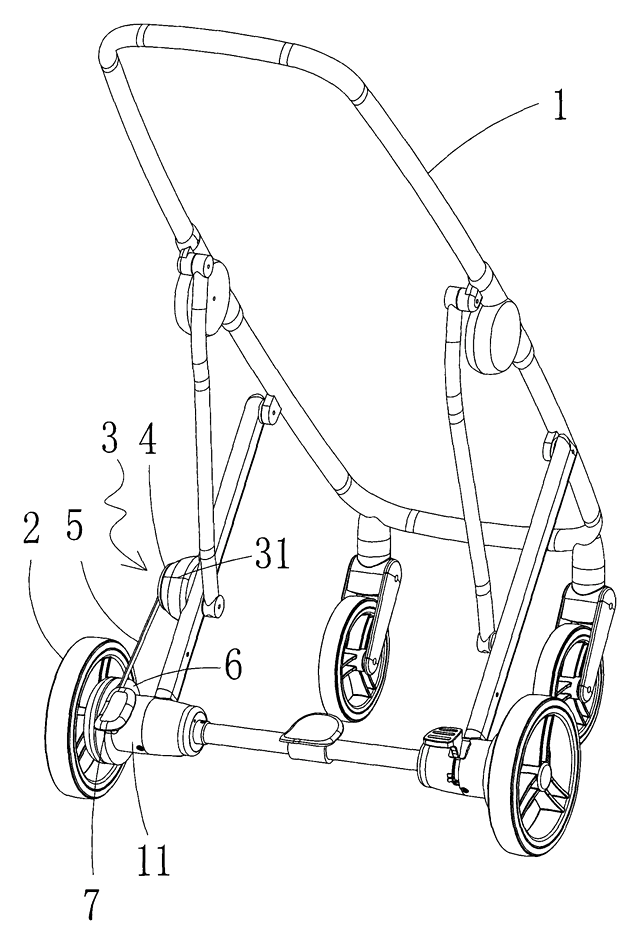
Motorized Rocking Stroller That Rocks by Turning Its Wheels
Baby rocker or stroller whose motor turns the wheels back and forth; a clutch switches to pushing.
Patent CN208119238U
Baby & Kids
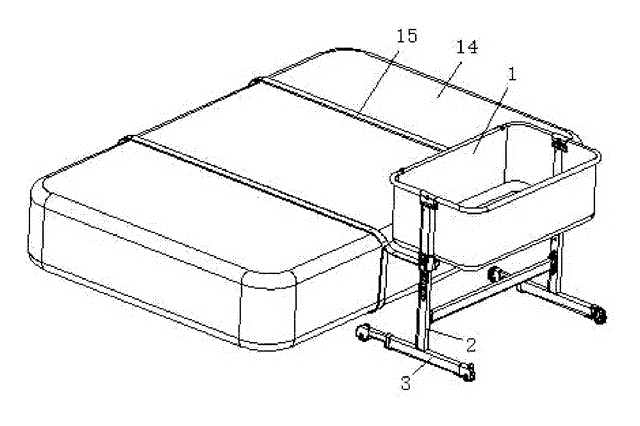
Bedside Crib Base with Spring-Loaded Telescoping Caster Legs
Bedside crib feet with spring-loaded sliding casters: wide when alone, short to sit flush at the bed.
Patent CN207168269U
Baby & Kids
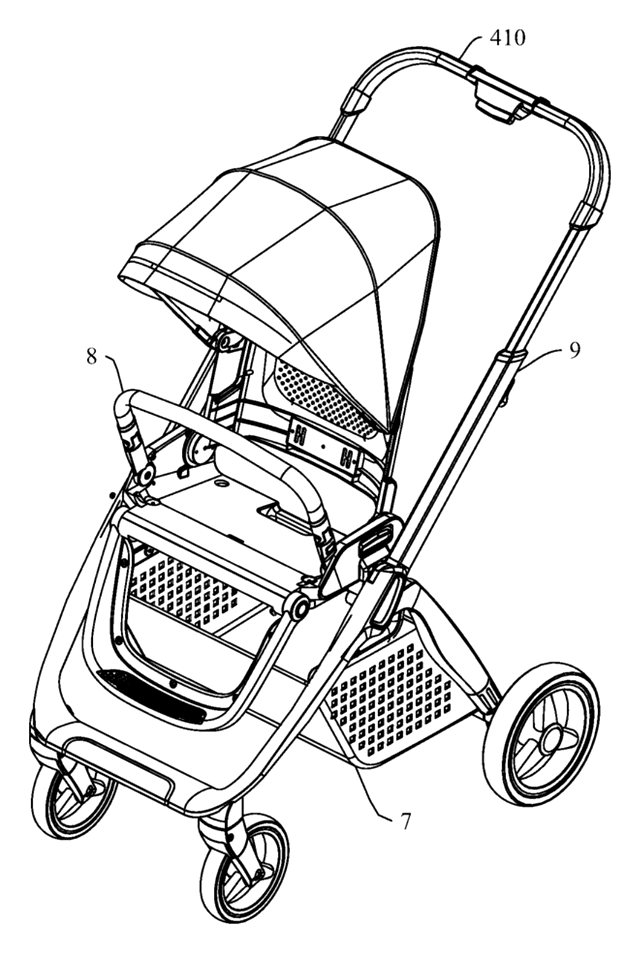
Compact-Fold Stroller with a Four-Bar Side Frame and Telescoping Handle
Stroller with four-bar side frames: handle and rear leg fold onto the front leg, handle telescopes.
Patent CN213799844U
Browse by category
- Apparel & Accessories (22)
- Baby & Kids (16)
- Bags & Luggage (9)
- Bath & Personal Care (16)
- Car Accessories (10)
- Furniture, Bedding & Storage (12)
- Garden & Outdoor (18)
- Health & Wellness (8)
- Home, Kitchen & Cleaning (24)
- Lighting (12)
- Packaging & Containers (6)
- Pet Products (6)
- Phone & Camera Accessories (4)
- Retail Display (13)
- School, Office & Art (19)
- Sports & Recreation (25)
- Tools & Workshop (27)
- Toys & Games (12)
This page is based on the public patent document CN108851769B, assigned to Shandong Guangming Yuandi Education Equipment Co.,Ltd.. IP2M is an independent manufacturing service and is not affiliated with, endorsed by or licensed by the patent owner. Images marked as concept renderings are illustrations, not photos of an existing product. Patent status information is provided for reference only and is not legal advice; confirm freedom to operate for your market before production. Full disclaimer.